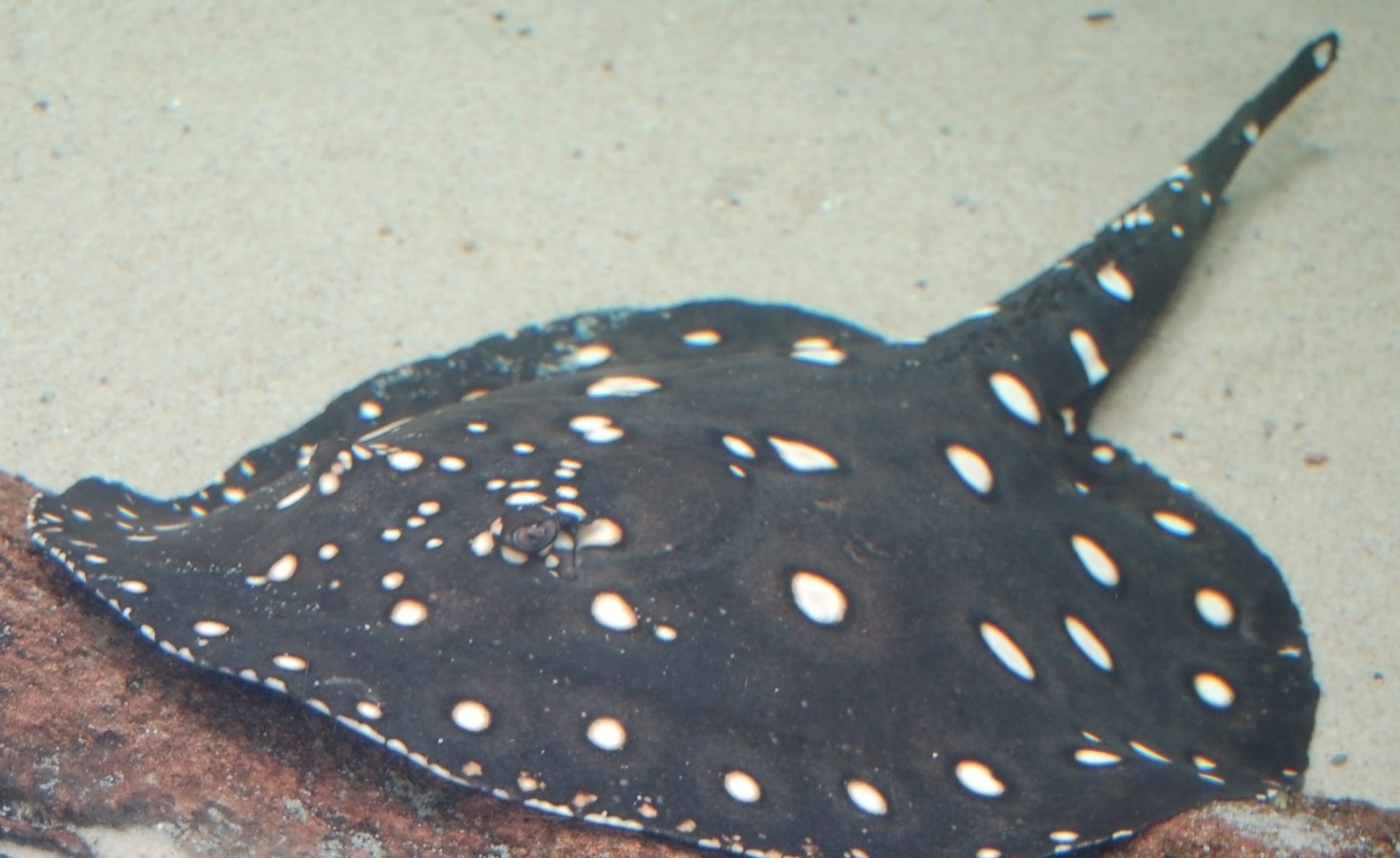
 © Derek Ramsey (Ram-Man) / CC BY-SA 2.5
Xingu River Ray
The polka dot stingray is a striking large freshwater ray, its black disc scattered with white spots. Native to Brazil's Xingu River system, it moves with a flat, graceful motion that makes it a true centerpiece fish. Its tail carries a venomous barb, so careful handling is essential. Keeping one requires a spacious, floor-area-focused tank and consistently soft, stable water over the long term, and feeding costs add up as well — which is why this species is considered suitable only for experienced keepers. Most specimens available are captive-bred, making this a ray best suited to keepers with solid knowledge and preparation.
View Xingu River Ray encyclopedia →0% commission on your first sales!Register by September 30, 2026 and your first 2 sales are commission-free!
Breeder Wanted!
List on BreederDirect and sell directly to customers nationwide!
Our 6 Transparency Commitments
All Tropical Fish listings include water quality, temperament, and tank size information from verified Breeder.
- Origin Disclosed
- Real Photos
- Water Quality Disclosed
- Recommended Tank Size
- Temperament Disclosed
- Breed Line Disclosed
Browse all 301 breeds
Water Type
Care Level
Verified breeders wanted for Tropical Fish
Breeders are signing up now ahead of launch. Subscribe to be notified when new listings go live.
Getting alerts is free with a member account. When new listings match your saved search, we'll notify you by email and in-app.
Browse other categories
Verified breeders (preview)
Are you raising tropical fish?
Register as a breeder and connect with buyers directly.
Apply as a breederXingu River Ray key facts
- Care level
- Advanced
- Lifespan
- 15+ years
- Size
- 40cm disc width, 75cm total length
- Temperature
- 20〜29℃
- Diet
- Live and frozen meaty foods such as fish, prawns, mussels and earthworms
- Tank
- Seriously Fish calls for a 240 x 90cm base, about 1620 litres, for an adult or a pair. Open swimming space comes first and any decor must be too heavy to be shifted. Use a deep bed of fine sand.
- Water Temperature & Quality
- 20-29C, preferably towards the upper end. pH 6.0-7.5 with hardness ideally below 5 degrees H. FishBase records pH 6.0-6.8 and 20-25C in the wild. It is intolerant of poor water, so large regular water changes are essential.
- Tank Mates
- A top predator that cannot be trusted with anything it can swallow. It also fails to thrive alongside very aggressive or territorial fish. Large, peaceful species that occupy the upper levels are the best companions.
- Diet & Feeding
- Wild rays eat fish and aquatic invertebrates. Juveniles take frozen bloodworm and brine shrimp while adults need mussels, prawns, squid, whole small fish and earthworms, fed at least twice a day. Newly imported fish are often reluctant to feed.
- Breeding & Spawning
- Reproduction is matrotrophic viviparity: the pups are nourished by histotrophe secreted by uterine villi and are born fully formed, in litters of one to eight. Captive breeding has become more regular but pairing is difficult because rays are selective about mates.
- Health & Notes
- The tail sting is venomous and the fish must be handled with care. Export from Brazil is banned under IBAMA rules and the species is listed in CITES Appendix II, so international trade requires permits. The IUCN assesses it as Vulnerable.
About Xingu River Ray
A large freshwater ray with white spots on a black disc, native to the Xingu River. Its venomous tail barb and need for a spacious, soft-water setup make it suited to experienced keepers.
7 things to know before welcoming a Xingu River Ray
1Requires a Spacious Tank Floor
Adults reach a disc width of about 40cm and a total length of about 75cm, so this bottom-dwelling ray needs a large tank with generous width and depth. Prioritize floor space over tank height when planning the setup.
2Handle the Venomous Tail Barb with Care
The tail carries a venomous barb that can cause significant pain if it strikes. When performing tank maintenance, avoid touching the tail directly, use a net or tongs, and work calmly so the ray isn't startled.
3Stable Soft Water Is Essential
Maintaining soft, stable water conditions that mirror its native Xingu River habitat is fundamental to its health. Regular water changes and daily monitoring help avoid sudden swings in pH or hardness.
4Plan for Ongoing Feeding Costs
As a large-growing species, it eats a substantial amount, so feeding costs should be factored in from the start. Plan for these expenses alongside ongoing tank equipment maintenance over the long term.
5Choose a Soft, Fine Substrate
Since this ray spends much of its time on the tank floor, a soft, fine-grained substrate helps prevent abrasions to its disc. Avoid sharp-edged substrate or decorations and keep the layout simple and safe.
6Mostly Available as Captive-Bred
Most individuals in the market today are captive-bred. Sourcing a healthy specimen from a trustworthy seller, with minimal transport stress, is an important first step toward successful long-term keeping.
7Recognize This Is for Experienced Keepers
Managing a large tank, maintaining water quality, and handling the venomous barb all demand real experience, which is why this species is considered suitable only for advanced keepers. Take time to research thoroughly and prepare before bringing one home.
Frequently asked questions about Xingu River Ray
- Q.Can beginners keep this ray?
- A.This species is considered suitable for experienced keepers only. It requires specialized knowledge around large-tank management and stable water quality, so it's best to gain experience with other fish first.
- Q.Is the venomous tail barb really dangerous?
- A.Yes, the tail has a venomous barb that can strike if the ray feels threatened. Avoiding direct hand contact during maintenance and using tools like a net keeps the risk manageable.
- Q.How large a tank does it need?
- A.Adults reach a disc width of about 40cm and a total length of about 75cm, so floor space matters more than tank height. It's best to start with a large tank sized for the adult it will become.
- Q.Can it be kept with other fish?
- A.Because of the venomous barb, any tankmates should be calm species that won't provoke the ray, and ample floor space should be secured. Consider the individual ray's temperament and tank size before attempting a mixed setup.
- Q.Is there a difference between captive-bred and wild-caught individuals?
- A.Most individuals available today are captive-bred. Captive-bred rays tend to adapt more smoothly to transport and new environments, making them a practical choice when starting out.
Useful tools for Xingu River Ray care
Learn more about Xingu River Ray in the encyclopedia
View Xingu River Ray encyclopedia entry →
Care difficulty, lifespan, size and diet — all basics covered.
More in this category
Can't find the one you're looking for?
Post your wishes for free and breeders with matching animals will contact you with introductions.