Source: Wikimedia Commons
Xingu River Ray
AdvancedPotamotrygon leopoldi
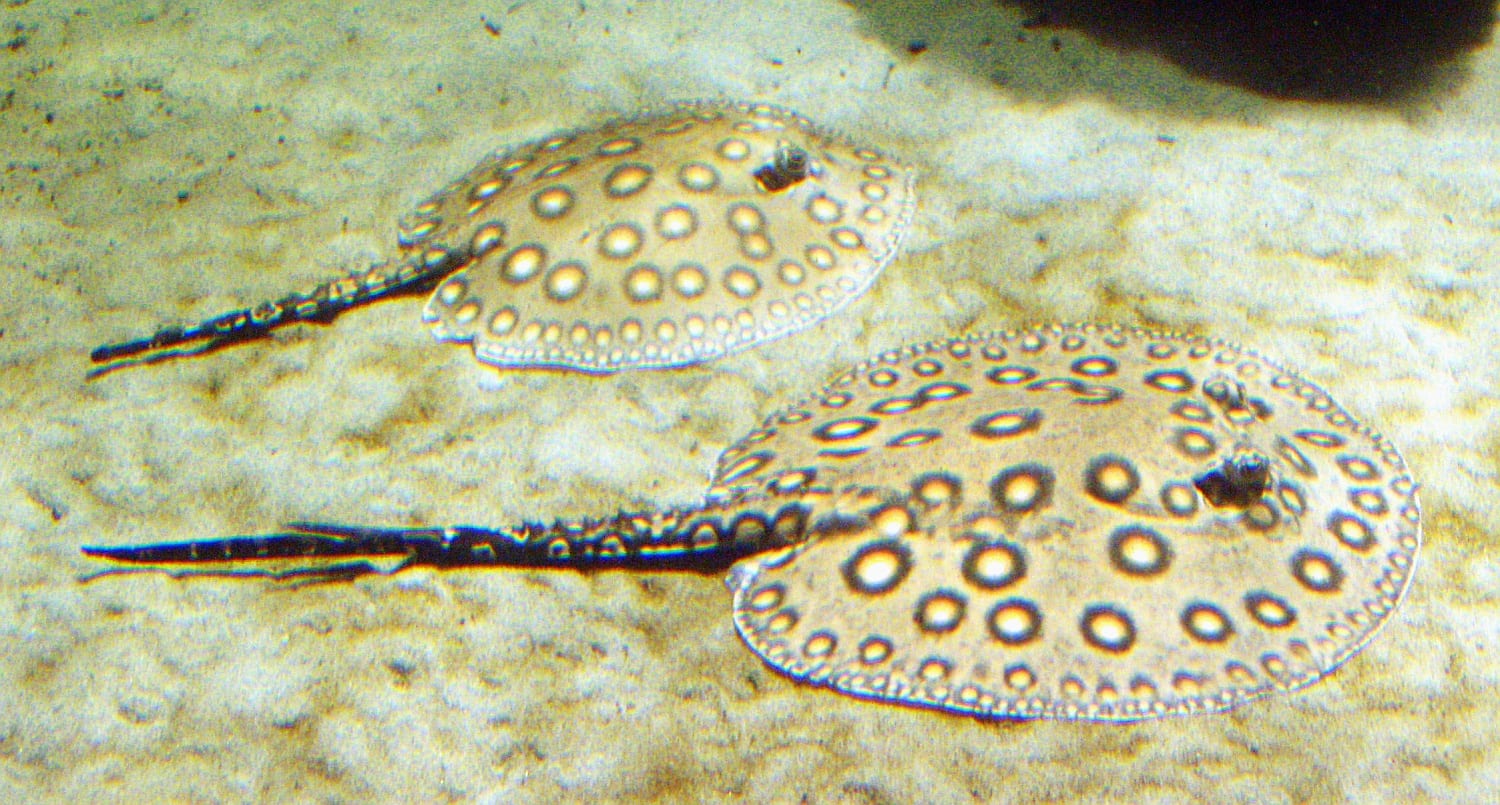
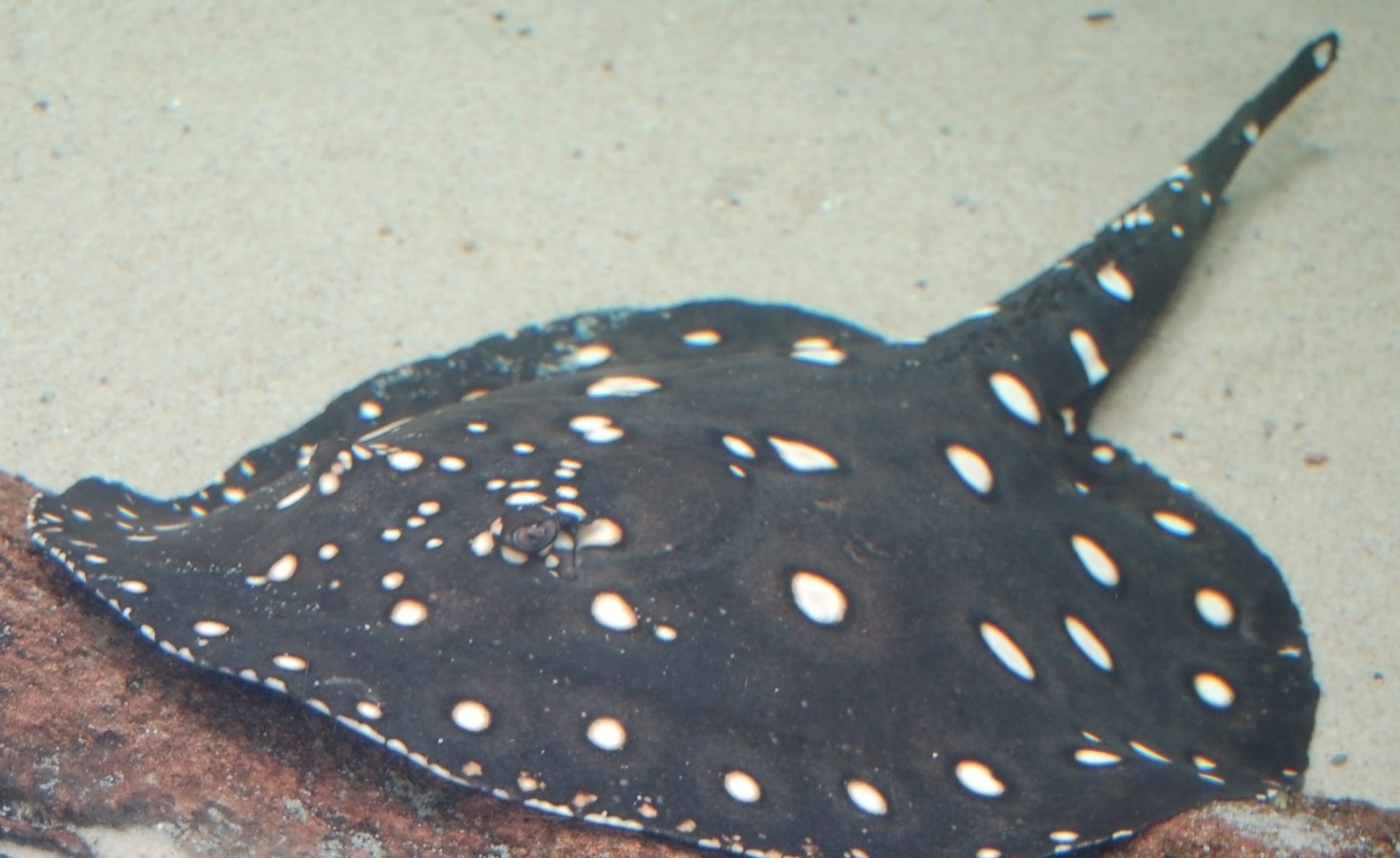
A large freshwater stingray with white spots scattered over a black disc. Endemic to the Xingu basin in Brazil, it carries venom in its tail sting. It needs a very large tank with a big footprint, stable soft water and a costly meaty diet, so it is demanding. Most fish traded are captive bred.
Difficulty
Advanced
Temperature
20〜29℃
Lifespan
15+ years
Size
40cm disc width, 75cm total length
Diet
Live and frozen meaty foods such as fish, prawns, mussels and earthworms
About
Potamotrygon leopoldi is a river stingray of the family Potamotrygonidae known only from the Rio Xingu basin and Rio Fresco in Brazil. Yellowish-white spots are scattered over a black disc, and the ray reportedly reaches 40cm disc width, 75cm total length and 20kg. FishBase gives a maximum of 111cm disc width. It is separated from the close relative P. henlei by having fewer and larger pale spots. The tail sting is venomous; toxicity decreases with age while the jaws become stiffer and more mineralised, so mature rays can crush hard-shelled invertebrates. Seriously Fish gives 20-29C, pH 6.0-7.5, hardness under 5 degrees H and a 240 x 90cm base of about 1620 litres. Its metabolism is high and it must be fed at least twice a day. Reproduction is matrotrophic viviparity with litters of one to eight pups. Brazil bans export under IBAMA rules, so captive-bred fish dominate the trade. The species is listed in CITES Appendix II.
Source: Wikipedia (CC BY-SA 4.0)
Lifespan of the Xingu River Ray
The Xingu River Ray lives 15+ years.
Size of the Xingu River Ray
The Xingu River Ray grows to 40cm disc width, 75cm total length.
Temperature & humidity for the Xingu River Ray
The ideal temperature for the Xingu River Ray is 20〜29℃.
Basic Info
Origin
South America (Rio Xingu basin and Rio Fresco, Brazil)
Lifespan
Care Specifications
- pH
- 6–7.5
- Hardness (GH)
- 0–5 dGH
- Water Temp.
- 20–29℃
- Min. Tank
- 1620 L
Semi-aggressiveBreeding: Hard
Sources: FishBase / Seriously Fish / Wikipedia
References & Sources
Edited & verified by: BreederDirect editorial team
The taxonomic, regulatory, and husbandry data on this page are compiled and verified against the authoritative primary sources below.
Taxonomy & Authority
Accepted name: Potamotrygon leopoldi Castex & Castello, 1970
Authority databases: FishBase
Nomenclature follows global taxonomic authority databases.
Regulations & Conservation Status
CITES Appendix IIIUCN VU · Vulnerable
Sources: CITES Appendix II (listed species) / IUCN Red List
Regulations may change. Always verify the latest information with the relevant authorities.
Xingu River Ray Listings
Loading latest listingsFind listings for this species