Source: Wikimedia Commons
Fahaka Puffer
AdvancedTetraodon lineatus
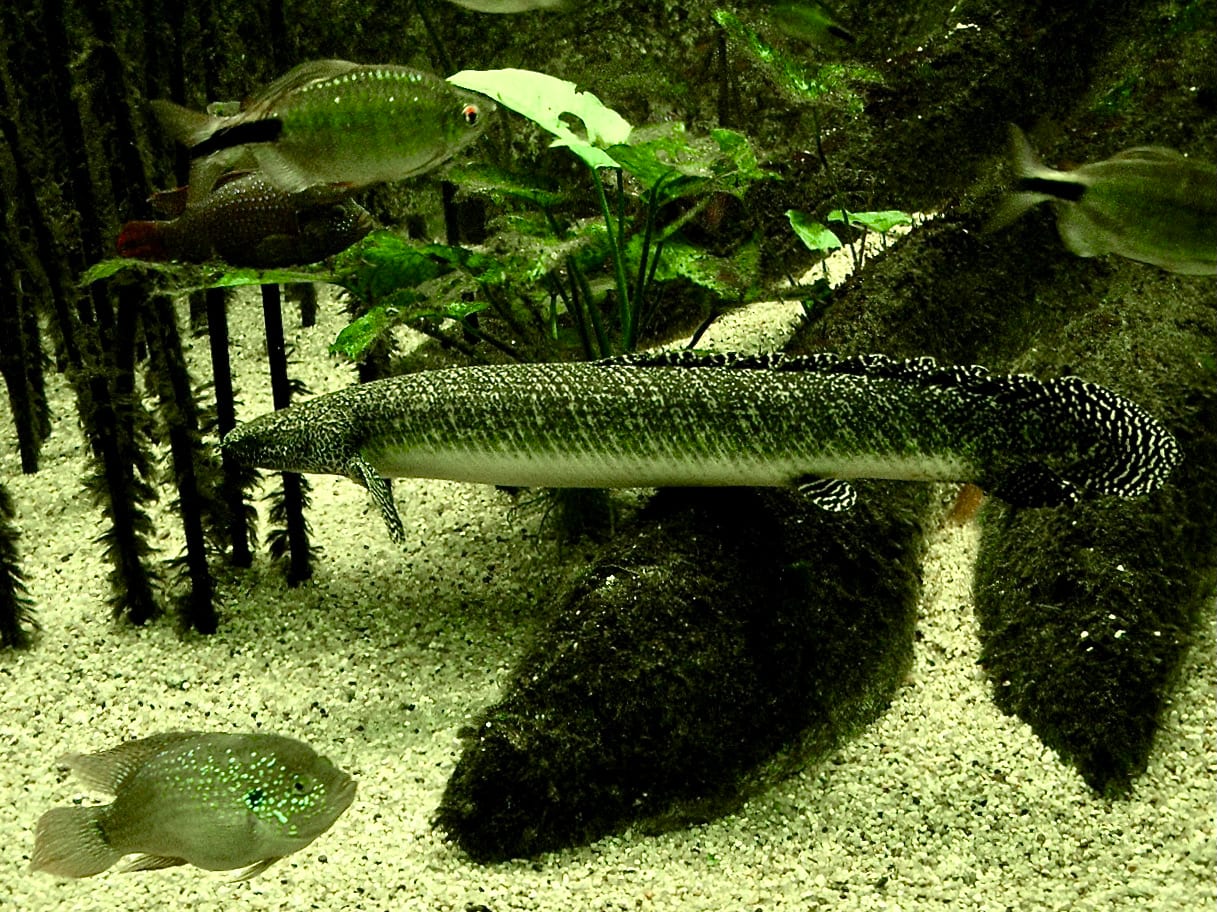
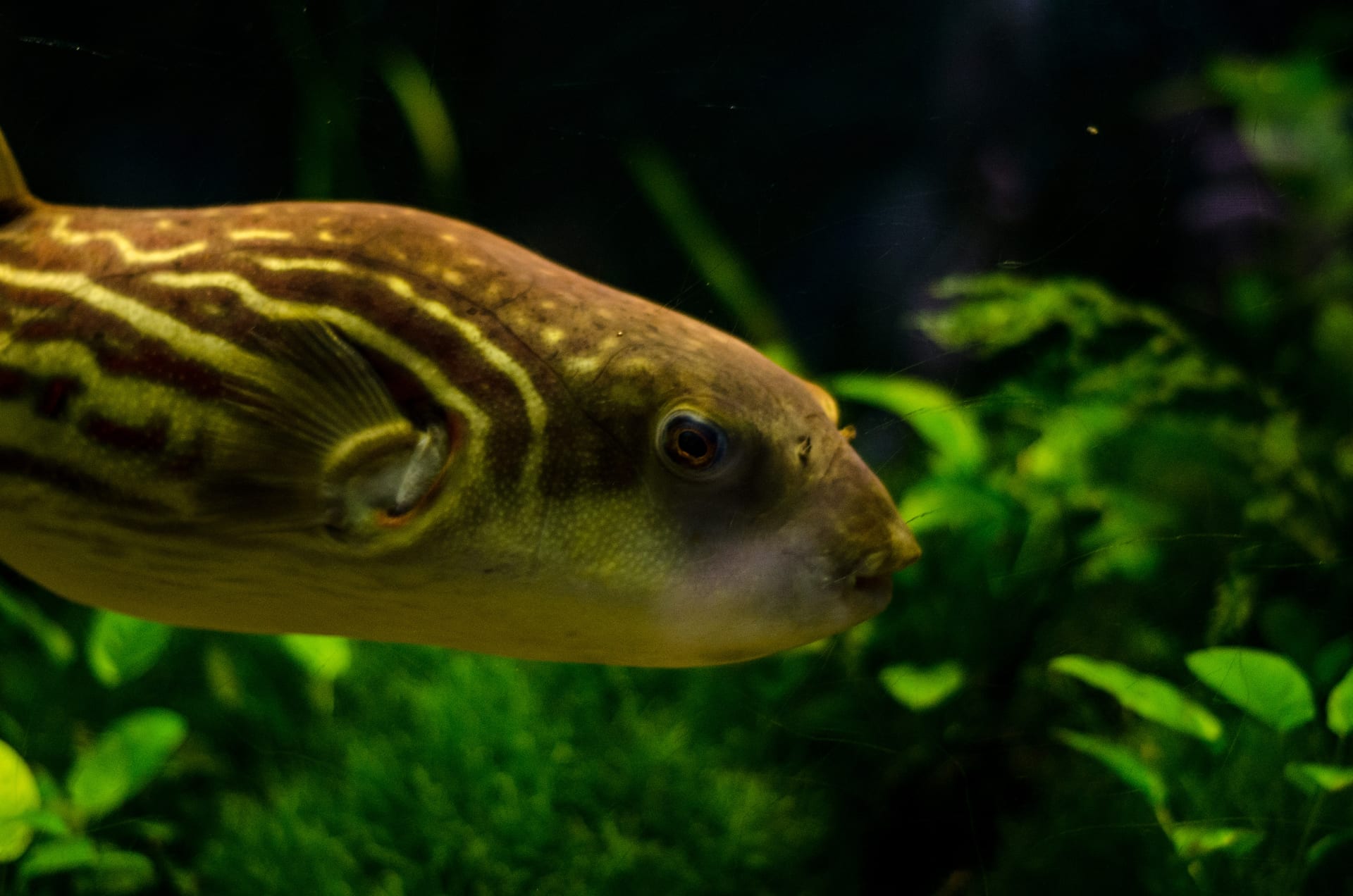
A large freshwater puffer with black stripes along a yellowish-brown body, found in the Nile and other African rivers. It reaches 43cm. Highly aggressive, it has to be kept on its own.
Difficulty
Advanced
Temperature
24〜26℃
Lifespan
Maximum reported age 5 years (FishBase)
Size
Up to 43cm TL
Diet
Snails, mussels, crab legs and other shelled foods, plus worms and frozen foods
About
Tetraodon lineatus is a large freshwater puffer distributed widely across Africa in the Nile, Chad, Senegal, Gambia and Volta systems. FishBase records a maximum of 43cm TL and 1.0kg, a maximum reported age of five years, maturity at 18.2cm, pH from 7.0, hardness from 10 dH and 24-26C. The skin is scaleless but head and body are covered in small spines, and a ventral pocket connecting the gill chamber to the oesophagus lets the fish inflate into a ball. It is a molluscivore in the wild. Seriously Fish gives 24-26C, pH 6.5-7.5, 5-15 dGH, considers 120 x 60 x 60cm and 450 litres adequate for a single fish, and states plainly that no salt is required. It is extremely aggressive and can bite chunks out of other fish, so it is kept alone. Its teeth grow continuously, so shelled food is indispensable. The IUCN rates it Least Concern and it is not listed by CITES.
Source: Wikipedia (CC BY-SA 4.0)
Lifespan of the Fahaka Puffer
The Fahaka Puffer lives Maximum reported age 5 years (FishBase).
Size of the Fahaka Puffer
The Fahaka Puffer grows to Up to 43cm TL.
Temperature & humidity for the Fahaka Puffer
The ideal temperature for the Fahaka Puffer is 24〜26℃.
Basic Info
Origin
Africa (Nile, Chad, Senegal, Gambia and Volta basins)
Lifespan
Maximum reported age 5 years (FishBase)
Care Specifications
- pH
- 6.5–7.5
- Hardness (GH)
- 5–15 dGH
- Water Temp.
- 24–26℃
- Min. Tank
- 450 L
AggressiveSolitaryBreeding: Very hard
Sources: FishBase / Seriously Fish
References & Sources
Edited & verified by: BreederDirect editorial team
The taxonomic, regulatory, and husbandry data on this page are compiled and verified against the authoritative primary sources below.
Taxonomy & Authority
Accepted name: Tetraodon lineatus Linnaeus, 1758
Synonyms: Tetraodon fahaka
Authority databases: FishBase
Nomenclature follows global taxonomic authority databases.
Regulations & Conservation Status
Not CITES-listedIUCN LC · Least Concern
Sources: CITES Appendices (species not listed) / IUCN Red List
Regulations may change. Always verify the latest information with the relevant authorities.
Fahaka Puffer Listings
Loading latest listingsFind listings for this species