Fahaka Pufferfish & MBU Pufferfish Care Guide | Keeping Large Freshwater Pufferfish
Care guide for large freshwater pufferfish including Fahaka and MBU pufferfish. Detailed explanations covering tank size requirements, feeding and dental care, reasons for solitary keeping, and acquisition methods.
Key Takeaways
Care guide for large freshwater pufferfish including Fahaka and MBU pufferfish. Detailed explanations covering tank size requirements, feeding and dental care, reasons for solitary keeping, and acquisition methods.
Related Species
The Appeal of Large Freshwater Pufferfish
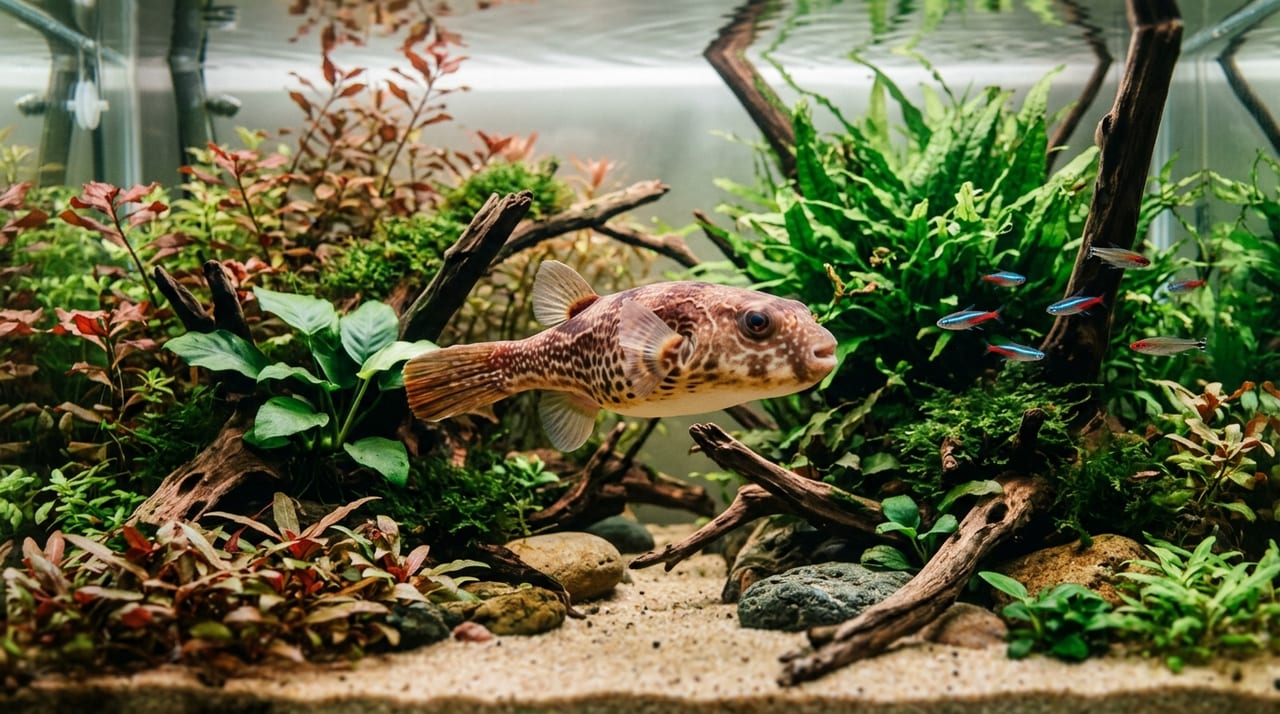
When people think of freshwater pufferfish, small species like the Dwarf Pufferfish are widely known as the most typical example, but in reality, much larger freshwater pufferfish species exist throughout the world. Among these, the most popular are Tetraodontidae Fahaka (Fahaka Pufferfish) and Tetraodontidae Mbu (MBU Pufferfish, also called Giant Pufferfish).
The Fahaka Pufferfish is native to the Nile River basin and reaches 40–50 cm in body length, attracting enthusiasts with its keen-eyed expression and distinctive swimming style. The MBU Pufferfish is native to the Congo River basin and reaches similar sizes, also known as the Congo Pufferfish. Both are highly intelligent, with some individuals recognizing their keepers and approaching them, possessing distinctly engaging personalities even among large aquarium fish.
On the other hand, they require solitary keeping, need large tanks, and have specialized feeding requirements, making them moderately difficult to care for. They are better suited for intermediate to advanced aquarists, but with proper preparation, long-term maintenance is entirely feasible.
Required Tank Size and Environmental Setup
Both Fahaka and MBU Pufferfish eventually reach 40–50 cm, so adult specimens require a minimum tank size of 180 cm or larger. Juveniles can be temporarily kept in 60–90 cm tanks, but growth is rapid, approaching adult size within 2–3 years. It is essential to plan with the assumption of future upgrade to a larger tank.
Water parameters should be water temperature 24–28°C, pH 6.5–7.5, and hardness (GH) approximately 5–15. They adapt to a relatively wide range of water conditions but are highly sensitive to ammonia and nitrite. Because large pufferfish have strong appetites and produce significant waste, the basic setup includes multiple powerful external filters and weekly water changes at a rate of 1–2 times per week.
Arrange driftwood and rocks to create hiding spots, providing a calm environment for the pufferfish. Many individuals prefer to nibble on aquatic plants and will almost certainly eat them, making planted tanks incompatible with this species. Sand-based substrates are easier to maintain than soil, and many keepers use bare-bottom tanks for easier maintenance.
Feeding and Dental Care
A characteristic of all pufferfish is that their beak-like teeth grow continuously throughout their lives. Large freshwater pufferfish are no exception, and it is essential to regularly provide hard-shelled foods to allow natural wear. Overgrown teeth can lead to serious problems such as inability to close the mouth or eat.
Recommended foods include bivalves (clams, mussels, snails), crustaceans (shrimp, crayfish, crabs), and frozen squid. Providing shells intact promotes natural tooth wear while supplying abundant protein and calcium. Sourcing clams and small shrimp from a supermarket's seafood counter is an economical and practical approach.
While some individuals will eat frozen bloodworms or pellets, these lack sufficient hardness for dental care purposes. The ideal balance is to provide hard-shelled foods several times per week as the primary diet, supplemented with frozen foods occasionally.
If teeth grow excessively beyond natural wear, tooth trimming under anesthesia may be necessary. This procedure should be performed by a veterinarian specializing in fish.
The Challenges of Tankmates and the Need for Solitary Keeping
Both Fahaka and MBU Pufferfish are known for their intense aggression. They attack fish smaller than themselves and often attack fish of similar size, making solitary keeping the basic recommendation. Particularly dangerous is their habit of nipping at the fins and tails of other fish. Fin damage can be severe enough to destroy fins within a single day.
While reports of successful tankmate combinations exist, these are extremely rare exceptions, and solitary keeping should be considered the standard approach. Keeping multiple individuals of the same species together is also generally difficult. While multiple juveniles can sometimes coexist in large tanks, territorial behavior increases with growth, typically leading to conflict.
Acquisition and Costs
Fahaka Pufferfish are well-known among pufferfish enthusiasts and are often available through large aquarium specialty shops and online retailers. Juvenile prices typically range from ¥5,000 to ¥15,000, varying by specimen condition and origin. MBU Pufferfish are less commonly available, typically ranging from ¥10,000 to ¥30,000.
The largest expense is the tank setup and equipment. Assembling a tank 180 cm or larger, stand, filter, and heater requires an initial investment of several hundred thousand yen. Additionally, powerful filters for large fish consume significant electricity, making utility costs considerably higher than for typical small tanks. Since shellfish food can be sourced inexpensively from supermarkets, ongoing costs are reasonable.
With proper care, they live 10–15 years or longer, and many hobbyists develop strong attachments to them as long-term companions.
Water Quality Maintenance Tips and Long-Term Keeping
The most critical factor in long-term pufferfish keeping is water stability. Because of their large size and high metabolism, water quality deteriorates rapidly if the filter's biological capacity cannot keep up. Select external filters with processing capacity at least double the tank volume, and perform 20–30% water changes every week as standard practice. Nitrate accumulation leads to poor appetite, weakened immunity, and faded coloration, making it essential to never skip water changes.
When stressed, some pufferfish repeatedly inflate (a defensive behavior) in what is called "puffing." While this is normal defensive behavior, frequent puffing depletes energy reserves, so maintaining a calm environment by minimizing sudden hand insertions into the tank and peering directly into it contributes to longevity. Properly maintained Fahaka Pufferfish have been reported to live 15 years or longer, making them fish to welcome with the commitment to care for them over many years.