Source: Wikimedia Commons
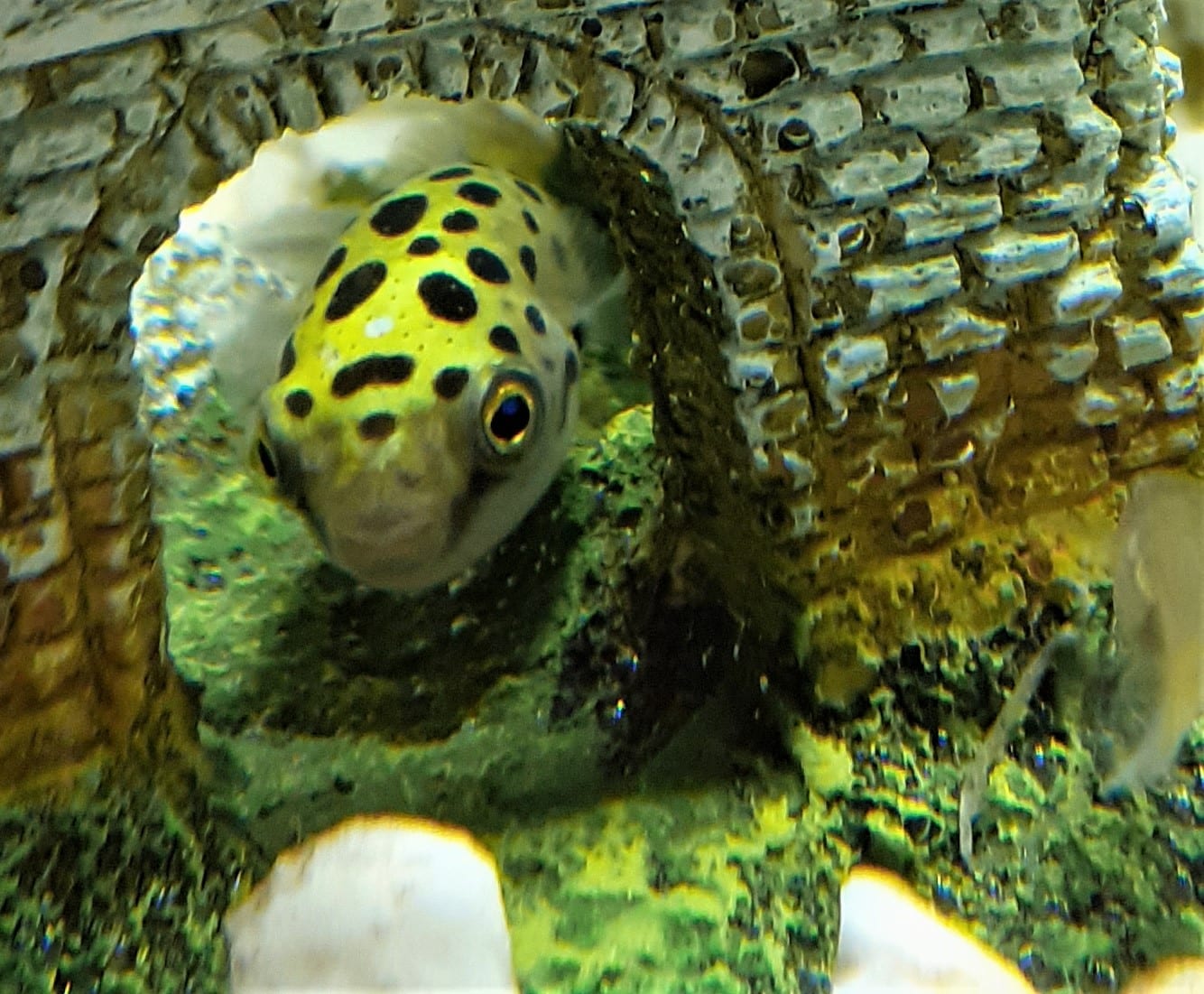
Green Spotted Puffer
IntermediateDichotomyctere nigroviridis
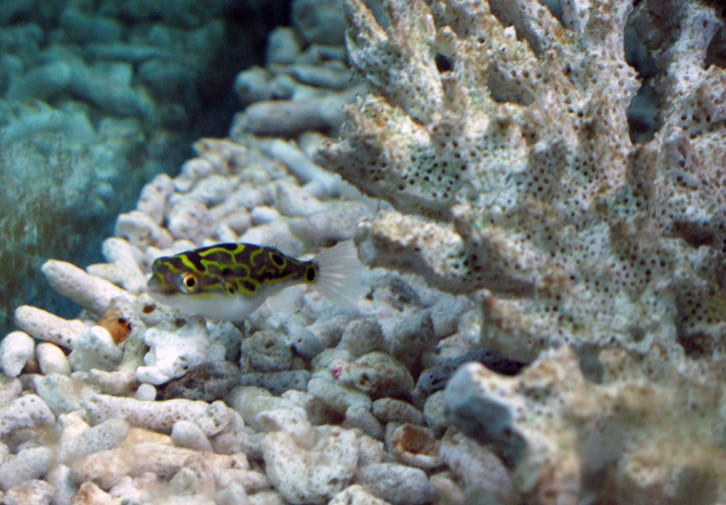
A small puffer with black spots over a yellow-green back and a white belly, from brackish and fresh waters of South and Southeast Asia. Its shell-crushing teeth grow continuously, so hard-shelled food must be offered regularly.
Difficulty
Intermediate
Temperature
24〜28℃
Lifespan
5-8 years
Size
Up to 17cm TL
Diet
Snails, crustaceans and other shelled invertebrates, plus frozen foods
About
Dichotomyctere nigroviridis is a small tetraodontid of coastal brackish water and rivers from Sri Lanka to Indonesia and north to China. FishBase records a maximum of 17cm TL, pH 8.0, 9-19 dH and 24-28C, and notes that it eats molluscs and crustaceans and will sometimes take scales and fins. It is still widely traded under the old name Tetraodon nigroviridis. Seriously Fish gives 24-28C, pH 7.5-8.5, 10-20 dGH and a 120 x 30cm base of about 108 litres, and stresses that the fish is very sensitive to declining water quality, so regular partial changes are essential. The teeth grow throughout life, so snails and shelled crustaceans must be fed regularly to wear them down. It is belligerent towards its own kind; if several are kept, use at least four in a large tank so aggression is spread. The IUCN rates it Least Concern and it is not listed by CITES.
Source: Wikipedia (CC BY-SA 4.0)
Lifespan of the Green Spotted Puffer
The Green Spotted Puffer lives 5-8 years.
Size of the Green Spotted Puffer
The Green Spotted Puffer grows to Up to 17cm TL.
Temperature & humidity for the Green Spotted Puffer
The ideal temperature for the Green Spotted Puffer is 24〜28℃.
Basic Info
Origin
Asia (Sri Lanka to Indonesia and north to China)
Lifespan
5-8 years
Care Specifications
- pH
- 7.5–8.5
- Hardness (GH)
- 10–20 dGH
- Water Temp.
- 24–28℃
- Min. Tank
- 108 L
Semi-aggressiveSolitaryBreeding: Hard
Sources: FishBase / Seriously Fish
References & Sources
Edited & verified by: BreederDirect editorial team
The taxonomic, regulatory, and husbandry data on this page are compiled and verified against the authoritative primary sources below.
Taxonomy & Authority
Accepted name: Dichotomyctere nigroviridis (Marion de Procé, 1822)
Synonyms: Tetraodon nigroviridis, Chelonodon nigroviridis
Authority databases: FishBase
Nomenclature follows global taxonomic authority databases.
Regulations & Conservation Status
Not CITES-listedIUCN LC · Least Concern
Sources: CITES Appendices (species not listed) / IUCN Red List
Regulations may change. Always verify the latest information with the relevant authorities.
Green Spotted Puffer Listings
Loading latest listingsFind listings for this species