Source: Wikimedia Commons
Barred Bichir
BeginnerPolypterus delhezi
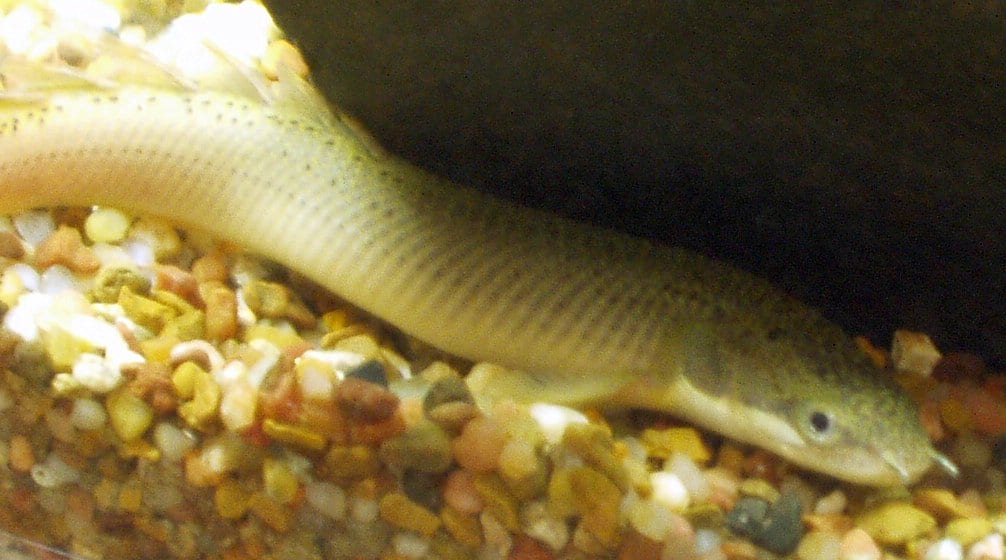
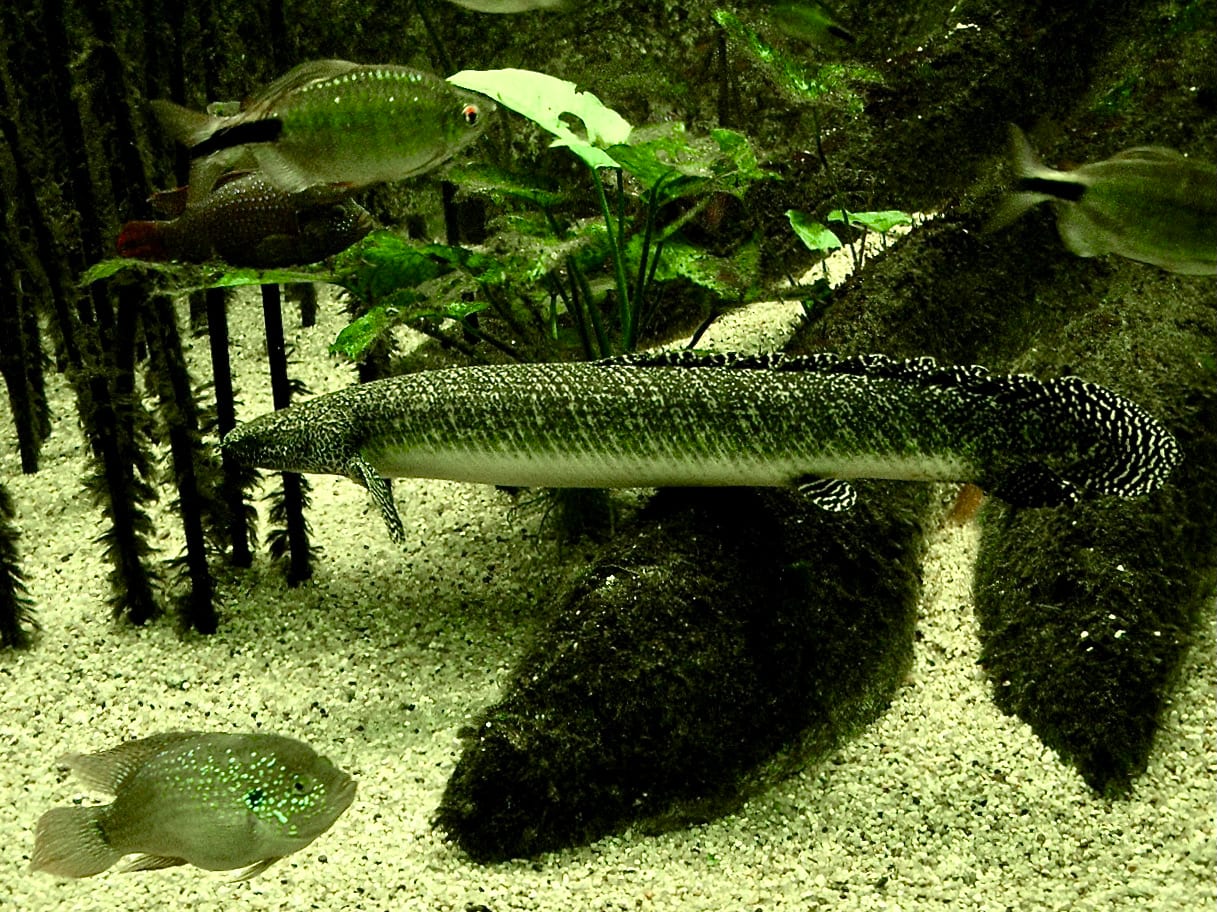
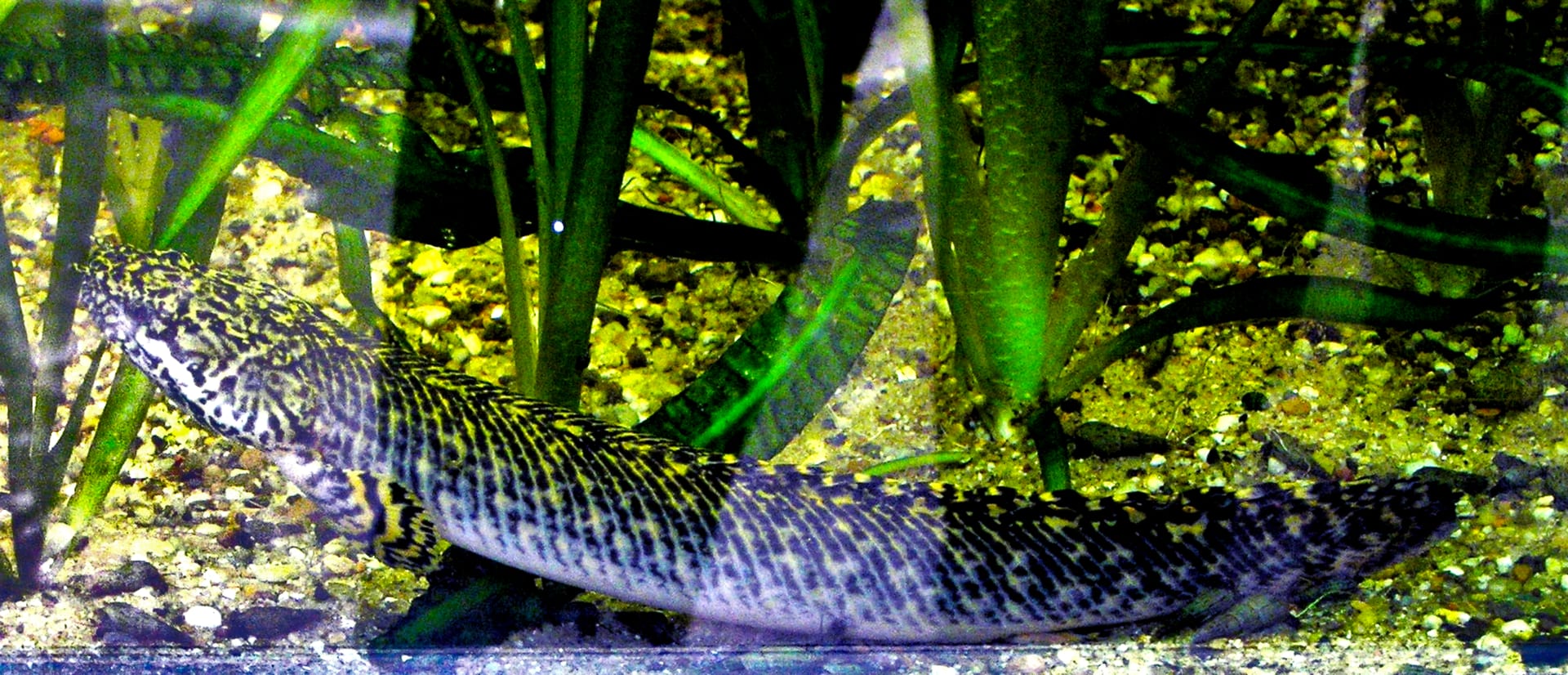
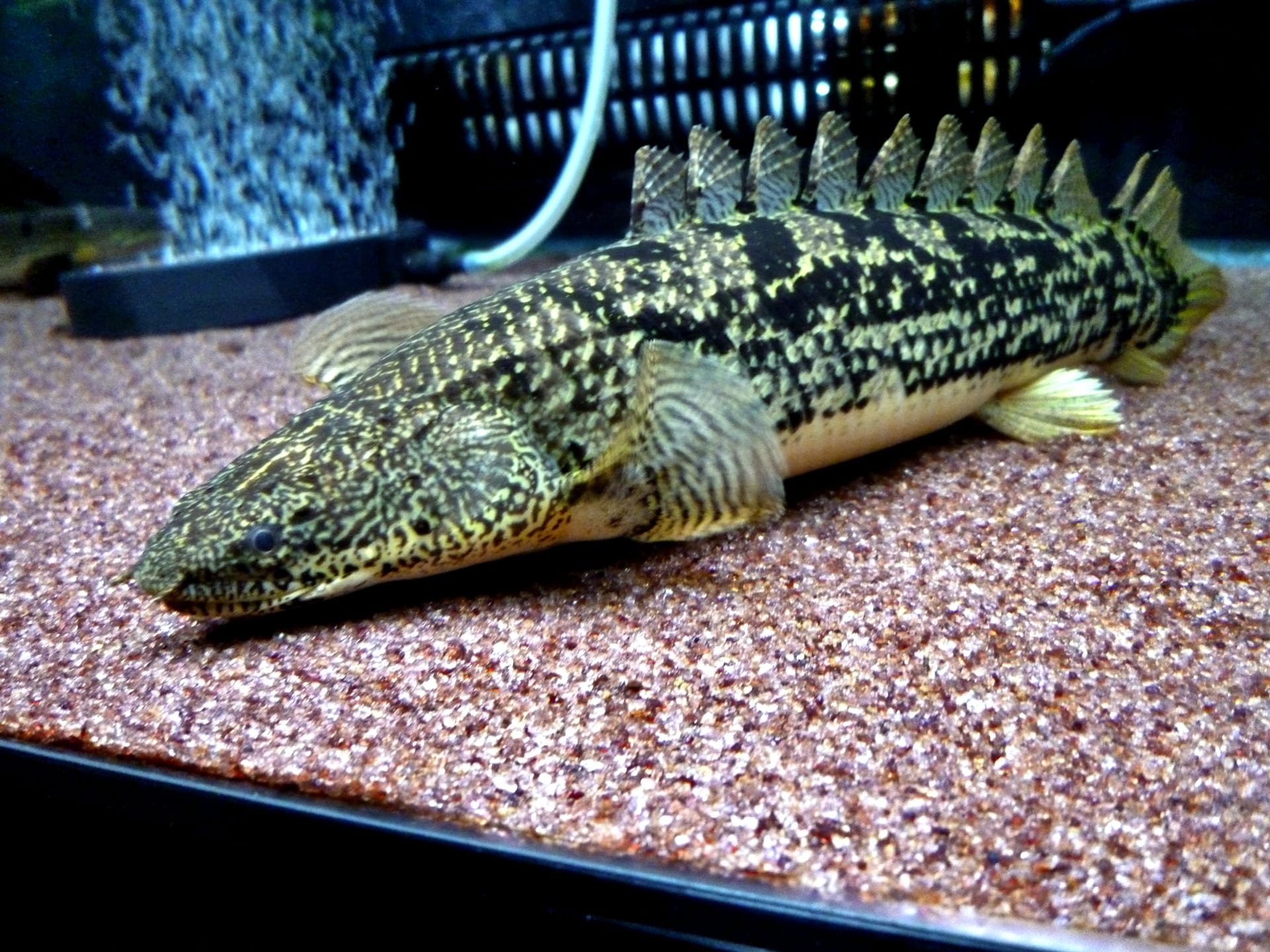
A medium-sized bichir with black bars across a grey body, from the middle and upper Congo. It is hardy and easy to keep for a Polypterus and popular for its markings. It is nocturnal and hunts by smell.
Difficulty
Beginner
Temperature
24〜30℃
Lifespan
15-20 years
Size
35-44cm
Diet
Meaty foods such as prawn, mussel, earthworms and frozen bloodworm
About
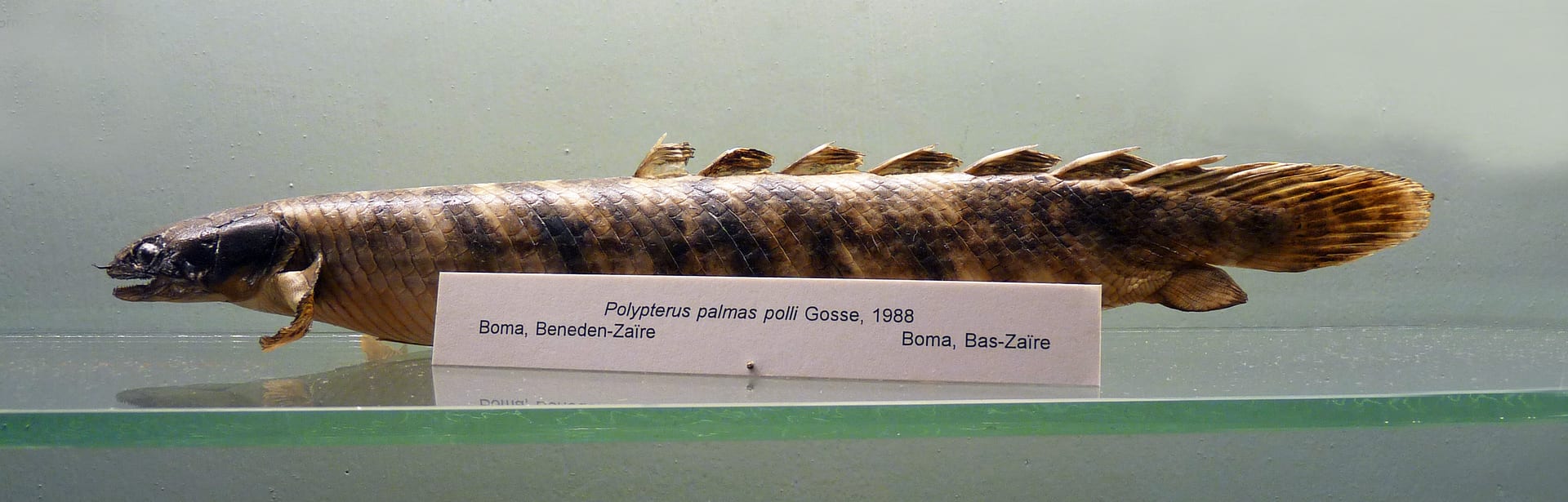
Polypterus delhezi is a bichir of the middle and upper Congo River. Black bars cross a grey body, and some fish show flecks of yellow or green. FishBase records 44.0cm total length and Seriously Fish 35cm standard length. The dorsal fin is a series of separate spines, and the rhomboid ganoid scales are coated in ganoine, a material similar to tooth enamel; they do not overlap but join with peg-and-socket articulations. The swim bladder is divided into two parts, the right much larger, and works as an accessory breathing organ, so the fish can survive out of water for a time if kept moist. Polypterus is described as the only vertebrate with lungs but no trachea. Seriously Fish gives 24-30C, pH 6.0-8.0, 5-25dGH and a 120 x 45cm base of about 205 litres. It is nocturnal with poor vision and locates food by smell.
Source: Wikipedia (CC BY-SA 4.0)
Lifespan of the Barred Bichir
The Barred Bichir lives 15-20 years.
Size of the Barred Bichir
The Barred Bichir grows to 35-44cm.
Temperature & humidity for the Barred Bichir
The ideal temperature for the Barred Bichir is 24〜30℃.
Basic Info
Origin
Africa (middle and upper Congo River)
Lifespan
15-20 years
Size
Care Specifications
- pH
- 6–8
- Hardness (GH)
- 5–25 dGH
- Water Temp.
- 24–30℃
- Min. Tank
- 205 L
Semi-aggressiveBreeding: Hard
Sources: FishBase / Seriously Fish / Wikipedia
References & Sources
Edited & verified by: BreederDirect editorial team
The taxonomic, regulatory, and husbandry data on this page are compiled and verified against the authoritative primary sources below.
Taxonomy & Authority
Accepted name: Polypterus delhezi Boulenger, 1899
Authority databases: FishBase
Nomenclature follows global taxonomic authority databases.
Regulations & Conservation Status
Not CITES-listedIUCN LC · Least Concern
Sources: CITES Appendices (species not listed) / IUCN Red List
Regulations may change. Always verify the latest information with the relevant authorities.
Barred Bichir Listings
Loading latest listingsFind listings for this species