Source: Wikimedia Commons
Senegal Bichir
BeginnerPolypterus senegalus
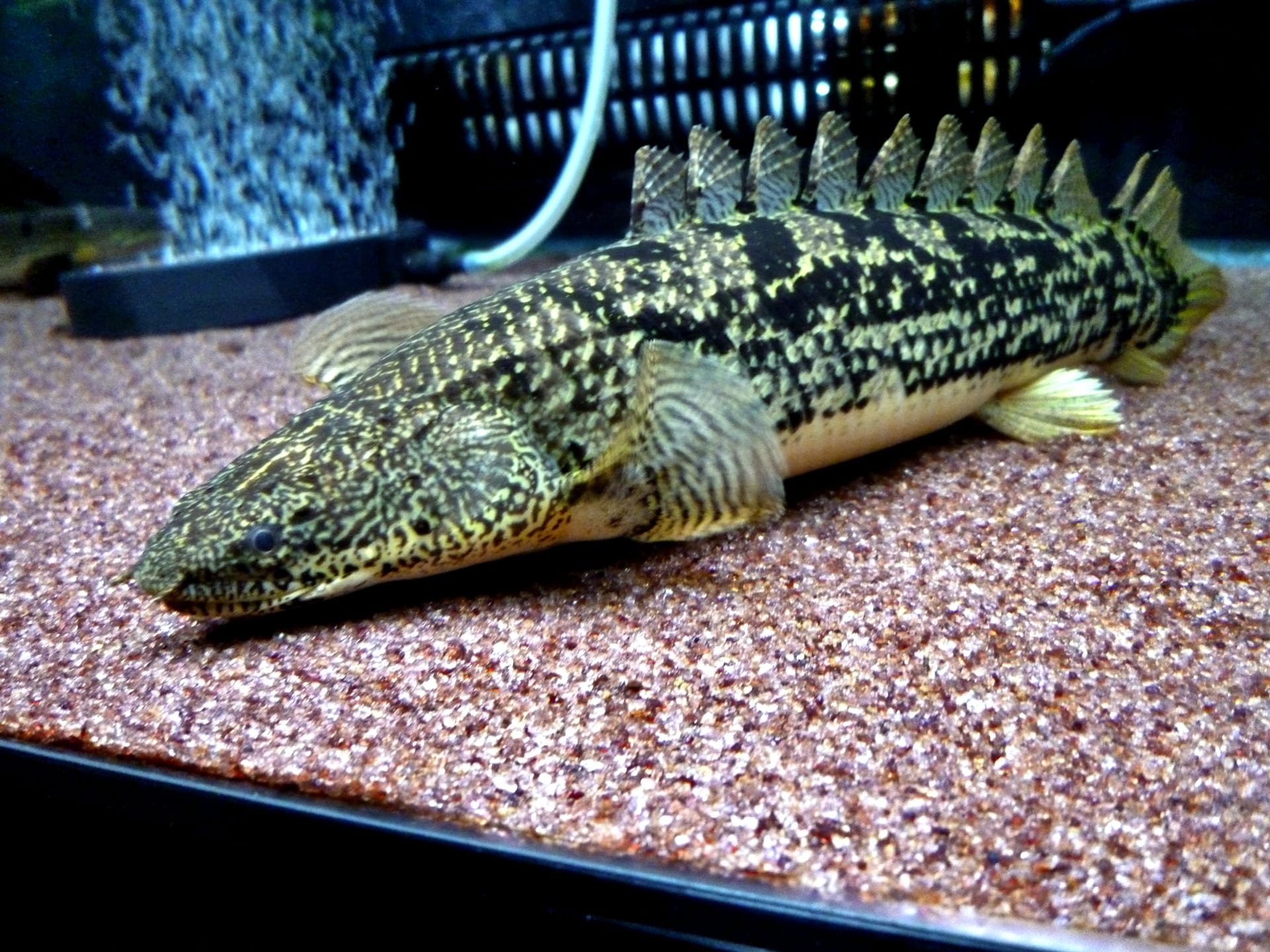
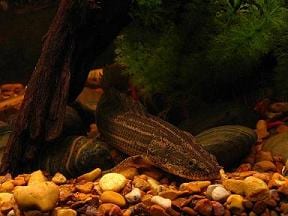
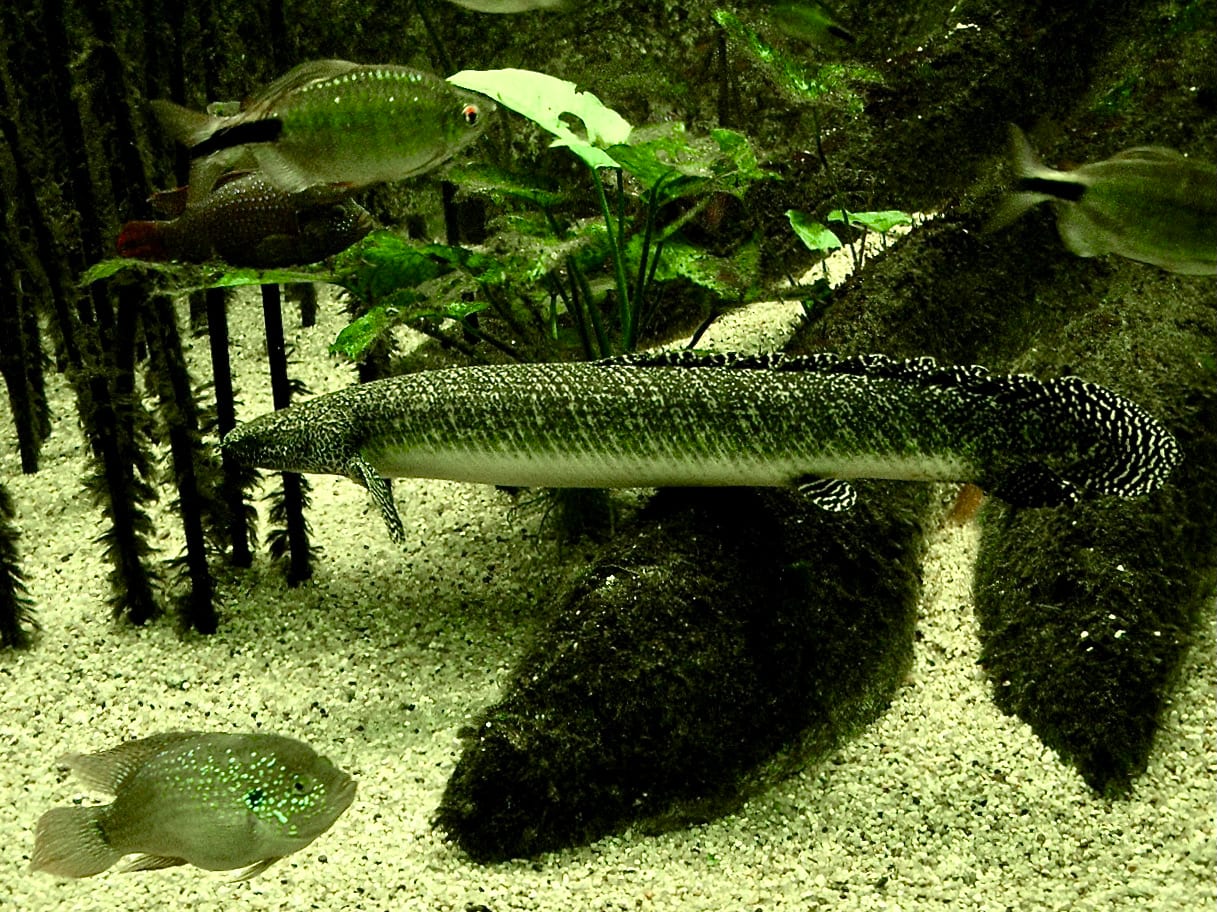
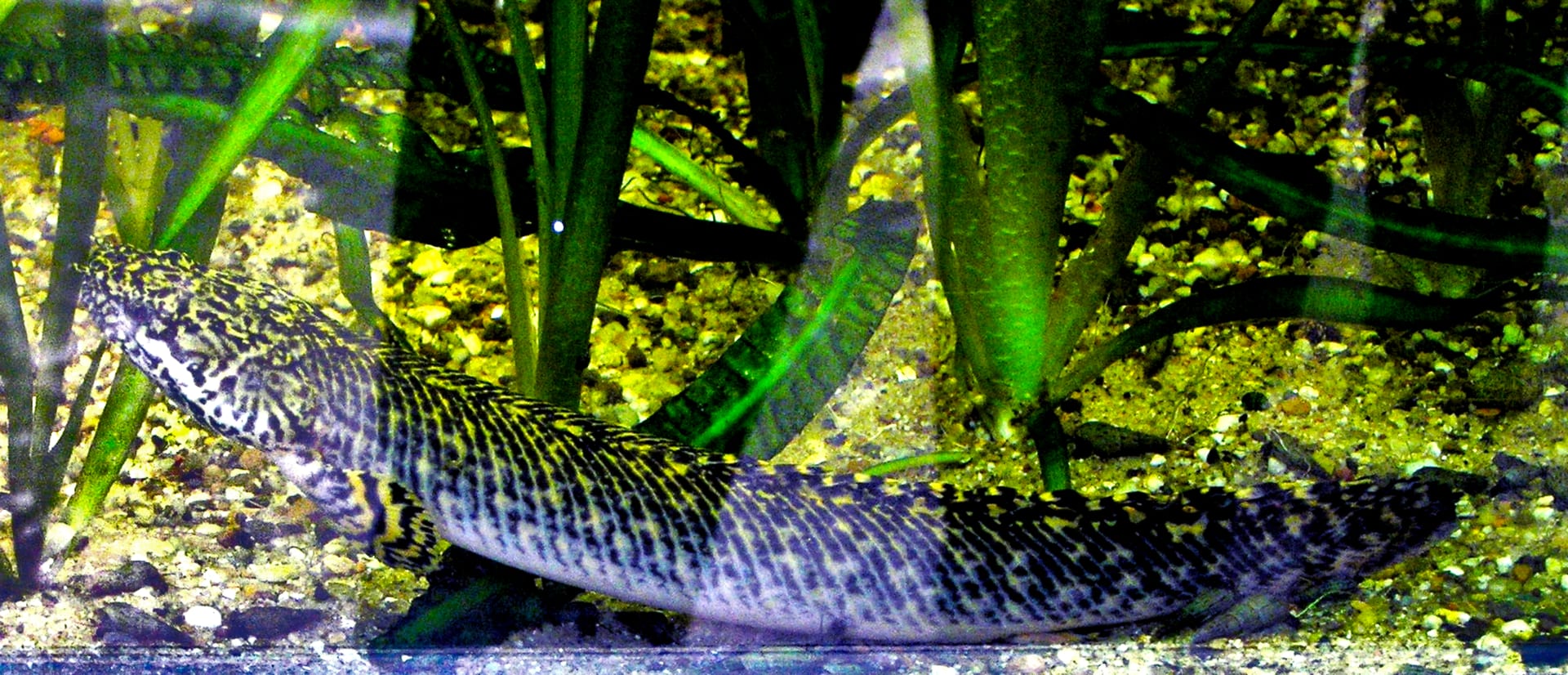
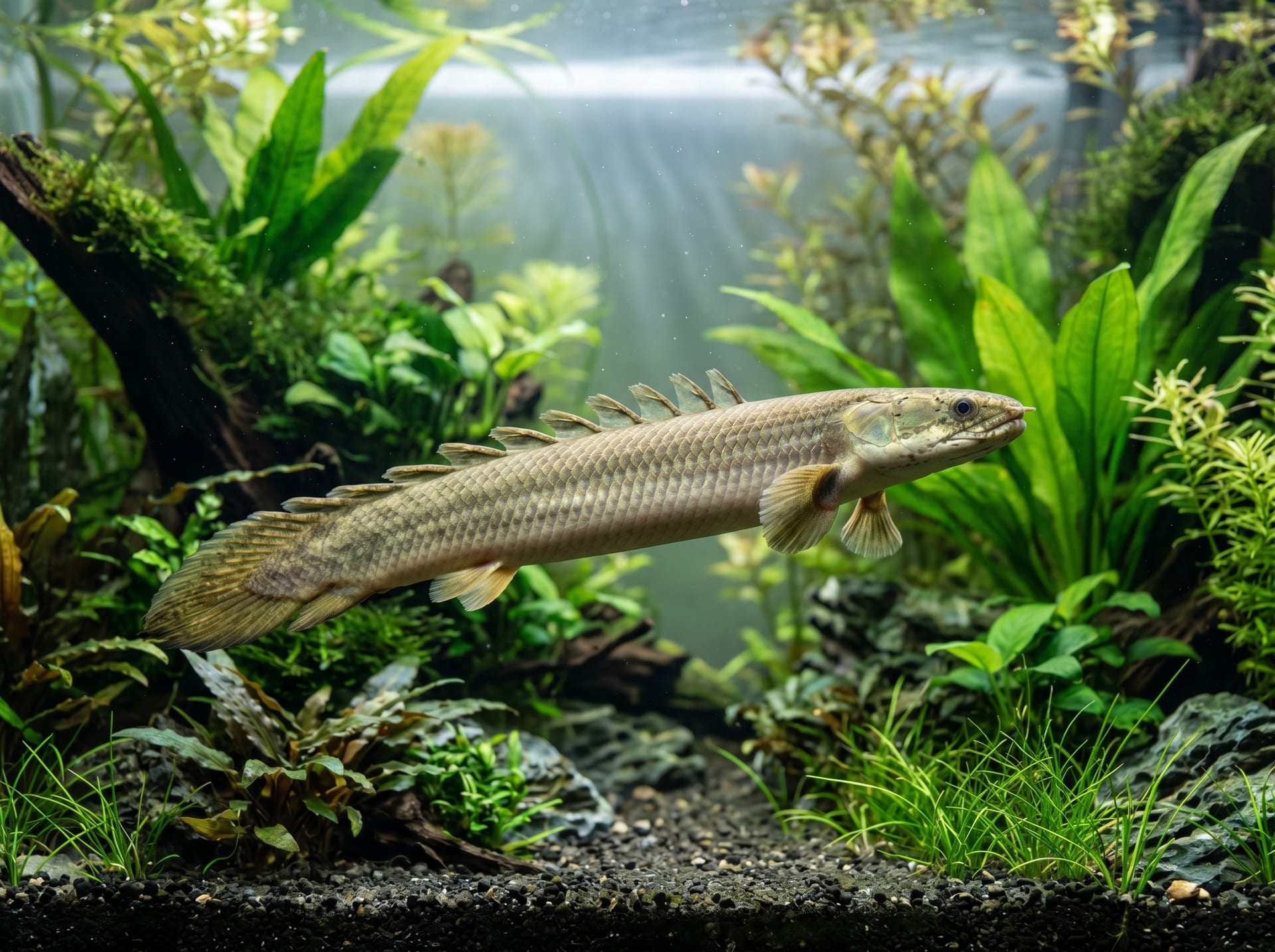
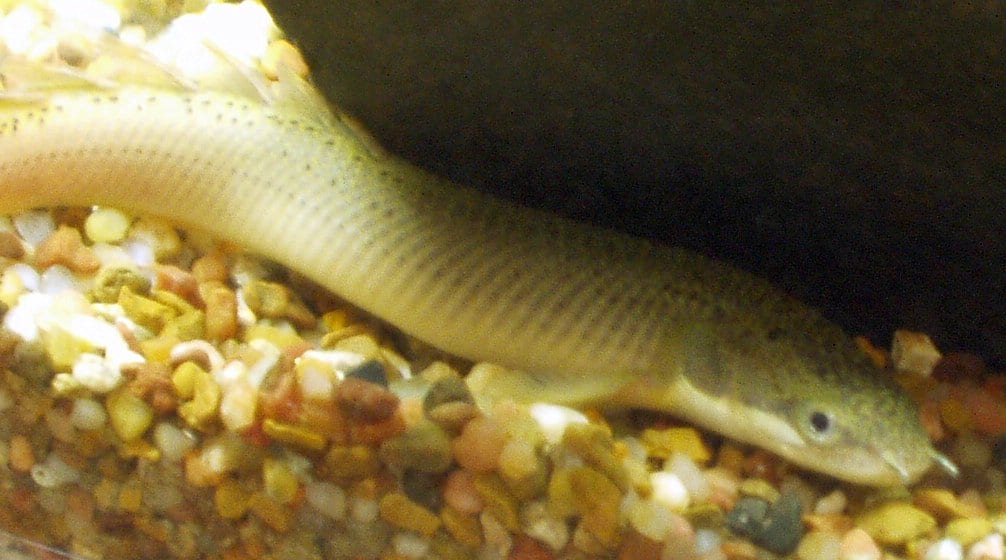
An ancient-looking fish with an elongated grey to beige body. It breathes air with a pair of primitive lungs and rises to the surface to gulp. Small and hardy for a Polypterus and relatively placid, it is often treated as a beginner's bichir.
Difficulty
Beginner
Temperature
24〜28℃
Lifespan
10-15 years
Size
35-50cm
Diet
Meaty foods such as prawn, white fish, earthworms and frozen bloodworm
About
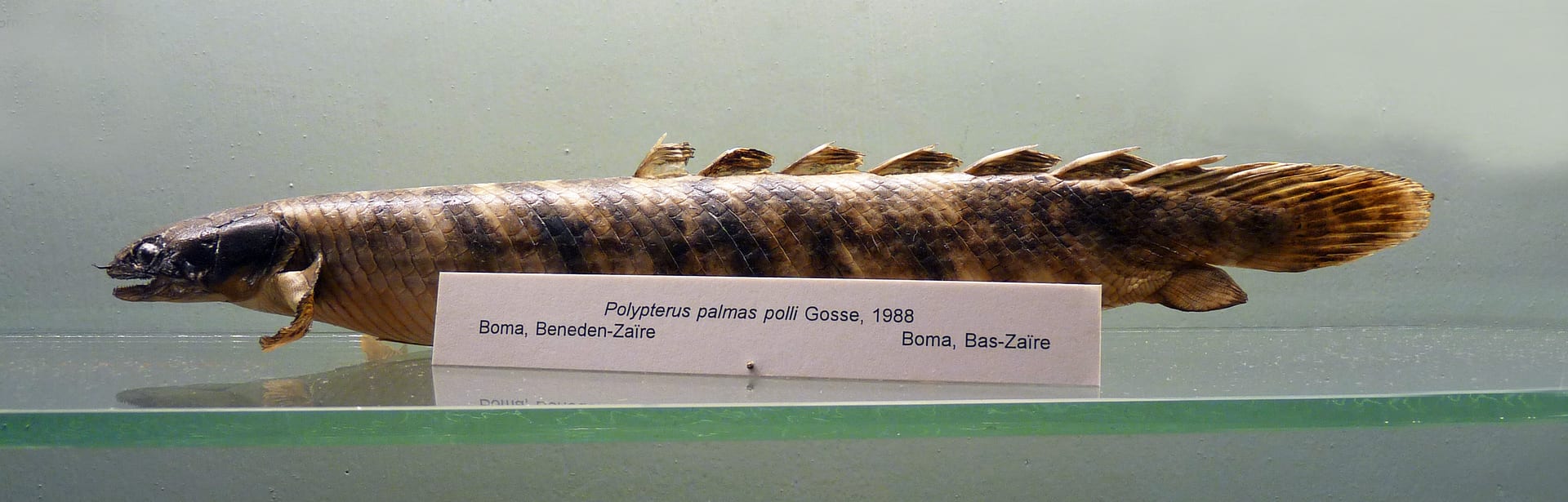
Polypterus senegalus is a widely distributed African bichir. Its elongated body is covered in rhomboid ganoid scales, a series of separate spined finlets runs along the back, and the large paddle-like pectoral fins drive its slow, graceful swimming. The swim bladder works as a pair of primitive lungs, so the fish rises to gulp air. Its eyesight is poor and it hunts largely by smell and by sensing movement. FishBase records 70cm standard length; it is also described as smaller than other bichirs at about 35.5cm, with 70cm in the wild and 48cm in captivity for the nominate subspecies. Seriously Fish gives 24-28C, pH 6.2-7.8, 5-20dGH and a 150 x 60cm base of about 540 litres. It breeds in the rainy season, the female laying 100 to 300 eggs, and captive breeding is extremely difficult. It is an accomplished escape artist, so the tank must have a tight-fitting cover.
Source: Wikipedia (CC BY-SA 4.0)
Lifespan of the Senegal Bichir
The Senegal Bichir lives 10-15 years.
Size of the Senegal Bichir
The Senegal Bichir grows to 35-50cm.
Temperature & humidity for the Senegal Bichir
The ideal temperature for the Senegal Bichir is 24〜28℃.
Basic Info
Origin
Africa (widely distributed from Senegal to the Nile basin)
Lifespan
10-15 years
Care Specifications
- pH
- 6.2–7.8
- Hardness (GH)
- 5–20 dGH
- Water Temp.
- 24–28℃
- Min. Tank
- 540 L
Semi-aggressiveBreeding: Very hard
Sources: FishBase / Seriously Fish / Wikipedia
References & Sources
Edited & verified by: BreederDirect editorial team
The taxonomic, regulatory, and husbandry data on this page are compiled and verified against the authoritative primary sources below.
Taxonomy & Authority
Accepted name: Polypterus senegalus Cuvier, 1829
Authority databases: FishBase
Nomenclature follows global taxonomic authority databases.
Regulations & Conservation Status
Not CITES-listedIUCN LC · Least Concern
Sources: CITES Appendices (species not listed) / IUCN Red List
Regulations may change. Always verify the latest information with the relevant authorities.
Senegal Bichir Listings
Loading latest listingsFind listings for this species