Source: Wikimedia Commons
Ocellate River Stingray
AdvancedPotamotrygon motoro
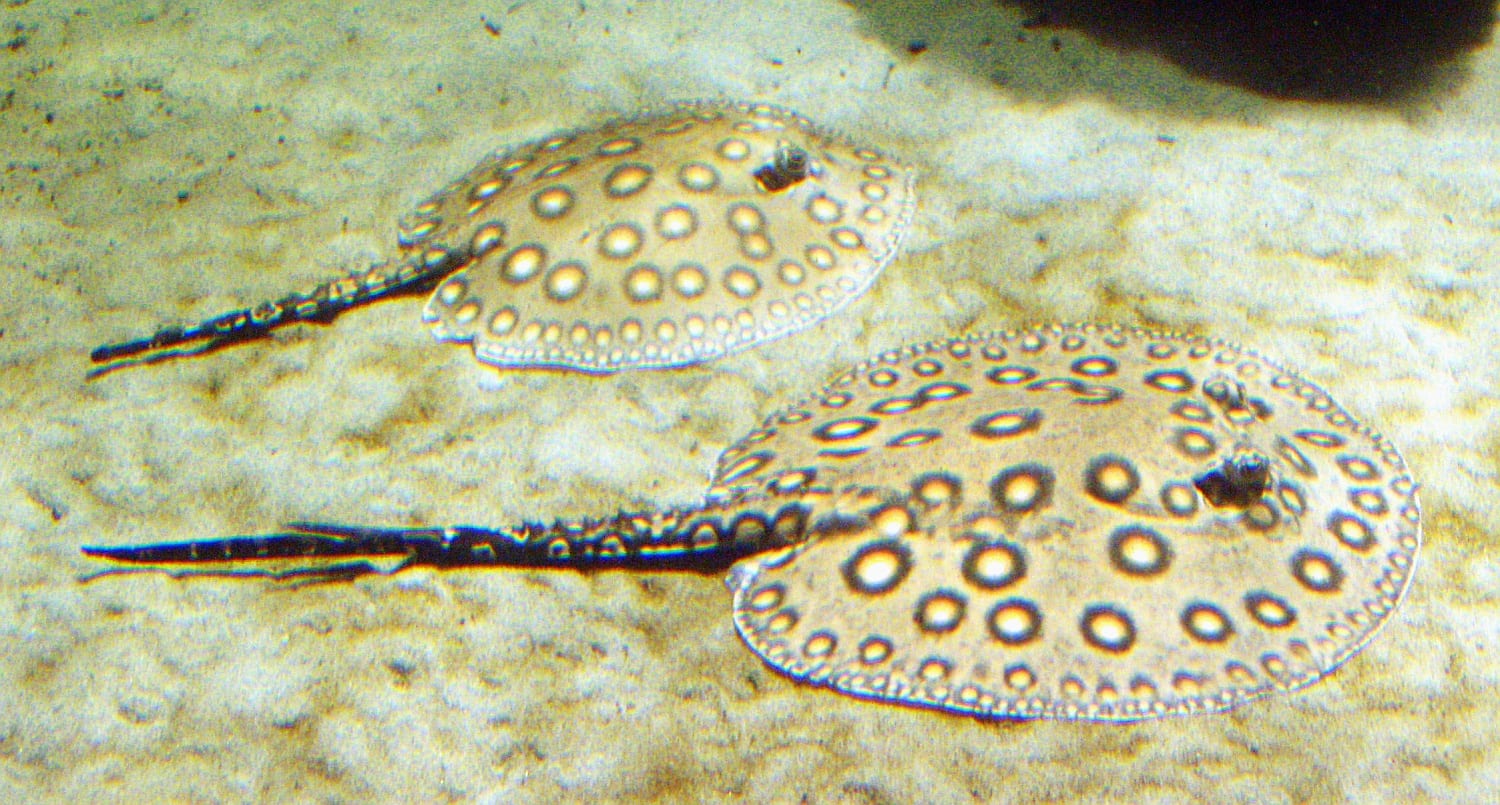
A South American freshwater stingray with yellow-ringed ocelli over the disc. The tail carries a venomous sting that causes severe pain. It reaches 50cm disc width and is listed in CITES Appendix III.
Difficulty
Advanced
Temperature
24〜26℃
Size
Up to 50cm disc width
Diet
Strips of fish, prawn, mussel, earthworms, frozen foods
About
Potamotrygon motoro is a freshwater stingray found across the Amazon, Orinoco, Parana-Paraguay and Uruguay basins. Yellow-ringed ocelli cover the disc, and the highly variable patterning has produced P numbers and trade names such as blue and orange. It occupies sand banks, the shallows of large rivers and slow tributaries over mud or sand. Seriously Fish recommends 24-26C, pH 6.0-7.5 and 1-12dGH with a 240 x 90cm base, about 1620 litres. Its high metabolism requires feeding at least twice a day. Reproduction is matrotrophic viviparity, the pups nourished by histotrophe secreted in the uterus, with litters of one to eight. It is listed in CITES Appendix III by Brazil, as a genus listing, and by Colombia.
Source: Wikipedia (CC BY-SA 4.0)
Size of the Ocellate River Stingray
The Ocellate River Stingray grows to Up to 50cm disc width.
FishBase records 50cm disc width and a maximum weight of 34.2kg, while Seriously Fish gives 900mm in length.
Temperature & humidity for the Ocellate River Stingray
The ideal temperature for the Ocellate River Stingray is 24〜26℃.
Basic Info
Origin
South America (Amazon, Orinoco, Parana-Paraguay and Uruguay basins)
Size
Up to 50cm disc width
Temperature
24〜26℃
Diet
Care Specifications
- pH
- 6–7.5
- Hardness (GH)
- 1–12 dGH
- Water Temp.
- 24–26℃
- Min. Tank
- 1620 L
Semi-aggressiveSolitaryBreeding: Moderate
Sources: FishBase / Seriously Fish
References & Sources
Edited & verified by: BreederDirect editorial team
The taxonomic, regulatory, and husbandry data on this page are compiled and verified against the authoritative primary sources below.
Taxonomy & Authority
Regulations & Conservation Status
CITES Appendix IIIIUCN LC · Least Concern
Sources: CITES Appendix III (Brazil, as a Potamotrygon spp. genus listing, and Colombia) / CITES Appendices / IUCN Red List
Regulations may change. Always verify the latest information with the relevant authorities.
Ocellate River Stingray Listings
Loading latest listingsFind listings for this species