Source: Wikimedia Commons
Blue Gularis
IntermediateFundulopanchax sjostedti
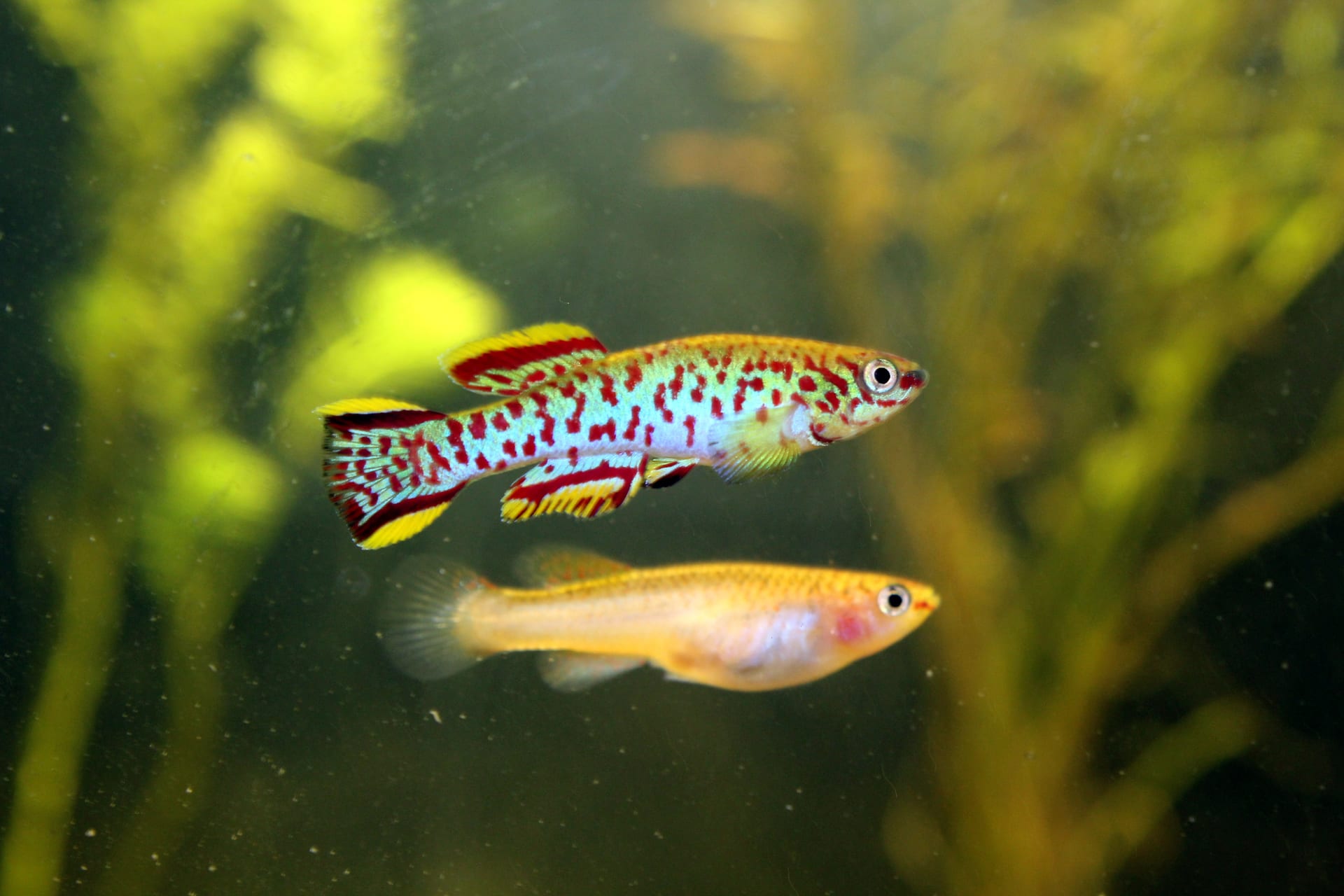
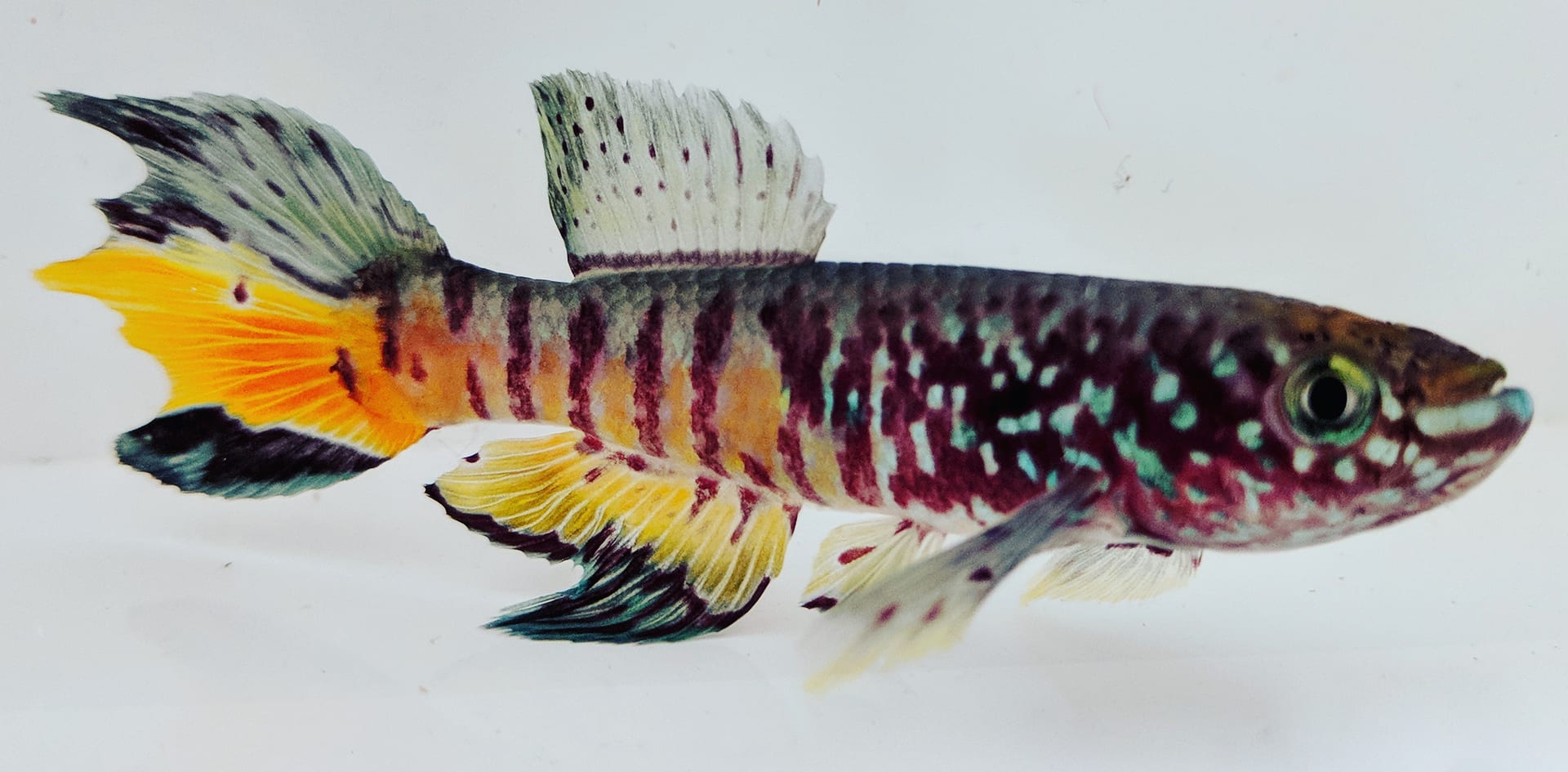
A large killifish exceeding 12cm. Males carry blue-green and red markings and a caudal fin drawn out into three lobes. Wild populations are assessed Endangered by the IUCN, and males fight fiercely among themselves.
Difficulty
Intermediate
Temperature
23〜26℃
Lifespan
3-5 years
Size
12-13cm
Diet
Frozen bloodworm, Artemia, prepared foods
About
Fundulopanchax sjostedti is a large killifish from the Niger delta of southern and southeastern Nigeria into southwestern Cameroon. Seriously Fish gives a standard length of 12cm and FishBase 13cm, among the largest of all killifish. Males show rows of red markings over a blue-green ground and a caudal fin drawn into three lobes, and Seriously Fish calls it one of the most stunning killifish available. Aquarium conditions are 23-26C, pH 6.0-8.0 and 5-20dGH, with a 90 x 30cm base of about 81 litres as the minimum. Males are aggressive towards each other and need ample space if more than one is kept. Allow two or three females per male so no individual is harassed. It is a substrate spawner and is bred in soft, acidic water. The IUCN Red List assesses it as Endangered.
Source: Wikipedia (CC BY-SA 4.0)
Lifespan of the Blue Gularis
The Blue Gularis lives 3-5 years.
Size of the Blue Gularis
The Blue Gularis grows to 12-13cm.
Temperature & humidity for the Blue Gularis
The ideal temperature for the Blue Gularis is 23〜26℃.
Basic Info
Origin
West Africa (Niger delta in southern and southeastern Nigeria, and southwestern Cameroon)
Lifespan
3-5 years
Size
Care Specifications
- pH
- 6–8
- Hardness (GH)
- 5–20 dGH
- Water Temp.
- 23–26℃
- Min. Tank
- 81 L
Semi-aggressiveGroupBreeding: Moderate
Sources: FishBase / Seriously Fish
References & Sources
Edited & verified by: BreederDirect editorial team
The taxonomic, regulatory, and husbandry data on this page are compiled and verified against the authoritative primary sources below.
Taxonomy & Authority
Accepted name: Fundulopanchax sjostedti (Lönnberg, 1895)
Authority databases: FishBase
Nomenclature follows global taxonomic authority databases.
Regulations & Conservation Status
Not CITES-listedIUCN EN · Endangered
Sources: CITES Appendices (species not listed) / IUCN Red List
Regulations may change. Always verify the latest information with the relevant authorities.
Blue Gularis Listings
Loading latest listingsFind listings for this species