Source: Wikimedia Commons
Fire Eel
AdvancedMastacembelus erythrotaenia
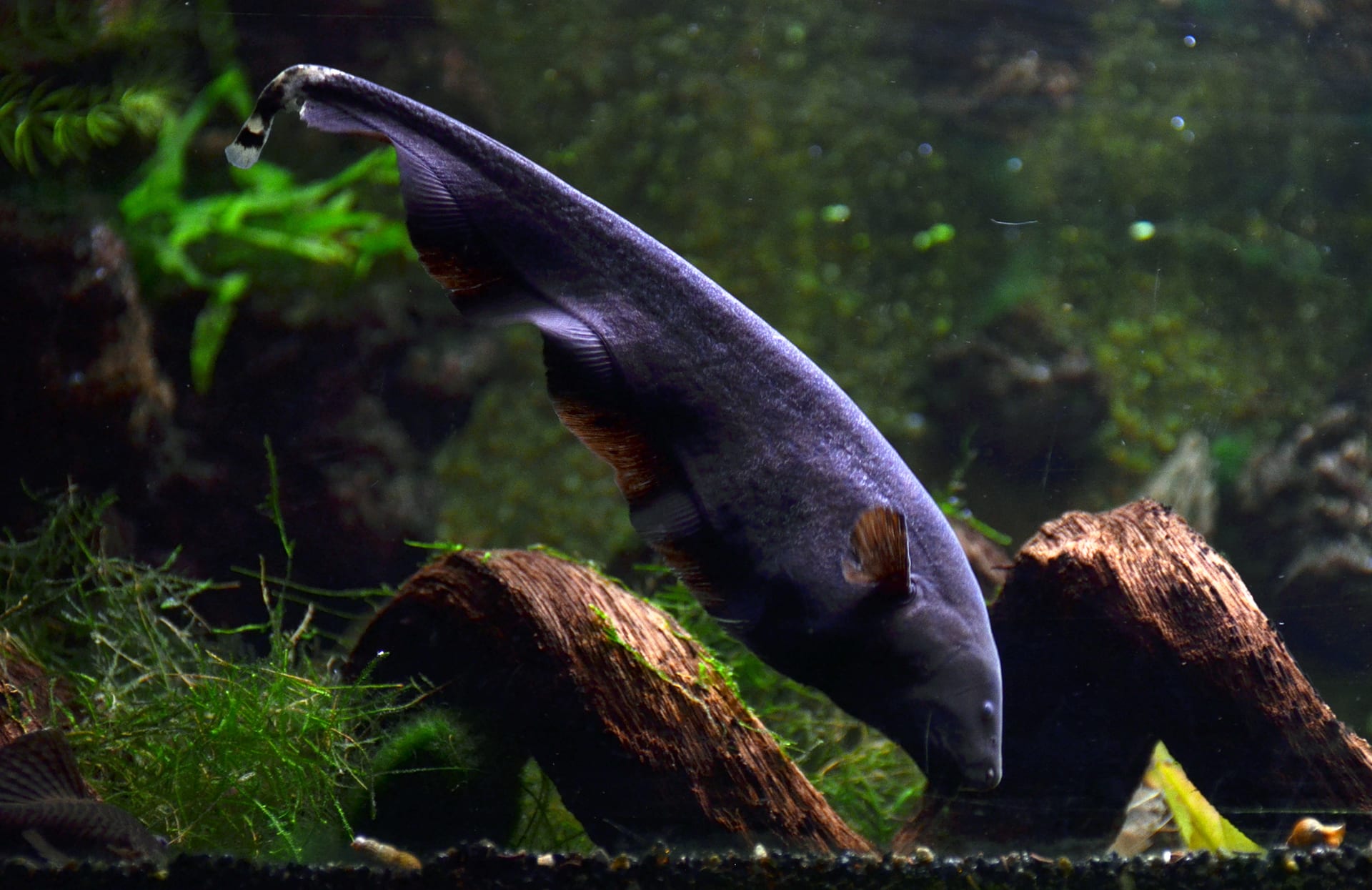
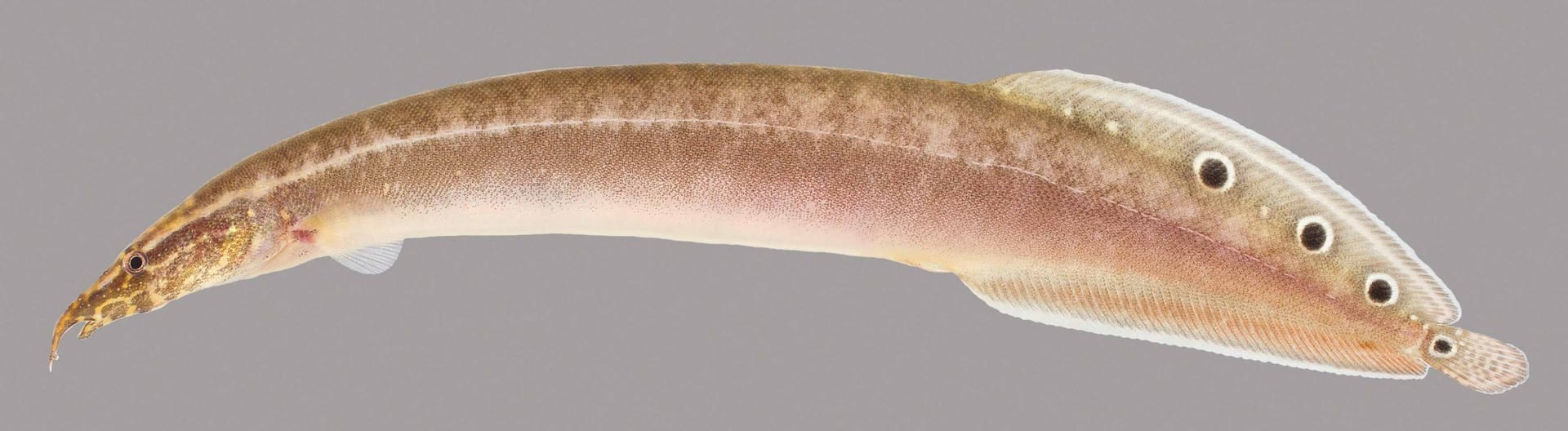
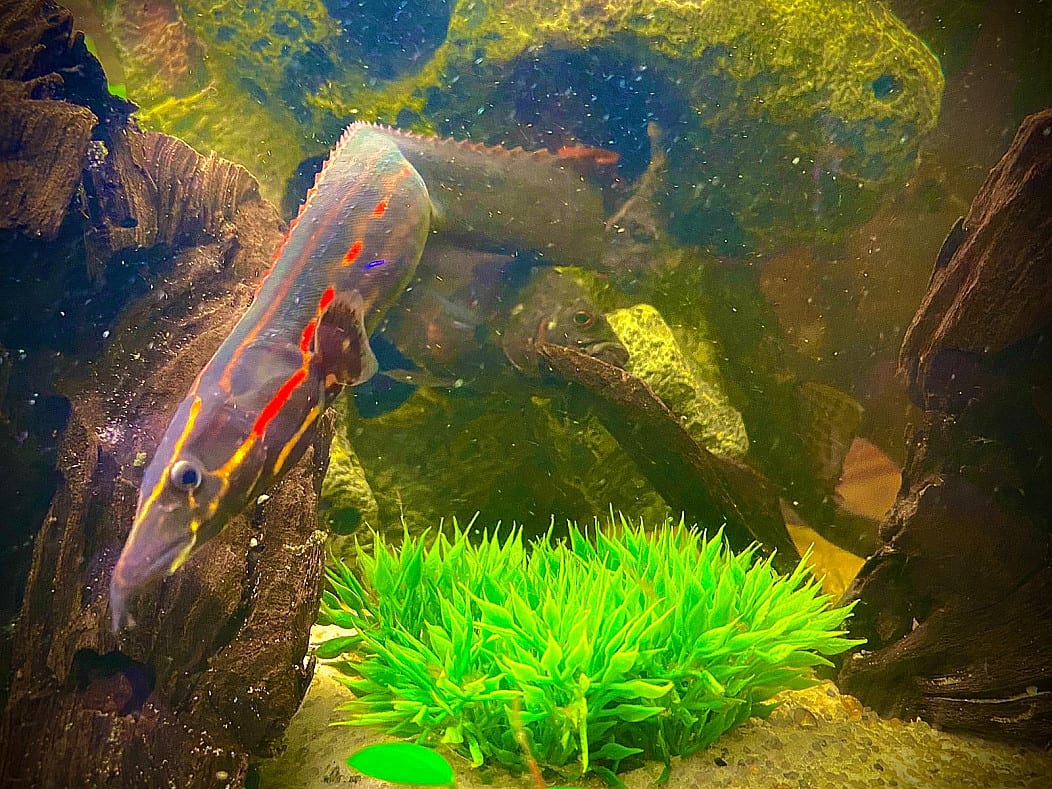
A large spiny eel with flame-coloured red-orange stripes along dark brown flanks. It buries in sand by day and becomes active after dark. Reaching a metre, it needs a big tank and a deep sand bed, and escapes through the smallest gaps.
Difficulty
Advanced
Temperature
24〜28℃
Lifespan
8-12 years
Size
Up to 100cm
Diet
Prawn, krill, lancefish, live and frozen foods
About
Mastacembelus erythrotaenia is a large mastacembelid ranging from Thailand and Cambodia to Indonesia. Both FishBase and Seriously Fish record a length of 100cm. Red-orange stripes run along dark brown flanks, and the soft portions of the median fins and the pectoral fins carry a sharply defined white margin. It inhabits sluggish lowland waters including floodplains and slow rivers. Seriously Fish recommends 24-28C, pH 6.0-7.0 and 5-12dGH with a 120 x 60cm base, about 432 litres. It burrows, so lay a deep bed of fine sand and add bogwood or pipes as refuges, and seal the cover because it escapes through the smallest gaps. It is peaceful with tankmates too large to swallow. Spawning in aquaria has occurred only accidentally on rare occasions.
Source: Wikipedia (CC BY-SA 4.0)
Lifespan of the Fire Eel
The Fire Eel lives 8-12 years.
Size of the Fire Eel
The Fire Eel grows to Up to 100cm.
Temperature & humidity for the Fire Eel
The ideal temperature for the Fire Eel is 24〜28℃.
Basic Info
Origin
Southeast Asia (Thailand and Cambodia to Indonesia)
Lifespan
8-12 years
Size
Up to 100cm
Care Specifications
- pH
- 6–7
- Hardness (GH)
- 5–12 dGH
- Water Temp.
- 24–28℃
- Min. Tank
- 432 L
Semi-aggressiveSolitaryBreeding: Very hard
Sources: FishBase / Seriously Fish
References & Sources
Edited & verified by: BreederDirect editorial team
The taxonomic, regulatory, and husbandry data on this page are compiled and verified against the authoritative primary sources below.
Taxonomy & Authority
Regulations & Conservation Status
Not CITES-listedIUCN LC · Least Concern
Sources: CITES Appendices (species not listed) / IUCN Red List
Regulations may change. Always verify the latest information with the relevant authorities.
Fire Eel Listings
Loading latest listingsFind listings for this species