Source: Wikimedia Commons
Peacock Eel
IntermediateMacrognathus siamensis
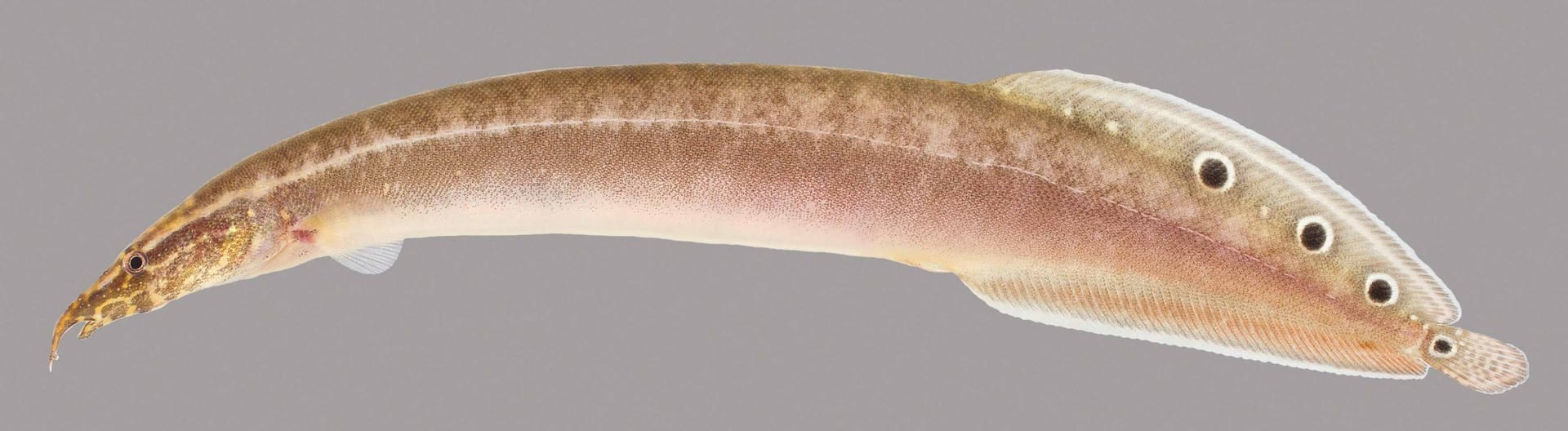
A spiny eel whose row of eyespots along the dorsal fin base recalls peacock feathers. It occurs in the Mekong and Chao Phraya basins. Scaleless and a burrower, it needs a fine sand bed, and reaches 30cm.
Difficulty
Intermediate
Temperature
22〜28℃
Lifespan
8-12 years
Size
20-30cm
Diet
Frozen bloodworm, Tubifex, small crustaceans
About
Macrognathus siamensis is a mastacembelid of the Mekong, Chao Phraya and Mae Klong basins and other river systems of peninsular and southeastern Thailand. FishBase records 30cm standard length; total length reaches 30cm, though 20cm is more usual. The row of eyespots along the dorsal fin base gives the fish its English name. Adults live on the bottom of slow-moving or standing water, buried in silt, sand or fine gravel with only part of the head showing, and emerge at dusk to forage for benthic insect larvae. Being scaleless it requires a fine substrate it can burrow into. It breeds in the wet season when adjacent forests flood, and larvae reach 8cm about 60 days after hatching. The sexes cannot readily be told apart. An introduced population, most likely of aquarium origin, is established in the Everglades of Florida.
Source: Wikipedia (CC BY-SA 4.0)
Lifespan of the Peacock Eel
The Peacock Eel lives 8-12 years.
Size of the Peacock Eel
The Peacock Eel grows to 20-30cm.
Basic Info
Origin
Southeast Asia (Mekong, Chao Phraya and Mae Klong basins and related systems)
Lifespan
8-12 years
Size
20-30cm
Temperature
22〜28℃
Diet
References & Sources
Edited & verified by: BreederDirect editorial team
The taxonomic, regulatory, and husbandry data on this page are compiled and verified against the authoritative primary sources below.
Taxonomy & Authority
Regulations & Conservation Status
Not CITES-listedIUCN LC · Least Concern
Sources: CITES Appendices (species not listed) / IUCN Red List
Regulations may change. Always verify the latest information with the relevant authorities.
Peacock Eel Listings
Loading latest listingsFind listings for this species