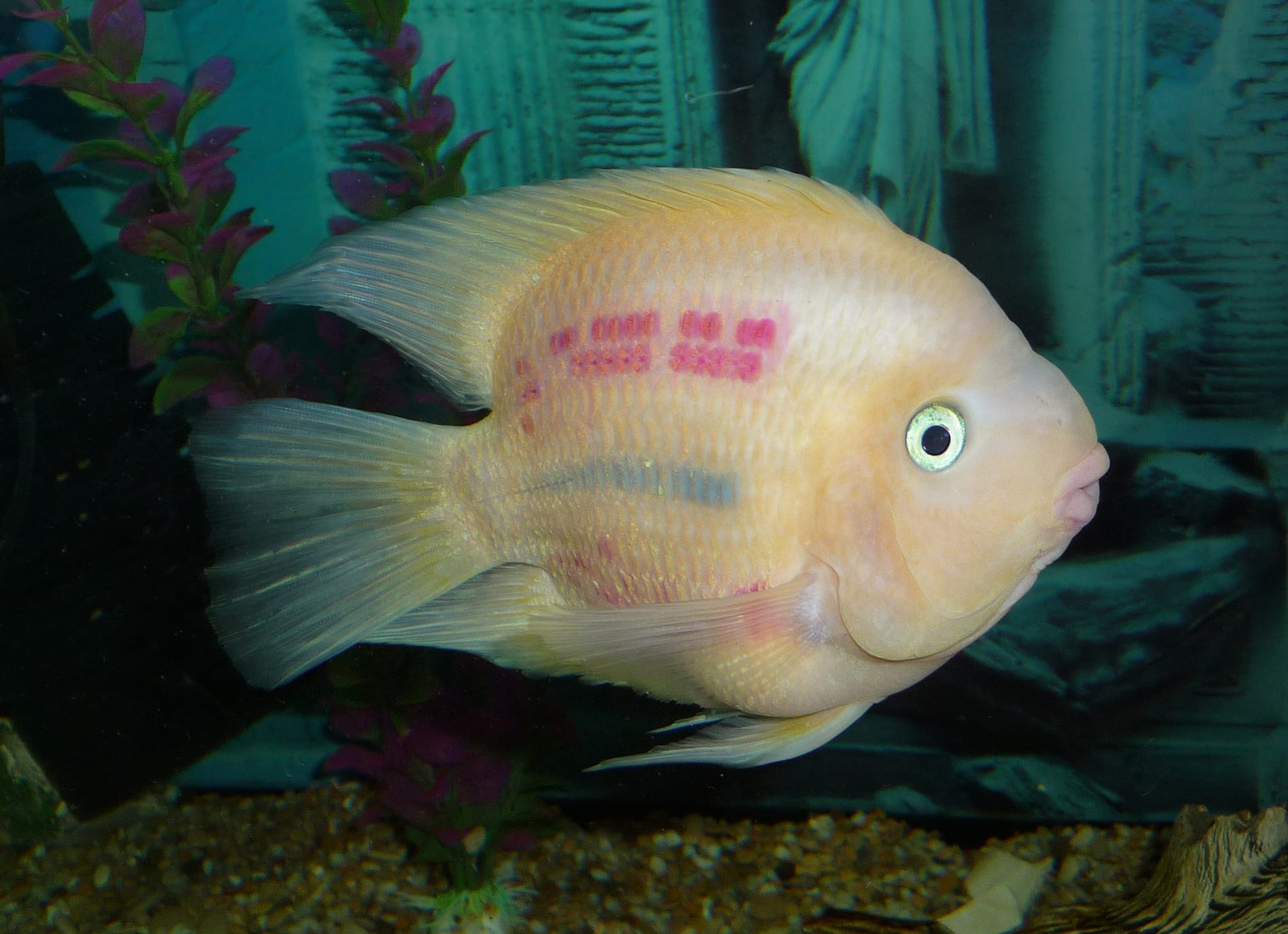
Source: Wikimedia Commons
Blood Parrot Cichlid
IntermediateA hybrid ornamental cichlid with a rounded, vivid orange body and a beak-shaped mouth that cannot close fully. It was first bred in Taiwan around 1986.
Difficulty
Intermediate
Temperature
22〜28℃
Lifespan
10-15 years
Size
Up to 20cm
Diet
Sinking prepared foods, frozen foods
About
The blood parrot cichlid is a hybrid ornamental fish first bred in Taiwan around 1986. It is not a biological species and therefore has no scientific name; the English Wikipedia gives its parentage as Amphilophus citrinellus crossed with Vieja melanura. The body is rounded and vivid orange, reaching about 20cm and living 10 to 15 years. The beak-shaped mouth cannot close fully, so food is crushed with the throat muscles. The fish carries several deformities, including compressed vertebrae, a deformed swim bladder that produces an awkward swimming action, and malformed irises, and there is ongoing controversy over the ethics of creating it. Most males are infertile and farms inject hormones to raise fertility. Dyeing the fish other colours is reported to shorten its life and, along with cutting the tail into a heart shape, is regarded by hobbyists as inhumane. A working temperature of 24-30C comes from the overlap of the FishBase records for both parent species.
Source: Wikipedia (CC BY-SA 4.0)
Lifespan of the Blood Parrot Cichlid
The Blood Parrot Cichlid lives 10-15 years.
Size of the Blood Parrot Cichlid
The Blood Parrot Cichlid grows to Up to 20cm.
Basic Info
Origin
Hybrid origin (first bred in Taiwan around 1986)
Lifespan
10-15 years
Size
Up to 20cm
Temperature
22〜28℃
Diet
Sinking prepared foods, frozen foods
Care Guide
Tank
It reaches about 20cm, so adults need a roomy tank. Some individuals swim awkwardly because of a deformed swim bladder, so avoid strong flow.
Water Temperature & Quality
FishBase records 23-33C for Amphilophus citrinellus and 24-30C, pH 7.0-8.0 and 9-20dH for Vieja melanura. The overlap of 24-30C is the working guide.
Tank Mates
The beak-shaped mouth cannot close fully, so the fish loses out in competition for food; check that it is actually feeding. Fish small enough to swallow will be eaten.
Diet & Feeding
Because the mouth will not close, food is crushed with the throat muscles. Choose sinking prepared food in a size the fish can take in easily.
Breeding & Spawning
Most males are infertile and farms inject hormones to raise fertility. Females do spawn, but planned home breeding cannot be expected.
Health & Notes
Compressed vertebrae, a deformed swim bladder and malformed irises are among the deformities, and the ethics of creating the fish are disputed. Dyed fish are said to live shorter lives, and heart-shaped tail cutting is likewise regarded as inhumane.
HybridCichlidFreshwater fishMedium species
Blood Parrot Cichlid FAQ
QHow difficult is it to keep Blood Parrot Cichlid?
A
Intermediate. This is an intermediate-level species. Some prior experience and knowledge of environmental management are recommended.
QWhat is the lifespan of Blood Parrot Cichlid?
A
The average lifespan of Blood Parrot Cichlid is 10-15 years. With proper care and nutrition, they can live a long and healthy life.
QHow large does Blood Parrot Cichlid get?
A
Blood Parrot Cichlid typically reaches Up to 20cm as an adult. Size may vary depending on care conditions and individual genetics.
QWhat should I feed Blood Parrot Cichlid?
A
Blood Parrot Cichlid feeds on: Sinking prepared foods, frozen foods. Aim for a balanced diet with appropriate feeding frequency.
QWhat is the typical price for Blood Parrot Cichlid?
A
The price of Blood Parrot Cichlid varies significantly depending on morph, size, and lineage. Check our market price page for the latest pricing information.
Last updated: September 16, 2026
Care Specifications
Breeding: Very hard
Sources: Wikipedia (Blood parrot cichlid) / FishBase (Amphilophus citrinellus) / FishBase (Vieja melanura)
References & Sources
Edited & verified by: BreederDirect editorial team
The taxonomic, regulatory, and husbandry data on this page are compiled and verified against the authoritative primary sources below.
Taxonomy & Authority
Parentage: Amphilophus citrinellus × Vieja melanura
Nomenclature follows global taxonomic authority databases.
Regulations & Conservation Status
Not CITES-listed
Sources: CITES Appendices (species not listed)
Regulations may change. Always verify the latest information with the relevant authorities.
Related Species
Blood Parrot Cichlid Listings
Loading latest listingsFind listings for this species
Related Articles
Cichlid Care Beginner's Guide | African and Central/South American Cichlids: Species-Specific Management and Territory Control
A guide to raising cichlids, popular for their distinctive behavior and beautiful coloration. We explain the differences between African and Central/South American cichlids, territory management, and breeding basics.
Victoria Lake Cichlid Care Guide | Introduction and Management of Colorful African Cichlids
Explaining the care methods for Victoria Lake cichlids with unique appeal distinct from Tanganyika and Malawi varieties. We cover the characteristics of representative species, water quality management, precautions for mixed-species tanks, and breeding.
Geophagus (Earth Eaters) Care Guide | Sand-Eating Behavior, Water Quality, and Breeding Basics
A comprehensive guide to caring for Geophagus (Earth Eaters), South American freshwater cichlids. Covers their distinctive sand-eating behavior, required substrate and water conditions, tank-mate compatibility, and breeding methods in practical detail.
Pike Cichlid (Crenicichla Genus) Care Guide | How to Keep South American Large Predatory Fish
Pike cichlids (Crenicichla genus) are among South America's largest predatory cichlids, native to the Amazon River basin. Their vibrant coloration and impressive presence are captivating, but their strong territoriality and carnivorous nature require careful management. This guide covers species-specific characteristics, tank setup, feeding, and breeding in detail.