Source: Wikimedia Commons
Checkerboard Cichlid
AdvancedDicrossus filamentosus
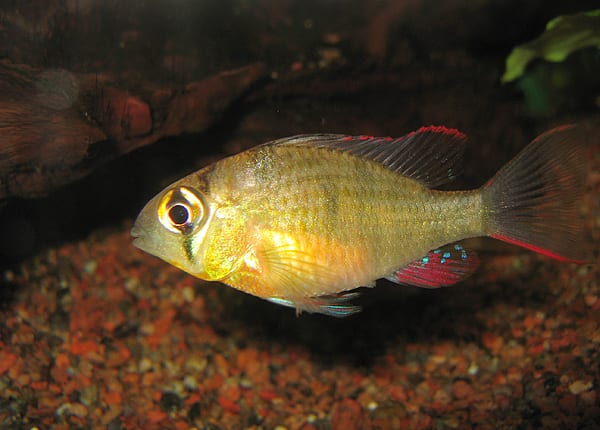
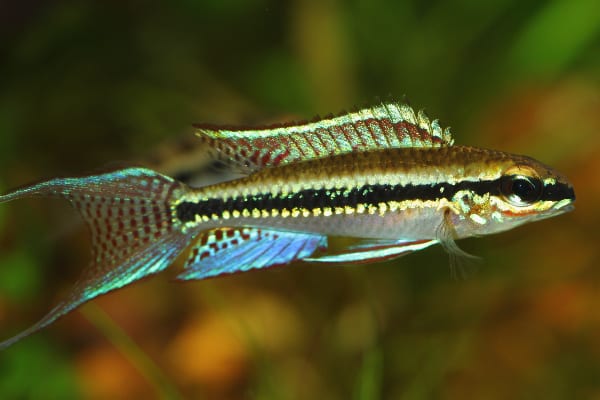
A small South American cichlid with rows of dark square blotches arranged in a chessboard pattern. Mature males develop an elongated lyre-shaped caudal fin.
Difficulty
Advanced
Temperature
27〜30℃
Size
3.8-10cm
Diet
Sinking cichlid pellets, spirulina flakes, frozen foods, Daphnia
About
Dicrossus filamentosus is a small cichlid from the Orinoco basin between the Rio Inirida in Colombia and Maripa in Venezuela, and from parts of the Brazilian Rio Negro. Rows of dark square blotches form the chessboard pattern that gives the fish its name, and mature males carry an elongated lyre-shaped caudal fin. FishBase records 3.8cm standard length while Seriously Fish gives about 10.2cm for males and 7.6cm for females including the extended fins. It wants warm water at 27-30C, a pH at or below 7 and hardness of 1dH or lower. A 60 x 30cm base and roughly 68 litres is the guide. The species is shy and settles in a densely planted, leaf-littered tank under dim light; it is peaceful but loses out to boisterous tankmates. Breeding calls for very acidic, very soft water at pH 4.5-5.8, yet reports hold that eggs will not hatch below pH 5.8, which makes water chemistry the hardest part. The IUCN Red List assesses it as Least Concern.
Source: Wikipedia (CC BY-SA 4.0)
Size of the Checkerboard Cichlid
The Checkerboard Cichlid grows to 3.8-10cm.
Temperature & humidity for the Checkerboard Cichlid
The ideal temperature for the Checkerboard Cichlid is 27〜30℃.
Basic Info
Origin
South America (Orinoco basin from the Rio Inirida to Maripa, and parts of the Rio Negro)
Size
3.8-10cm
Temperature
27〜30℃
Diet
Care Specifications
References & Sources
Edited & verified by: BreederDirect editorial team
The taxonomic, regulatory, and husbandry data on this page are compiled and verified against the authoritative primary sources below.
Taxonomy & Authority
Regulations & Conservation Status
Not CITES-listedIUCN LC · Least Concern
Sources: CITES Appendices (species not listed) / IUCN Red List
Regulations may change. Always verify the latest information with the relevant authorities.
Checkerboard Cichlid Listings
Loading latest listingsFind listings for this species