Breeding Guide for Red-bellied Newts and Salamanders | Basic Care for Japanese Amphibians in Aquariums
A beginner's guide to keeping red-bellied newts and salamanders, representative amphibians of Japan's countryside. This article explains basic care methods clearly, from aquarium setup and water quality management to feeding methods and breeding observation.
Key Takeaways
A beginner's guide to keeping red-bellied newts and salamanders, representative amphibians of Japan's countryside. This article explains basic care methods clearly, from aquarium setup and water quality management to feeding methods and breeding observation.
Related Species
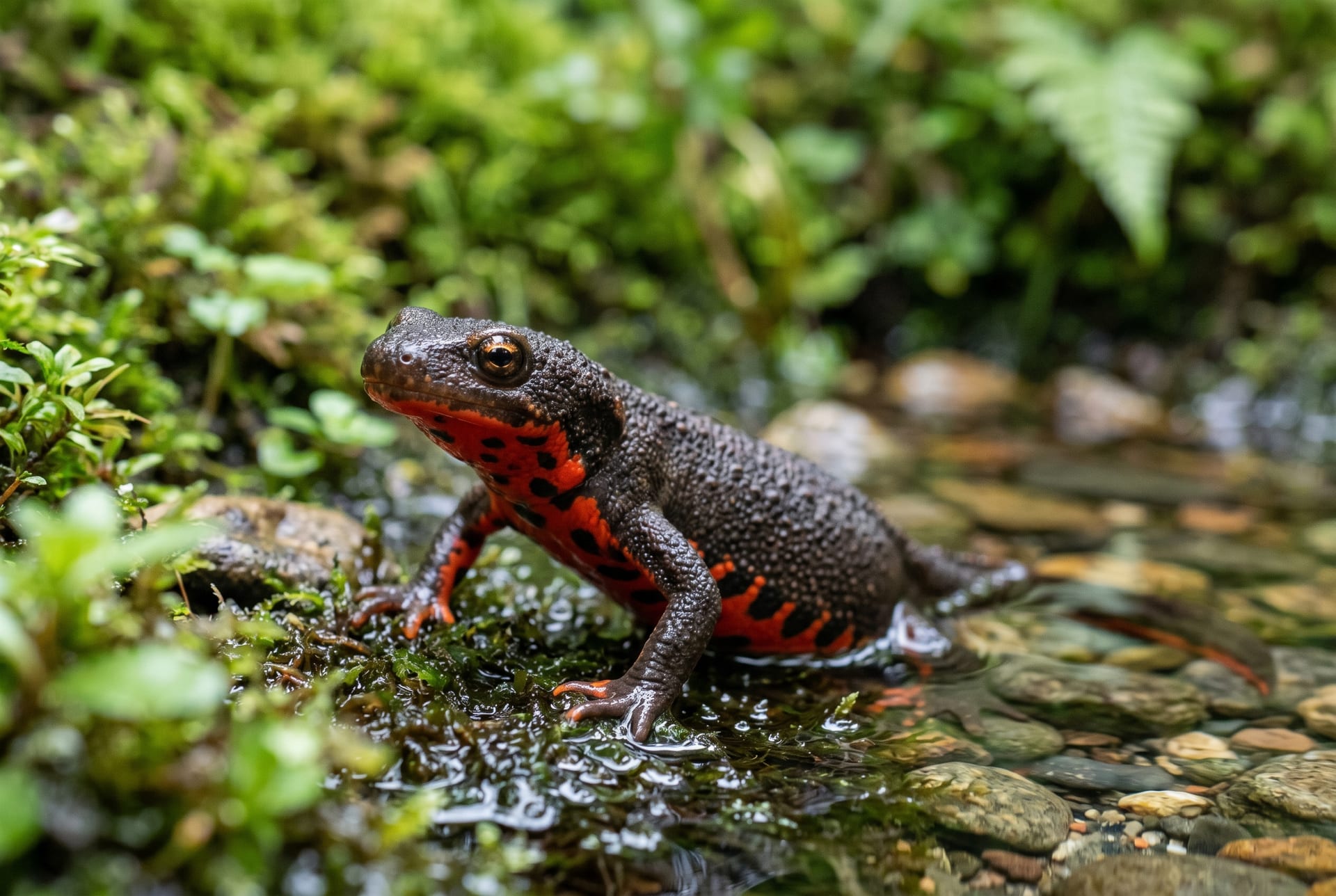
The Japanese red-bellied newt (Cynops pyrrhogaster) is an endemic caudatan (salamander) to Japan, widely inhabiting ponds and areas near rice paddies in rural regions. Characterized by a distinctive bright red mottled pattern on its belly, it is hardy and easy to keep, making it a long-favored amphibian for beginners. This article explains the basic care methods for red-bellied newts and related salamander species.
Characteristics and Ecology of the Red-bellied Newt
Basic Information
- Body length: 8–14 cm
- Lifespan: A long-lived creature, reaching 20–30 years under proper care
- Habitat: From mountainous areas to lowland rice paddies, ponds, and waterways in Honshu, Shikoku, and Kyushu
- Activity: Aquatic and terrestrial. During breeding season (February–June), they are more active in water; in other seasons, they spend more time on land and near water
Appearance The red belly pattern is important for species identification, but the pattern varies from individual to individual. This red also serves as a warning color for toxins; they secrete tetrodotoxin (a type of pufferfish poison) on their skin. Always wash your hands after handling.
Other Domestic Newt and Salamander Species
- Ryukyu Newt: Distributed in Okinawa and Amami Oshima. Requires similar care to red-bellied newts
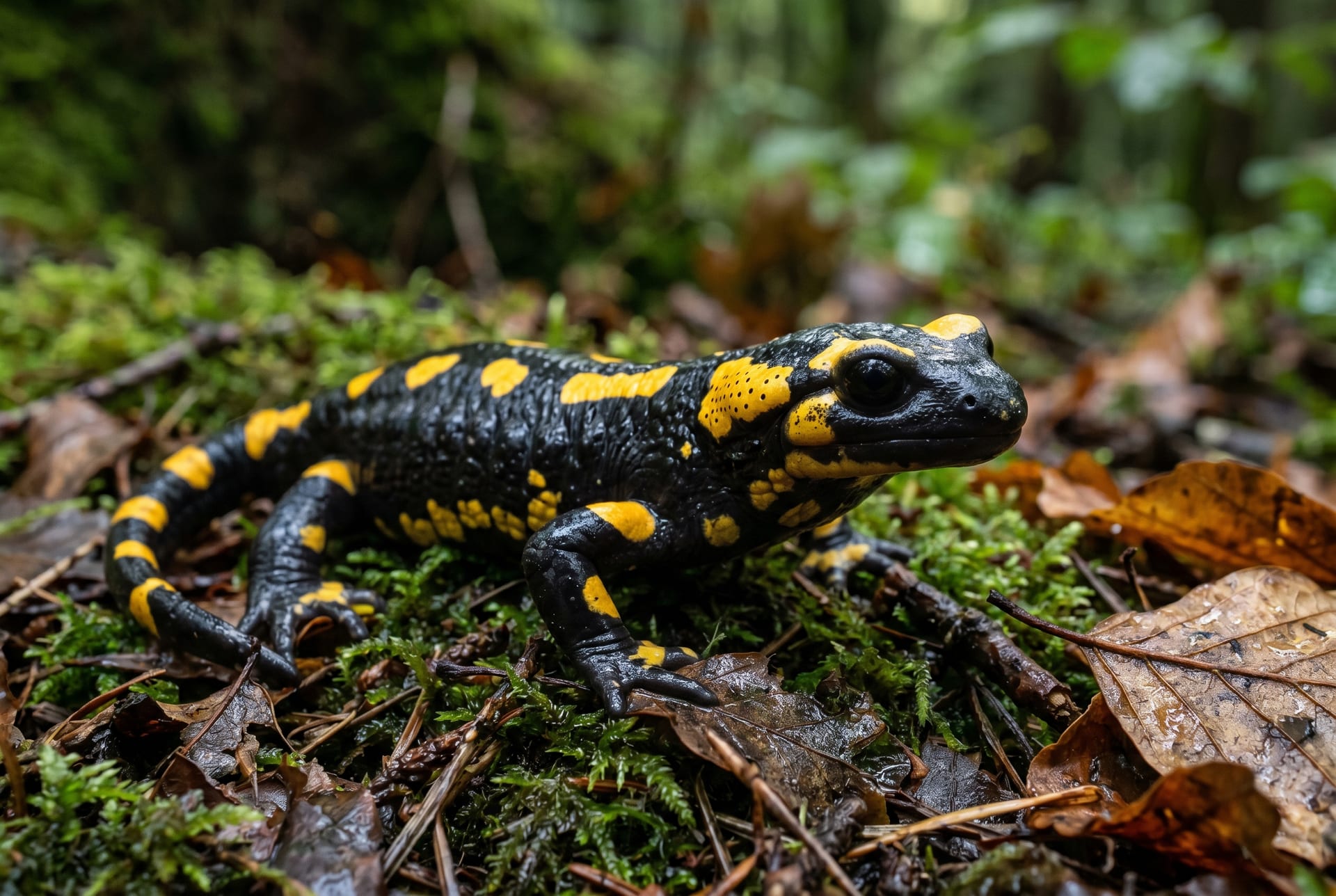
- Fire Salamander: European species. Beautiful pattern with yellow markings on black
- Japanese Giant Salamander: Japan's largest amphibian (cannot be kept as it is a natural monument)
- Hakone Salamander: Stream-dwelling species preferring low water temperatures; recommended for advanced keepers
Creating the Right Habitat
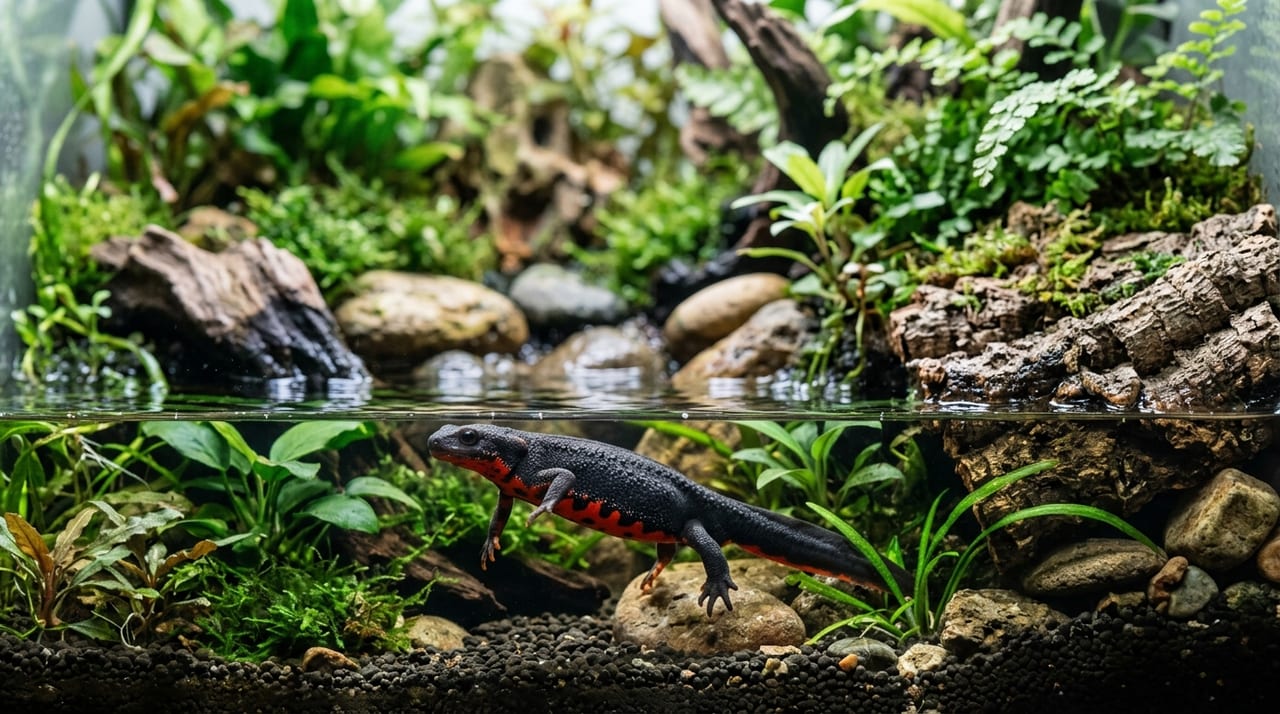
The ideal environment for red-bellied newts is semi-aquatic, with both aquatic and terrestrial areas.
Necessary Equipment
- Aquarium (30–45 cm): Approximately 20 cm deep, glass or acrylic
- Mesh lid (essential for escape prevention; newts can climb walls)
- Aquatic filter (sponge filter is optimal for low flow)
- Substrate (fine gravel or volcanic soil)
- Cork bark, driftwood, or artificial plants for land areas
- Thermometer
- Water dechlorinator
Aquatic-Terrestrial Ratio and Structure The layout from water surface to land is important. Maintain a water depth of approximately 5–10 cm, with land area (above the water surface) comprising about 1/3 of the total space. Creating "islands" with driftwood or large stones, or using commercially available "wetland-type aquariums," makes management easier.
Temperature Management Red-bellied newts prefer cool to moderate temperatures.
- Ideal temperature: 15–22°C
- Summer heat (28°C or above) is fatal. Cooling with an air conditioner or ice packs is necessary
- Winter cold (5–10°C): They enter hibernation. Hibernation is not necessary, but a heater is needed if maintaining 18°C or above
Lighting UVB lighting is not particularly necessary, but weak lighting (6–8 hours/day) for aquatic plant photosynthesis improves aesthetics. Avoid direct sunlight as it can raise water temperature.
Water Quality Management and Water Changes
Red-bellied newts rely on cutaneous respiration, so water quality directly affects their health.
- pH: Slightly acidic to neutral (pH 6.5–7.5) is appropriate
- Ammonia and Nitrite: Maintain at zero. If unstable, strengthen filtration or increase water change frequency
- Water change frequency: Once weekly, changing 1/3 to 1/2 of the water. Always dechlorinate fresh water and match its temperature before adding
- Chlorine and Heavy Metals: Always treat tap water with dechlorinator or let it sit for 24 hours
With a filter, weekly water changes are sufficient, but without one, water changes are needed every 2–3 days.
Feeding Methods and Nutrition Management
Red-bellied newts are carnivorous and respond to moving prey.
Appropriate Foods
- Frozen bloodworms (highly recommended): Nutritious and readily available. Feed a small amount once every 1–2 days
- Tubifex worms: Living food with good feeding response. However, rinse before feeding to reduce bacterial infection risk
- Artificial feed (newt tablets): Requires some adjustment time but is easier to manage
- Dried shrimp/krill: For vitamin and mineral supplementation. Not suitable as a primary diet
Feeding Frequency and Amount Adults need feeding only once every 2–3 days. Overfeeding causes belly distension and water quality deterioration. Remove uneaten food immediately.
Winter Feeding Below 10°C, appetite decreases or disappears. Adjust feeding frequency according to water temperature rather than forcing food.
Breeding and Egg-laying Observation
Red-bellied newts breed in spring to early summer (February–June), becoming more active as water temperature rises.
Breeding Behavior Males court by waving their tails and deposit spermatophores (sperm packets), which females take into their bodies for fertilization. Direct mating does not occur.
Egg-laying Females lay eggs one at a time, wrapping them in aquatic plant leaves (approximately 50–200 per season). Moving the plants with eggs to a separate container makes management easier.
Hatching and Larval Stage
- Hatching: Approximately 2–4 weeks at 18–20°C water temperature
- Larvae (gill stage): Aquatic larvae with prominent external gills. Feed small brine shrimp or bloodworms
- Metamorphosis: Transforms into terrestrial juveniles in 2–4 months
Health Management and Disease Prevention
Daily Observation Points
- Skin luster and color (paling of red belly indicates stress)
- Changes in appetite
- Abnormal swimming (tilting, spinning, etc.)
Common Diseases
- Red-leg syndrome (bacterial): Red inflammation on legs and belly. Caused by poor water quality. Prevent through partial water changes and maintaining clean conditions
- Fungal infection: White, fluffy cotton-like mycelium on skin. Apply 1% salt water to affected areas and improve water quality
- Dehydration: Prolonged exposure to land-only environments. Guide to water areas for hydration
Collection and Legal Considerations
Wild red-bellied newts can only be collected in limited locations, and some regions protect them by ordinance. Before collecting, check local ordinances and the Natural Parks Law (collection is prohibited in national and quasi-national parks) and obtain proper permission. Obtaining them from pet shops or breeders avoids legal risks.
Conclusion
The red-bellied newt is one of the easiest native Japanese amphibians to keep. Despite their longevity, daily care is relatively simple, and the appeal lies in their graceful movements in the aquarium and the enjoyment of observing breeding. With proper summer temperature control and escape prevention, beginners can enjoy a long and rewarding keeping experience.