Mississippi Red-eared Slider Care Guide | Large Tanks, Filtration, Temperature Management, and Long-term Husbandry Practices
A comprehensive guide to caring for the Mississippi Red-eared Slider, the most common aquatic pet turtle. Learn about essential tank sizes, filtration systems, basking spot setup, feeding management, and long-term planning strategies to ensure your turtle thrives for decades.
Key Takeaways
A comprehensive guide to caring for the Mississippi Red-eared Slider, the most common aquatic pet turtle. Learn about essential tank sizes, filtration systems, basking spot setup, feeding management, and long-term planning strategies to ensure your turtle thrives for decades.
Related Species
Mississippi Red-eared Slider: Basic Information
The Mississippi Red-eared Slider (scientific name: Trachemys scripta elegans) is an aquatic turtle native to North America, widely distributed in the pet market under the Japanese common name "Midori Turtle." While often recommended for beginners, long-term husbandry actually requires substantial knowledge and equipment.
Basic Specifications:
- Adult Size: 25–30 cm (males); females are slightly larger
- Lifespan: 20–40 years in captivity (a very long-lived species)
- Diet: Omnivorous (hatchlings tend toward carnivory; adults shift to omnivory)
Many keepers underestimate that these turtles grow significantly larger and can live for decades, leading to problems down the line.
Essential Equipment
Tank Size
Hatchling Stage (3–5 cm at purchase): Many keepers start with a 30 cm tank, but you must plan for upgrades as your turtle grows.
For Adults (Recommended):
- Minimum: 120×60×60 cm (432 L)
- Ideal: 150×75×60 cm (675 L) or larger
While a standard home aquarium is typically 60 cm (60 L), this is absolutely insufficient for an adult Red-eared Slider. Planning ahead for a large tank prevents future complications.
Filtration System
The most common mistake in turtle keeping is inadequate filtration leading to poor water quality. Turtles produce large amounts of waste, so powerful filtration is essential.
Recommended:
- External Filter (canister-style): Capacity of 1200+ L/hour
- Submersible Filter: Use as a supplement (insufficient filtration alone; not recommended as the sole filter)
- Regular Partial Water Changes: 30–50% weekly
External filters require an upfront investment, but are essential for long-term husbandry.
Basking Spot
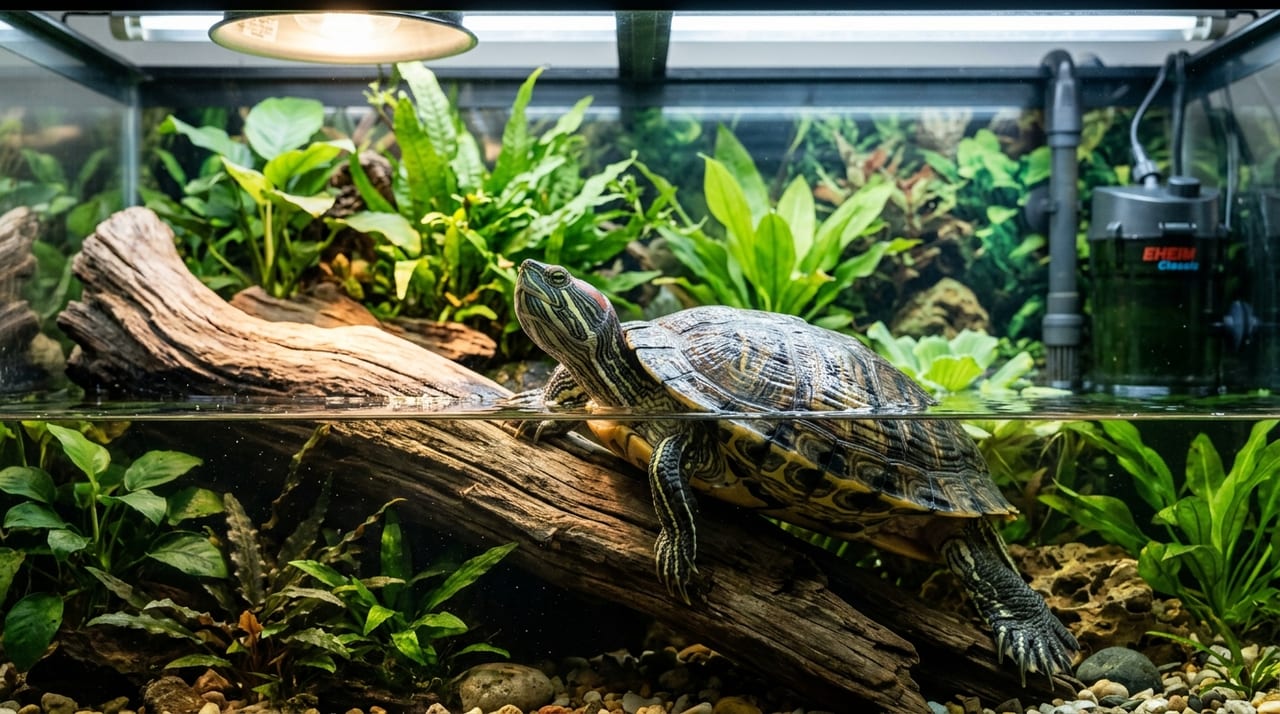
Turtles naturally climb out of the water to thermoregulate and dry their shells.
Setting Up a Basking Spot:
- Platform: A floating island or ceramic platform designed for reptiles
- Lighting: Basking lamp (approximately 75W incandescent bulb for reptiles)
- Temperature: 30–35°C (peak of basking spot)
- UVB Exposure: 8–10 hours daily (for skin and shell health)
Installing a proper basking spot dramatically reduces dermatitis and shell rot.
Temperature and Water Quality Management
Water Temperature
- Recommended: 26–28°C
- Winter: Heater is essential (below 18°C is lethal)
UVB Lighting
Turtles require UVB radiation (particularly 290–315 nm wavelength) for calcium metabolism. Deficiency results in shell softening and deformities (metabolic bone disease).
- Duration: 8–10 hours daily
- Intensity: Reptile fluorescent bulb (10.0 UVB rating)
- Distance: 25–30 cm from the turtle
Feeding Management
Hatchling Stage (3–5 cm)
- Staple: Small live prey (blood-red shrimp, killifish, etc.)
- Pellets: Reptile pellets (supplementary)
- Feeding Frequency: 1–2 times daily
Transition to Adults (10 cm or larger)
As turtles grow, they shift toward omnivory:
- Protein Foods: 3–4 times weekly (pellets or live prey)
- Vegetables: 2–3 times weekly (spinach, squash, etc.)
- Feeding Frequency: Once daily or every other day
Common Feeding Mistakes
Mistake 1: Food Waste As adults, turtles leave more uneaten food, which is a major cause of water quality decline. Limit each feeding to an amount the turtle can consume in 5 minutes.
Mistake 2: Calcium Deficiency Especially when shifting to vegetable-based diets, calcium deficiency is common. Adding calcium powder to food once weekly is recommended.
Common Health Problems
Shell Rot
Cause: Inadequate basking spot, unsanitary environment
Symptoms: White, moldy appearance on shell; foul odor
Treatment:
- Install a proper basking spot
- Weekly water changes
- Ensure shell drying and UVB exposure
Swollen Eyes
Cause: Poor water quality, vitamin A deficiency
Symptoms: Eyes swollen and unable to open
Treatment:
- Enhance filtration and increase water change frequency
- Provide vitamin A-rich foods (carrots, squash)
Egg Binding in Females
If a female has nowhere to lay eggs, egg binding (dystocia) can occur.
Treatment: Provide a moist sand nesting area in a large container
Mindset for Long-term Husbandry
Red-eared Sliders live 20–40 years. Be prepared for:
- Ongoing Equipment Costs: Filter replacements, lamp upgrades
- Weekly Maintenance: Filter cleaning, partial water changes
- Moving: You must accommodate a large tank at any new residence
- Veterinary Care: Finding a reptile specialist can be difficult in some areas
Starting with the mindset "it's just a small turtle" can lead to major difficulties later. We strongly recommend understanding the true adult size, lifespan, and equipment requirements before beginning care.
Conclusion
With proper knowledge and equipment, the Mississippi Red-eared Slider is a wonderful pet that can thrive beautifully and healthily for decades.