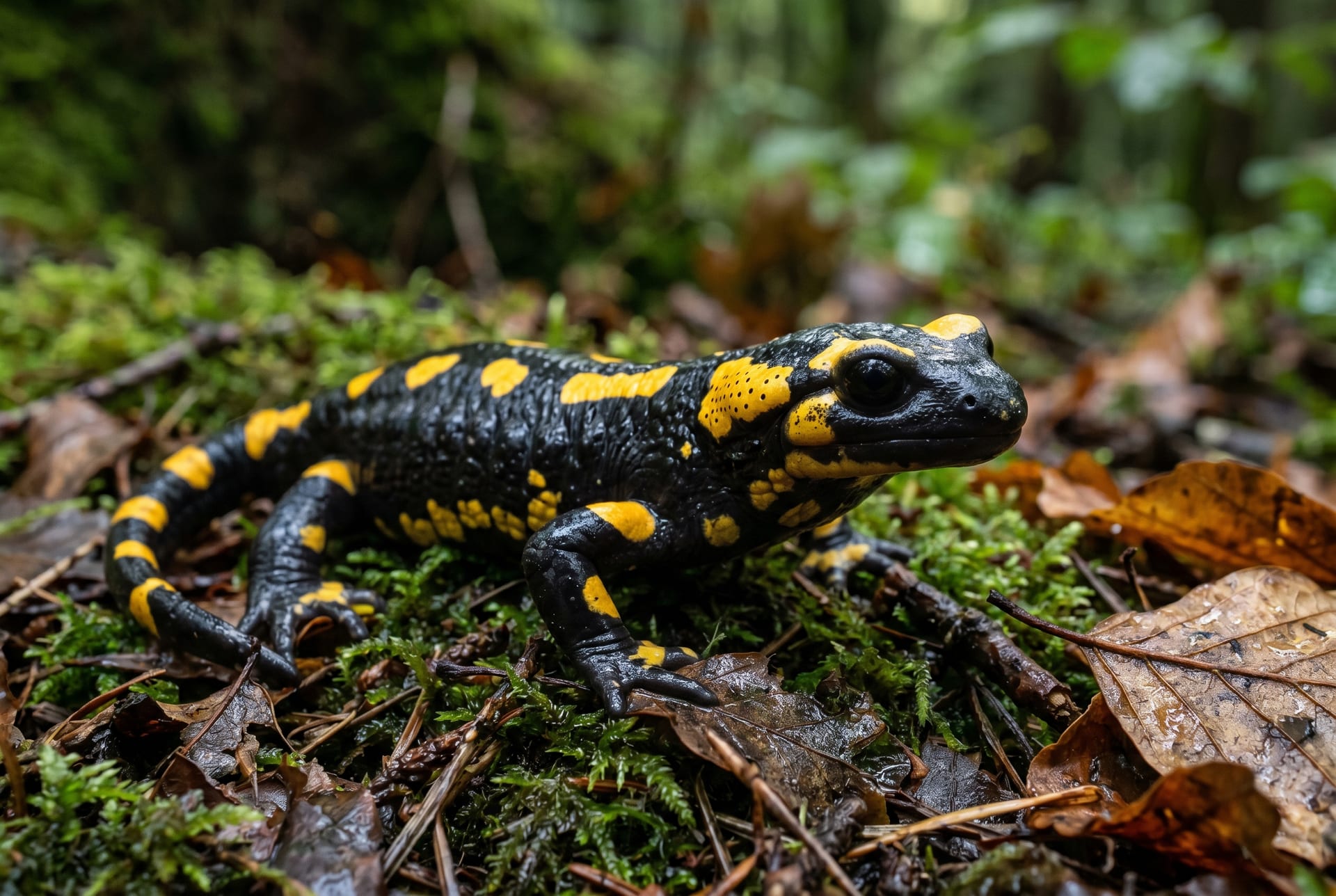
AI-generated image
Fire Salamander
IntermediateSalamandra salamandra
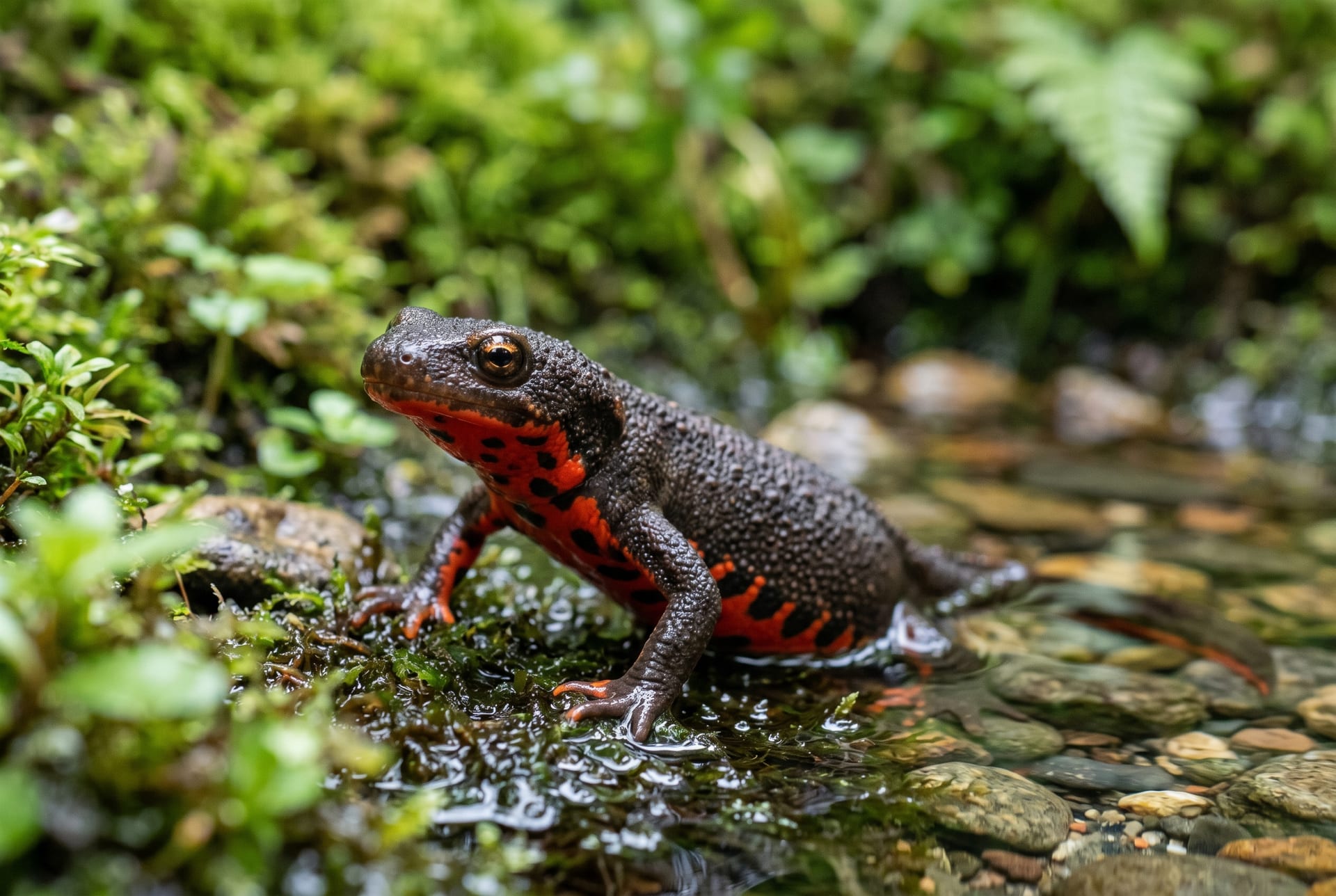
A European salamander with glossy black skin boldly marked in bright yellow, one of the most widely kept tailed amphibians. It prefers cool conditions and secretes a skin toxin, so handle it with care.
Difficulty
Intermediate
Temperature
15〜22℃
Lifespan
10-20 years
Size
15-25cm
Humidity
70〜90%
Diet
Carnivore (crickets, earthworms, roaches)
About
The fire salamander (Salamandra salamandra) ranges widely across central and southern Europe and is instantly recognizable by its glossy black body boldly patterned with bright yellow (sometimes orange) blotches and stripes, classic warning coloration. Reaching 15-25 cm (rarely 30 cm), it inhabits damp forest floors and is most active at night, feeding on crickets, earthworms, and other invertebrates. It secretes the neurotoxic alkaloid samandarin from glands behind the eyes, so handling should be minimal and hands washed afterward. Hardy and long-lived, it is neither CITES-listed nor a regulated invasive species in Japan.
Source: Wikipedia (CC BY-SA 4.0)
Lifespan of the Fire Salamander
The Fire Salamander lives 10-20 years.
Size of the Fire Salamander
The Fire Salamander grows to 15-25cm.
Temperature & humidity for the Fire Salamander
The ideal temperature for the Fire Salamander is 15〜22℃. Ideal humidity is 70〜90%.
In captivity it needs a cool (15-22°C), humid, well-ventilated terrestrial setup and is intolerant of heat above 25°C.
Basic Info
Origin
Moist forests of central and southern Europe
Lifespan
10-20 years
References & Sources
Edited & verified by: BreederDirect editorial team
The taxonomic, regulatory, and husbandry data on this page are compiled and verified against the authoritative primary sources below.
Taxonomy & Authority
Accepted name: Salamandra salamandra (Linnaeus, 1758)
Authority databases: AmphibiaWeb
Nomenclature follows global taxonomic authority databases.
Regulations & Conservation Status
Not CITES-listedIUCN LC · Least Concern
Not covered by CITES or designated as an invasive alien species in Japan, making keeping and trade legal. As it secretes neurotoxic alkaloids (samandarin) from its skin, handling should be minimized and hands should be washed after contact. It is a cool-preferring species sensitive to high temperatures.
Sources: CITES Checklist (not listed) / IUCN Red List
Regulations may change. Always verify the latest information with the relevant authorities.
Fire Salamander Listings
Loading latest listingsFind listings for this species