Source: Wikimedia Commons
Kissing Gourami
IntermediateHelostoma temminckii
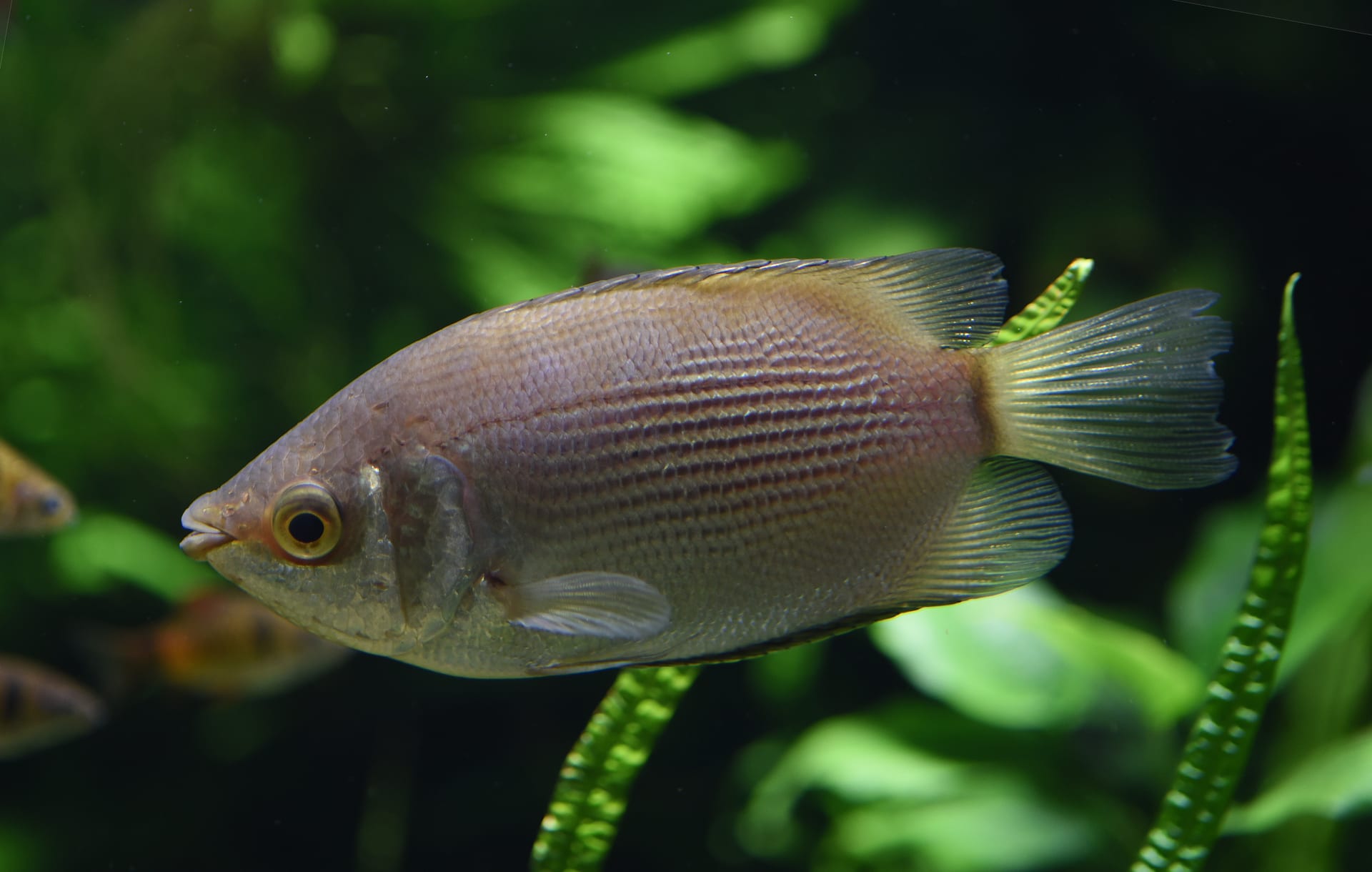
A large gourami named for the way two fish press their lips together. It is a filter feeder with very fine gill rakers that strains particles from the water and also rasps algae from wood and glass. It reaches 30cm and needs a large tank.
Difficulty
Intermediate
Temperature
22〜30℃
Lifespan
5-7 years
Size
20-30cm
Diet
Fine particulate dried foods, vegetable matter, algae
About
Helostoma temminckii is a freshwater fish of the family Helostomatidae ranging from Thailand to Indonesia. FishBase records 30cm total length while Seriously Fish gives 20-25cm standard length. It is a microphagous filter feeder with very fine gill rakers and moveable horny teeth on the lips, straining particles from the water and rasping algae from wood and glass; there are no teeth on the jaws or palate, so large items cannot be crushed. The kissing that gives it its name is a few seconds of mouth-to-mouth pressing with the jaws fully extended; it is thought to be mouth fighting, a ritualized form of intraspecific aggression. Aquarium conditions are 22-30C, pH 6.0-8.0 and 1-20dGH, with a 150 x 45cm base and roughly 304 litres as the practical minimum. It breathes air, so a gap must be left above the water. Spawning scatters buoyant eggs with no parental care and they hatch in 24-36 hours. Most traded fish are the pinkish-white leucistic form, which does not occur in the wild.
Source: Wikipedia (CC BY-SA 4.0)
Lifespan of the Kissing Gourami
The Kissing Gourami lives 5-7 years.
Size of the Kissing Gourami
The Kissing Gourami grows to 20-30cm.
Temperature & humidity for the Kissing Gourami
The ideal temperature for the Kissing Gourami is 22〜30℃.
Basic Info
Origin
Southeast Asia (Thailand to Indonesia)
Lifespan
Care Specifications
- pH
- 6–8
- Hardness (GH)
- 1–20 dGH
- Water Temp.
- 22–30℃
- Min. Tank
- 304 L
Semi-aggressiveBreeding: Hard
Sources: FishBase / Seriously Fish / Wikipedia
References & Sources
Edited & verified by: BreederDirect editorial team
The taxonomic, regulatory, and husbandry data on this page are compiled and verified against the authoritative primary sources below.
Taxonomy & Authority
Regulations & Conservation Status
Not CITES-listedIUCN LC · Least Concern
Sources: CITES Appendices (species not listed) / IUCN Red List
Regulations may change. Always verify the latest information with the relevant authorities.
Kissing Gourami Listings
Loading latest listingsFind listings for this species