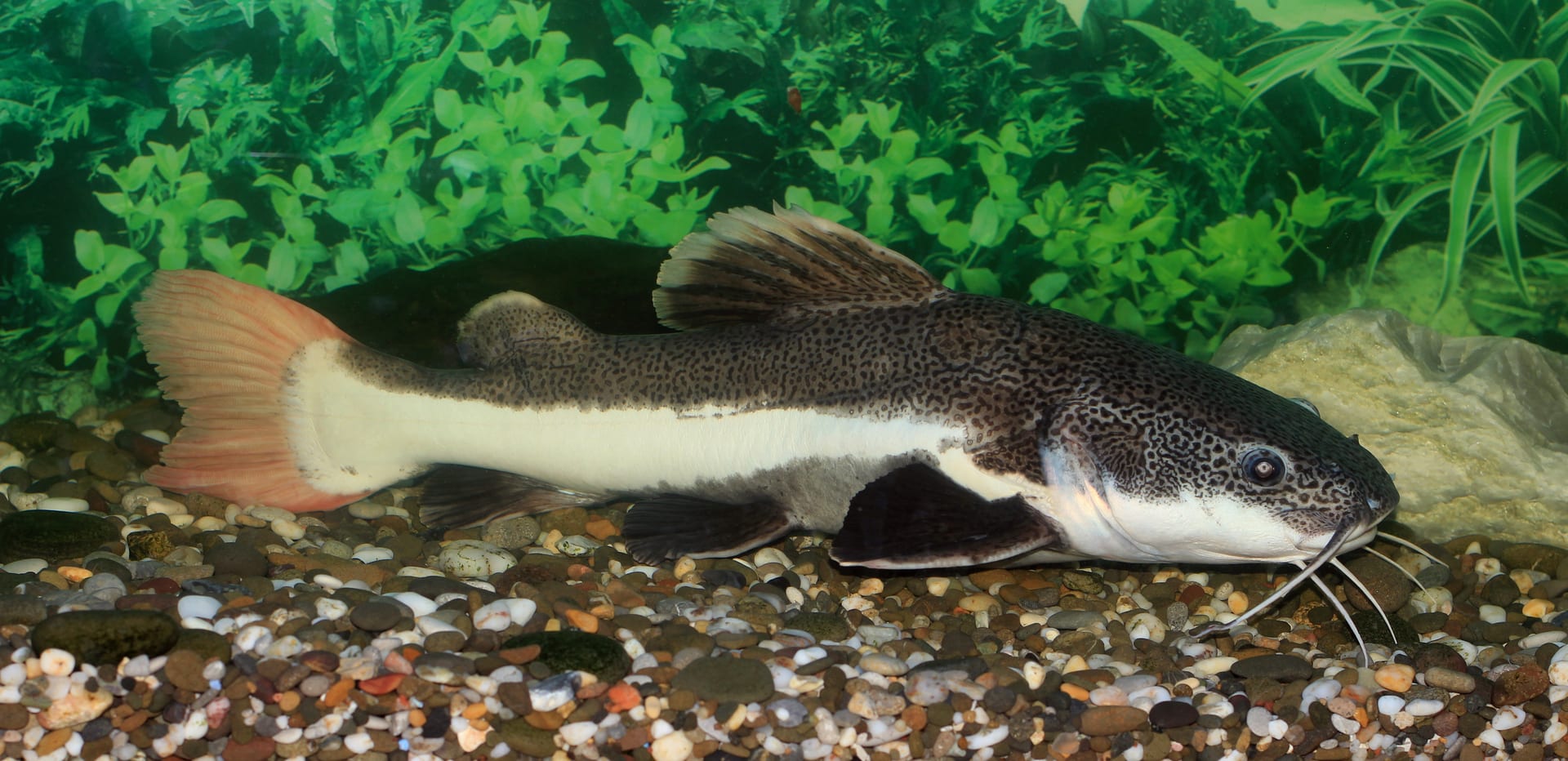
 © George Chernilevsky / CC BY-SA 4.0
Redtail Catfish
The Redtail Catfish is a giant catfish native to the Amazon and Orinoco river systems. Its striking coloration—a dark brown body marked with a white band and a vivid red tail fin—makes it an unmistakable centerpiece for any tank. Generally docile and known to recognize its keeper, it will still eat any tankmate small enough to fit in its mouth, so tankmate selection matters. Reaching up to 135cm at full size, adults require water volume on the scale of 10,000 liters, making this a serious long-term commitment. Considered suitable only for experienced keepers, it demands careful planning of space and equipment well in advance.
View Redtail Catfish encyclopedia →0% commission on your first sales!Register by September 30, 2026 and your first 2 sales are commission-free!
Breeder Wanted!
List on BreederDirect and sell directly to customers nationwide!
Our 6 Transparency Commitments
All Tropical Fish listings include water quality, temperament, and tank size information from verified Breeder.
- Origin Disclosed
- Real Photos
- Water Quality Disclosed
- Recommended Tank Size
- Temperament Disclosed
- Breed Line Disclosed
Browse all 301 breeds
Water Type
Care Level
Verified breeders wanted for Tropical Fish
Breeders are signing up now ahead of launch. Subscribe to be notified when new listings go live.
Getting alerts is free with a member account. When new listings match your saved search, we'll notify you by email and in-app.
Browse other categories
Verified breeders (preview)
Are you raising tropical fish?
Register as a breeder and connect with buyers directly.
Apply as a breederRedtail Catfish key facts
- Care level
- Advanced
- Lifespan
- 15+ years
- Size
- Up to about 135cm
- Temperature
- 21〜26℃
- Diet
- Prawns, mussels, cockles, lancefish, earthworms
- Tank
- Seriously Fish gives 360 x 240 x 120cm (about 10,368 litres) as the bare minimum for an adult. Judge by the adult size, not the juvenile you buy.
- Water Temperature & Quality
- 21-26C, pH 6.0-7.5, 2-12 degrees hardness. Heavy feeding fouls the water, so powerful filtration and frequent changes are needed.
- Tank Mates
- Relatively peaceful with similarly sized fish, but it eats smaller ones and is territorial towards conspecifics and other large pimelodids. Keep singly.
- Diet & Feeding
- Prawns, mussels, cockle, lancefish and earthworms. Avoid mammalian meat and feeder fish. Feed juveniles every other day and adults at most weekly.
- Breeding & Spawning
- Breeding is not thought to have been achieved in the hobby.
- Health & Notes
- Overfeeding and the resulting water quality problems are the main risks. Growth is fast and the fish outgrows most setups within a few years, so settle the final housing before buying.
About Redtail Catfish
Redtail Catfish is a giant Amazon-native catfish with a dark body, white band, and vivid red tail, reaching up to 135cm. Suited to experienced keepers—learn its traits and care essentials.
7 things to know before welcoming a Redtail Catfish
1Plan for its final tank size
Redtail Catfish can grow to roughly 135cm, and adults need water volume on the scale of 10,000 liters. Plan your tank and equipment around its eventual size from the very beginning.
2Suited to experienced keepers only
This species is classified as suitable for experienced keepers. Prior experience with large fish, along with solid knowledge of filtration and water quality management, is recommended before bringing one home.
3Choosing tankmates carefully
While generally calm in temperament, it will eat any fish small enough to fit in its mouth. If keeping tankmates, choose similarly large fish to avoid size mismatches.
4Enjoying its distinctive coloring
Its dark brown body with a white band and a vivid red tail fin is the standout feature. The coloring's appearance can shift subtly as the fish matures, offering a changing view over time.
5Investing in strong filtration
As a large fish, it produces a substantial bioload, and water quality can deteriorate quickly. Set up a high-capacity filtration system and commit to regular water changes.
6Upgrading the tank as it grows
Body length changes dramatically from juvenile to adult, so tank size and layout need to be reassessed in stages as the fish grows.
7Committing for the long term
Large fish take time to grow but stay with you for many years. Before bringing one home, think through future logistics such as space and the possibility of relocation.
Frequently asked questions about Redtail Catfish
- Q.How big does a Redtail Catfish get?
- A.It can reach up to about 135cm in length, making it one of the larger catfish species. While growth takes time, it's important to prepare equipment suited to its eventual size in advance.
- Q.Can beginners keep this fish?
- A.This species is considered suitable for experienced keepers. It's best suited to those with prior experience keeping large fish and managing water quality.
- Q.Can it be kept with other fish?
- A.It has a generally calm temperament, but it may eat fish small enough to fit in its mouth. If housing it with tankmates, choose similarly sized large fish.
- Q.Is it listed under CITES?
- A.The Redtail Catfish is not listed under CITES.
- Q.What size tank does it need?
- A.Adults are generally said to need water volume on the scale of 10,000 liters. It helps to plan a staged tank upgrade from the time you bring the fish home.
Useful tools for Redtail Catfish care
Learn more about Redtail Catfish in the encyclopedia
View Redtail Catfish encyclopedia entry →
Care difficulty, lifespan, size and diet — all basics covered.
More in this category
Can't find the one you're looking for?
Post your wishes for free and breeders with matching animals will contact you with introductions.