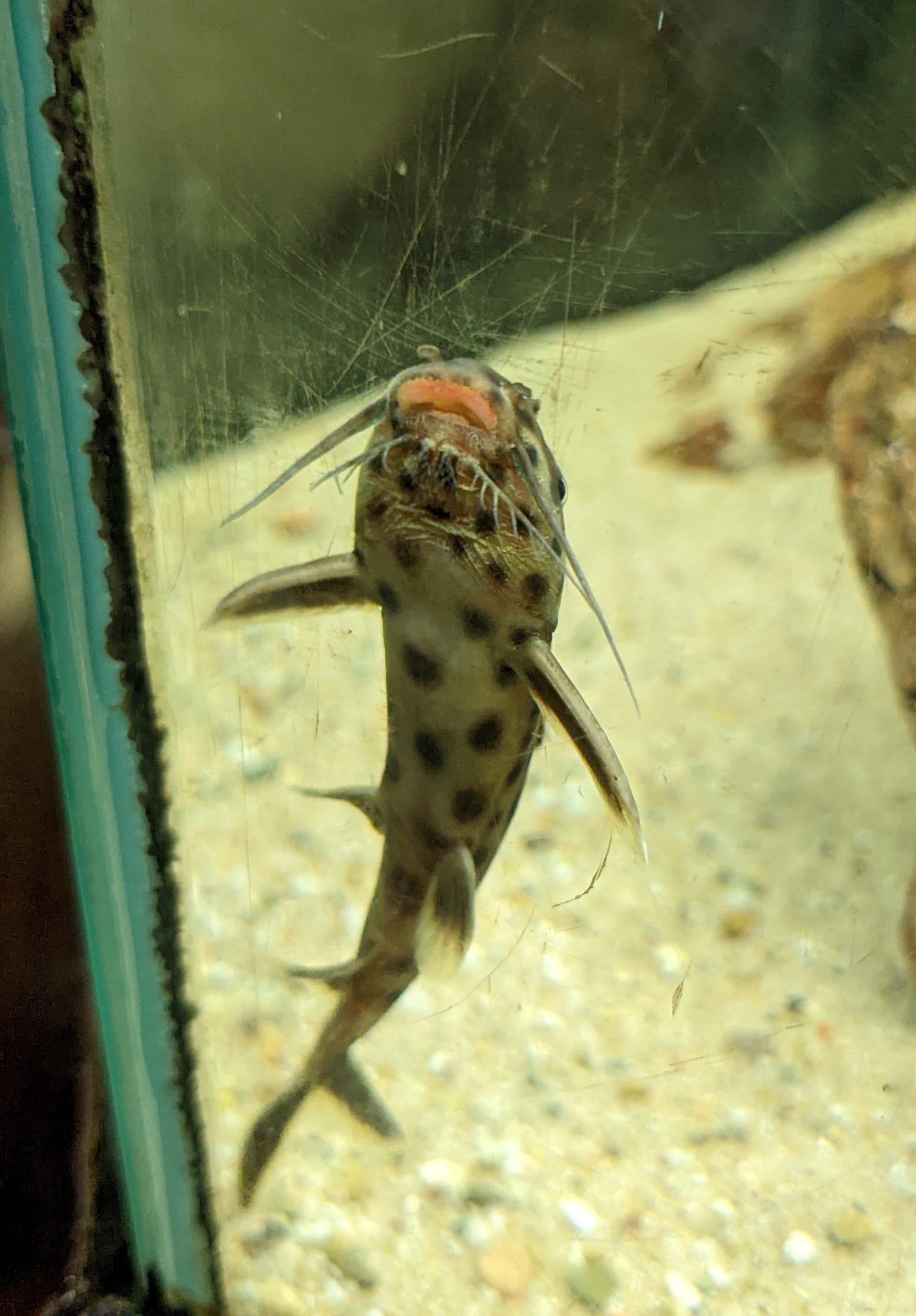
 © FakirNL / CC BY-SA 4.0
Pygmy Leopard Catfish
Synodontis petricola is a small catfish that naturally gathers in groups among the rocky shores of Lake Tanganyika. Its pale body scattered with black spots, paired with fins edged in white and black, gives it a striking, clean-cut look. Unafraid and active during the day, it swims readily in open water and shows more natural schooling behavior when kept in a group. Because it thrives in hard, alkaline water, it pairs well with African rift lake cichlids. Considered a fish for intermediate keepers, it's a great next step once you're comfortable managing water chemistry.
View Pygmy Leopard Catfish encyclopedia →0% commission on your first sales!Register by September 30, 2026 and your first 2 sales are commission-free!
Breeder Wanted!
List on BreederDirect and sell directly to customers nationwide!
Our 6 Transparency Commitments
All Tropical Fish listings include water quality, temperament, and tank size information from verified Breeder.
- Origin Disclosed
- Real Photos
- Water Quality Disclosed
- Recommended Tank Size
- Temperament Disclosed
- Breed Line Disclosed
Browse all 301 breeds
Water Type
Care Level
Verified breeders wanted for Tropical Fish
Breeders are signing up now ahead of launch. Subscribe to be notified when new listings go live.
Getting alerts is free with a member account. When new listings match your saved search, we'll notify you by email and in-app.
Browse other categories
Verified breeders (preview)
Are you raising tropical fish?
Register as a breeder and connect with buyers directly.
Apply as a breederPygmy Leopard Catfish key facts
- Care level
- Intermediate
- Lifespan
- 5-8 years
- Size
- About 10-13cm
- Temperature
- 24〜28℃
- Diet
- Frozen and live foods, dried foods, vegetables (shelled peas, cucumber)
- Tank
- About 90 x 30cm (81 litres), aquascaped with rockwork full of crevices. Allow extra floor space for a group.
- Water Temperature & Quality
- 24-28C, pH 7.5-8.5, 10-35 dGH. Maintain the hard, alkaline chemistry of Lake Tanganyika.
- Tank Mates
- One of the most peaceful Synodontis. Suits hard-water cichlids, rainbowfish and livebearers, but not fish small enough to be prey. Keep four or more.
- Diet & Feeding
- Omnivorous. Alongside frozen, live and dried foods it rasps at shelled peas and cucumber.
- Breeding & Spawning
- Capable of parasitic spawning with mouthbrooding cichlids, though a separate breeding tank is more productive. Eggs hatch in about 24 hours, fry swim free in 2-3 days, and growth is slow.
- Health & Notes
- Watch for falling pH and hardness. The stiff pectoral and dorsal spines snag in nets, so move the fish in a container. Fish sold as petricola may include the closely related Synodontis lucipinnis, which is hard to tell apart by eye. FishBase also lists cuckoo catfish as an English name for this species, although that name normally refers to the brood-parasitic Synodontis multipunctatus, so check scientific names when using English sources.
About Pygmy Leopard Catfish
Synodontis petricola is a small Lake Tanganyika catfish known for its black spots and edged fins. An intermediate-level species suited to group keeping — here's what to know before bringing one home.
7 things to know before welcoming a Pygmy Leopard Catfish
1Keep in a group for stability
This species tends to settle in and behave more naturally when kept in a group of four or more, rather than alone. Plan for a tank large enough to comfortably house the whole group.
2Prefers hard, alkaline water
Mirroring its native Lake Tanganyika, this fish does best in hard, alkaline water. Using water conditioners or substrate suited to rift lake setups helps recreate a stable, comfortable environment.
3Provide rocky hiding spots
In the wild it lives among rocky terrain, so stacking rocks or driftwood to create hiding spots in the tank helps it feel secure. Leave enough gaps in the layout for the fish to move through comfortably.
4Plan tank size for adult growth
Adults grow to roughly 10-13 cm. Even if you're starting with juveniles, it's worth choosing a tank and filtration setup sized for their eventual adult length and group numbers.
5More active around dusk and night
While relatively bold and visible during the day, as a catfish it tends to become more active around dusk and after dark. Feeding during these more active periods can help reduce leftover food.
6Choose tankmates carefully
Given its preference for hard, alkaline water, it pairs well with tankmates from the same environment, such as Tanganyikan cichlids. Combining it with fish that need different water conditions adds extra management complexity.
7Prepare water conditions in advance
Making major water changes right before bringing the fish home can cause unnecessary stress. It's best to adjust hardness and pH toward the target range in advance and wait until the tank is stable before introducing it.
Frequently asked questions about Pygmy Leopard Catfish
- Q.Can beginners keep this fish?
- A.This species is generally considered suited to intermediate keepers. Since it requires maintaining hard, alkaline water and space for group keeping, it's best attempted once you're comfortable with basic water chemistry management.
- Q.How large does it grow?
- A.Adults reach roughly 10-13 cm in length. It's important to choose a tank based on this eventual adult size, not just the fish's size when you bring it home.
- Q.Is it okay to keep just one?
- A.Keeping a single fish is possible, but it tends to display calmer, more natural behavior when kept in a group of four or more. If your tank has the space, group keeping is worth considering.
- Q.Can it be kept with other fish?
- A.Because it prefers hard, alkaline water, it's well suited to tankmates with similar needs, such as Tanganyikan cichlids. It's best to avoid pairing it with fish that require very different water conditions.
- Q.Is this species subject to any regulations?
- A.Synodontis petricola is not subject to CITES. There's no special procedure to consider on that front when bringing one home.
Useful tools for Pygmy Leopard Catfish care
Learn more about Pygmy Leopard Catfish in the encyclopedia
View Pygmy Leopard Catfish encyclopedia entry →
Care difficulty, lifespan, size and diet — all basics covered.
More in this category
Can't find the one you're looking for?
Post your wishes for free and breeders with matching animals will contact you with introductions.