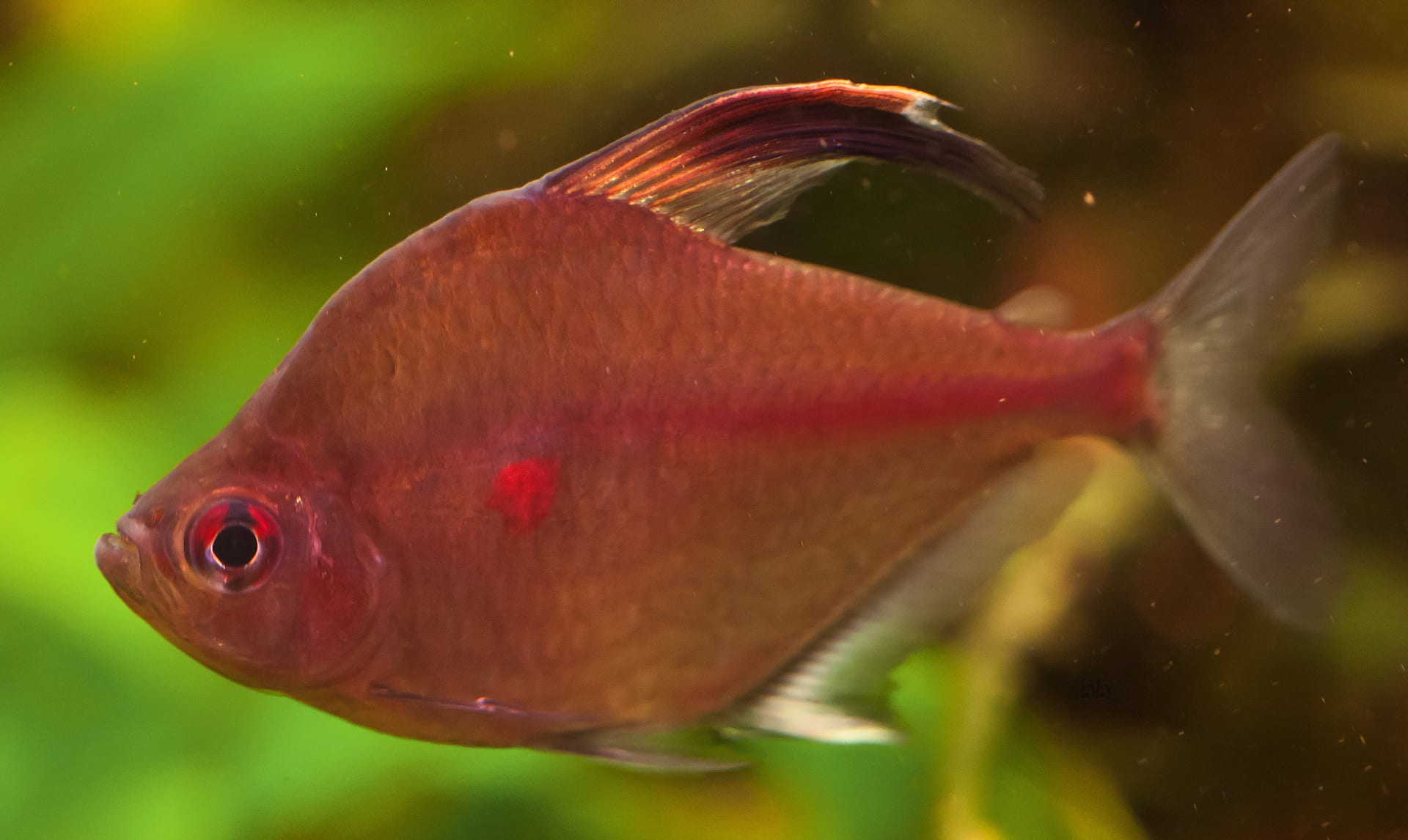
 © 5snake5 / CC0
Bleeding Heart Tetra
The Bleeding Heart Tetra is a striking mid-sized characin, its pale pink body marked by a vivid red spot near the chest that gives the species its name. Kept in a group, these fish bring a lively splash of color to the tank, and mature males grow elegantly elongated dorsal and anal fins that trail as they swim. Generally peaceful and well-suited to community tanks, they do best in stable water conditions within a well-established aquarium. Adults reach around 6cm in standard length, so it's worth giving them a little more room than smaller tetra species need, letting their schooling behavior really shine.
View Bleeding Heart Tetra encyclopedia →0% commission on your first sales!Register by September 30, 2026 and your first 2 sales are commission-free!
Breeder Wanted!
List on BreederDirect and sell directly to customers nationwide!
Our 6 Transparency Commitments
All Tropical Fish listings include water quality, temperament, and tank size information from verified Breeder.
- Origin Disclosed
- Real Photos
- Water Quality Disclosed
- Recommended Tank Size
- Temperament Disclosed
- Breed Line Disclosed
Browse all 301 breeds
Water Type
Care Level
Verified breeders wanted for Tropical Fish
Breeders are signing up now ahead of launch. Subscribe to be notified when new listings go live.
Getting alerts is free with a member account. When new listings match your saved search, we'll notify you by email and in-app.
Browse other categories
Verified breeders (preview)
Are you raising tropical fish?
Register as a breeder and connect with buyers directly.
Apply as a breederAbout Bleeding Heart Tetra
A mid-sized characin with a pale pink body and a red chest spot, growing to about 6cm. Peaceful and community-friendly, but best suited to keepers who can offer stable, mature water conditions.
7 things to know before welcoming a Bleeding Heart Tetra
1Give Them Room to Grow
Adults reach about 6cm in standard length, so a tank sized for smaller tetras can feel cramped. If you're keeping a school, choose a tank a size larger than you would for typical small tetra species.
2Prefers Mature, Stable Water
Bleeding Heart Tetras tend to be sensitive to shifts in water quality and do best in a well-established tank with stable filtration and bacteria, rather than a freshly cycled one. If you're starting a new tank, it's worth waiting until conditions settle before adding them.
3Peaceful, but Choose Tankmates
Their temperament is generally calm, making them easy to combine with similarly sized fish. That said, more aggressive tankmates may nip at the long, trailing fins that develop, so choose companions with care.
4Keep Them in a School
Like other characins, they show their natural swimming behavior and social interactions best when kept in a group rather than alone. A small number may stay hidden, so plan the headcount around your tank's capacity.
5Males Develop Longer Fins
Mature males grow noticeably elongated dorsal and anal fins and tend to have a slightly slimmer build than females. Checking fin length is a simple way to tell males and females apart when selecting fish.
6Check Health Before You Buy
Look for individuals with glossy coloring and a clearly visible red chest spot, both signs of good condition. It's also worth checking that the fins aren't damaged and that swimming looks normal.
7Add Hiding Spots in the Layout
These fish can be a little shy, so plants or driftwood that offer cover will help them settle in. Keeping the lighting moderate rather than harsh also creates a calmer setting that lets their red markings stand out.
Frequently asked questions about Bleeding Heart Tetra
- Q.Is the Bleeding Heart Tetra suitable for beginners?
- A.This species is generally considered suited to intermediate-level keepers. Since it can be sensitive to changes in water quality, it's best introduced to a tank with established filtration and beneficial bacteria rather than a freshly set-up one.
- Q.How big does it grow as an adult?
- A.Adults typically reach about 6cm in standard length. That's noticeably larger than many small tetra species, so it helps to give them a bit more room in the tank.
- Q.How can I tell males and females apart?
- A.Mature males develop noticeably long, thread-like dorsal and anal fins. Females have shorter fins and tend to have a slightly rounder body shape.
- Q.Can it be kept with other fish?
- A.Its temperament is generally peaceful, so it pairs well with similarly sized fish. However, more aggressive tankmates may nip at its long trailing fins, so choose companions carefully.
- Q.Is it okay to add them to a newly set up tank?
- A.It's better to wait if possible. This species prefers stable water conditions and a mature tank with established filtration and bacteria, so it's best introduced once the tank has settled in.
Useful tools for Bleeding Heart Tetra care
Learn more about Bleeding Heart Tetra in the encyclopedia
View Bleeding Heart Tetra encyclopedia entry →
Care difficulty, lifespan, size and diet — all basics covered.
More in this category
Can't find the one you're looking for?
Post your wishes for free and breeders with matching animals will contact you with introductions.