Source: Wikimedia Commons
Bleeding Heart Tetra
IntermediateMegalamphodus erythrostigma
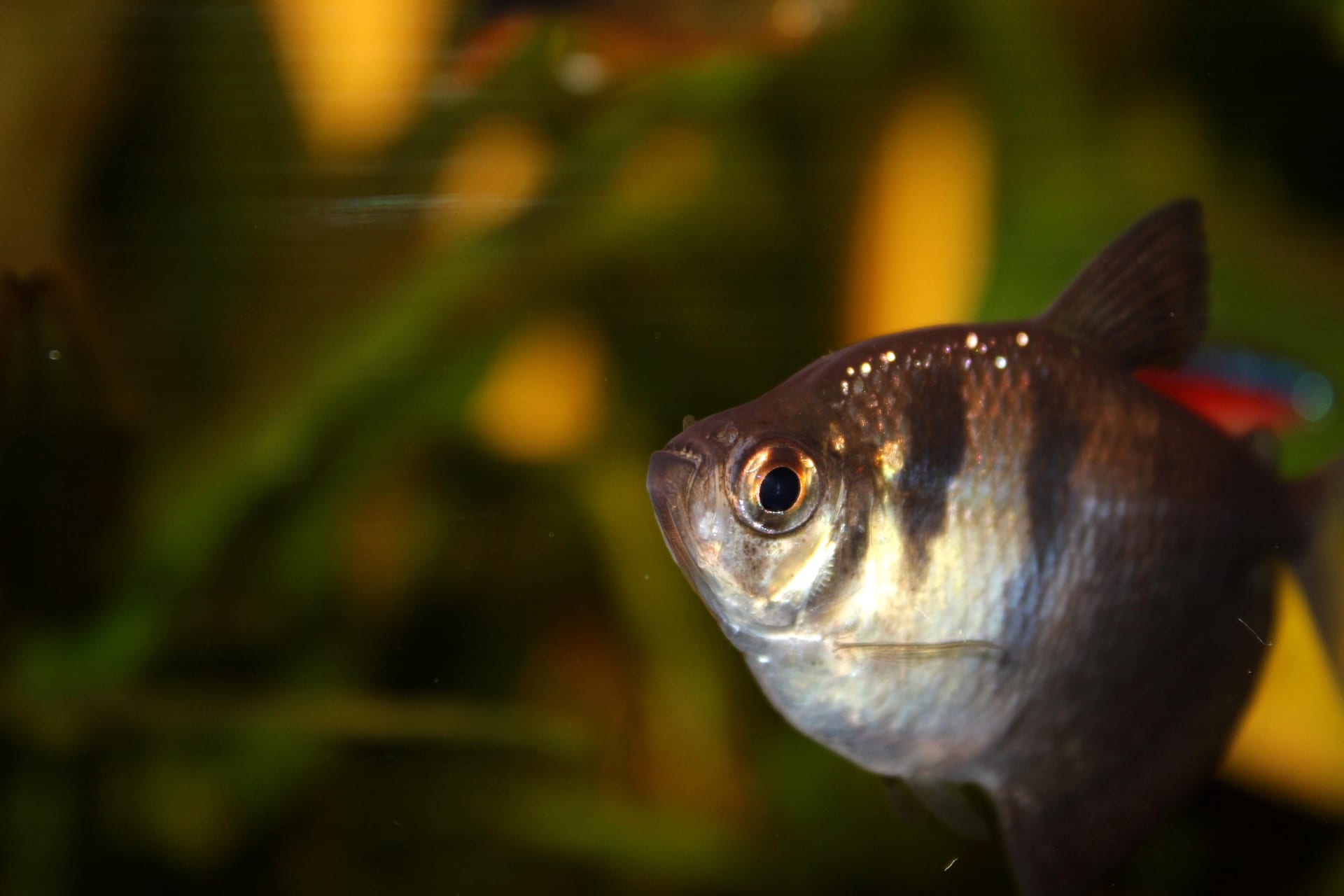
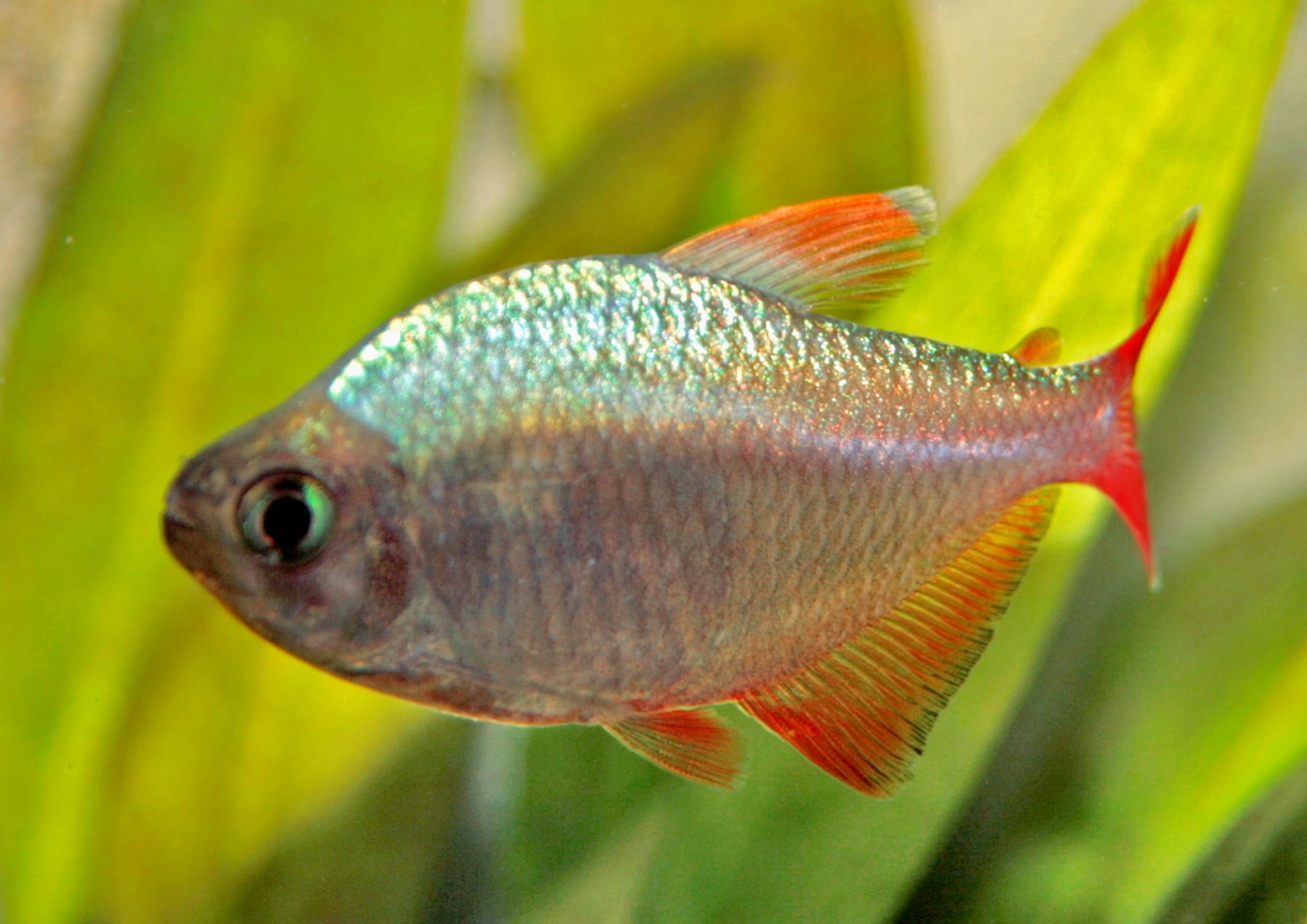
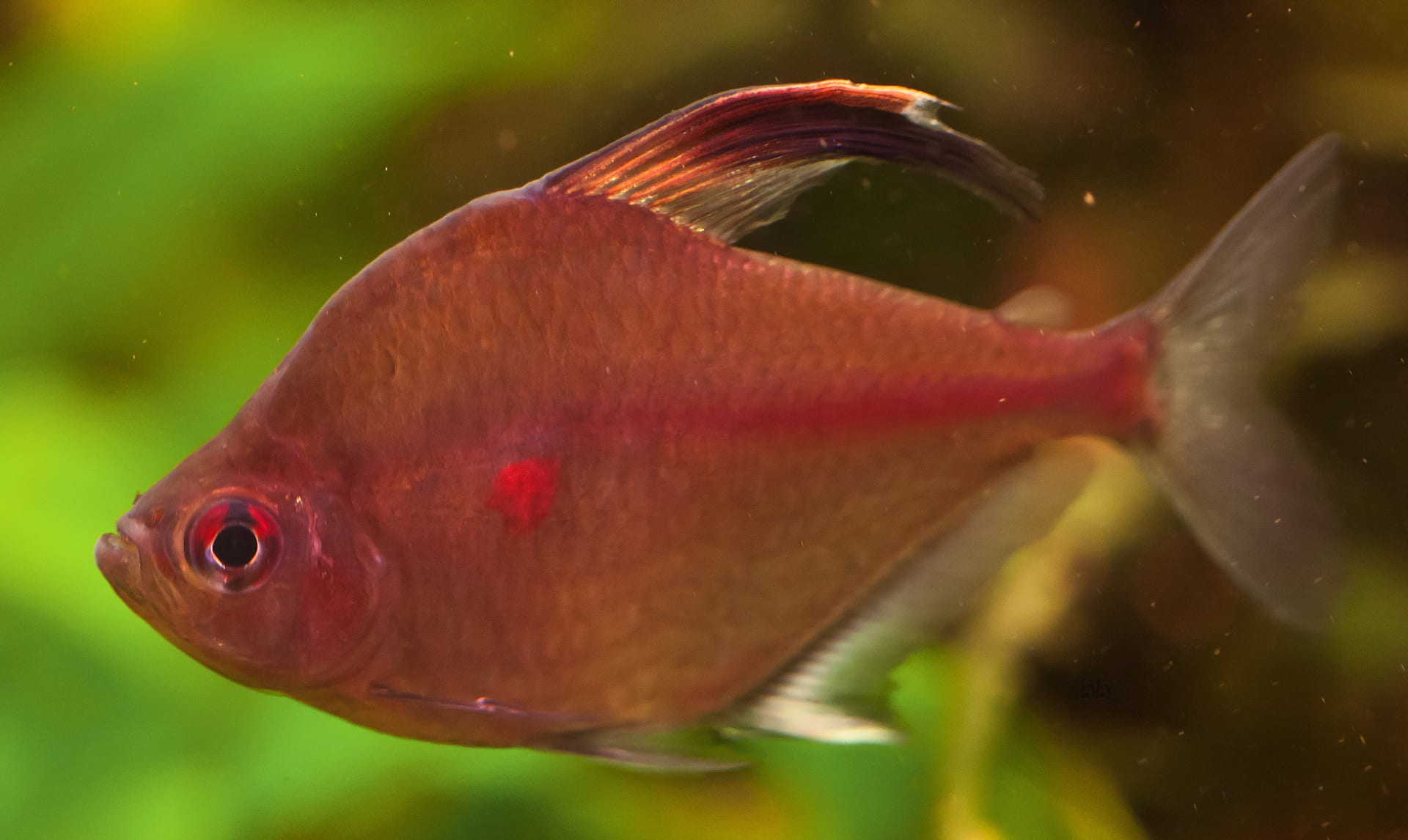
A medium-sized characin named for the red blood spot on its pale pink flank, with long extended dorsal fins in males. It needs settled water and a larger tank than the small tetras.
Difficulty
Intermediate
Temperature
21〜28℃
Lifespan
5-7 years
Size
About 6cm SL
Diet
Dried foods, frozen bloodworm, Daphnia, brine shrimp
About
Megalamphodus erythrostigma is a characin from the upper Amazon basin. FishBase gives 6.1cm SL, pH 5.6-7.2, up to 12 dH and 23-28C, while Seriously Fish gives 21-28C, pH 4.0-7.5, 1-12 dGH and a base of at least 90 by 30cm, about 81 litres. The name comes from the red spot on the middle of the flank. Males grow larger and more intensely coloured than females, with the dorsal, anal and pelvic fins drawn out into filaments. Stomach contents of wild fish are dominated by fruit, followed by aquatic insects. It is peaceful in the aquarium, though mature males are territorial to a degree towards similarly shaped fish. It does poorly in newly set-up tanks and with swings in water quality, so a settled environment decides whether it lives long.
Source: Wikipedia (CC BY-SA 4.0)
Lifespan of the Bleeding Heart Tetra
The Bleeding Heart Tetra lives 5-7 years.
Size of the Bleeding Heart Tetra
The Bleeding Heart Tetra grows to About 6cm SL.
Temperature & humidity for the Bleeding Heart Tetra
The ideal temperature for the Bleeding Heart Tetra is 21〜28℃.
Basic Info
Origin
South America (upper Amazon River basin)
Lifespan
5-7 years
Size
Care Specifications
- pH
- 4–7.5
- Hardness (GH)
- 1–12 dGH
- Water Temp.
- 21–28℃
- Min. Tank
- 81 L
PeacefulGroupBreeding: Hard
Sources: Seriously Fish / FishBase
References & Sources
Edited & verified by: BreederDirect editorial team
The taxonomic, regulatory, and husbandry data on this page are compiled and verified against the authoritative primary sources below.
Taxonomy & Authority
Accepted name: Megalamphodus erythrostigma (Fowler, 1943)
Synonyms: Hyphessobrycon erythrostigma
Authority databases: FishBase
Nomenclature follows global taxonomic authority databases.
Regulations & Conservation Status
Not CITES-listedIUCN LC · Least Concern
Sources: CITES Appendices (species not listed) / IUCN Red List
Regulations may change. Always verify the latest information with the relevant authorities.
Bleeding Heart Tetra Listings
Loading latest listingsFind listings for this species