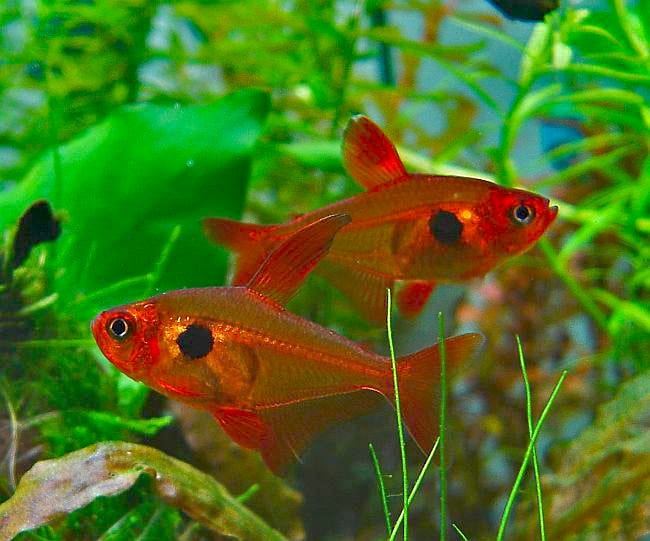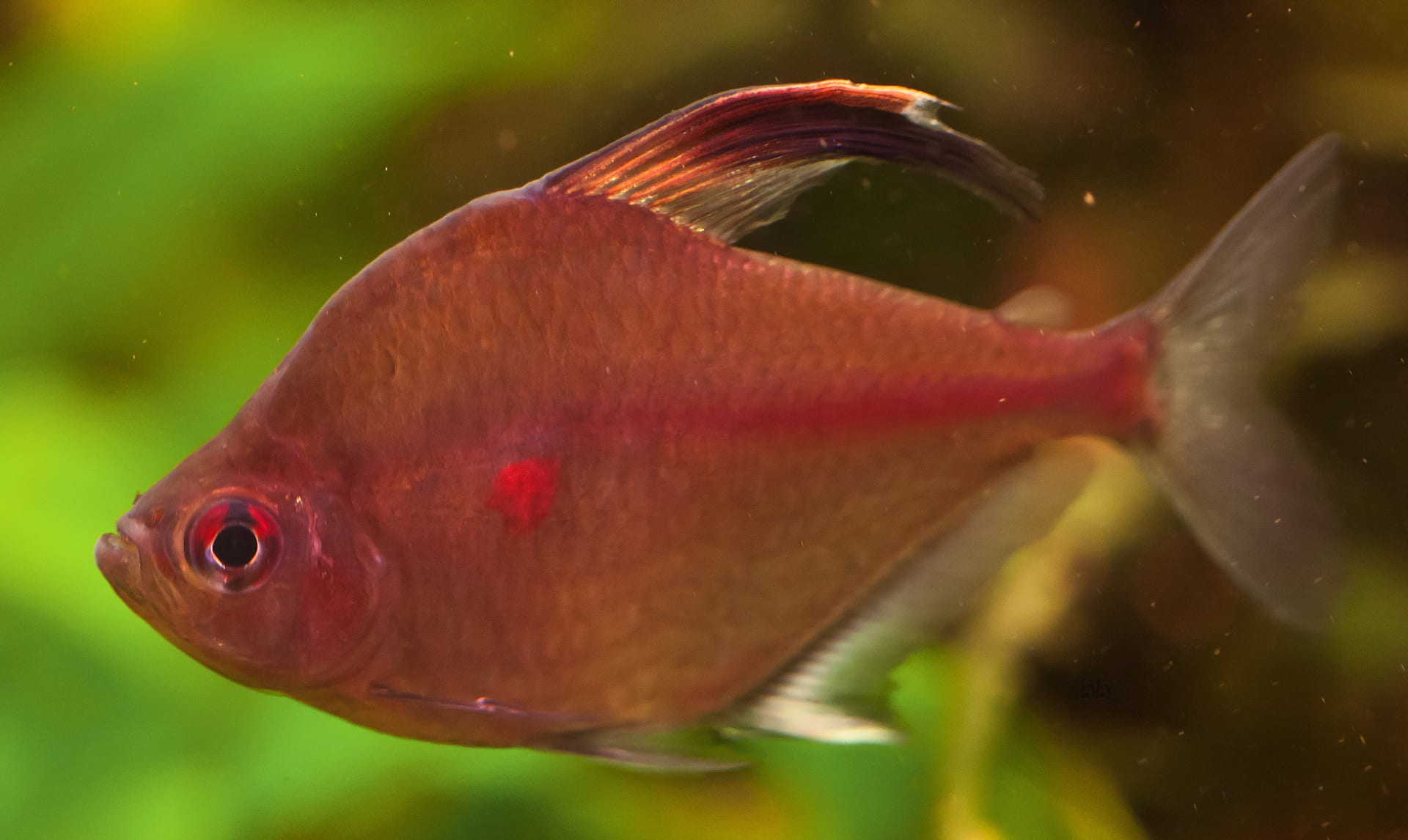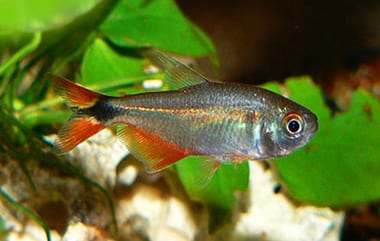
Source: Wikimedia Commons
Buenos Aires Tetra
BeginnerPsalidodon anisitsi
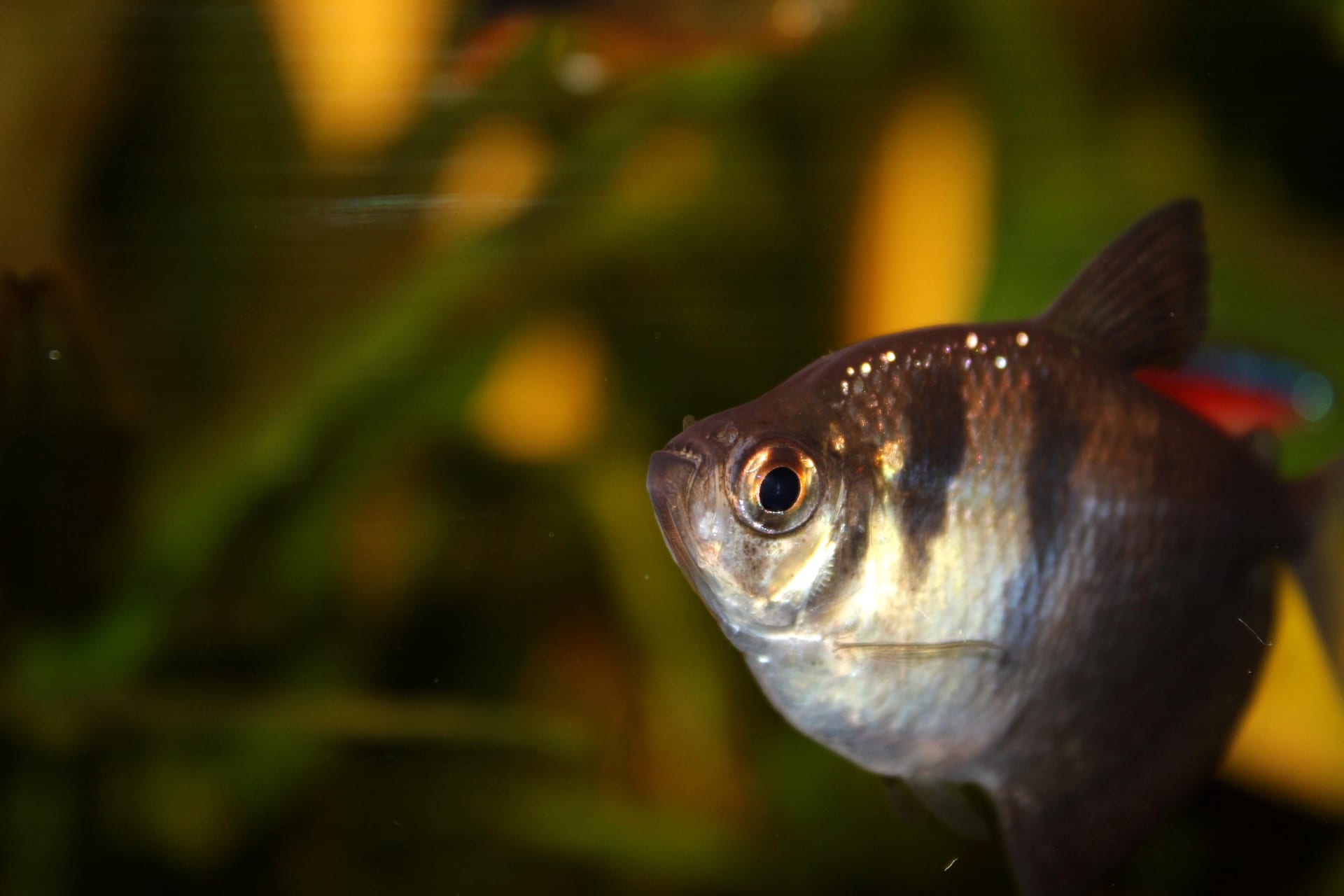
A characin, silver with yellow-tinged fins and a conspicuous diamond-shaped black mark on the caudal peduncle. It takes anything from 16 to 28C and ranks among the hardiest of aquarium fishes, though it nips fins when kept in small numbers.
Difficulty
Beginner
Temperature
16〜28℃
Size
About 6cm (FishBase records 13.2cm TL)
Diet
Dried foods, frozen bloodworm, Daphnia, flakes with plant or algal content
About
Psalidodon anisitsi is a characin found widely through the Parana and Uruguay systems in Brazil, Paraguay, Argentina and Uruguay. FishBase gives 13.2cm TL, calls it subtropical, notes that it also lives in ponds, and describes it as one of the hardiest tropical fishes for the home aquarium. Seriously Fish gives 6.0cm SL, 16-28C, pH 5.5-8.5, 1-20 dGH and a base of at least 90 by 30cm. It is commoner in smaller streams and tributaries than in the main channels, and also in floodplain lakes. The body is silver with yellow-tinged fins and a diamond-shaped black mark on the caudal peduncle. It adapts widely to both water and temperature, though it should not be held at the top of its range for long. It has a reputation for nipping fins, most noticeable when too few are kept or the tank is small, and rival males skirmish continually over females.
Source: Wikipedia (CC BY-SA 4.0)
Size of the Buenos Aires Tetra
The Buenos Aires Tetra grows to About 6cm (FishBase records 13.2cm TL).
Temperature & humidity for the Buenos Aires Tetra
The ideal temperature for the Buenos Aires Tetra is 16〜28℃.
Basic Info
Origin
South America (the Parana and Uruguay systems in Brazil, Paraguay, Argentina and Uruguay)
Size
About 6cm (FishBase records 13.2cm TL)
Temperature
16〜28℃
Diet
Care Specifications
- pH
- 5.5–8.5
- Hardness (GH)
- 1–20 dGH
- Water Temp.
- 16–28℃
- Min. Tank
- 81 L
Semi-aggressiveGroupBreeding: Easy
Sources: Seriously Fish / FishBase
References & Sources
Edited & verified by: BreederDirect editorial team
The taxonomic, regulatory, and husbandry data on this page are compiled and verified against the authoritative primary sources below.
Taxonomy & Authority
Regulations & Conservation Status
Not CITES-listedIUCN LC · Least Concern
Sources: CITES Appendices (species not listed) / IUCN Red List
Regulations may change. Always verify the latest information with the relevant authorities.
Buenos Aires Tetra Listings
Loading latest listingsFind listings for this species