Source: Wikimedia Commons
Black Tetra
BeginnerGymnocorymbus ternetzi
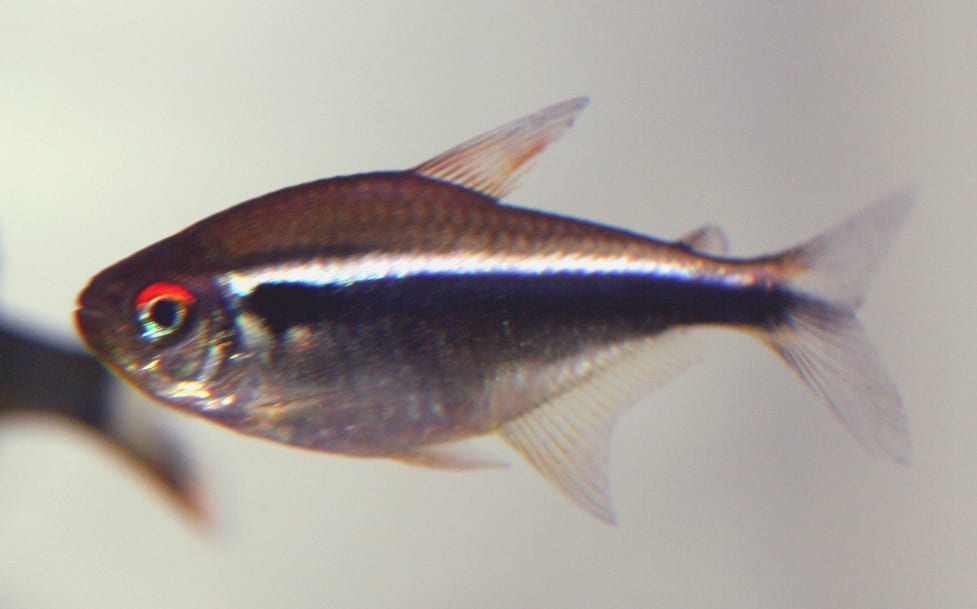
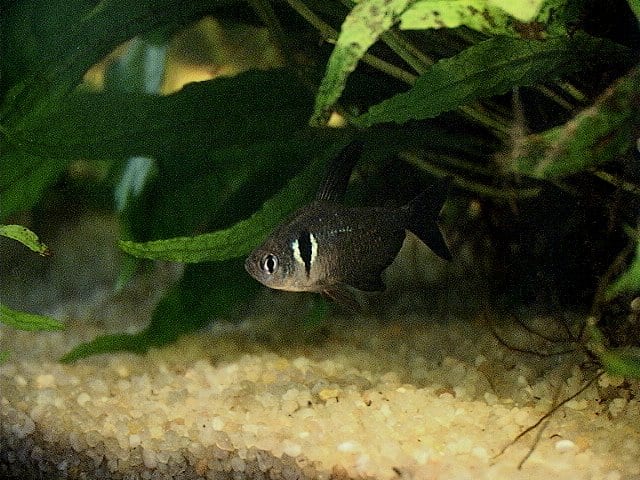
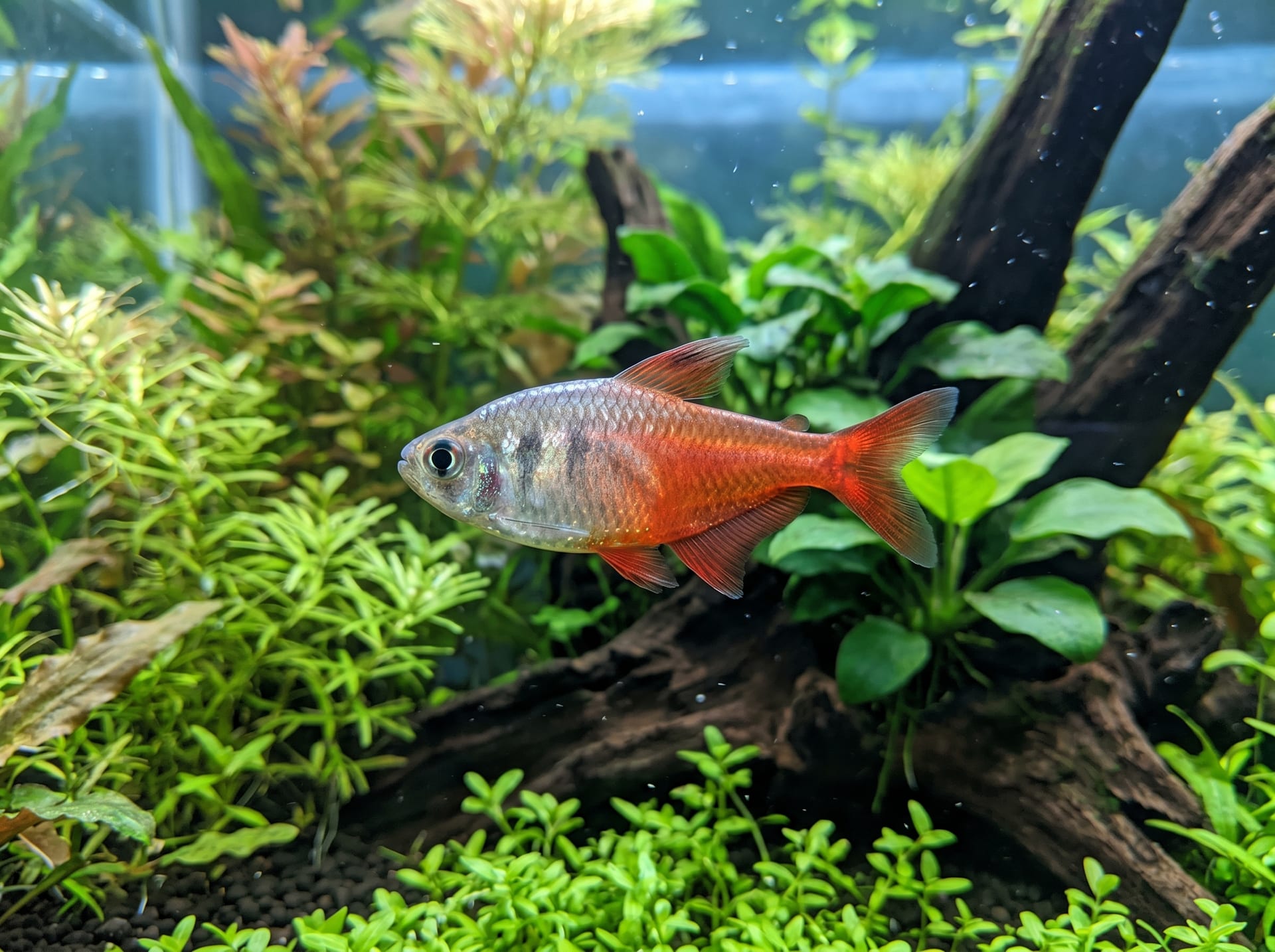
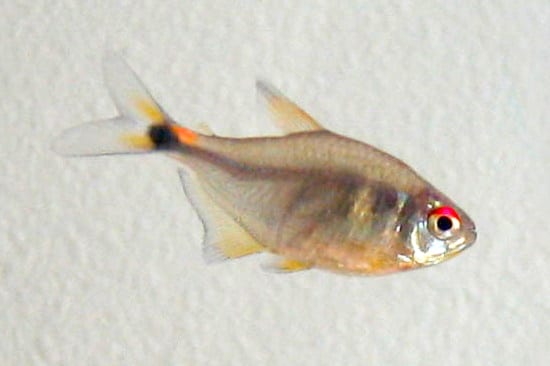
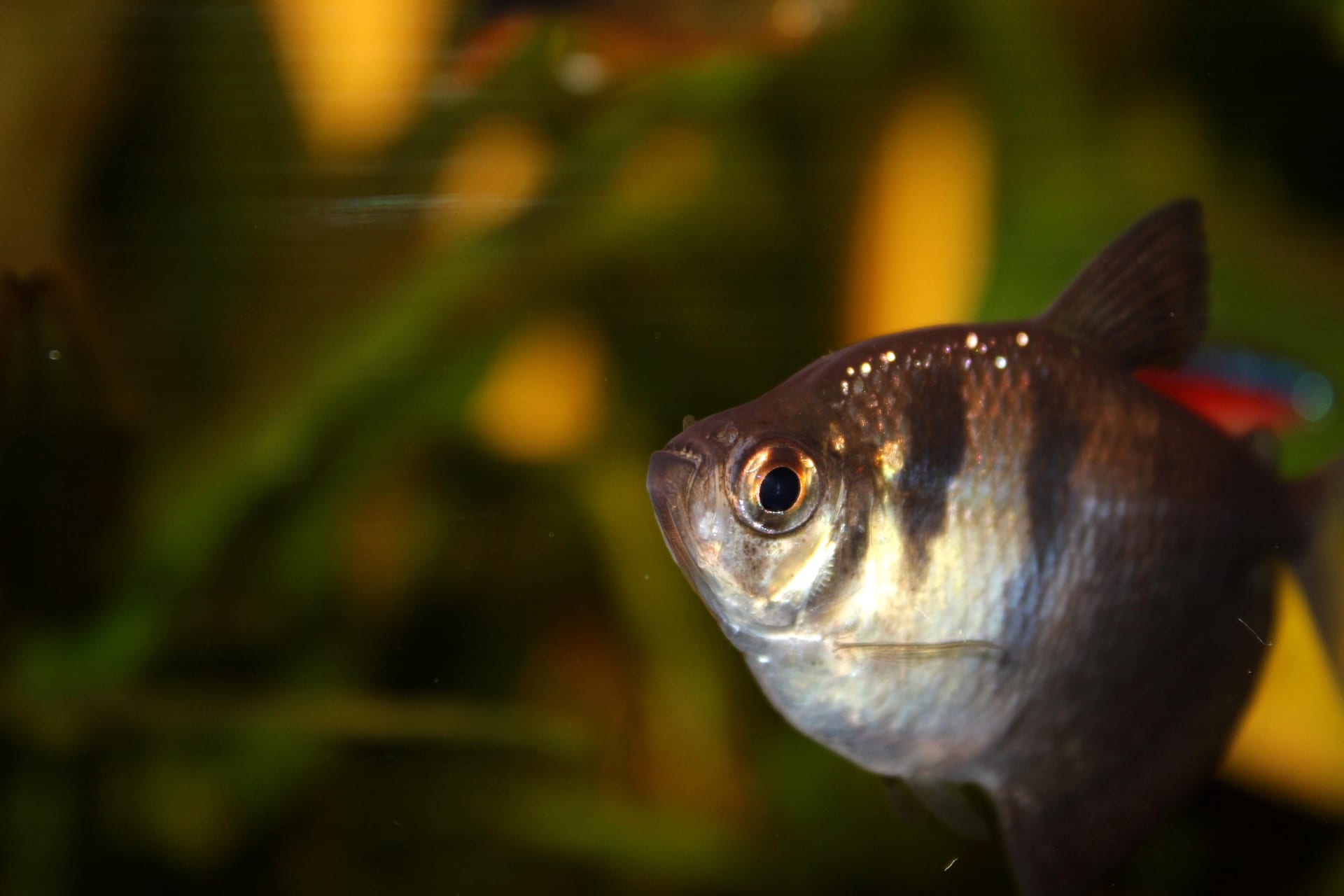
A medium-sized characin with a diamond-shaped body whose rear half is black and a large skirt-like anal fin. The black is deepest in juveniles and fades with age. Hardy and relatively tolerant of cool water.
Difficulty
Beginner
Temperature
20〜26℃
Lifespan
5-8 years
Size
About 6-7.5cm SL
Diet
Dried foods, frozen bloodworm, Daphnia
About
Gymnocorymbus ternetzi is a characin from the Paraguay and Guapore basins down into Argentina. FishBase gives 7.5cm SL, pH 6.0-8.0, 5-19 dH and a subtropical range of 20-26C, while Seriously Fish gives 20-26C, pH 6.0-7.0, 5-20 dGH and a base of at least 75 by 30cm, about 68 litres. The name comes from the black rear half of the near-diamond-shaped body and the black dorsal and anal fins; this is deepest in juveniles and greys out with age. In the wild it favours small, slow creeks with dense overhanging vegetation, and in the aquarium it works the middle and upper water actively. All trade fish are captive bred and undemanding about chemistry, and being subtropical it tolerates cooler water than most tropical characins.
Source: Wikipedia (CC BY-SA 4.0)
Lifespan of the Black Tetra
The Black Tetra lives 5-8 years.
Size of the Black Tetra
The Black Tetra grows to About 6-7.5cm SL.
Temperature & humidity for the Black Tetra
The ideal temperature for the Black Tetra is 20〜26℃.
Basic Info
Origin
South America (Paraguay and Guapore River basins to Argentina)
Lifespan
5-8 years
Size
About 6-7.5cm SL
Care Specifications
- pH
- 6–7
- Hardness (GH)
- 5–20 dGH
- Water Temp.
- 20–26℃
- Min. Tank
- 68 L
PeacefulGroupBreeding: Moderate
Sources: Seriously Fish / FishBase
References & Sources
Edited & verified by: BreederDirect editorial team
The taxonomic, regulatory, and husbandry data on this page are compiled and verified against the authoritative primary sources below.
Taxonomy & Authority
Regulations & Conservation Status
Not CITES-listedIUCN LC · Least Concern
Sources: CITES Appendices (species not listed) / IUCN Red List
Regulations may change. Always verify the latest information with the relevant authorities.
Black Tetra Listings
Loading latest listingsFind listings for this species