How to Create a Blackwater Aquarium: Recreating the Acidic Soft Water Environments of South America and Southeast Asia
A guide to creating a blackwater aquarium that mimics tea-colored water containing tannins and humic acids, along with management methods for suitable fish species and plants.
Key Takeaways
A guide to creating a blackwater aquarium that mimics tea-colored water containing tannins and humic acids, along with management methods for suitable fish species and plants.
Related Species
"Blackwater" refers to water that has been stained tea-brown by tannins and humic acids (fulvic acids) leached from fallen leaves, mangrove roots, and similar sources. It is found in tributaries of the Amazon River such as the Rio Negro, as well as in wetlands of the lowland forests of Borneo and Sumatra, characterized by extremely acidic water (pH 3–6) and hardness near zero (soft water). Many popular tropical fish species such as discus, Apistogramma, betta, and rasbora have adapted to such environments, and blackwater aquariums are widely recognized as the best method to bring out the true beauty and breeding behavior of these fish.
Characteristics and Effects of Blackwater
Tannins and humic acids are said to have the following effects:
- Antibacterial and antifungal properties: Combined with low pH, they inhibit the proliferation of pathogens
- Stress reduction: The dark water color provides the fish with a sense of security, and coloration improves
- Breeding promotion: Matches breeding conditions for many Amazon and Asian fish species
- Protection of fins and skin: Humic acid is said to promote recovery from fin rot and stress marks
Humic acids have structures similar to some amino acids and vitamins, and research has also reported that they lower stress hormones (cortisol) in fish. The dim, tea-brown water blocks excessive light stimuli in the aquarium, creating an environment where shy wild species are more likely to exhibit their natural behavior.
However, there are also drawbacks. Since the water is brown, visibility decreases and management becomes difficult. Additionally, aquatic plants that require strong light are prone to insufficient photosynthesis, and the range of plant choices for layouts is limited.
Types and Usage of Blackwater Materials
Alder Cones
One of the most popular materials. Simply placing small seed pods (cones) in water naturally releases tannins. You get an appropriate yellowish-brown coloration and gentle acidification without rapidly lowering pH, making it an easy-to-handle material for beginners. A guideline is 2–3 cones per liter, and replace with new ones every few weeks.
Fallen Leaves (Indian Almond Leaf / Magic Leaf)
Dried leaves of the Indian almond tree (Terminalia catappa) are most commonly used. When submerged in water, brown water seeps out and the leaves gradually decompose over 2–4 weeks. The decomposed leaves also serve a secondary role as a microbial substrate for guppy and betta fry. Fallen leaves from native broadleaf trees such as Japanese oak and Chinese parasol tree can also be used as substitutes, but they should be collected from mountains or wild areas with no pesticide or herbicide concerns, then sterilized with boiling water before use.
Peat Moss
Has the strongest acidifying capability, capable of lowering pH to the 3–4 range. The typical use is to pack it in the filter media space and pass water through it, allowing you to control the acidification rate by adjusting the amount and contact time. Using a large quantity all at once can cause a sudden drop in pH, so it is safer to start with a small amount and gradually increase it while measuring pH.
Driftwood
Driftwood for aquatic use such as willow wood and tiger wood naturally releases tannins over time. Especially with new driftwood, if placed directly in the aquarium without removing tannins first, brown water will continue to be produced. Skipping the tannin removal process and using the wood as a blackwater material is a rational choice that saves both time and cost.
Target Water Parameters and the Use of RO Water
Target water parameters for blackwater aquariums (adjust according to fish species):
- pH: 4.5–6.5 (optimal is 5.0–6.0; beginners should start around 6.0)
- General hardness (GH): 0–3 dH (water close to pure; soft water)
- Carbonate hardness (KH): 0–2 dH
- Conductivity (TDS): 50–150 μS/cm
Depending on the region, Japanese tap water typically has a pH of 7–8, and hardness varies. If you directly add tannin materials to dechlorinated tap water, the high hardness acts as a buffer against pH reduction, preventing the water from becoming acidic.
The ideal approach is to use RO water (reverse osmosis water). Create a base water with virtually zero hardness using an RO filter, then add a very small amount of a specialized blackwater mineral supplement to adjust the TDS to 50–100 μS/cm. After this, add the tannin materials to recreate true blackwater similar to the Rio Negro. While an RO filter requires an initial investment, it offers excellent cost-effectiveness in terms of stable water quality management.
Compatible Fish Species and Plants
South American Species
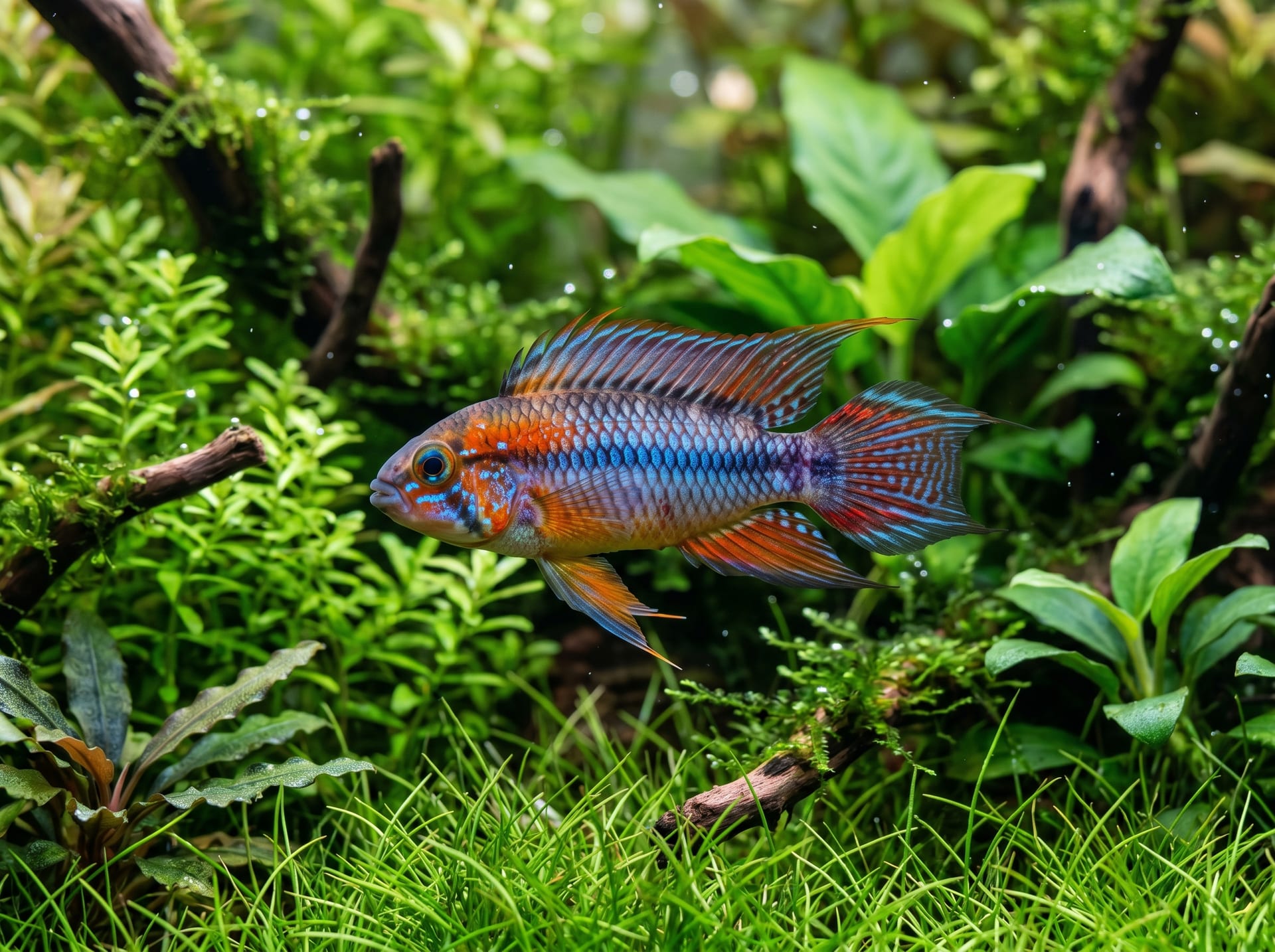
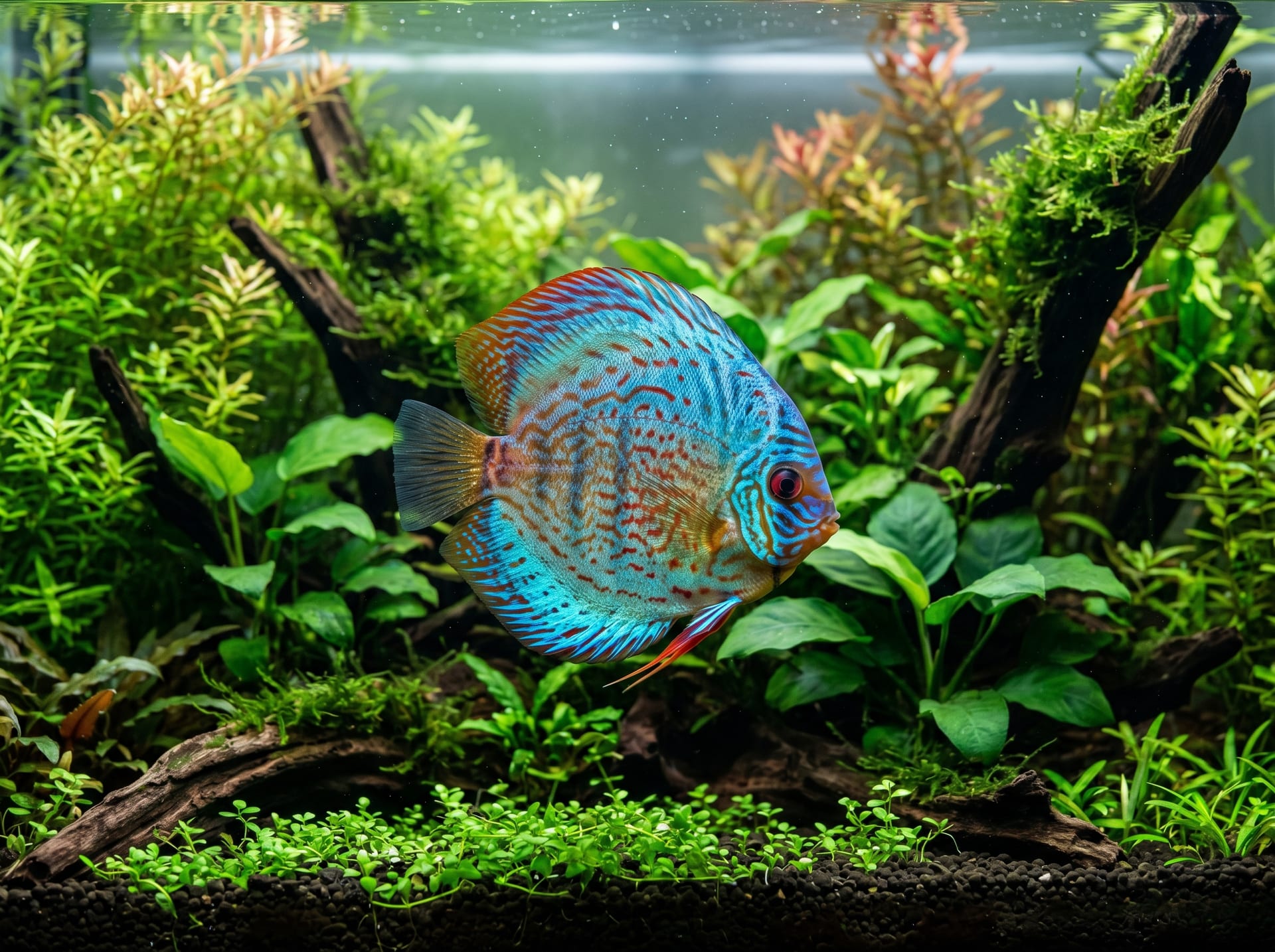
Most Apistogramma species require low pH (5.0–6.0) for breeding, making them an excellent match for blackwater. For a more elaborate breeding setup, How to Set Up an Apistogramma Biotope Pair-Breeding Tank can serve as a reference for specific layout procedures. It has long been used as a breeding water for discus, and fish from the Rio Negro such as cardinal tetras, pencil fish, and chocolate gouramis show particularly vibrant coloration in weakly acidic soft water. BreederDirect's tropical fish category includes many breeders who keep these species, and individuals raised in blackwater tend to receive high evaluations.
Asian Species
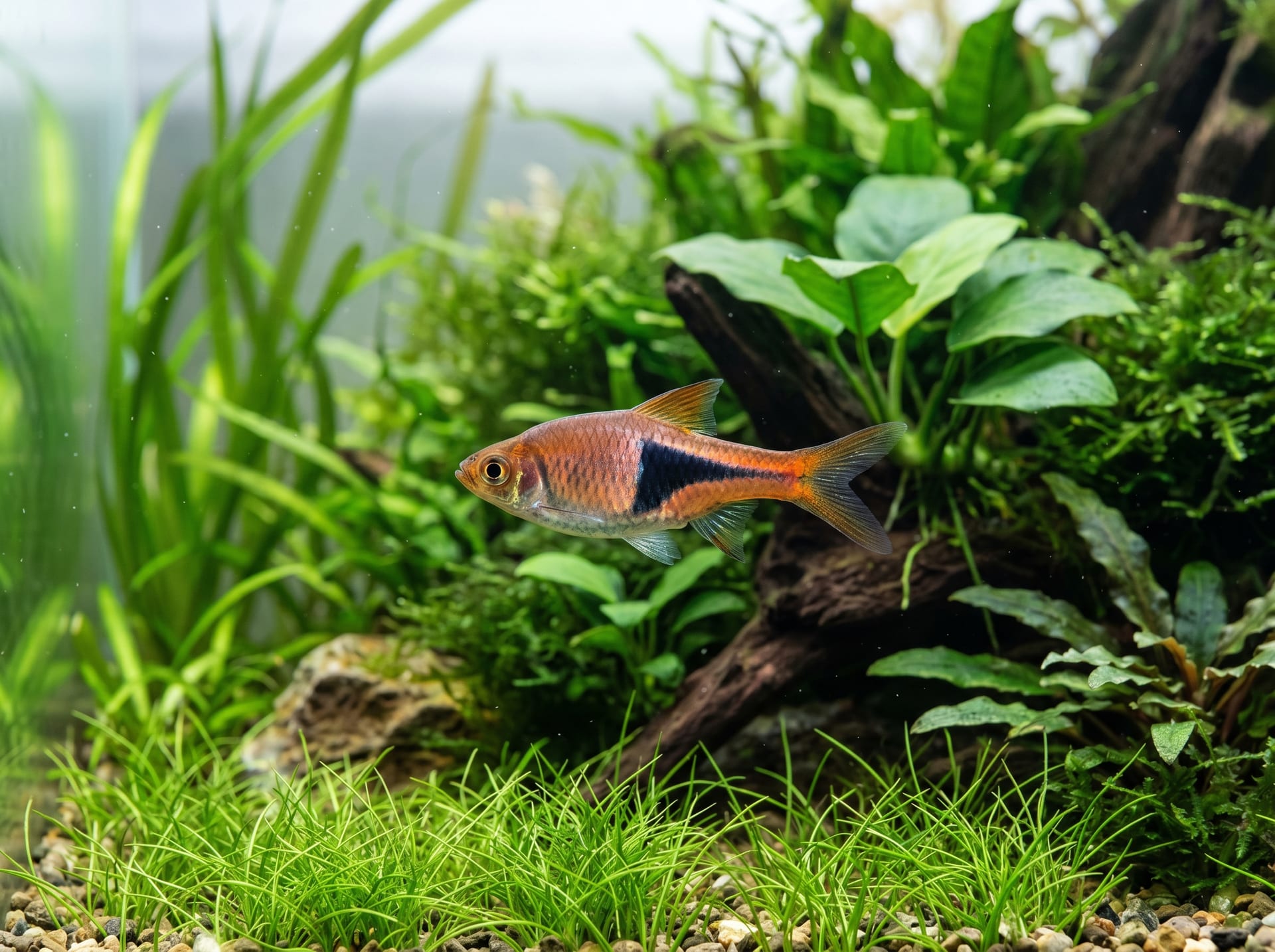
Wild bettas and Siamese fighting fish are native to acidic wetlands of Thailand and Malaysia, and when maintained in blackwater, their body coloration becomes significantly more vibrant. If you are interested in wild species themselves, Wild Betta Species and Care Guide will also help you better understand the relationship between native water parameters and body coloration. Rasbora heteromorpha, Badis badis (scarlet gem), and various Sphaerichthys and Osphronemus species prefer similar environments.
Plants
Due to reduced light, low-light plant species become the main focus. Without focusing on elaborate aquatic plant layouts, a nature-style "leaf litter" layout combining driftwood, fallen leaves, and white sand requires minimal effort and maximizes the atmosphere of blackwater.
Setup Procedure and Precautions
- Aquarium setup: Choose light-colored fine sand or a bare bottom for the substrate to highlight the tea-brown water color. A sponge filter or external filter is suitable for filtration (keep water flow settings low)
- Water preparation: Prepare RO water or soft water, add mineral supplements, and confirm TDS and GH measurements
- Material placement: Arrange alder cones, fallen leaves, and driftwood. pH will gradually begin to lower from the first day
- Water parameter check: Measure pH daily; once target values are reached, introduce fish. Avoid rapid changes (more than 1 pH unit per day)
- Fish introduction: Acclimate slowly using the drip method over 60–90 minutes
Maintenance Tips
The basic principle of maintaining a blackwater aquarium is "small water changes at low frequency." Large water changes will quickly destabilize the carefully balanced weakly acidic environment. Ideally, perform a small 10–15% weekly water change using RO water, and always measure pH after the water change to confirm.
Tannin materials gradually lose their effectiveness over weeks to months, so they need to be regularly replaced or supplemented. As fallen leaves decompose, they become a habitat for microorganisms and become part of the aquarium's ecosystem. The key to blackwater aquarium keeping is to embrace "natural accumulation" rather than obsess over perfect cleanliness. White spots or mold-like growths may appear on driftwood and fallen leaves, but these are usually colonies of bacteria or fungi, and since fish will peck at and consume them, they are typically not a problem.
While a blackwater aquarium requires effort during the initial setup stage, once water parameters stabilize, it becomes an extremely robust and stable system. The vivid coloration, behavior, and breeding richness that your fish display when kept in their native environment is an experience difficult to obtain in a standard aquarium. By all means, try this challenge into the deep, tea-brown world.