Source: Wikimedia Commons
Red Phantom Tetra
BeginnerMegalamphodus sweglesi
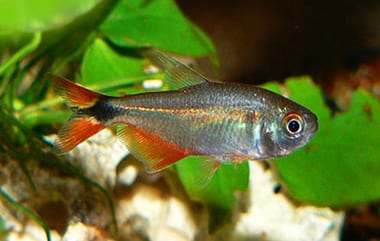
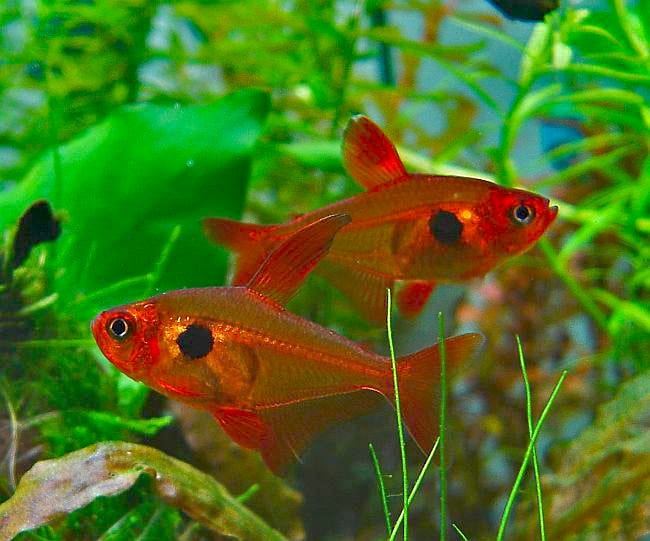
A small characin, translucent red with a black humeral spot. Males develop extended dorsal and anal fins while females are deeper-bodied. The depth of red varies, apparently by locality, and the reddest form is traded under its own name.
Difficulty
Beginner
Temperature
20〜28℃
Lifespan
3-5 years
Size
Up to 3.2cm SL
Diet
Dried, frozen and live foods
About
Megalamphodus sweglesi occurs in the Orinoco basin across Colombia and Venezuela. FishBase records a maximum of 3.2cm SL, pH 5.5-7.5, up to 20 dH and 20-23C, lists a diet of worms, small insects and crustaceans, and advises groups of five or more with a minimum tank length of 60cm. Seriously Fish gives 35mm SL, 20-28C, pH 4.5-7.5, 1-12 dGH and an 80 x 30cm base of about 72 litres. The body is translucent red with a black humeral spot; mature males develop extended dorsal and anal fins while females are deeper-bodied. Two or three colour forms are traded, and the reddest is sold as red or var. rubra. Seriously Fish notes that this red persists in long-term captives, so it is not a dietary artefact, and suspects it reflects the collection locality, with the reddest fish coming from blackwater and the plainer ones from clearwater. The IUCN rates it Least Concern and it is not listed by CITES.
Source: Wikipedia (CC BY-SA 4.0)
Lifespan of the Red Phantom Tetra
The Red Phantom Tetra lives 3-5 years.
Size of the Red Phantom Tetra
The Red Phantom Tetra grows to Up to 3.2cm SL.
Temperature & humidity for the Red Phantom Tetra
The ideal temperature for the Red Phantom Tetra is 20〜28℃.
Basic Info
Origin
South America (Orinoco basin, Colombia and Venezuela)
Lifespan
3-5 years
Care Specifications
- pH
- 4.5–7.5
- Hardness (GH)
- 1–12 dGH
- Water Temp.
- 20–28℃
- Min. Tank
- 72 L
PeacefulGroupBreeding: Moderate
Sources: FishBase / Seriously Fish
References & Sources
Edited & verified by: BreederDirect editorial team
The taxonomic, regulatory, and husbandry data on this page are compiled and verified against the authoritative primary sources below.
Taxonomy & Authority
Regulations & Conservation Status
Not CITES-listedIUCN LC · Least Concern
Sources: CITES Appendices (species not listed) / IUCN Red List
Regulations may change. Always verify the latest information with the relevant authorities.
Red Phantom Tetra Listings
Loading latest listingsFind listings for this species