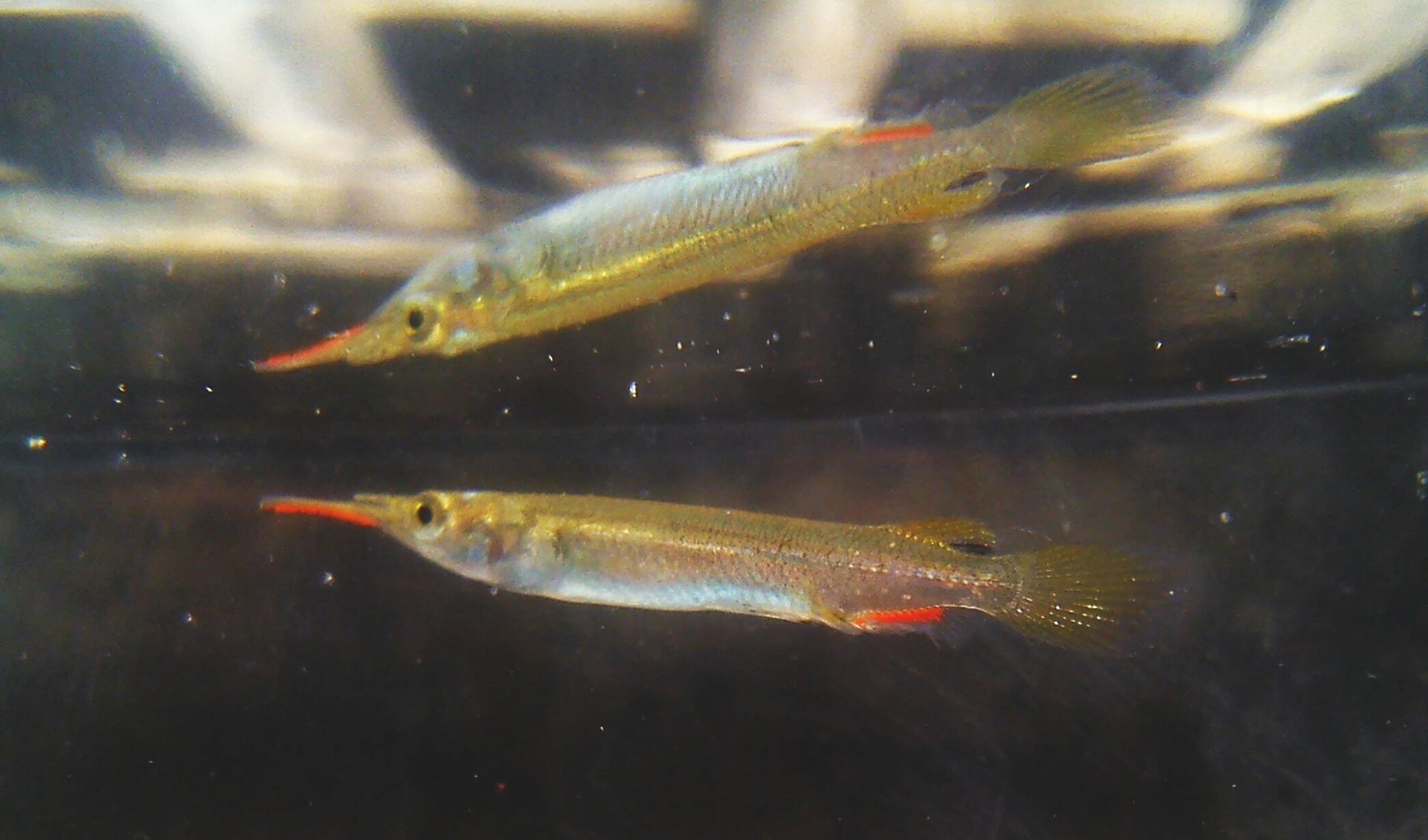
 © Ahsan_al_hidayat / CC BY-SA 3.0
Wrestling Halfbeak
The Golden Wrestling Halfbeak is a livebearing tropical fish known for its striking asymmetrical jaw, with only the lower half extended into a long beak-like structure. It spends nearly all its time just beneath the water's surface, snapping up insects that fall in. Its most distinctive behavior is males locking their elongated lower jaws together and pushing against one another — the very "wrestling" match that gives the species its English name. Staying compact at around 5.5cm as an adult, it also offers the chance to observe livebearing reproduction up close. While keeping this fish calls for some intermediate-level know-how, its unusual biology makes it a rewarding choice for hobbyists seeking something different.
View Wrestling Halfbeak encyclopedia →0% commission on your first sales!Register by September 30, 2026 and your first 2 sales are commission-free!
Breeder Wanted!
List on BreederDirect and sell directly to customers nationwide!
Our 6 Transparency Commitments
All Tropical Fish listings include water quality, temperament, and tank size information from verified Breeder.
- Origin Disclosed
- Real Photos
- Water Quality Disclosed
- Recommended Tank Size
- Temperament Disclosed
- Breed Line Disclosed
Browse all 301 breeds
Water Type
Care Level
Verified breeders wanted for Tropical Fish
Breeders are signing up now ahead of launch. Subscribe to be notified when new listings go live.
Getting alerts is free with a member account. When new listings match your saved search, we'll notify you by email and in-app.
Browse other categories
Verified breeders (preview)
Are you raising tropical fish?
Register as a breeder and connect with buyers directly.
Apply as a breederWrestling Halfbeak key facts
- Care level
- Intermediate
- Lifespan
- 4-6 years
- Size
- About 5.5cm
- Temperature
- 24〜28℃
- Diet
- Drosophila fruit flies, Artemia, frozen bloodworm
- Tank
- Seriously Fish suggests 60 x 38cm, about 68 litres, and notes that surface area matters more than depth. It jumps, so use floating plants with a tight lid, and plant densely at the edges to stop it damaging its jaw on the glass.
- Water Temperature & Quality
- Seriously Fish gives 24-28C, pH 6.5-8.0 and 10-20dGH. Fresh water is fine so long as it is hard and slightly alkaline, and it also tolerates brackish conditions up to about sg 1.005.
- Tank Mates
- It suits peaceful fish of similar size. With larger or more aggressive species it becomes shy and is outcompeted for food. A group settles better, and if several males are kept, more of them spreads the sparring.
- Diet & Feeding
- It feeds only from the surface. Gut-loaded Drosophila are ideal, and it also takes Artemia and frozen bloodworm. Dried foods are often refused at first but can be accepted over time.
- Breeding & Spawning
- Gestation runs three to six weeks depending on temperature. Inducing breeding is not difficult, but stillbirths are common and Seriously Fish attributes this to the parents' nutrition, advising a high-quality diet.
- Health & Notes
- Seriously Fish places it on the easy side but also notes it is flighty and can be delicate just after import. The extended jaw is easily damaged, so lay the tank out to avoid startling it. IUCN status is Data Deficient. The trade name Dermogenys is only the genus name and does not identify the species; other members of the genus arrive under it, so check for Dermogenys pusilla.
About Wrestling Halfbeak
The Golden Wrestling Halfbeak is a livebearing tropical fish with a distinctive elongated lower jaw. It lives just beneath the water's surface and is known for males' jaw-locking "wrestling" behavior. Adults reach about 5.5cm; recommended for intermediate keepers.
7 things to know before welcoming a Wrestling Halfbeak
1Recreate its surface-dwelling habitat
This species spends nearly its entire life just beneath the water's surface. Choose a tank shape that leaves plenty of open surface area, and make sure the lid has no gaps it could jump through. A tank with generous horizontal width suits its surface-swimming habit well.
2Feed to mimic falling insects
In the wild, it feeds on insects that fall onto the water's surface, so floating-type foods tend to suit it well. Choosing food that stays near the surface makes it easier for the fish to recognize and take.
3Males "wrestle" with their jaws
Males display a distinctive behavior of locking their long lower jaws together and pushing against each other, a form of dominance display. It rarely leads to serious injury, but if keeping multiple males, provide hiding spots and keep an eye on how they interact.
4Handle the delicate jaw with care
The slender, elongated lower jaw is delicate in structure. Avoid catching the fish with a net or using decor with sharp edges the jaw could snag on, and favor a tank layout with rounded, obstacle-free surfaces.
5Livebearing reproduction
As a livebearer, females give birth to free-swimming fry rather than laying eggs. If aiming to breed them, prepare hiding spots or a separate container for the fry so they aren't preyed upon by adults.
6Choose calm tankmates
Since it favors the surface layer, its territory can overlap with other fish that share the same zone. When housing it with tankmates, choose calm species that don't aggressively dominate the surface area for a more settled tank.
7Prepare equipment before bringing one home
As this species is recommended for intermediate keepers, gather the basic equipment for water quality management (filter, thermometer, secure lid) beforehand, and review the acclimation process so you can start off with confidence.
Frequently asked questions about Wrestling Halfbeak
- Q.Can beginners keep this fish?
- A.This species is generally considered suitable for intermediate keepers. Its surface-dwelling habits and delicate jaw require care different from typical tropical fish, so it's best introduced after gaining some fishkeeping experience.
- Q.How large does it grow?
- A.Adults reach approximately 5.5cm. Its compact size makes it relatively manageable as long as enough surface space is provided.
- Q.What does the "wrestling" behavior look like?
- A.It refers to males locking their elongated lower jaws together and pushing against one another, a dominance display behavior. This is the origin of the English name "Wrestling Halfbeak."
- Q.Can it be kept with other fish?
- A.Since it prefers the surface layer, its territory can overlap with other surface-dwelling fish. Choosing calm species that don't aggressively dominate the surface makes cohabitation smoother.
- Q.Are there any regulatory restrictions?
- A.This species is not subject to CITES. No special procedures are required on this point when bringing one home.
Useful tools for Wrestling Halfbeak care
Learn more about Wrestling Halfbeak in the encyclopedia
View Wrestling Halfbeak encyclopedia entry →
Care difficulty, lifespan, size and diet — all basics covered.
More in this category
Can't find the one you're looking for?
Post your wishes for free and breeders with matching animals will contact you with introductions.