Source: Wikimedia Commons
Wrestling Halfbeak
IntermediateDermogenys pusilla
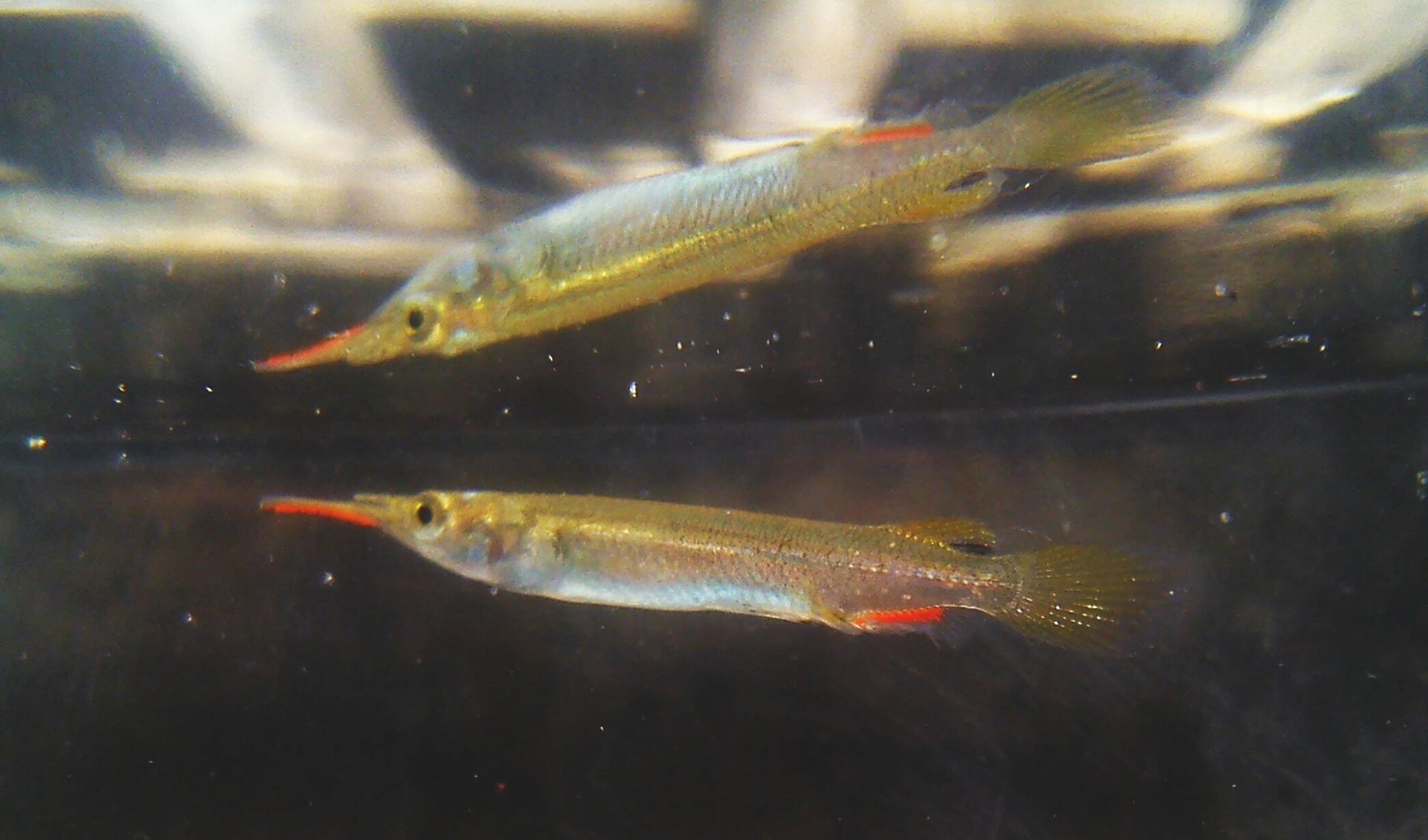
A livebearer with a distinctive mouth in which only the lower jaw is elongated. It lives entirely just under the surface, feeding on insects that fall in. Males lock jaws and push against each other, which gives it the name wrestling halfbeak.
Difficulty
Intermediate
Temperature
24〜28℃
Lifespan
4-6 years
Size
About 5.5cm
Diet
Drosophila fruit flies, Artemia, frozen bloodworm
About
Dermogenys pusilla is a livebearer widespread from South to Southeast Asia. Only its lower jaw is drawn out into a spear, the beloniform mouth, and it holds station just under the surface waiting for insects to fall. It lives in slow rivers, canals, ditches, flooded fields and lakes, favouring places with abundant surface vegetation, and appears in brackish mangrove areas in the rainy season. Seriously Fish gives 24-28C, pH 6.5-8.0, 10-20dGH and a 60 x 38cm tank of about 68 litres, noting that surface area matters more than depth. It is nervous and bolts when startled, easily damaging its delicate jaw tip against the glass, so plant densely around the edges and combine floating plants with a tight lid against jumping. Males lock jaws and push, the behaviour behind the English name, but serious injury is rare when there is space. Gestation runs three to six weeks depending on temperature. Stillbirths are common, and Seriously Fish links them to nutrition. IUCN status is Data Deficient.
Source: Wikipedia (CC BY-SA 4.0)
Lifespan of the Wrestling Halfbeak
The Wrestling Halfbeak lives 4-6 years.
Size of the Wrestling Halfbeak
The Wrestling Halfbeak grows to About 5.5cm.
Temperature & humidity for the Wrestling Halfbeak
The ideal temperature for the Wrestling Halfbeak is 24〜28℃.
Basic Info
Origin
South and Southeast Asia (India, Myanmar, Thailand, Indochina, Malaysia, Indonesia)
Care Specifications
- pH
- 6.5–8
- Hardness (GH)
- 10–20 dGH
- Water Temp.
- 24–28℃
- Min. Tank
- 68 L
PeacefulGroupBreeding: Moderate
Sources: FishBase / Seriously Fish
References & Sources
Edited & verified by: BreederDirect editorial team
The taxonomic, regulatory, and husbandry data on this page are compiled and verified against the authoritative primary sources below.
Taxonomy & Authority
Accepted name: Dermogenys pusilla Kuhl & van Hasselt, 1823
Authority databases: FishBase
Nomenclature follows global taxonomic authority databases.
Regulations & Conservation Status
Not CITES-listedIUCN DD · Data Deficient
Sources: CITES Appendices (species not listed) / IUCN Red List
Regulations may change. Always verify the latest information with the relevant authorities.
Wrestling Halfbeak Listings
Loading latest listingsFind listings for this species