Source: Wikimedia Commons
Redtail Notho
IntermediateNothobranchius guentheri
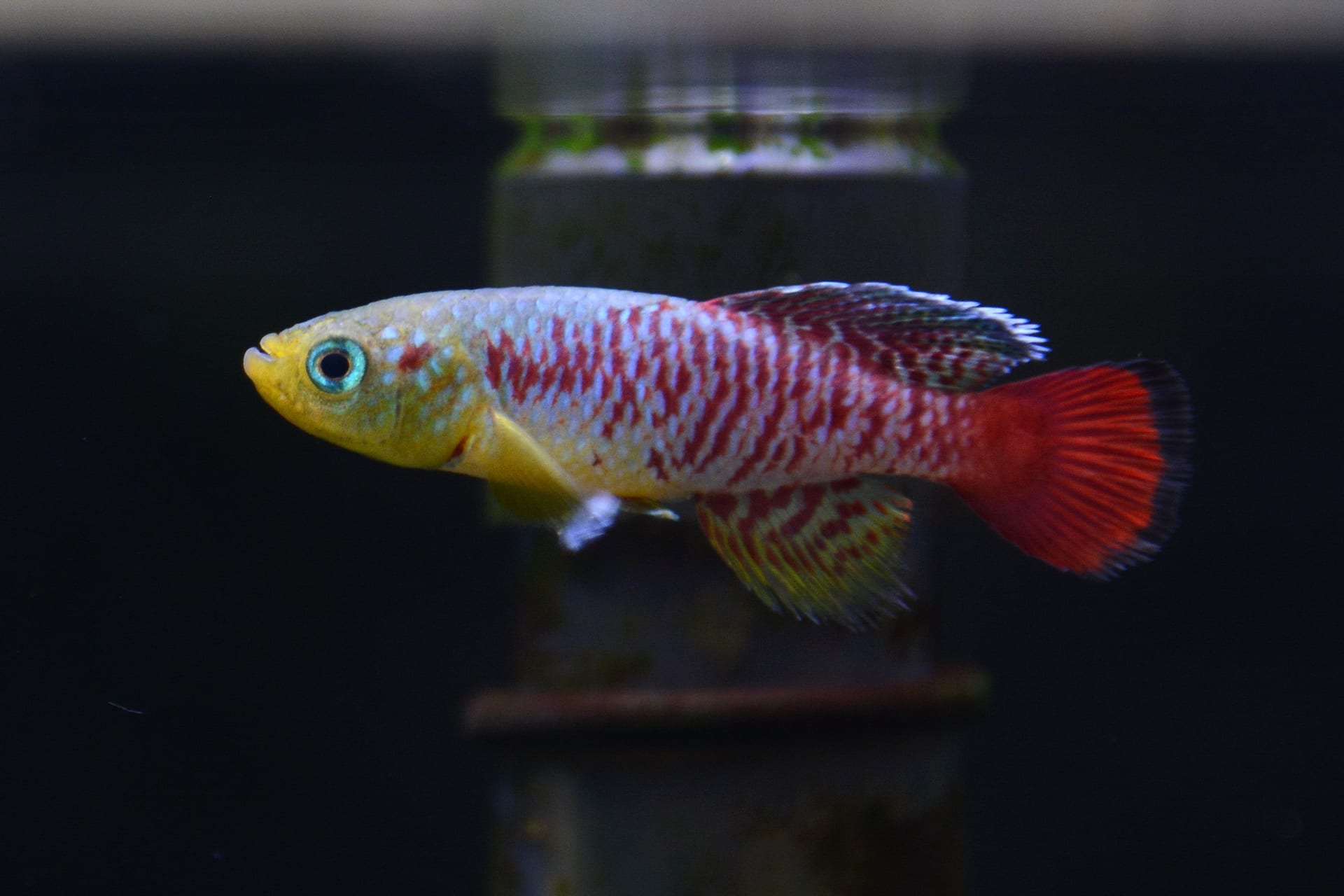
A small annual killifish whose males carry a deep red caudal fin. It is endemic to Unguja Island in Tanzania and assessed as Endangered by the IUCN, and it survives the dry season as drought-resistant eggs.
Difficulty
Intermediate
Temperature
22〜25℃
Lifespan
About 1 years
Size
3-3.5cm
Diet
Artemia, Daphnia, frozen bloodworm
About
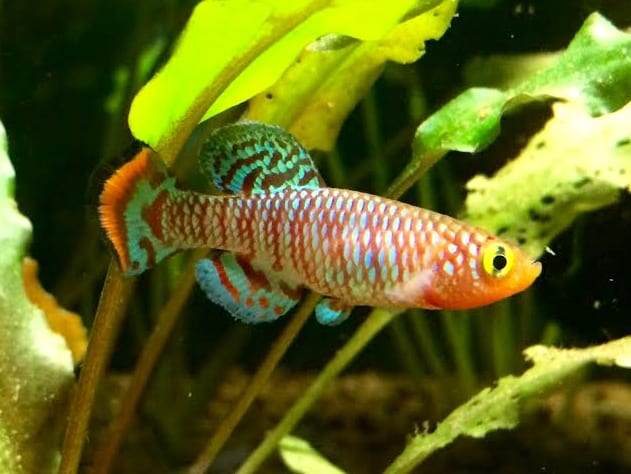
Nothobranchius guentheri is a small killifish restricted to Unguja Island in the Zanzibar archipelago of Tanzania. FishBase gives a standard length of 3.5cm for males and 3.2cm for females. Males are blue-green with red scale margins and a deep red caudal fin. It lives in temporary pools, swamps, ditches and small streams, and is an annual species adapted to habitats that dry out. It lays drought-resistant eggs in the bottom, and the eggs take three to four months to incubate. It preys on mosquito larvae and has been used in biological control. FishBase records 22-25C, pH 6.0-7.0 and 4-10dH for its habitat. It has long been known to aquarists, but FishBase notes that it is difficult to maintain in an aquarium. Because its range is confined to Unguja Island, the IUCN Red List assessed it as Endangered in 2018, and the fish offered in the hobby are captive-bred lines.
Source: Wikipedia (CC BY-SA 4.0)
Lifespan of the Redtail Notho
The Redtail Notho lives About 1 years.
Size of the Redtail Notho
The Redtail Notho grows to 3-3.5cm.
Temperature & humidity for the Redtail Notho
The ideal temperature for the Redtail Notho is 22〜25℃.
Basic Info
Origin
East Africa (Unguja Island, Zanzibar archipelago, Tanzania)
Lifespan
About 1 years
Care Specifications
References & Sources
Edited & verified by: BreederDirect editorial team
The taxonomic, regulatory, and husbandry data on this page are compiled and verified against the authoritative primary sources below.
Taxonomy & Authority
Accepted name: Nothobranchius guentheri (Pfeffer, 1893)
Authority databases: FishBase
Nomenclature follows global taxonomic authority databases.
Regulations & Conservation Status
Not CITES-listedIUCN EN · Endangered
Sources: CITES Appendices (species not listed) / IUCN Red List
Regulations may change. Always verify the latest information with the relevant authorities.
Redtail Notho Listings
Loading latest listingsFind listings for this species