Source: Wikimedia Commons
Reticulated Hillstream Loach
IntermediateSewellia lineolata
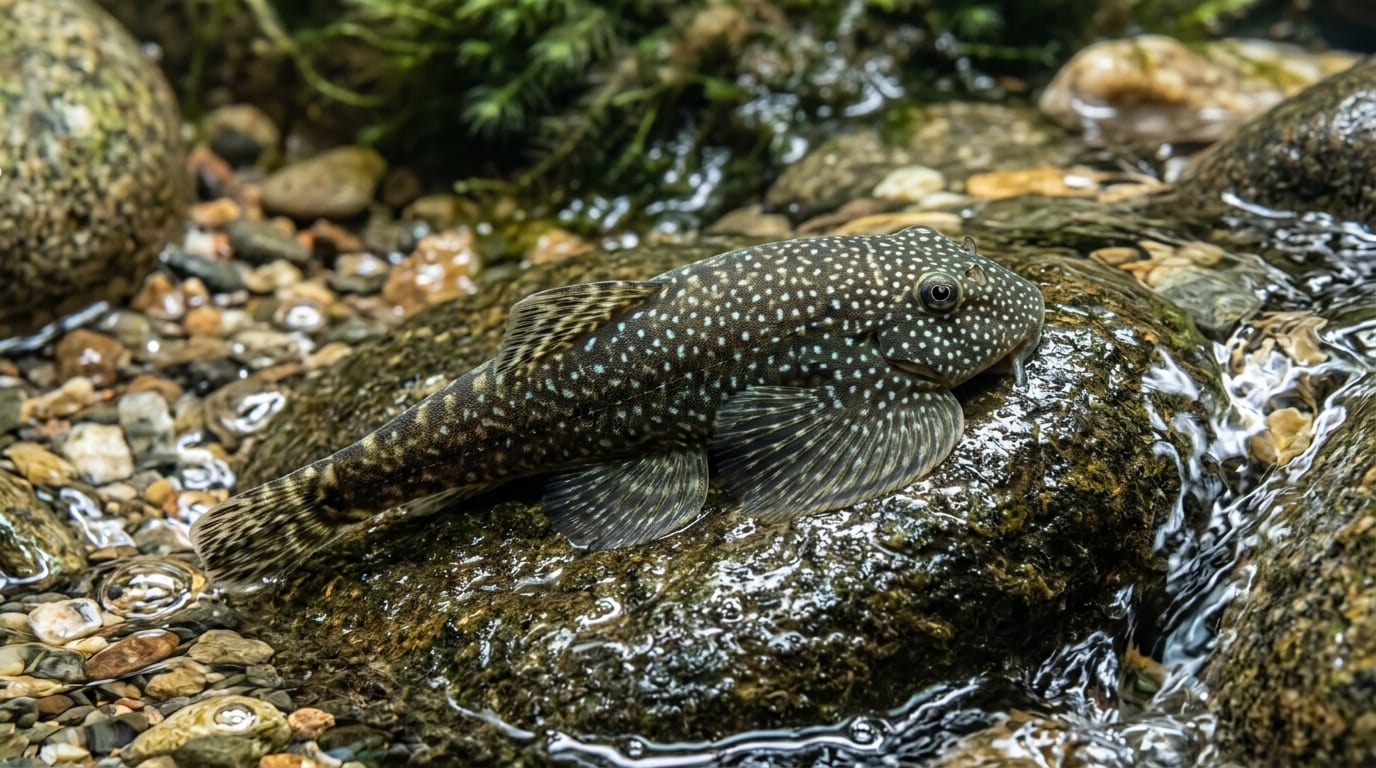
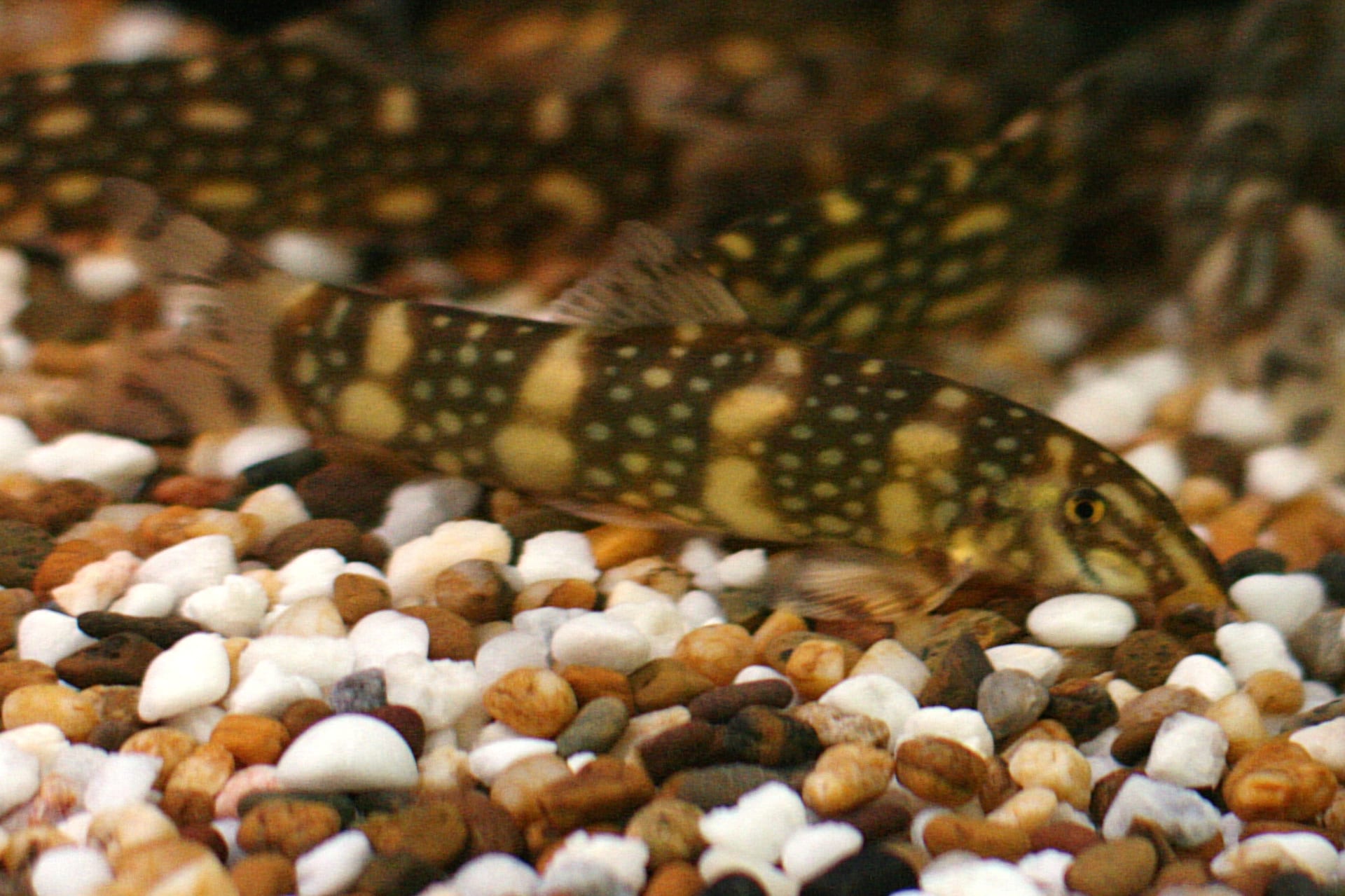
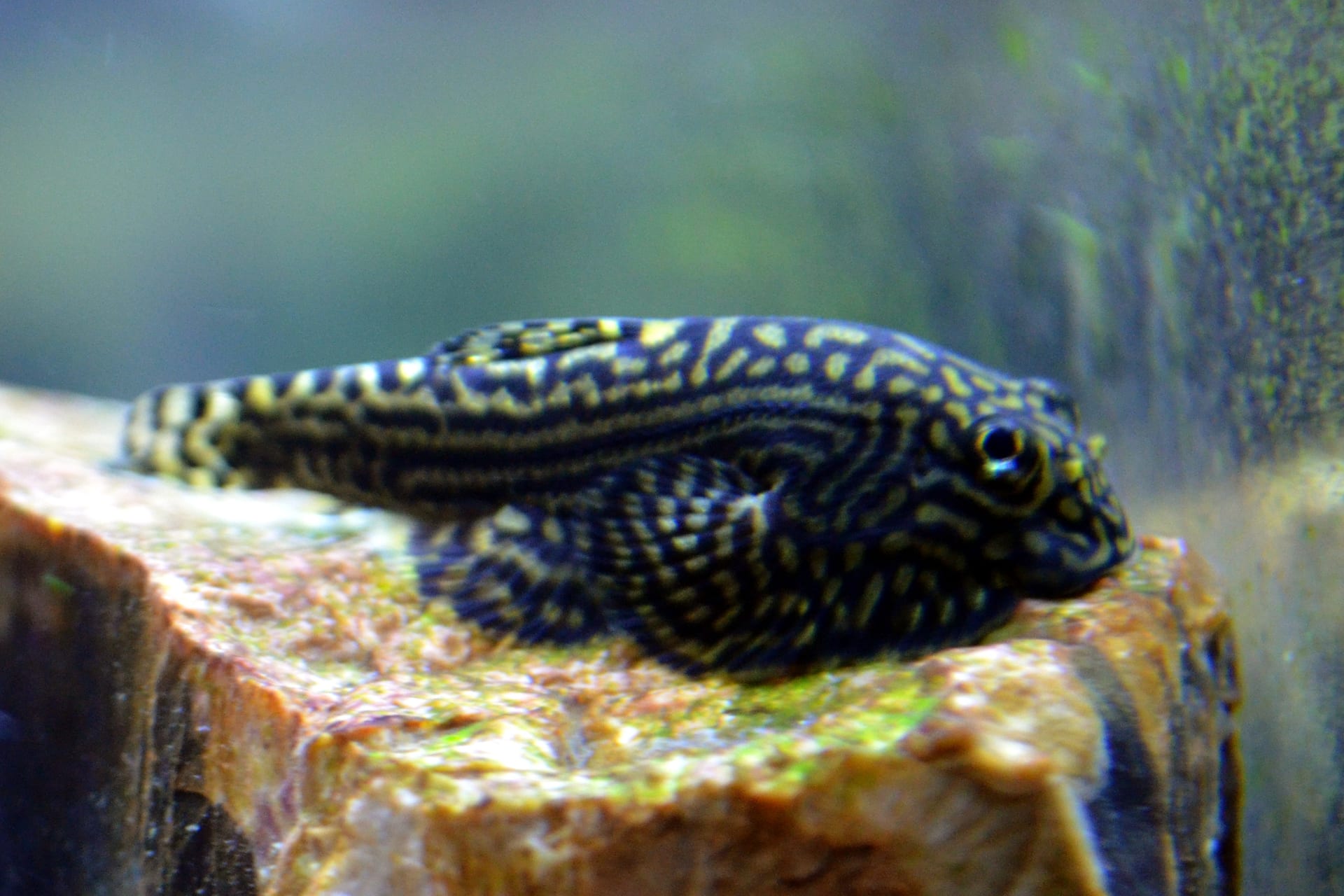
A torrent loach that flattens itself against rock, marked with a handsome yellow and black reticulation. It needs strong flow, high oxygen and algae-covered rock, but it is among the easier loaches to breed.
Difficulty
Intermediate
Temperature
20〜24℃
Lifespan
5-8 years
Size
5.7-6.5cm
Diet
Benthic algae, home-made vegetable-rich foods, algae-based dried foods
About
Sewellia lineolata is a hillstream loach of the streams of Viet Nam and Laos. FishBase gives a standard length of 5.7cm and Seriously Fish 65mm. It flattens its body and uses the paired fins as a sucker to hold onto rock, and the yellow and black reticulation gives it its name. It lives in rapids and riffles, from places where the current exceeds one metre per second to small streams where only short riffles link deeper pools. Flow and oxygen are the key to keeping it: Seriously Fish advises a turnover of 15 to 20 times per hour and strong lighting to grow algae. The figures given are 20-24C, pH 6.0-7.5, 1-10dGH and a 75 x 30cm tank of about 68 litres. Its diet is mainly benthic algae and associated micro-organisms, and where algae are short, rocks can be grown in a separate tank and rotated in. It is dominant among its own group but not aggressive towards fish of a different shape. It is among the easier loaches to breed, and a deep bed of rounded river gravel protects the eggs. IUCN status is Vulnerable.
Source: Wikipedia (CC BY-SA 4.0)
Lifespan of the Reticulated Hillstream Loach
The Reticulated Hillstream Loach lives 5-8 years.
Size of the Reticulated Hillstream Loach
The Reticulated Hillstream Loach grows to 5.7-6.5cm.
Temperature & humidity for the Reticulated Hillstream Loach
The ideal temperature for the Reticulated Hillstream Loach is 20〜24℃.
Basic Info
Origin
Southeast Asia (Viet Nam and Laos, Mekong basin)
Care Specifications
- pH
- 6–7.5
- Hardness (GH)
- 1–10 dGH
- Water Temp.
- 20–24℃
- Min. Tank
- 68 L
Semi-aggressiveGroupBreeding: Easy
Sources: FishBase / Seriously Fish
References & Sources
Edited & verified by: BreederDirect editorial team
The taxonomic, regulatory, and husbandry data on this page are compiled and verified against the authoritative primary sources below.
Taxonomy & Authority
Accepted name: Sewellia lineolata (Valenciennes, 1846)
Authority databases: FishBase
Nomenclature follows global taxonomic authority databases.
Regulations & Conservation Status
Not CITES-listedIUCN VU · Vulnerable
Sources: CITES Appendices (species not listed) / IUCN Red List
Regulations may change. Always verify the latest information with the relevant authorities.
Reticulated Hillstream Loach Listings
Loading latest listingsFind listings for this species