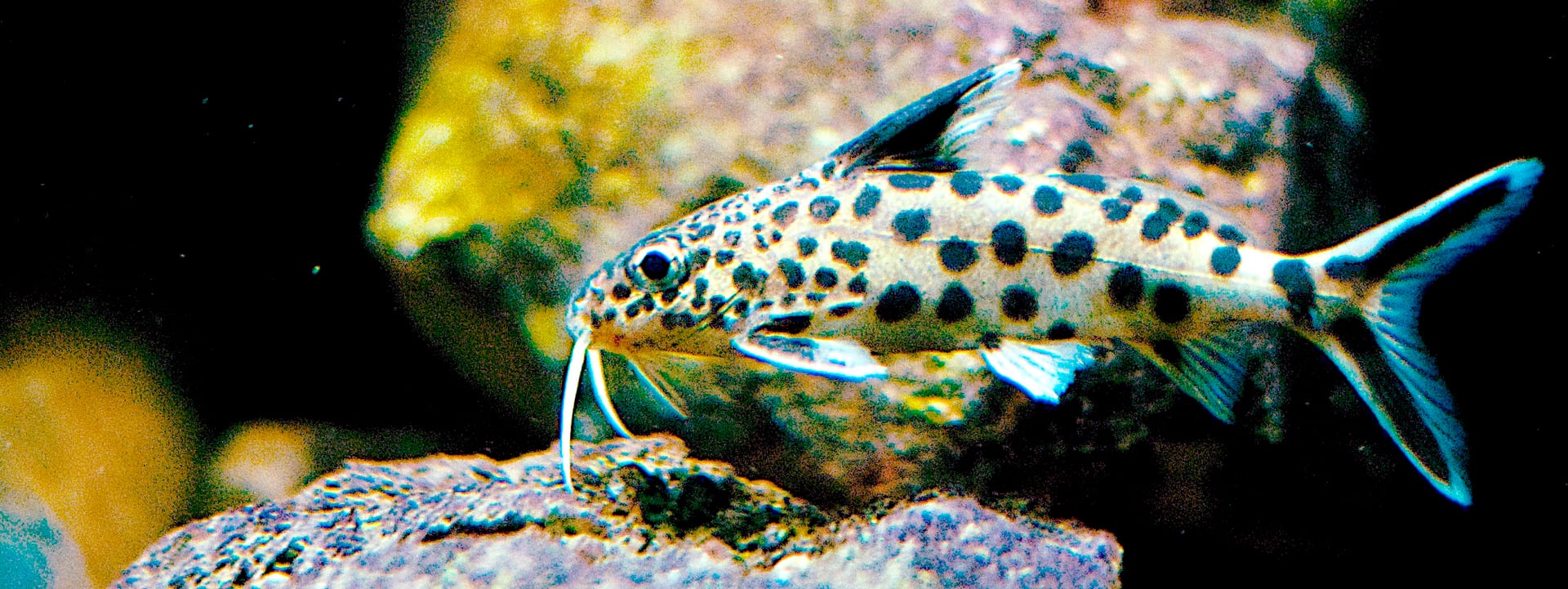
 © Mario Rubio García / CC BY 2.0
Cuckoo Catfish
The Cuckoo Catfish (Synodontis multipunctatus) is a mid-sized catfish endemic to Lake Tanganyika, best known for its remarkable brood-parasitic behavior. Females slip their own eggs in among the eggs of mouthbrooding cichlids, and once hatched, the catfish fry feed on the host's own young as they grow. Its pale body is dappled with dark spots, and its whiskered face and rounded profile give it a distinctly charming look. Adults can reach up to about 27.5cm, making for a striking presence in a well-established aquarium. Because it thrives best in hard, alkaline water, it calls for a bit more experience with water chemistry, making it a better fit for intermediate keepers. It also tends toward nocturnal habits and appreciates plenty of hiding spots, both worth planning for in advance.
View Cuckoo Catfish encyclopedia →0% commission on your first sales!Register by September 30, 2026 and your first 2 sales are commission-free!
Breeder Wanted!
List on BreederDirect and sell directly to customers nationwide!
Our 6 Transparency Commitments
All Tropical Fish listings include water quality, temperament, and tank size information from verified Breeder.
- Origin Disclosed
- Real Photos
- Water Quality Disclosed
- Recommended Tank Size
- Temperament Disclosed
- Breed Line Disclosed
Browse all 301 breeds
Water Type
Care Level
Verified breeders wanted for Tropical Fish
Breeders are signing up now ahead of launch. Subscribe to be notified when new listings go live.
Getting alerts is free with a member account. When new listings match your saved search, we'll notify you by email and in-app.
Browse other categories
Verified breeders (preview)
Are you raising tropical fish?
Register as a breeder and connect with buyers directly.
Apply as a breederAbout Cuckoo Catfish
Synodontis multipunctatus, the Cuckoo Catfish, is a Lake Tanganyika endemic known for parasitizing cichlid broods. Pale with dark spots, it grows to about 27.5cm and suits intermediate keepers.
7 things to know before welcoming a Cuckoo Catfish
1Known for Brood Parasitism
This species is known for "brood parasitism," slipping its own eggs in among a mouthbrooding cichlid's clutch so the host raises them. Once hatched, the fry feed on the host's own young, so tankmates need to be chosen carefully.
2Prefers Hard, Alkaline Water
As a Lake Tanganyika native, it prefers hard, alkaline water. Tap water in many areas tends to be softer, so substrate or additives may be needed to adjust water chemistry accordingly.
3Grows Up to About 27.5cm
Even though juveniles start out small, adults can reach up to about 27.5cm. Plan ahead with a tank large enough to accommodate its full adult size.
4Nocturnal and Likes Hiding Spots
It tends to hide during the day and become more active at night. Providing driftwood or rockwork for shelter helps it feel secure.
5Best Suited to Intermediate Keepers
Because it calls for some experience with water chemistry and tankmate selection, it's considered a fish for intermediate keepers. First-time aquarists may want to get comfortable with basic water management before taking one on.
6Choose Tankmates Carefully
Because of its brood-parasitic habits, keeping it with mouthbrooding cichlids can lead to breeding-related complications. Research any potential tankmates thoroughly before combining them.
7Prepare the Tank in Advance
Given its adult size and preference for hard water, it's best to set up a spacious tank with adjusted water chemistry before bringing one home. Arrange hiding spots in the layout ahead of time as well.
Frequently asked questions about Cuckoo Catfish
- Q.Can it be kept with other fish?
- A.Cohabitation is generally possible, but caution is needed when pairing it with mouthbrooding cichlids due to its brood-parasitic habits. Research the tankmate's biology carefully before combining them.
- Q.How big does it get?
- A.Adults can grow to about 27.5cm at maximum. Consider its eventual adult size, not just its size at purchase, when choosing a tank.
- Q.Is it suitable for beginners?
- A.It's considered a fish for intermediate keepers, since it calls for some experience with water chemistry and tankmate selection. Getting comfortable with basic aquarium care first is recommended.
- Q.What kind of water conditions does it need?
- A.As a Lake Tanganyika native, it prefers hard, alkaline water. Since tap water in many areas tends to be softer, adjusting water chemistry accordingly is a good idea.
- Q.Is this species regulated under CITES?
- A.Synodontis multipunctatus is not subject to CITES.
Useful tools for Cuckoo Catfish care
Learn more about Cuckoo Catfish in the encyclopedia
View Cuckoo Catfish encyclopedia entry →
Care difficulty, lifespan, size and diet — all basics covered.
More in this category
Can't find the one you're looking for?
Post your wishes for free and breeders with matching animals will contact you with introductions.