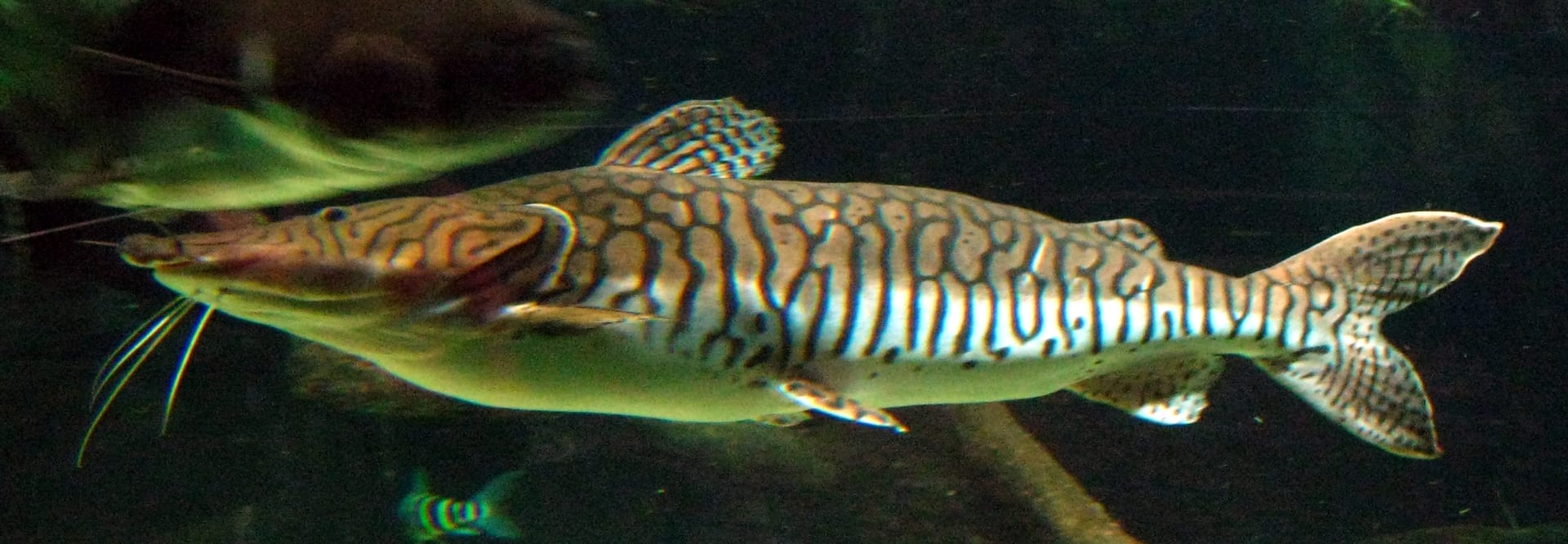
 © Matthieu Sontag / CC BY-SA 3.0
Tiger Shovelnose Catfish
The Tiger Shovelnose Catfish is a striking large catfish native to South America's Amazon and Orinoco river systems. Its silvery body marked with bold black stripes, combined with a long, flattened snout and three pairs of long barbels, gives it an unmistakably dramatic presence. Calm and unhurried in temperament, it spends much of its time cruising slowly through open water rather than darting about. Because it can grow to roughly 105 cm in length, this is very much an advanced keeper's fish, requiring a tank system built from the start around its eventual adult size. Anyone considering one should be prepared for a genuine long-term commitment.
View Tiger Shovelnose Catfish encyclopedia →0% commission on your first sales!Register by September 30, 2026 and your first 2 sales are commission-free!
Breeder Wanted!
List on BreederDirect and sell directly to customers nationwide!
Our 6 Transparency Commitments
All Tropical Fish listings include water quality, temperament, and tank size information from verified Breeder.
- Origin Disclosed
- Real Photos
- Water Quality Disclosed
- Recommended Tank Size
- Temperament Disclosed
- Breed Line Disclosed
Browse all 341 breeds
Water Type
Care Level
Verified breeders wanted for Tropical Fish
Breeders are signing up now ahead of launch. Subscribe to be notified when new listings go live.
Getting alerts is free with a member account. When new listings match your saved search, we'll notify you by email and in-app.
Browse other categories
Verified breeders (preview)
Are you raising tropical fish?
Register as a breeder and connect with buyers directly.
Apply as a breederTiger Shovelnose Catfish key facts
- Care level
- Advanced
- Lifespan
- 10-15 years
- Size
- Up to about 105cm
- Temperature
- 22〜26℃
- Diet
- Prawns, mussels, cockles, lancefish, earthworms, fish fillet
- Tank
- Seriously Fish gives 360 x 240 x 120cm (about 10,368 litres) as the minimum for an adult. The long snout is easily damaged against the glass in a cramped tank.
- Water Temperature & Quality
- 22-26C, pH 6.0-7.6, 2-30 degrees hardness, with a preference for slightly acidic water. Heavy feeding demands powerful filtration.
- Tank Mates
- Fairly peaceful with similarly sized fish, but it eats smaller ones and is territorial towards conspecifics and other large catfishes. Large doradids and characins can work in spacious systems.
- Diet & Feeding
- Prawns, mussels, cockle, lancefish, earthworms and fish fillet. Avoid mammalian meat and feeder fish. Feed juveniles every other day, adults about weekly.
- Breeding & Spawning
- It migrates long distances to spawn in the wild. Reproduction is unreported in the hobby.
- Health & Notes
- Easily confused with Pseudoplatystoma tigrinum, so check the identification when buying. Growth is fast: settle the lifetime housing before acquiring one.
About Tiger Shovelnose Catfish
A large Amazon catfish with a striking black-striped silver body, a flattened snout, and three pairs of long barbels. Growing to about 105 cm, it's a fish for experienced aquarists only.
7 things to know before welcoming a Tiger Shovelnose Catfish
1Grows to About 105 cm
This catfish can reach roughly 105 cm in total length as an adult. Its size at the juvenile stage is misleading, and a tank chosen for a small fish will quickly become inadequate. Planning around its full adult size from the start is essential.
2Needs a ~10,000 L Setup
A fully grown adult requires a water volume on the order of 10,000 liters. This far exceeds what a typical home aquarium can provide, so it's important to carefully consider whether you can secure a large, purpose-built setup before committing.
3Advanced-Level Difficulty
Due to its size and the demands of managing such a large water volume, this species is considered suitable only for experienced keepers. Prior experience with catfish and the water-quality and feeding routines specific to large fish is strongly recommended.
4Calm but Predatory
Despite its imposing appearance, this fish is relatively calm and spends much of its time swimming unhurriedly. However, any tankmate small enough to fit in its mouth may be viewed as prey, so tankmate size needs careful consideration.
5Flattened Snout and Barbels
Its long, flattened snout and three pairs of barbels function as sensory organs for probing the substrate for prey. This structure allows it to detect its surroundings even in dim water, reflecting its natural foraging behavior in the wild.
6Silver Body, Black Stripes
The black stripes across its silvery body are the source of its name, and the pattern's appearance can change somewhat as the fish matures. Watching these gradual changes over the years is one of the rewards of keeping this fish long-term.
7A Long-Term Commitment
Bringing home a fish that grows this large means committing to maintaining a large tank and equipment for years to come. Before deciding, it's worth discussing with your household whether you can keep providing adequate space and facilities long-term.
Frequently asked questions about Tiger Shovelnose Catfish
- Q.Can I keep it in a home aquarium for life?
- A.Adults can reach about 105 cm and are said to need a water volume on the order of 10,000 liters, so keeping one long-term in a typical home aquarium isn't realistic. Before bringing one home, have a concrete picture of the setup scale you'll eventually need.
- Q.Is this fish suitable for beginners?
- A.No — its care level is rated for advanced keepers, so it isn't recommended for beginners. Consider it only after building up experience with water-quality management, feeding, and planning equipment around a large fish's eventual size.
- Q.Can it be kept with other fish?
- A.Its temperament is relatively calm, but any fish small enough to fit in its mouth may be eaten. If you plan to keep tankmates, choose robust fish of a similar or larger size and pay close attention to the size difference.
- Q.Is it subject to CITES regulation?
- A.No, the Tiger Shovelnose Catfish is not subject to CITES. That said, regardless of regulatory status, keeping this fish still requires preparing adequate facilities and space.
- Q.What does it look like?
- A.Its most distinctive features are the black stripes across its silvery body, a long flattened snout, and three pairs of long barbels. Watching how it moves those barbels while probing the substrate for food is also an interesting point to observe.
Useful tools for Tiger Shovelnose Catfish care
Learn more about Tiger Shovelnose Catfish in the encyclopedia
View Tiger Shovelnose Catfish encyclopedia entry →
Care difficulty, lifespan, size and diet — all basics covered.
Tiger Shovelnose Catfish related articles
See more Tiger Shovelnose Catfish articles →More in this category
Can't find the one you're looking for?
Post your wishes for free and breeders with matching animals will contact you with introductions.