Guinean bichir
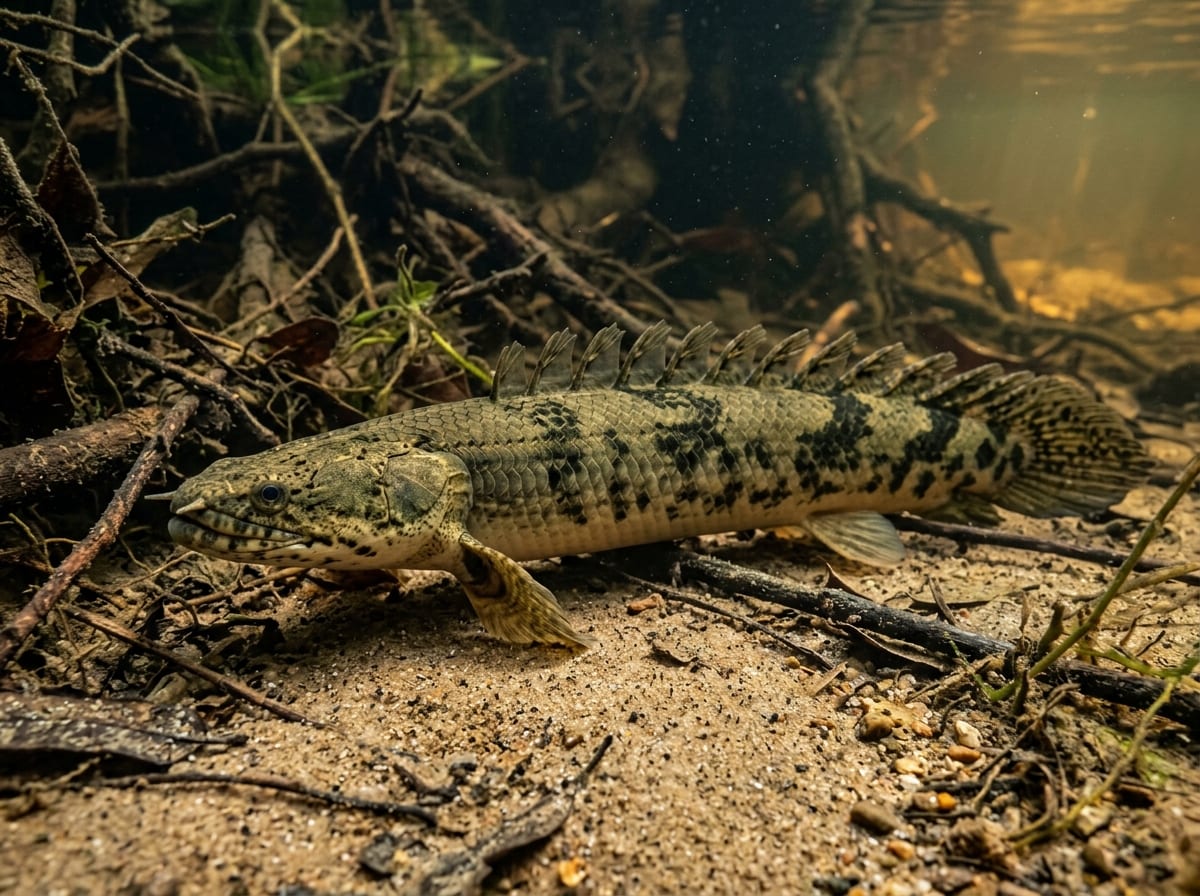
The Guinean bichir (Polypterus ansorgii) comes from West Africa, ranging from Guinea-Bissau to Nigeria. Its greenish-brown to black body carries large dark blotches, and the lower jaw becomes slightly protruding as the fish matures. It is known as a large species with an ancient-fish look and a calm, bottom-oriented way of moving. Reported adult length varies widely, from 28 cm (FishBase) to 72 cm (Wikipedia), so plan for generous tank space. It is rated as suited to intermediate keepers, and because lifespan data is scarce, it is safest to prepare for a long commitment.
View Guinean bichir encyclopedia →Breeder Wanted!
List on BreederDirect and sell directly to customers nationwide!
BreederDirect's 6 Transparency Commitments
All Tropical Fish listings include water quality, temperament, and tank size information from verified Breeder.
- Origin Disclosed
- Real Photos
- Water Quality Disclosed
- Recommended Tank Size
- Temperament Disclosed
- Breed Line Disclosed
Browse all 341 breeds
Water Type
Care Level
Verified breeders wanted for Tropical Fish
Breeders are signing up now ahead of launch. Subscribe to be notified when new listings go live.
Getting alerts is free with a member account. When new listings match your saved search, we'll notify you by email and in-app.
Browse other categories
Verified breeders (preview)
Are you raising tropical fish?
Register as a breeder and connect with buyers directly.
Apply as a breederGuinean bichir key facts
- Care level
- Intermediate
- Size
- 28 cm TL (some sources give up to 72 cm)
- Diet
- Carnivore (prawns, earthworms, mussels, fish pieces)
- Water Temperature & Quality
- Few species-specific data on temperature or water chemistry. A tropical river fish; provide ample filtration and regular water changes.
- Aquarium
- Plan for a large adult: a big tank with a wide footprint for life, as floor area matters more than depth. Add driftwood and rocks for cover and use a gap-free lid.
- Tank Mates & Compatibility
- Eats fish it can swallow. It often lives with robust fish of similar size, but review companions as it grows.
- Diet & Feeding
- Carnivorous: frozen or live prawns, earthworms, mussels and fish pieces; it may be weaned onto sinking pellets for predators.
- Breeding & Egg-laying
- Few reliable reports of breeding in home aquaria.
- Health & Cautions
- It weakens without access to air. Escapes that end in drying out are common, so seal all gaps in the lid.
About Guinean bichir
Guinean bichir (Polypterus ansorgii): a large West African bichir with a greenish-brown to black body and bold dark blotches. Rated for intermediate keepers. Learn its traits, care points and what to prepare before bringing one home.
7 things to know before welcoming a Guinean bichir
1Plan for size range
Sources report adult length anywhere from 28 cm (FishBase) to 72 cm (Wikipedia), so the final size is hard to predict. Plan your tank and its location around the larger figure before you bring one home.
2Wide-bottomed tank
Bichirs spend much of their time near the bottom, so choose a tank for floor area rather than height. Since this is known as a large species, make sure there is enough width for the fish to turn around comfortably.
3Escape-proof the lid
Bichirs can slip out through surprisingly small gaps in a tank. Keep the lid firmly closed and seal the openings around filter pipes and cables.
4Air space at surface
Bichirs have lungs and are often seen gulping air at the surface. Leave a little air space between the water and the lid so the fish can breathe air freely.
5Tankmates and mouth size
This is a carnivorous fish, so anything small enough to fit in its mouth may be eaten. If you keep tankmates, choose fish of similar or larger size, provide hiding places, and watch how they get along.
6Sinking foods
Because it forages along the bottom and eats meat, sinking foods are easiest to offer. Leftovers foul the water, so start with small portions and adjust based on how the fish eats.
7Water quality and health
Larger fish foul the water faster, so solid filtration and regular water changes are the foundation of care. Lifespan data is scarce and no reliable figure can be given, so watch appetite and body condition daily to catch changes early.
Frequently asked questions about Guinean bichir
- Q.Can beginners keep this fish?
- A.It is rated as suited to intermediate keepers. Its large size, the need for escape-proofing, and the care needed in choosing tankmates make some prior aquarium experience helpful.
- Q.How big does it get?
- A.Sources differ widely, from 28 cm (FishBase) to 72 cm (Wikipedia), so no single figure can be given. It is safer to prepare a tank sized for the larger end of that range.
- Q.How long does it live?
- A.Lifespan information is limited, so no reliable figure can be given. It is wise to set up your tank and care routine with a long-term commitment in mind.
- Q.Can it live with other fish?
- A.As a carnivore, it may eat any fish small enough to fit in its mouth. If you try tankmates, pick fish of similar or larger size and judge compatibility by watching them closely.
- Q.Does it look different when mature?
- A.When mature, the lower jaw becomes slightly protruding. The body is greenish brown to black, and the large dark blotches are a key identifying feature.
Useful tools for Guinean bichir care
Learn more about Guinean bichir in the encyclopedia
View Guinean bichir encyclopedia entry →
Care difficulty, lifespan, size and diet — all basics covered.
More in this category
Can't find the one you're looking for?
Post your wishes for free and breeders with matching animals will contact you with introductions.