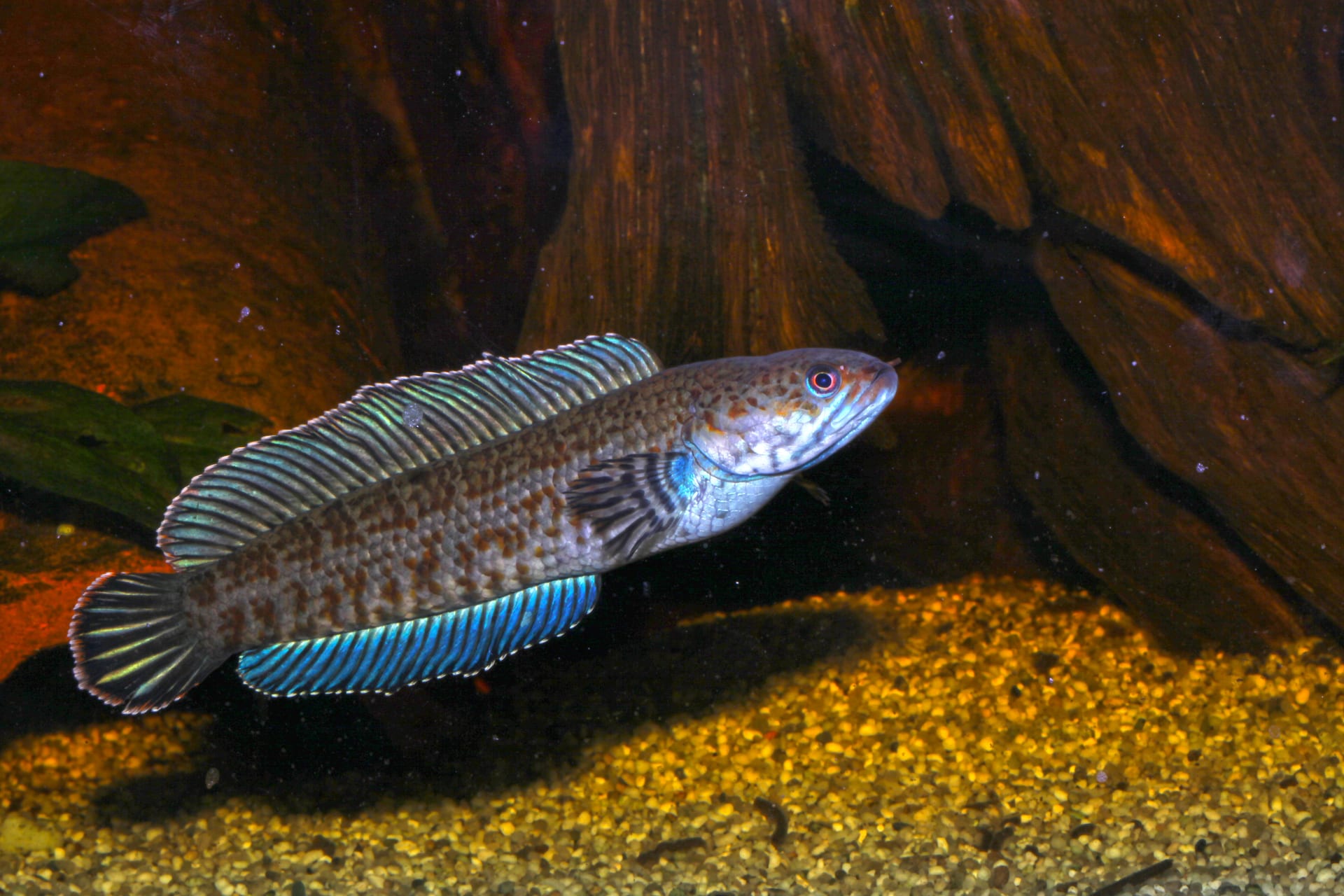
 © 5snake5 / CC0
Blue rainbow snakehead
The Blue rainbow snakehead (Channa andrao) is a small snakehead from northeastern India. Its dark body carries shimmering blue fins, and it has no pelvic fins, which gives it a distinctive profile. Reaching a maximum total length of 14.2 cm, it stays compact enough for a home aquarium. The male is known to guard the eggs in his mouth. It does need a seasonal change with cooler water in winter, so it is best suited to intermediate keepers. If you are drawn to its blue fins and unusual biology, get the setup ready before bringing one home.
View Blue rainbow snakehead encyclopedia →0% commission on your first sales!Register by September 30, 2026 and your first 2 sales are commission-free!
Breeder Wanted!
List on BreederDirect and sell directly to customers nationwide!
Our 6 Transparency Commitments
All Tropical Fish listings include water quality, temperament, and tank size information from verified Breeder.
- Origin Disclosed
- Real Photos
- Water Quality Disclosed
- Recommended Tank Size
- Temperament Disclosed
- Breed Line Disclosed
Browse all 341 breeds
Water Type
Care Level
Verified breeders wanted for Tropical Fish
Breeders are signing up now ahead of launch. Subscribe to be notified when new listings go live.
Getting alerts is free with a member account. When new listings match your saved search, we'll notify you by email and in-app.
Browse other categories
Verified breeders (preview)
Are you raising tropical fish?
Register as a breeder and connect with buyers directly.
Apply as a breederBlue rainbow snakehead key facts
- Care level
- Intermediate
- Lifespan
- Few reliable data
- Size
- Up to 14.2 cm TL (FishBase)
- Temperature
- 14〜28℃
- Diet
- Carnivore (frozen bloodworm, prawn, fish pieces)
- Water Temperature & Quality
- 14-28°C, pH 6.0-8.0, 2-20 dGH (Seriously Fish). Do not keep it at a constant temperature; provide a cooler winter, during which it needs little food.
- Aquarium
- Seriously Fish suggests an 80 x 30 cm footprint. Keep lighting dim with floating plants, cover and leaf litter. A notorious escape artist, it needs a gap-free lid with an air layer above the water.
- Tank Mates & Compatibility
- Best kept in a species tank, though peaceful non-territorial companions may work. Mature fish become aggressive to each other, females often more so.
- Diet & Feeding
- Carnivorous: give juveniles bloodworm, small earthworms and chopped prawn, and adults fish strips, prawns and mussels. Do not rely on dried foods.
- Breeding & Egg-laying
- A paternal mouthbrooder bred regularly in captivity. Let a pair form from 6-8 young fish. The female feeds free-swimming fry with unfertilised eggs, and brood care lasts several weeks.
- Health & Cautions
- It may be sold under other species' names, so check for orange spots on the tail and the number of dark bands on the pectoral fin. It weakens without access to air at the surface.
About Blue rainbow snakehead
Channa andrao, the Blue rainbow snakehead: a small northeast Indian snakehead with blue fins, up to 14.2 cm. Needs a cool winter; for intermediate keepers.
7 things to know before welcoming a Blue rainbow snakehead
1Best for intermediate keepers
This species is rated for intermediate keepers. Because it needs a seasonal change with cooler water in winter, you cannot manage it the same way all year round, which can be a hurdle for beginners. Some experience with tropical fish or small predatory fish will make setup easier.
2Cool the water in winter
This species needs a seasonal change in which the water is cooled down in winter. Rather than holding a single temperature all year, plan for equipment that lets you both cool and warm the tank as the seasons change. Ask the seller about the specific temperature range before you bring one home.
3Always use a snug lid
Snakeheads breathe air and come to the surface, and they may jump out when startled. Fit the tank with a snug lid and close off any gaps around cable holes. Leave some air space between the water surface and the lid so the fish can breathe at the surface.
4A meat-based diet
Snakeheads are carnivorous, so animal-based foods form the core of the diet. Preferences and familiarity with prepared foods vary from fish to fish, so ask what the individual is currently eating. Some fish do not feed right after arrival, so offer food gradually and watch how they respond.
5Choose tank mates carefully
Even though it is small, it is a predator, so fish and shrimp small enough to fit in its mouth may be eaten. Territorial disputes can also occur between members of the same species. If you plan to keep more than one, make sure the tank is roomy and has plenty of hiding places, and decide with care.
6Males are mouthbrooders
Males of this species brood the eggs and fry in their mouths, and it has been bred many times in captivity. To breed it, raise 6–8 juveniles together and let pairs form. Once the fry are free-swimming, the female lays unfertilized eggs for them to eat, and parental care continues for several weeks.
7What to check on arrival
The missing pelvic fins are a natural trait of this species, not an injury or defect. Check the body color, the condition of the fins, how the fish moves, and whether it is eating. Prepare the tank, lid, and temperature control before it arrives, and because lifespan information is scarce, make sure you can commit to caring for it to the end.
Frequently asked questions about Blue rainbow snakehead
- Q.Can a beginner keep this fish?
- A.It is rated for intermediate keepers. It needs a seasonal change with cooler winter water, so it is better to gain some experience with tropical fish first.
- Q.How long does it live?
- A.There is little published information on lifespan, so no reliable figure can be given. When you get one, asking the seller about its background can be helpful.
- Q.Can I keep the temperature the same all year?
- A.This species is said to need a seasonal change with cooler water in winter. Rather than holding one temperature all year, vary it with the seasons. Ask the seller for the specific temperatures to use.
- Q.Are the missing pelvic fins a sign of illness?
- A.No. Lacking pelvic fins is a natural feature of this species, not an injury or disease. On arrival, judge its health by other signs such as body color, fin condition, and whether it is eating.
- Q.Can it live with other fish?
- A.Because it is carnivorous, fish and shrimp small enough to fit in its mouth may be eaten. Members of the same species can also fight over territory, so decide on tank mates carefully and only after providing enough space and hiding places.
Useful tools for Blue rainbow snakehead care
Learn more about Blue rainbow snakehead in the encyclopedia
View Blue rainbow snakehead encyclopedia entry →
Care difficulty, lifespan, size and diet — all basics covered.
More in this category
Can't find the one you're looking for?
Post your wishes for free and breeders with matching animals will contact you with introductions.