Source: Wikimedia Commons
Blue rainbow snakehead
IntermediateChanna andrao
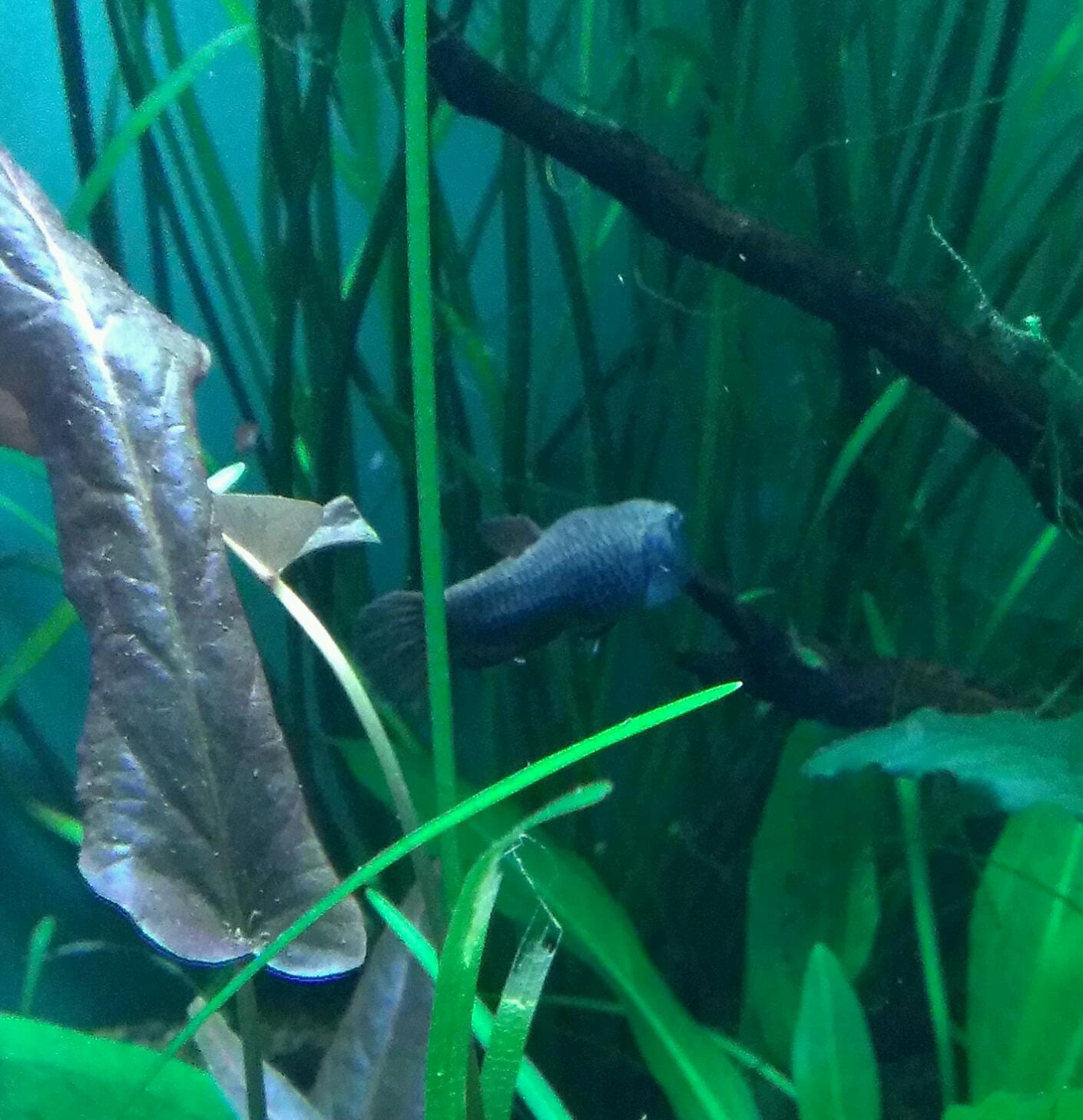
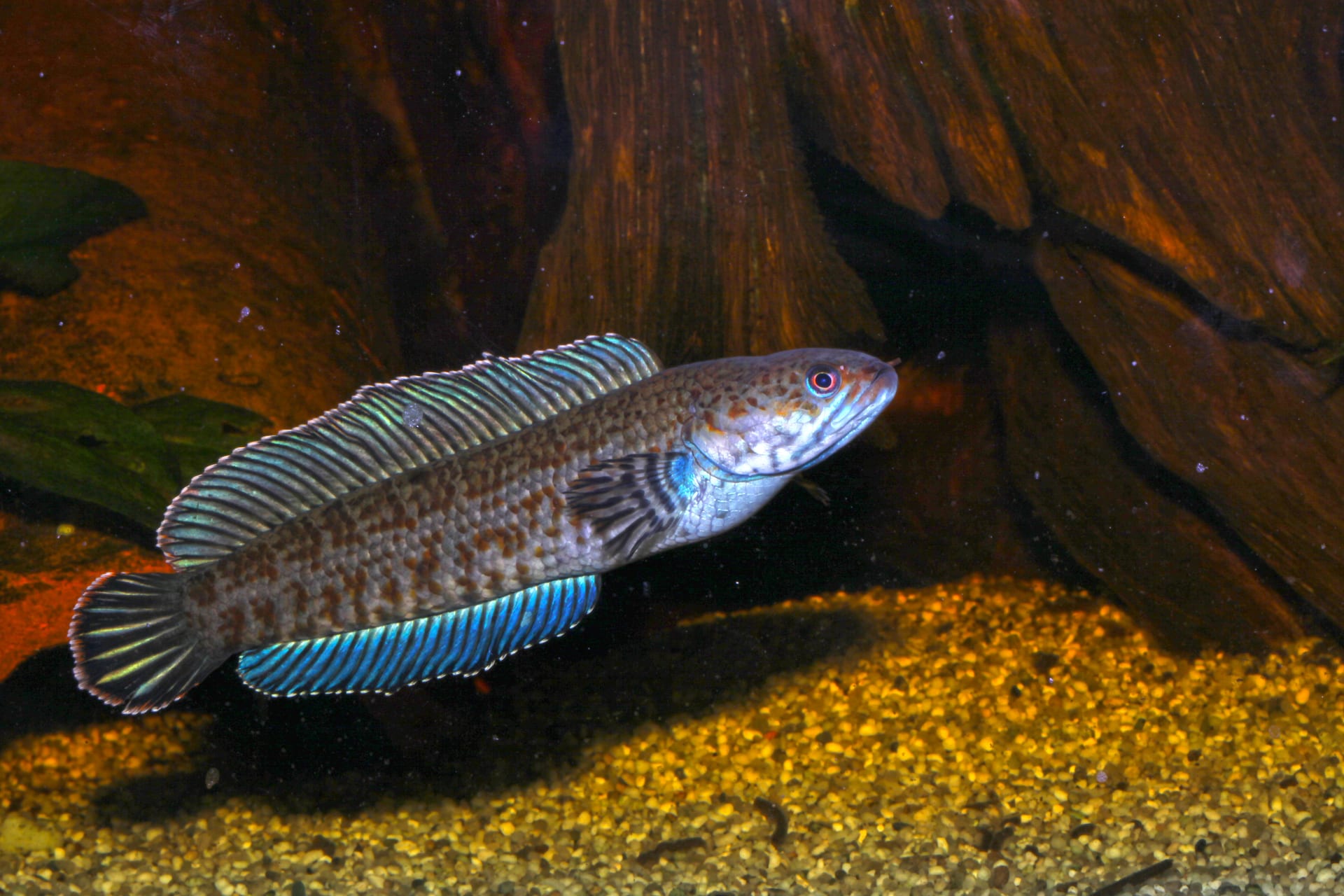
A small snakehead from northeastern India with a dark body, iridescent blue fins and no pelvic fins. Only about 14 cm, the male mouthbroods, and it needs a cooler winter season.
Difficulty
Intermediate
Temperature
14〜28℃
Lifespan
Few reliable data
Size
Up to 14.2 cm TL (FishBase)
Diet
Carnivore (frozen bloodworm, prawn, fish pieces)
About
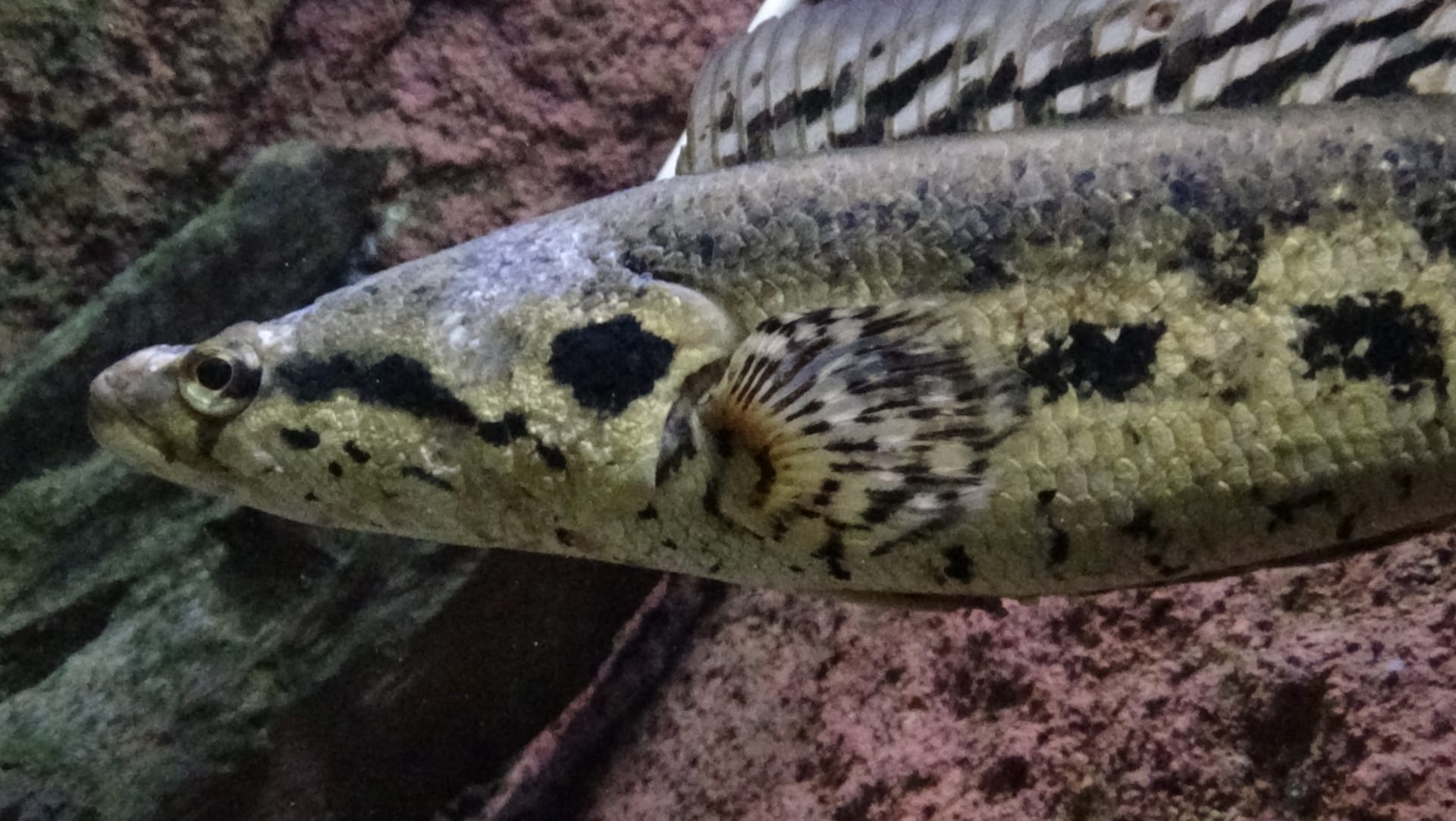
Channa andrao is a small snakehead described in 2013. Endemic to the Brahmaputra basin in northeastern India, it is formally known only from a swamp in Jalpaiguri district, West Bengal. FishBase gives a maximum of 14.2 cm TL. It was in the hobby before description under names such as 'Lal Cheng', 'Assam' and 'blue bleheri', and has also been sold as other species such as C. bleheri or C. stewartii. It lacks pelvic fins and is most often confused with the rainbow snakehead (C. bleheri), from which it differs in lacking orange spots on the tail, having two rather than five dark bands on the pectoral fin, and being a mouthbrooder rather than guarding floating eggs. Its habitat is influenced by Himalayan snowmelt and cools in winter, so captive fish need defined winter and summer seasons. In Japan it is sold by specialist shops, including captive-bred fish.
Source: Wikipedia (CC BY-SA 4.0)
Size of the Blue rainbow snakehead
The Blue rainbow snakehead grows to Up to 14.2 cm TL (FishBase).
Temperature & humidity for the Blue rainbow snakehead
The ideal temperature for the Blue rainbow snakehead is 14〜28℃.
Basic Info
Origin
South Asia (Brahmaputra basin, northeastern India)
Lifespan
Few reliable data
Size
Up to 14.2 cm TL (FishBase)
Temperature
References & Sources
Edited & verified by: BreederDirect editorial team
The taxonomic, regulatory, and husbandry data on this page are compiled and verified against the authoritative primary sources below.
Primary sources
Taxonomy & Authority
Regulations & Conservation Status
Not CITES-listedIUCN NE · Not Evaluated
Not listed in the CITES Appendices (checked on Species+). Not evaluated on the IUCN Red List. Not designated under Japan's Invasive Alien Species Act nor on the invasive species list. Never release aquarium fish into the wild.
Sources: Species+ (CITES) / FishBase
Regulations may change. Always verify the latest information with the relevant authorities.
Blue rainbow snakehead Listings
Loading latest listingsFind listings for this species