Source: Wikimedia Commons
White-spotted cichlid
AdvancedTropheus duboisi
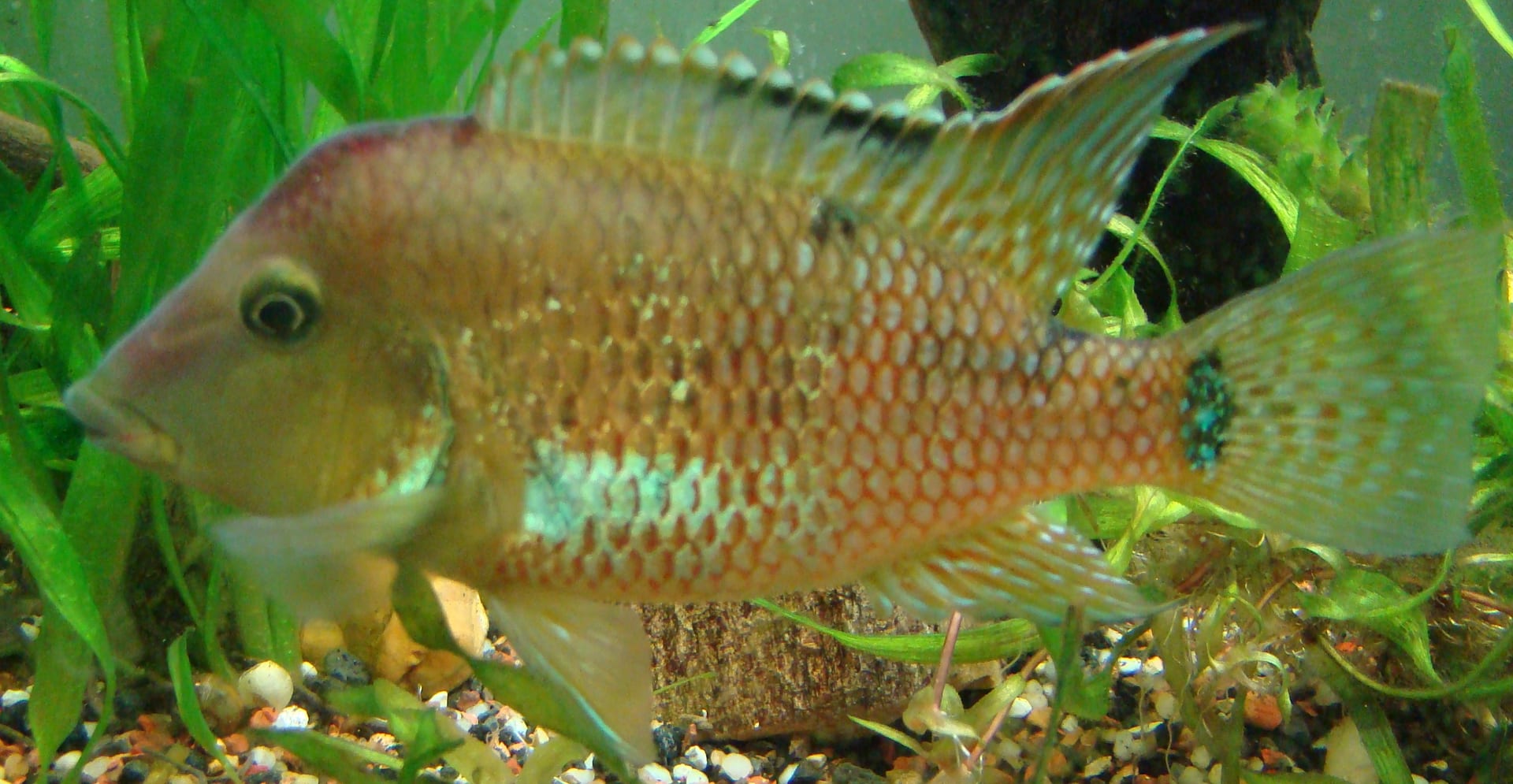
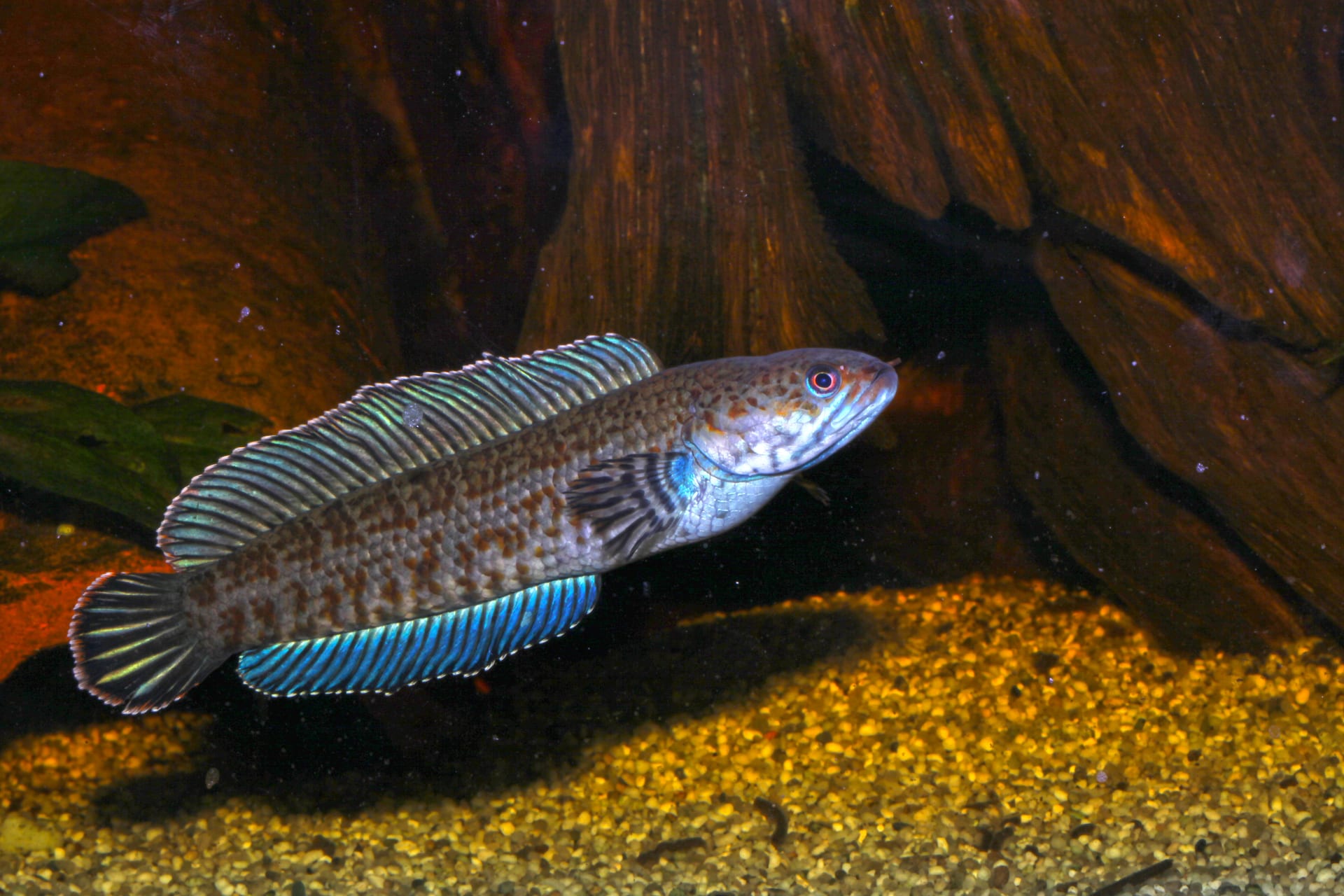
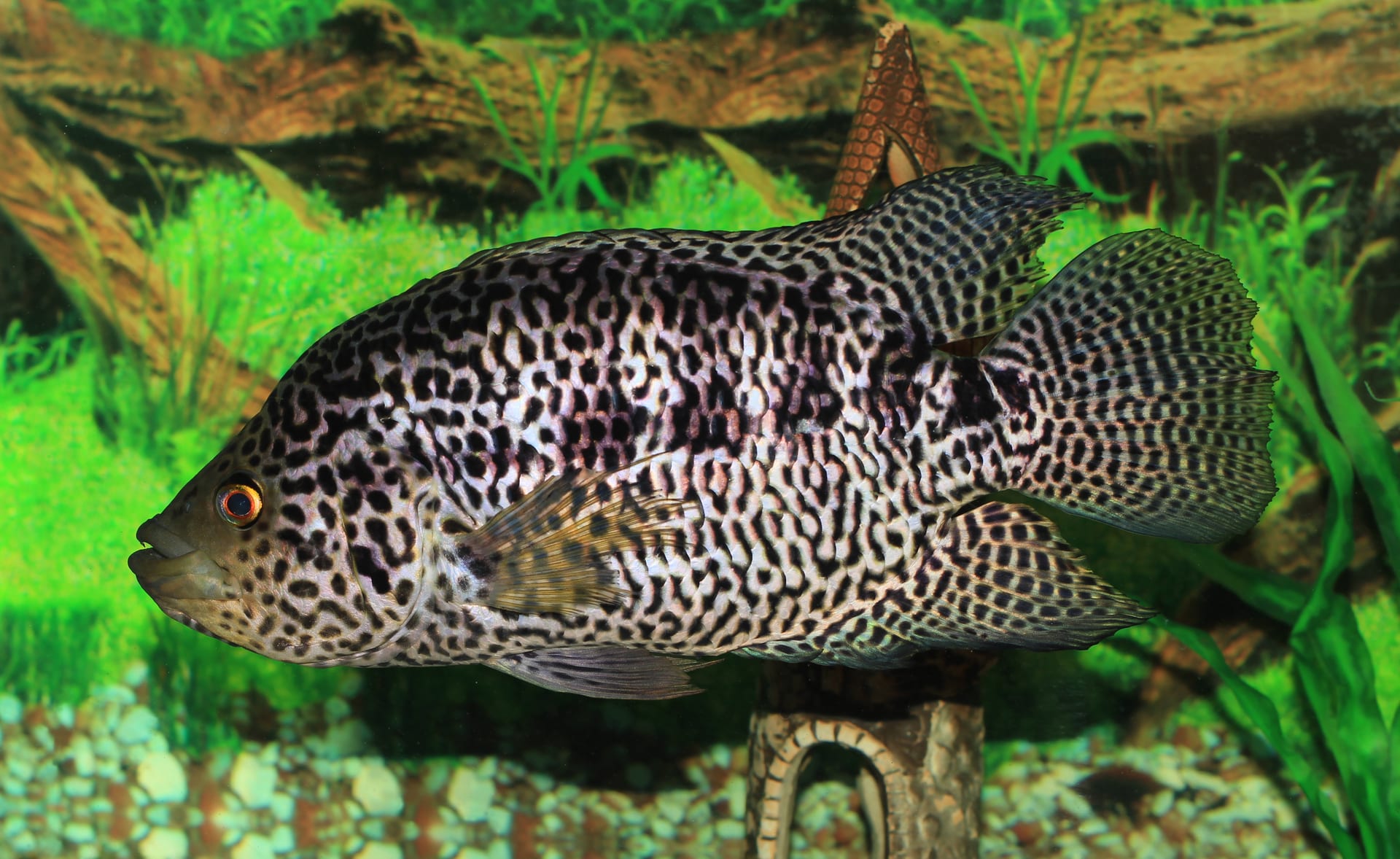
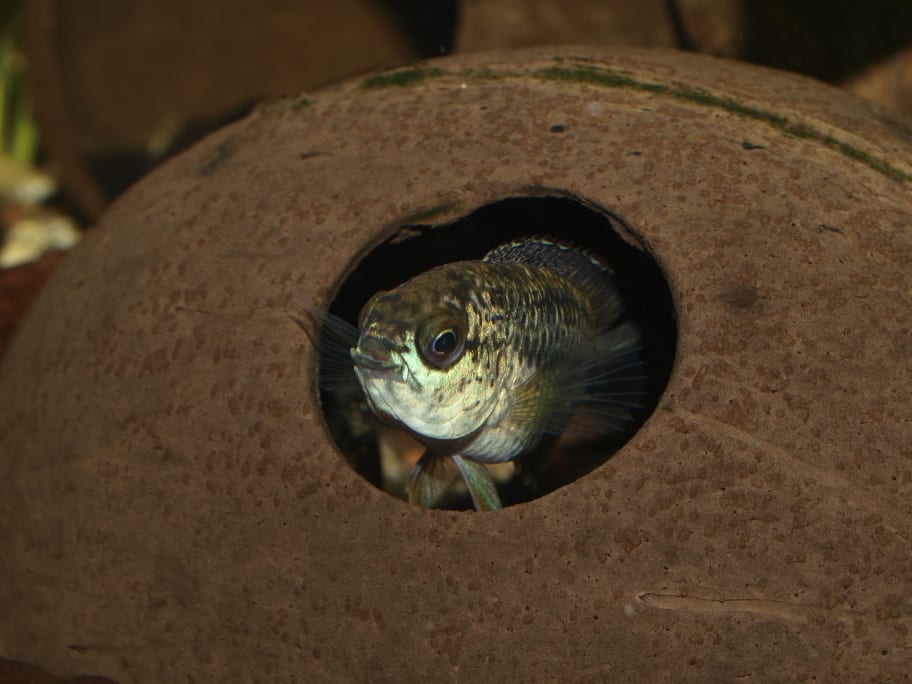
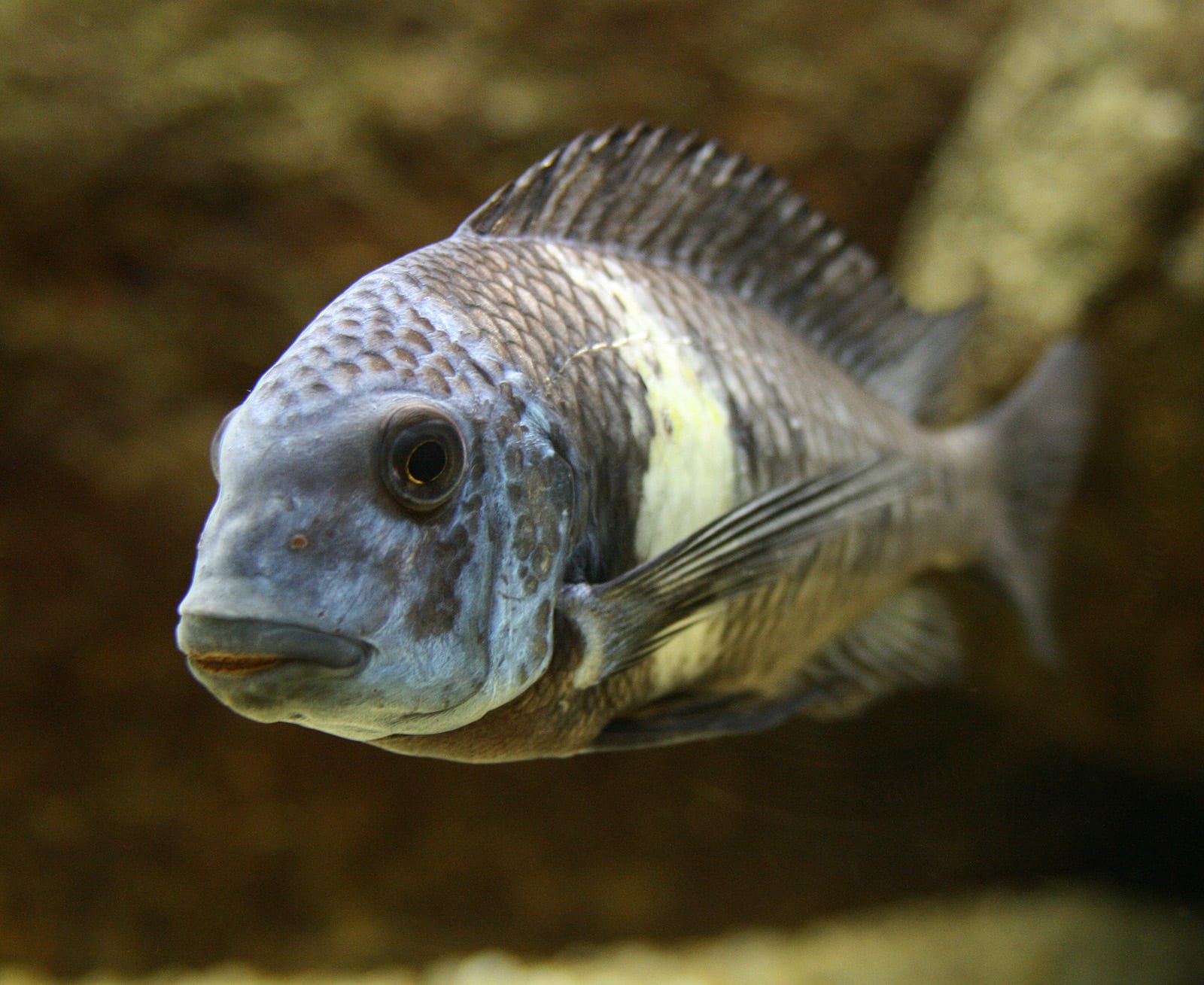
A Tropheus from the rocky northern shores of Lake Tanganyika. Juveniles are black with white spots; adults develop a blue face and a yellow-to-white band. A largely herbivorous algae grazer.
Difficulty
Advanced
Temperature
24〜26℃
Lifespan
Few reliable data
Size
Up to 12 cm TL (FishBase)
Diet
Mainly herbivorous (spirulina and other plant-based foods)
About
Tropheus duboisi is a cichlid endemic to Lake Tanganyika, with a patchy distribution in the northern part of the lake. It lives on the upper rocky habitat grazing algae from rocks, down to about 30 m, deeper than its congeners. FishBase gives a maximum of 12 cm TL. Juveniles are black with white spots and very popular; adults develop a blue head and a yellow-to-white mid-body band. It is a maternal mouthbrooder with small broods of 5-15 eggs. It needs hard, alkaline water and is sensitive to deteriorating water quality. Because conspecific fighting can be lethal in small groups, it is usually kept in groups of 15-20, which requires a large tank. The diet must be mainly plant-based; mammalian meat upsets its digestion. It was assessed as Endangered (EN) on the IUCN Red List in 2025. In Japan juveniles are sold by African cichlid specialists.
Source: Wikipedia (CC BY-SA 4.0)
Size of the White-spotted cichlid
The White-spotted cichlid grows to Up to 12 cm TL (FishBase).
Temperature & humidity for the White-spotted cichlid
The ideal temperature for the White-spotted cichlid is 24〜26℃.
Basic Info
Origin
East Africa (endemic to northern Lake Tanganyika)
Lifespan
Few reliable data
Size
Up to 12 cm TL (FishBase)
Temperature
References & Sources
Edited & verified by: BreederDirect editorial team
The taxonomic, regulatory, and husbandry data on this page are compiled and verified against the authoritative primary sources below.
Primary sources
Taxonomy & Authority
Regulations & Conservation Status
Not CITES-listedIUCN EN · Endangered
Not listed in the CITES Appendices (checked on Species+). Assessed as Endangered (EN) on the IUCN Red List in 2025. Not regulated under Japan's Invasive Alien Species Act. Never release aquarium fish into the wild.
Sources: Species+ (CITES) / FishBase
Regulations may change. Always verify the latest information with the relevant authorities.
White-spotted cichlid Listings
Loading latest listingsFind listings for this species