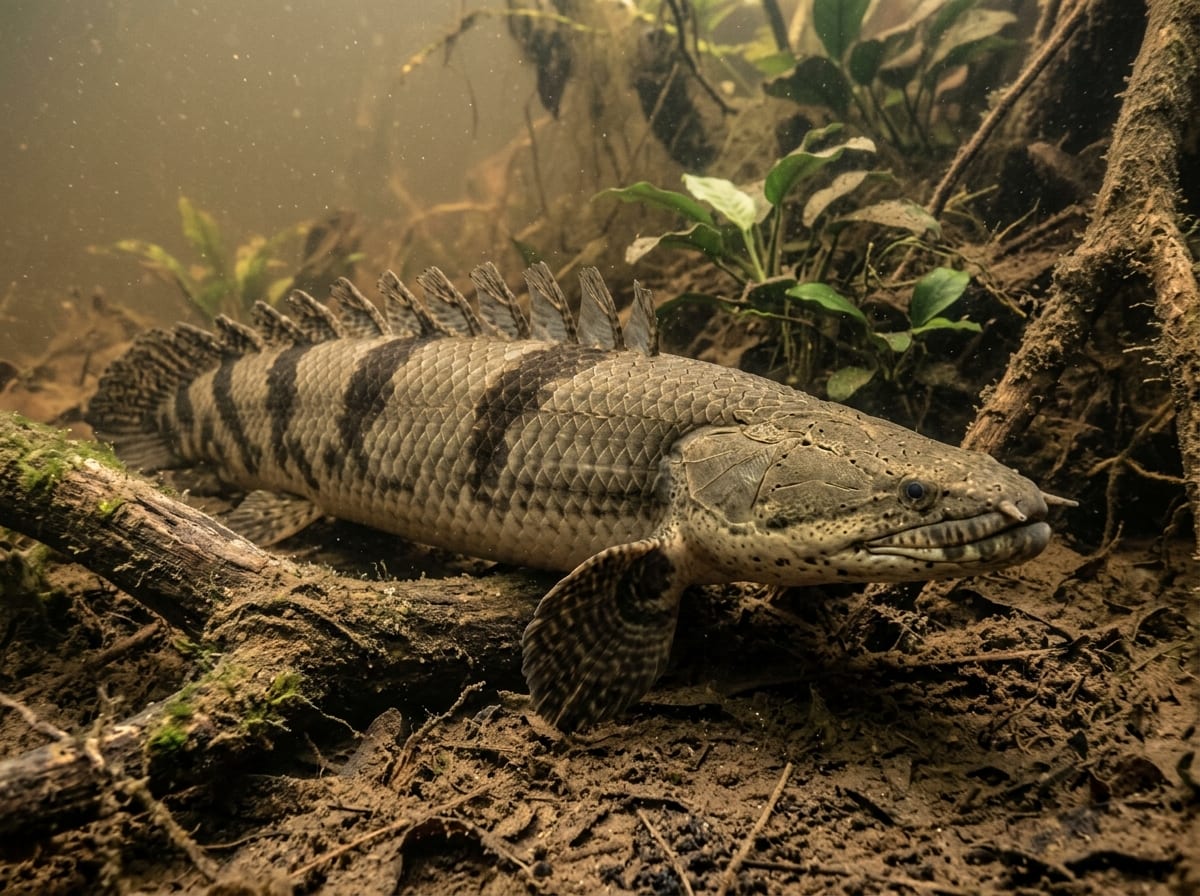
Congo bichir
The Congo bichir (Polypterus congicus) is a large bichir found widely across the Congo River basin. It was once treated as a subspecies of Polypterus endlicheri but is now recognized as a separate species. With its long body and a row of small dorsal finlets, it has the look of an ancient fish, and it is a carnivore that hunts actively at night. Records show a total length of up to 97 cm and a weight of 4.4 kg, so keeping one for life calls for an extra-large tank. Care is rated for experienced keepers, and data on lifespan is scarce.
View Congo bichir encyclopedia →0% commission on your first sales!Register by September 30, 2026 and your first 2 sales are commission-free!
Breeder Wanted!
List on BreederDirect and sell directly to customers nationwide!
BreederDirect's 6 Transparency Commitments
All Tropical Fish listings include water quality, temperament, and tank size information from verified Breeder.
- Origin Disclosed
- Real Photos
- Water Quality Disclosed
- Recommended Tank Size
- Temperament Disclosed
- Breed Line Disclosed
Browse all 341 breeds
Water Type
Care Level
Verified breeders wanted for Tropical Fish
Breeders are signing up now ahead of launch. Subscribe to be notified when new listings go live.
Getting alerts is free with a member account. When new listings match your saved search, we'll notify you by email and in-app.
Browse other categories
Verified breeders (preview)
Are you raising tropical fish?
Register as a breeder and connect with buyers directly.
Apply as a breederCongo bichir key facts
- Care level
- Advanced
- Lifespan
- Few reliable data
- Size
- Up to 97 cm TL and 4.4 kg (FishBase)
- Diet
- Carnivore (fish, prawns, mussels, earthworms)
- Water Temperature & Quality
- Few species-specific data on temperature or water chemistry. Large and messy, so strong filtration and regular water changes are needed.
- Aquarium
- It may approach 1 m, so provide an extra-large tank with a wide footprint for life; floor area matters more than depth. Use a heavy, gap-free lid.
- Tank Mates & Compatibility
- Eats any fish it can swallow. Limit companions to similarly large, robust fish and review as it grows.
- Diet & Feeding
- Carnivorous: fish pieces, prawns, mussels and earthworms; it may be weaned onto sinking pellets for predators.
- Breeding & Egg-laying
- Breeding in home aquaria is not realistic.
- Health & Cautions
- It weakens without access to air. Never release it, however large it grows.
About Congo bichir
Learn about the Congo bichir (Polypterus congicus), a large carnivorous fish from the Congo River basin that reaches up to 97 cm. Expert-level care and an extra-large tank are essential.
7 things to know before welcoming a Congo bichir
1Extra-large tank needed
Records show a total length of up to 97 cm, and an adult in a standard tank may struggle even to turn around. Plan for an extra-large tank with generous width and depth, sized for the fully grown fish. A larger water volume also helps keep water quality stable.
2A lifelong commitment
This species is rated for experienced keepers. Reliable data on lifespan is scarce, so plan on caring for it over the long term. Think ahead about future space and any possible move, too.
3Choose tank mates carefully
As a carnivore, it will eat fish or shrimp small enough to fit in its mouth. If you keep tank mates, choose calm fish too large to swallow and watch closely. Keeping it alone is also a sound option.
4Air breathing and a lid
Bichirs have lungs and are often seen gulping air at the surface. Leave an air space above the water and use a tightly fitting lid to prevent jumping accidents. Seal gaps around pipes and cables as well.
5Feeding basics
It is a carnivore, so offer carnivore pellets or frozen seafood. It often forages near the bottom, so sinking foods may be easier for it to take. Remove uneaten food promptly, as it fouls the water.
6Water and filtration
Large carnivores produce a lot of waste, which fouls the water quickly. Use a filtration system with ample capacity and change water regularly. When adding fresh water, avoid big differences in temperature and water quality.
7Hideouts and pre-purchase checks
Provide hideouts such as driftwood or thick pipes that will not shift when a large fish moves, which helps it settle in. Before buying, ask the seller about its current size, what it eats and how it feeds, and check photos for wounds or a thin body.
Frequently asked questions about Congo bichir
- Q.How large does it get?
- A.FishBase records a maximum total length of 97 cm and a weight of 4.4 kg. It will not necessarily reach that size in captivity, but you should plan a tank with that in mind.
- Q.Can beginners keep it?
- A.Its care level is rated for experienced keepers. It needs an extra-large tank, ample filtration and escape-proofing, so consider carefully whether you can provide the setup and keep up the care.
- Q.Can it live with other fish?
- A.Because it is a carnivore, any fish small enough to fit in its mouth may be eaten. If you try tank mates, limit them to fish too large to swallow and judge by observing how they get along.
- Q.What does it eat?
- A.It is a carnivore and can be fed carnivore pellets or frozen seafood. Since it often forages near the bottom, sinking foods tend to work well.
- Q.How long does it live?
- A.Data on lifespan is scarce, so no clear figure can be given. Assume a long-term commitment and consider whether you can maintain the setup and care before bringing one home.
Useful tools for Congo bichir care
Learn more about Congo bichir in the encyclopedia
View Congo bichir encyclopedia entry →
Care difficulty, lifespan, size and diet — all basics covered.
More in this category
Can't find the one you're looking for?
Post your wishes for free and breeders with matching animals will contact you with introductions.