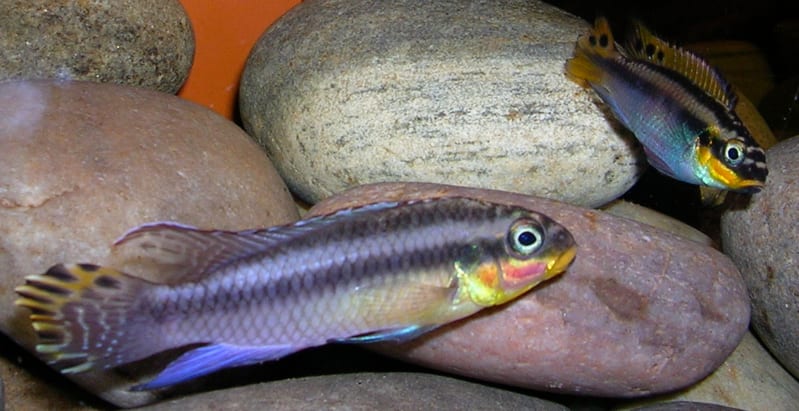
 © Neale Monks / CC BY-SA 3.0
Striped kribensis
Pelvicachromis taeniatus, known as the striped kribensis, is a small cichlid from the coastal regions of West Africa. Adults reach a standard length of about 7 cm at most, and both sexes are brightly colored. Males have a white-to-yellow upper half on the tail fin, marked with a row of black spots. Pairs spawn in caves and both parents guard the fry, which makes them rewarding to watch. Territorial behavior can increase during breeding, so water quality and aquascaping need attention, and the species is considered suitable for intermediate keepers. Reliable information on lifespan is limited.
View Striped kribensis encyclopedia →0% commission on your first sales!Register by September 30, 2026 and your first 2 sales are commission-free!
Breeder Wanted!
List on BreederDirect and sell directly to customers nationwide!
Our 6 Transparency Commitments
All Tropical Fish listings include water quality, temperament, and tank size information from verified Breeder.
- Origin Disclosed
- Real Photos
- Water Quality Disclosed
- Recommended Tank Size
- Temperament Disclosed
- Breed Line Disclosed
Browse all 341 breeds
Water Type
Care Level
Verified breeders wanted for Tropical Fish
Breeders are signing up now ahead of launch. Subscribe to be notified when new listings go live.
Getting alerts is free with a member account. When new listings match your saved search, we'll notify you by email and in-app.
Browse other categories
Verified breeders (preview)
Are you raising tropical fish?
Register as a breeder and connect with buyers directly.
Apply as a breederStriped kribensis key facts
- Care level
- Intermediate
- Lifespan
- Few reliable data
- Size
- Up to about 7 cm SL (7.1 cm SL in FishBase)
- Temperature
- 22〜25℃
- Diet
- Omnivore leaning to meaty foods (frozen/live foods and prepared foods)
- Water Temperature & Quality
- 22-25°C, pH 6.0-8.0, 5-12 dH (FishBase). For breeding, about 23-25°C and pH 6-7 is recommended.
- Aquarium
- FishBase gives a minimum of 80 cm for a pair. Provide caves (clay pots, driftwood) for shelter and spawning, and use fine sand because pairs dig when breeding.
- Tank Mates & Compatibility
- Shy; avoid large or boisterous fish. It can live with small characins, rasboras and Corydoras, but defends a territory strongly when breeding.
- Diet & Feeding
- Accepts most foods, but base the diet on frozen and live foods with prepared foods alongside.
- Breeding & Egg-laying
- A cave spawner. Growing on six or more juveniles and letting a pair form is the reliable route. Eggs hatch in 2-3 days and fry swim freely after 7-8 days.
- Health & Cautions
- Use a sponge filter in breeding tanks so fry are not sucked in. Do not cross strains from different localities.
About Striped kribensis
Pelvicachromis taeniatus (striped kribensis) is a small West African cichlid reaching about 7 cm. Both sexes are colorful, and pairs spawn in caves with both parents guarding the fry. Care tips for intermediate keepers.
7 things to know before welcoming a Striped kribensis
1Small, up to about 7 cm
Growing to a maximum standard length of about 7 cm (7.1 cm according to FishBase), this is a compact fish that suits smaller setups. It does defend a territory around its cave, though, so it settles better when the tank has room to divide up living space. Choose the tank size with any tank mates in mind.
2Provide cave-like shelters
Because this species spawns in caves, build cave-like spaces where the fish can hide, using clay pots, ceramic shelters, or driftwood. A good hiding place helps them feel secure and gives a pair somewhere to carry out breeding behavior. Check that the entrance is not too narrow and that the structure will not collapse when you clean the tank.
3Watch for sudden water changes
As a fish from the coastal regions of West Africa, it is likely to be stressed by abrupt shifts in water conditions. Rather than changing a large volume at once, do small, regular water changes, and acclimate new fish slowly. If you notice dull coloring or a drop in appetite, check the water quality first.
4Sexing and pairing
Males have a white-to-yellow upper half on the tail fin with a row of black spots, but females are also vividly colored, so telling the sexes apart can be tricky at first. If you want a pair, ask the breeder whether the sexes have been confirmed and whether the fish have been kept together as a pair.
5Territorial during breeding
Once a pair has spawned in a cave, the parents may chase off other fish while protecting their fry. If you keep tank mates, choose small, calm species, provide several hiding places, and adjust as you watch how they behave. Being able to manage this breeding-time behavior is part of why the species is rated for intermediate keepers.
6Small foods, fed lightly
Because the fish is small, foods that fit its mouth, such as fine flakes, granules, and small frozen foods, are a good match. Overfeeding leaves uneaten food that fouls the water, so feed small amounts a few times a day and remove leftovers promptly.
7Lifespan and long-term care
Little reliable information exists on lifespan, so no firm estimate can be given. Plan on keeping the fish for the long term and set up a tank and routine you can sustain. Before bringing one home, ask the breeder about the water conditions, the foods used, and any breeding history so you can match your own setup more easily.
Frequently asked questions about Striped kribensis
- Q.Can beginners keep this fish?
- A.It is rated for intermediate keepers. Besides keeping water conditions stable, you need to plan the layout and tank mates carefully, since territorial behavior increases during breeding. It is best to get comfortable with basic tropical fish care first and consult the breeder before bringing one home.
- Q.How large does it grow?
- A.The maximum standard length is about 7 cm (FishBase lists 7.1 cm). It is small, but since it holds a territory, give it a tank with some room to spare.
- Q.How long does it live?
- A.Reliable information on lifespan is limited, so we cannot give a definite figure. Plan to keep it for the long term and make sure you can keep up with water quality and feeding.
- Q.Can I breed them?
- A.Pairs spawn in caves and both parents guard the fry, so breeding behavior can be observed. Providing cave-like shelters and a calm environment improves the chances of seeing it, though breeding is never guaranteed.
- Q.Can it live with other fish?
- A.It can sometimes be combined with small, calm fish, but during breeding it defends the area around its cave. Provide several hiding places and judge carefully by watching how the tank mates behave.
Useful tools for Striped kribensis care
Learn more about Striped kribensis in the encyclopedia
View Striped kribensis encyclopedia entry →
Care difficulty, lifespan, size and diet — all basics covered.
More in this category
Can't find the one you're looking for?
Post your wishes for free and breeders with matching animals will contact you with introductions.