Source: Wikimedia Commons
Striped kribensis
IntermediatePelvicachromis taeniatus
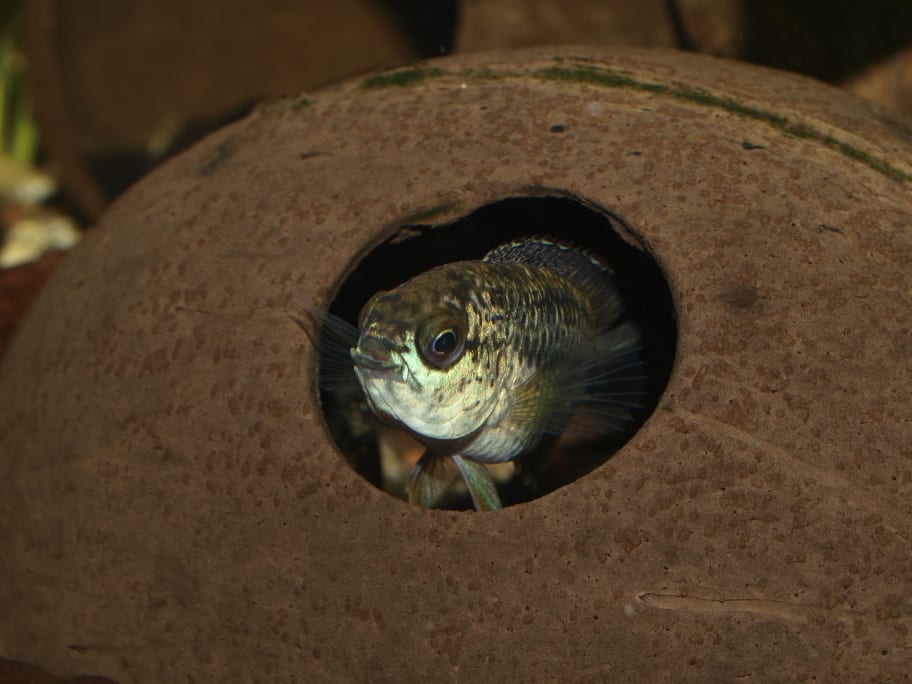
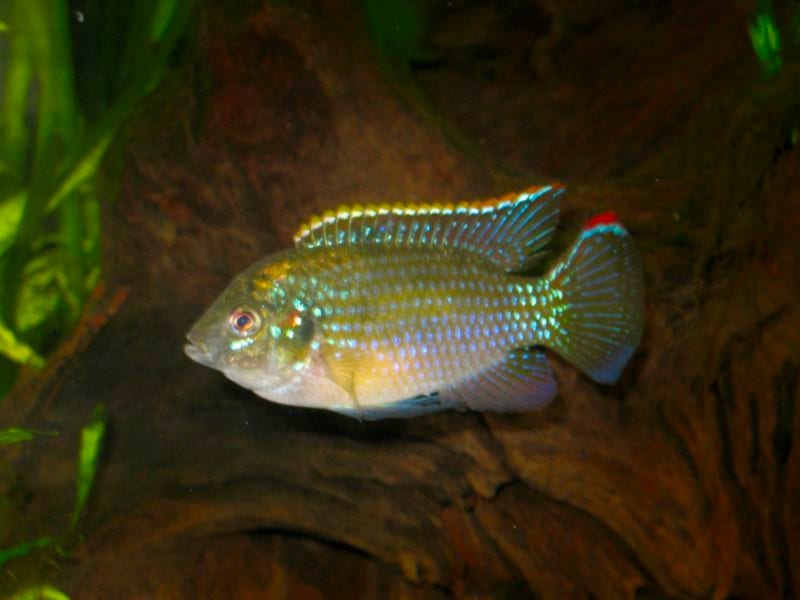
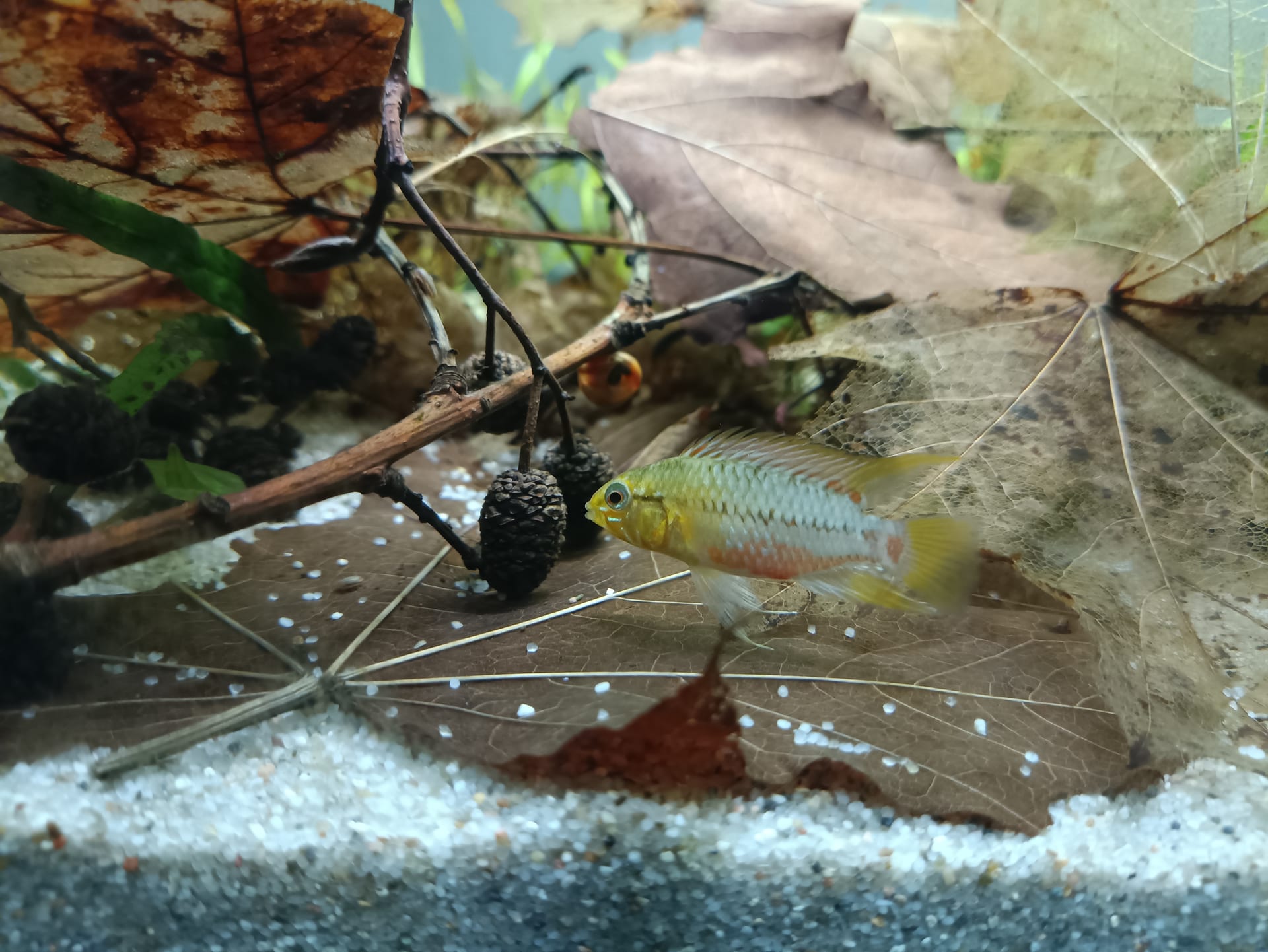
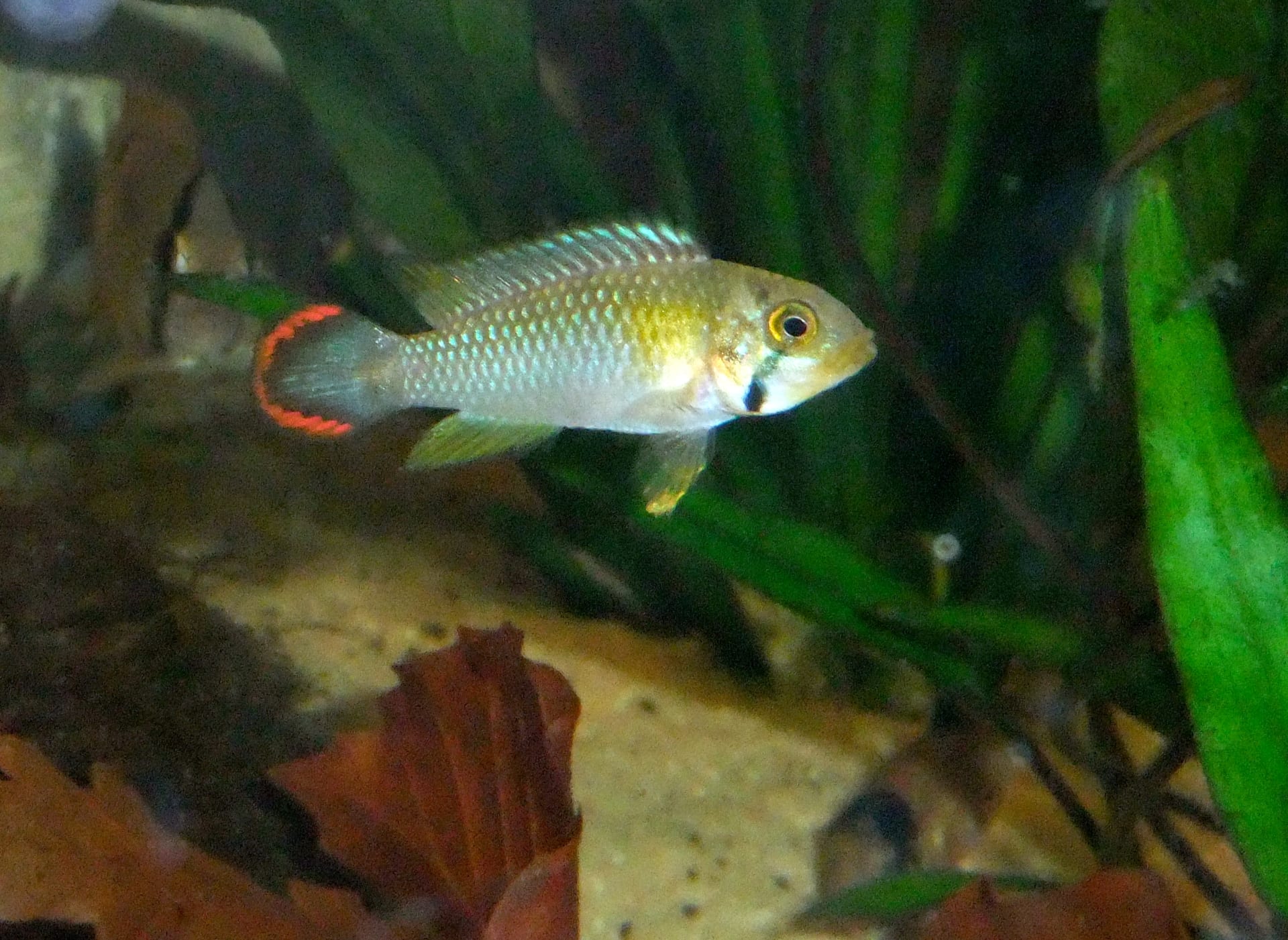
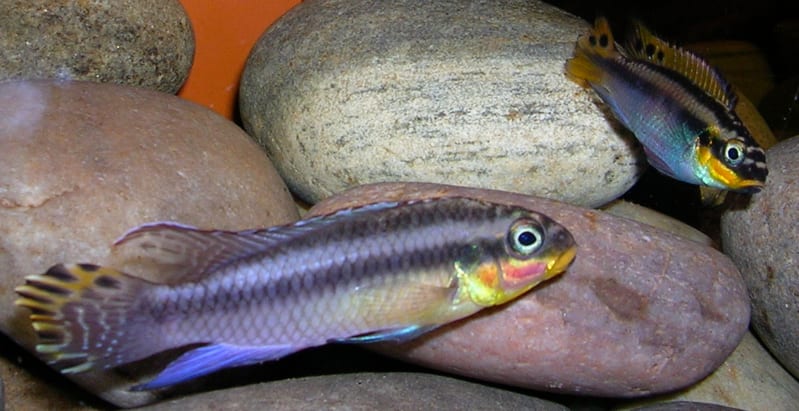
A small West African Pelvicachromis. Males show a white-to-yellow upper caudal fin dotted with black; both sexes are colourful, and pairs spawn in caves and guard their fry together.
Difficulty
Intermediate
Temperature
22〜25℃
Size
Up to about 7 cm SL (7.1 cm SL in FishBase)
Diet
Omnivore leaning to meaty foods (frozen/live foods and prepared foods)
About
Pelvicachromis taeniatus is a small cichlid that, according to FishBase, occurs in freshwater coastal areas from eastern Benin to Nigeria, including the Niger Delta, and reaches about 7.1 cm standard length. Males are distinguished from congeners by a white-to-yellow upper caudal fin with black dots and a black-edged lower half. A 2014 revision reassigned fish reported from Cameroon and Bioko to the related P. kribensis, so strains sold under Cameroonian locality names such as 'Lobe', 'Moliwe' or 'Dehane' now belong to P. kribensis; P. taeniatus in the strict sense covers Nigerian forms such as 'Nigeria Red'. Buyers should check which locality and scientific name a fish is sold under. It lives in slow forest streams; in aquaria pairs spawn on the roof or walls of a cave, the female tending the eggs while the male guards the territory. Hobbyists keep locality strains separate to avoid crossing them. In Japan it appears in specialist shops as pairs labelled with a locality.
Source: Wikipedia (CC BY-SA 4.0)
Size of the Striped kribensis
The Striped kribensis grows to Up to about 7 cm SL (7.1 cm SL in FishBase).
Temperature & humidity for the Striped kribensis
The ideal temperature for the Striped kribensis is 22〜25℃.
Basic Info
Origin
West Africa (coastal eastern Benin to Nigeria)
Size
Up to about 7 cm SL (7.1 cm SL in FishBase)
Temperature
22〜25℃
References & Sources
Edited & verified by: BreederDirect editorial team
The taxonomic, regulatory, and husbandry data on this page are compiled and verified against the authoritative primary sources below.
Primary sources
Taxonomy & Authority
Accepted name: Pelvicachromis taeniatus (Boulenger, 1901)
Synonyms: Pelmatochromis calliptera Pellegrin, 1929, Pelmatochromis klugei Meinken, 1960, Pelmatochromis kribensis calliptera Pellegrin, 1929, Pelmatochromis kribensis klugei Meinken, 1960, Pelmatochromis pulcher klugei Meinken, 1960, Pelmatochromis taeniatus Boulenger, 1901, Pelmatochromis taeniatus klugei Meinken, 1960
Authority databases: GBIF · GBIF · FishBase
Nomenclature follows global taxonomic authority databases.
Regulations & Conservation Status
Not CITES-listedIUCN LC · Least Concern
Not listed in the CITES Appendices (checked on Species+). Not designated under Japan's Invasive Alien Species Act, nor on the Ministry of the Environment's list of invasive alien species. Never release aquarium fish into the wild.
Sources: Species+ (CITES) / FishBase
Regulations may change. Always verify the latest information with the relevant authorities.
Striped kribensis Listings
Loading latest listingsFind listings for this species