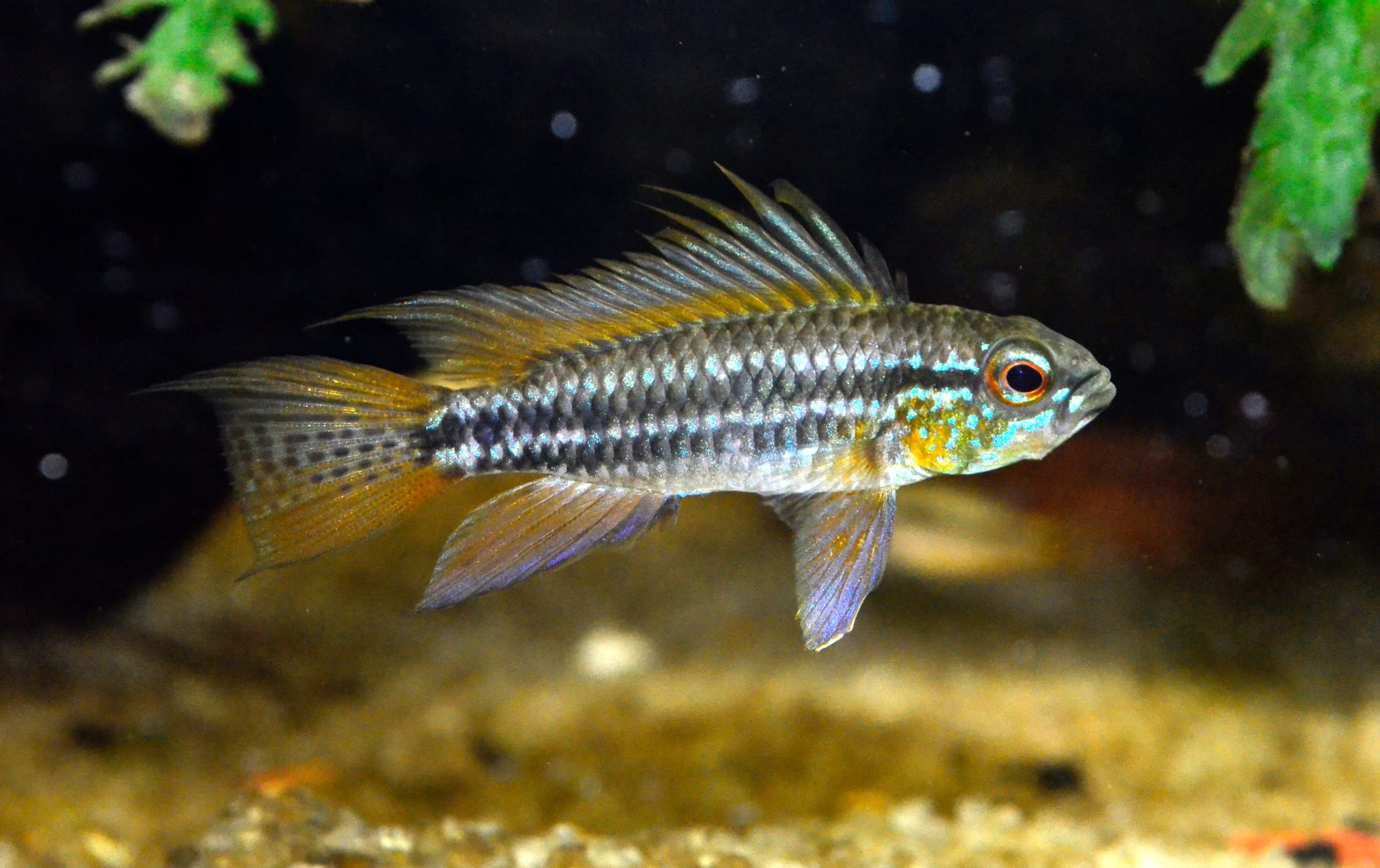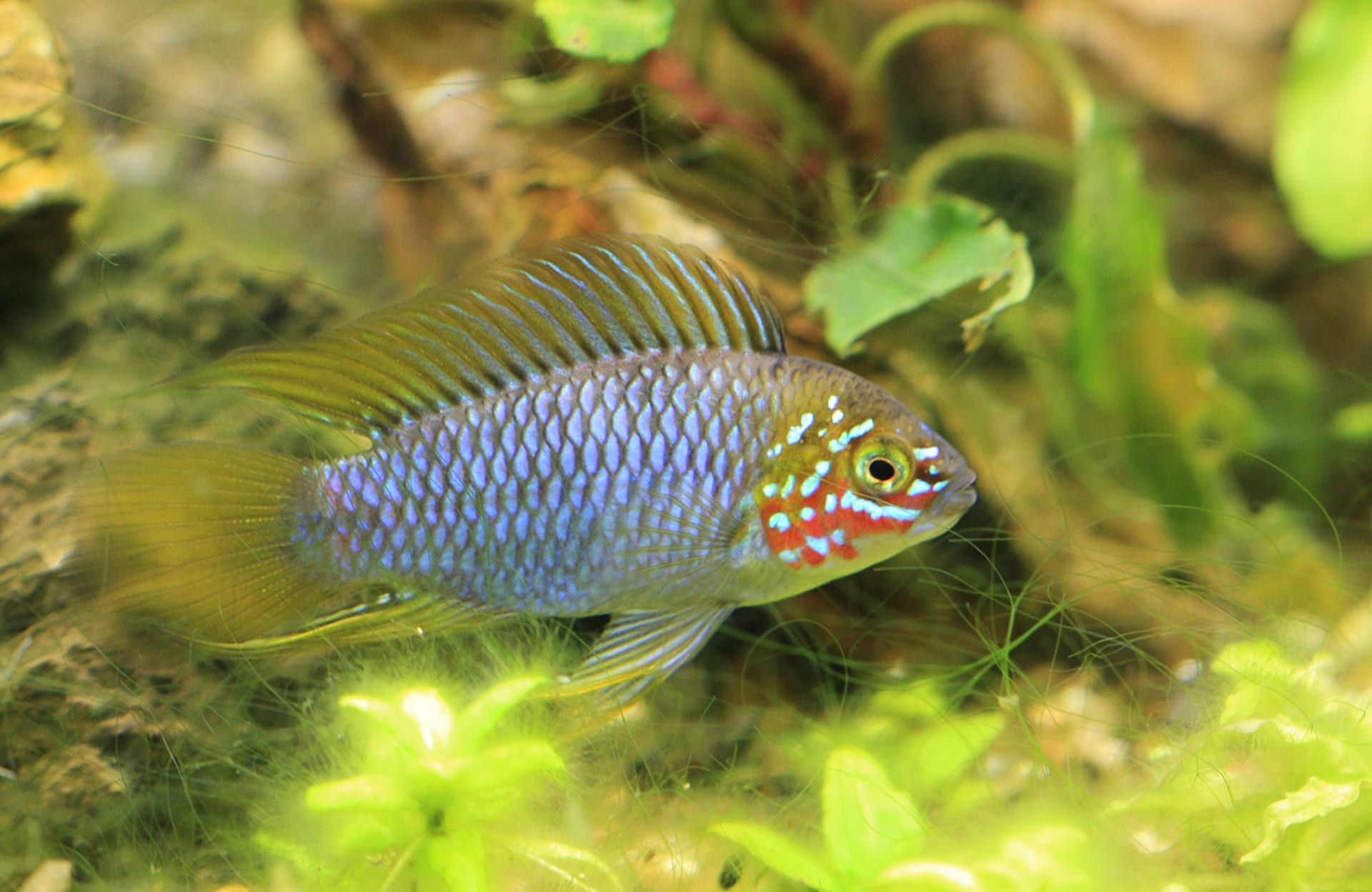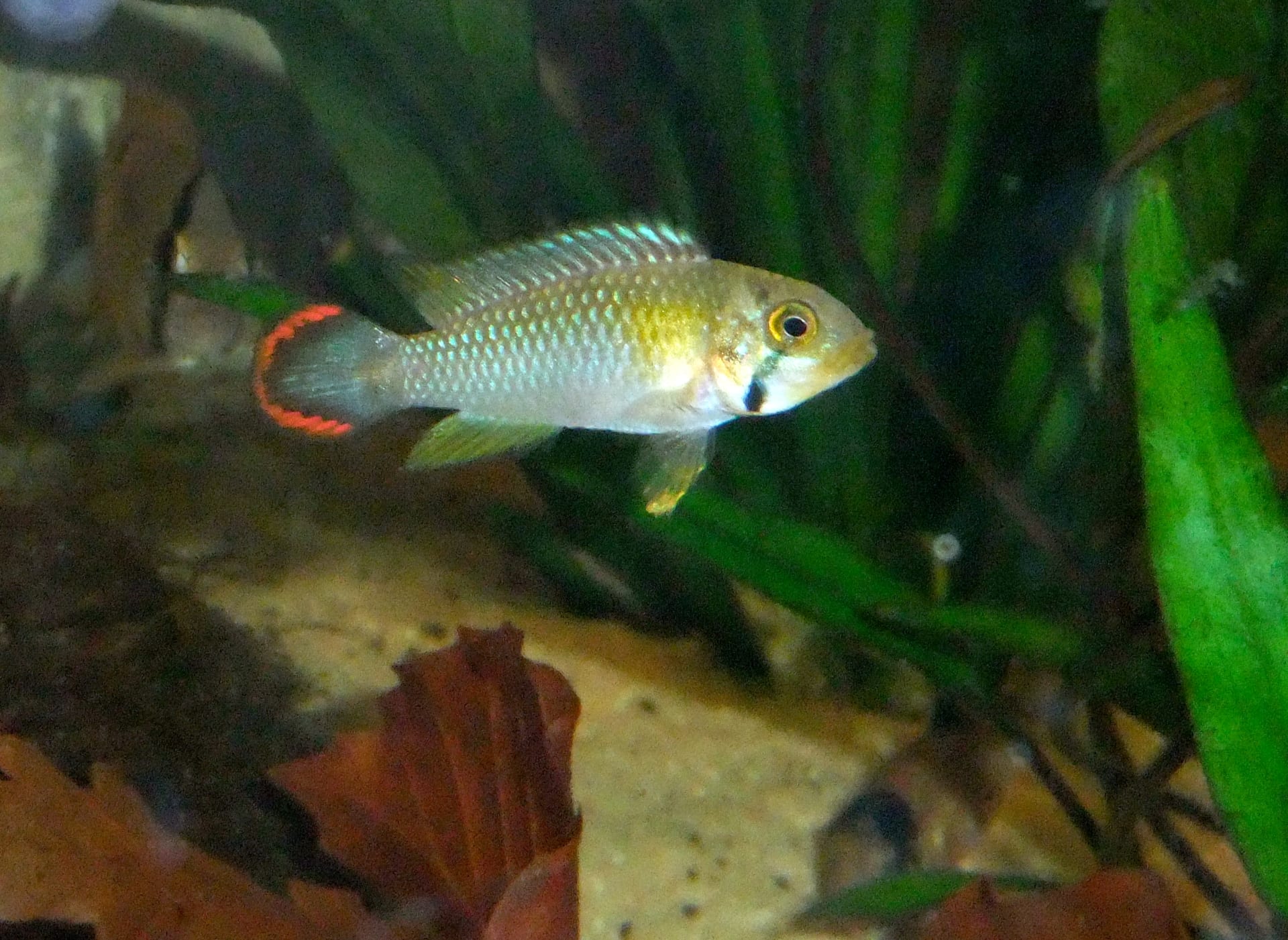
Source: Wikimedia Commons
Panduro dwarf cichlid
IntermediateApistogramma panduro
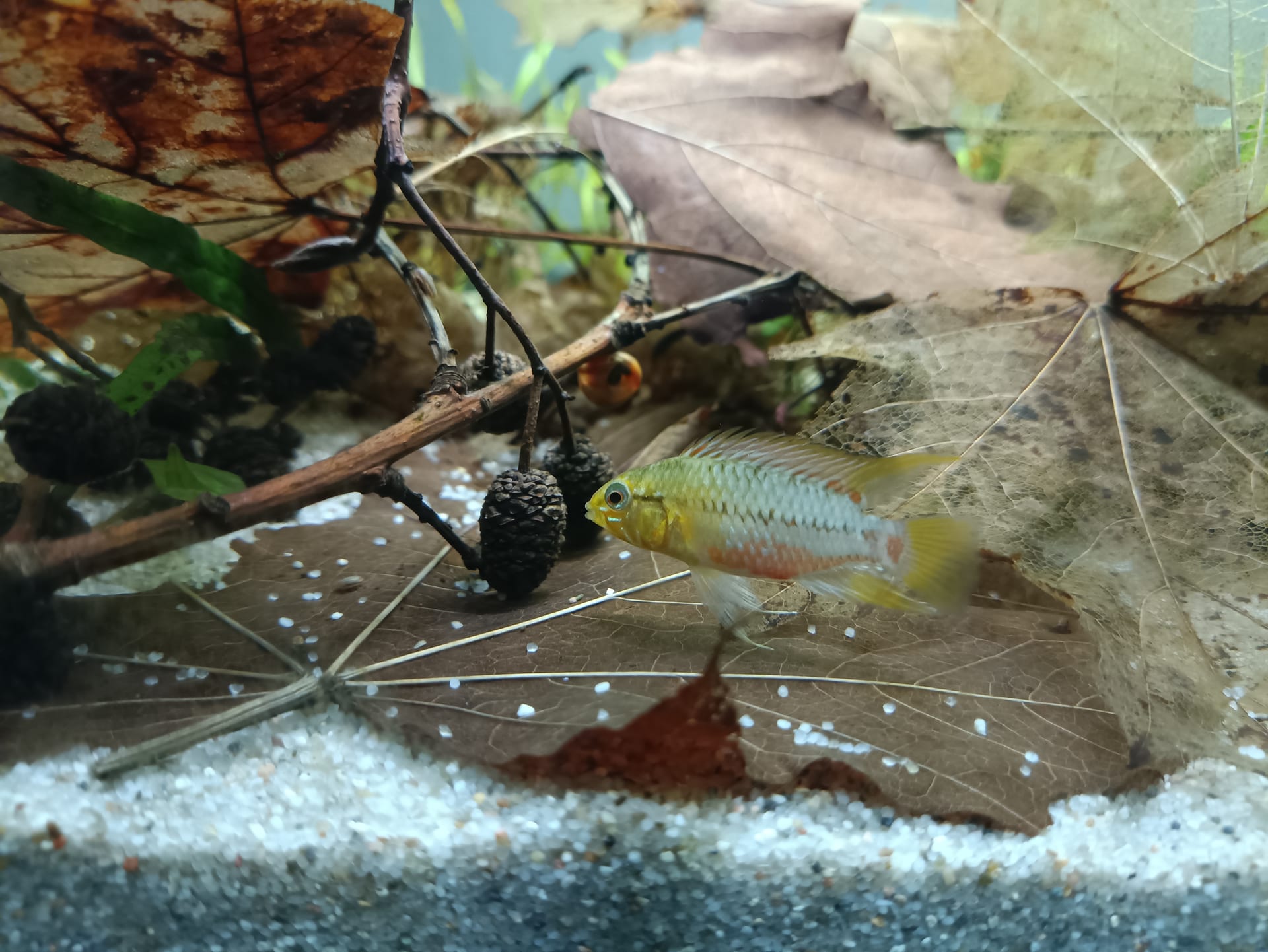
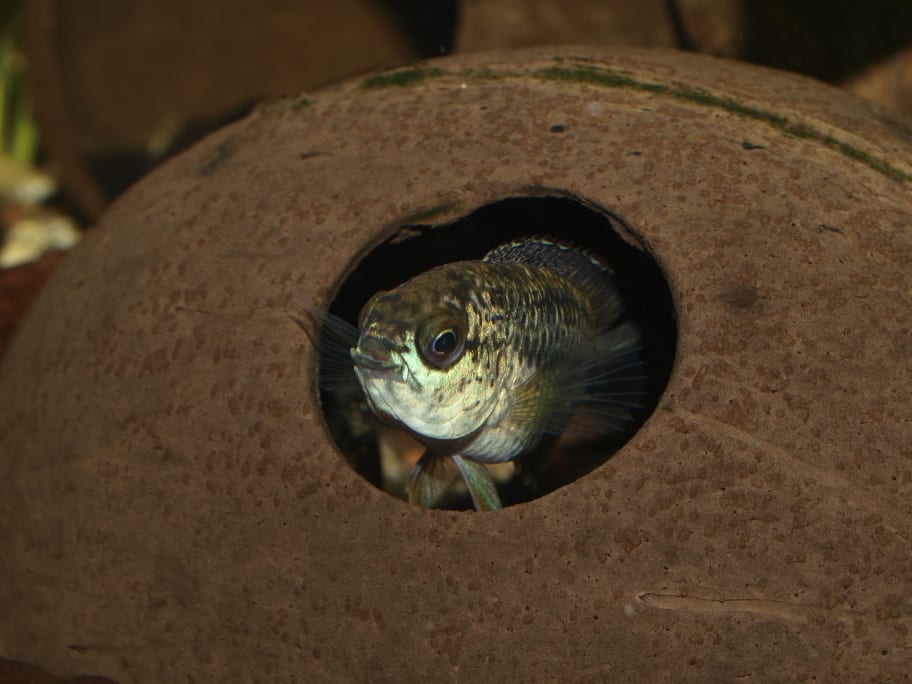
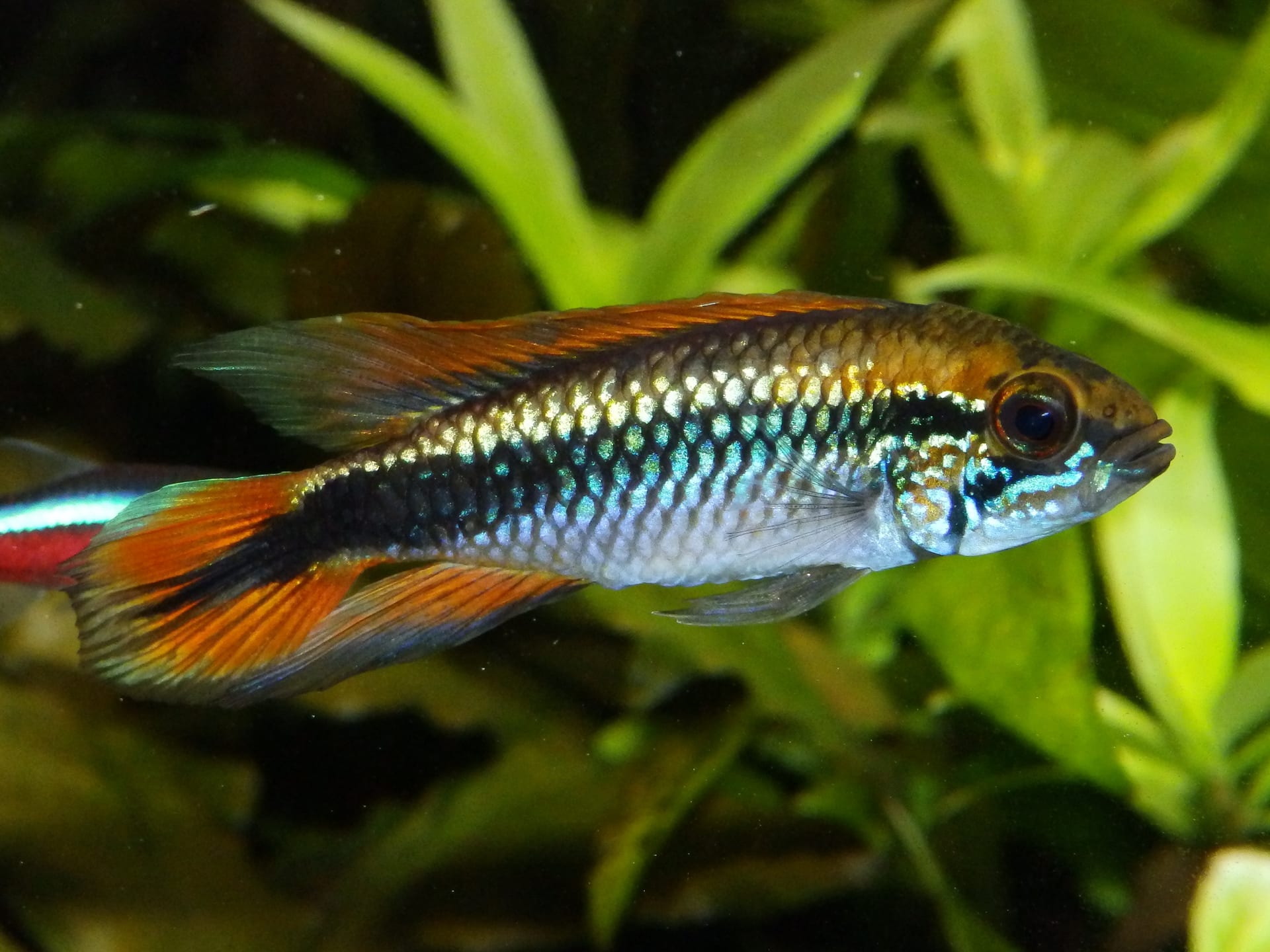
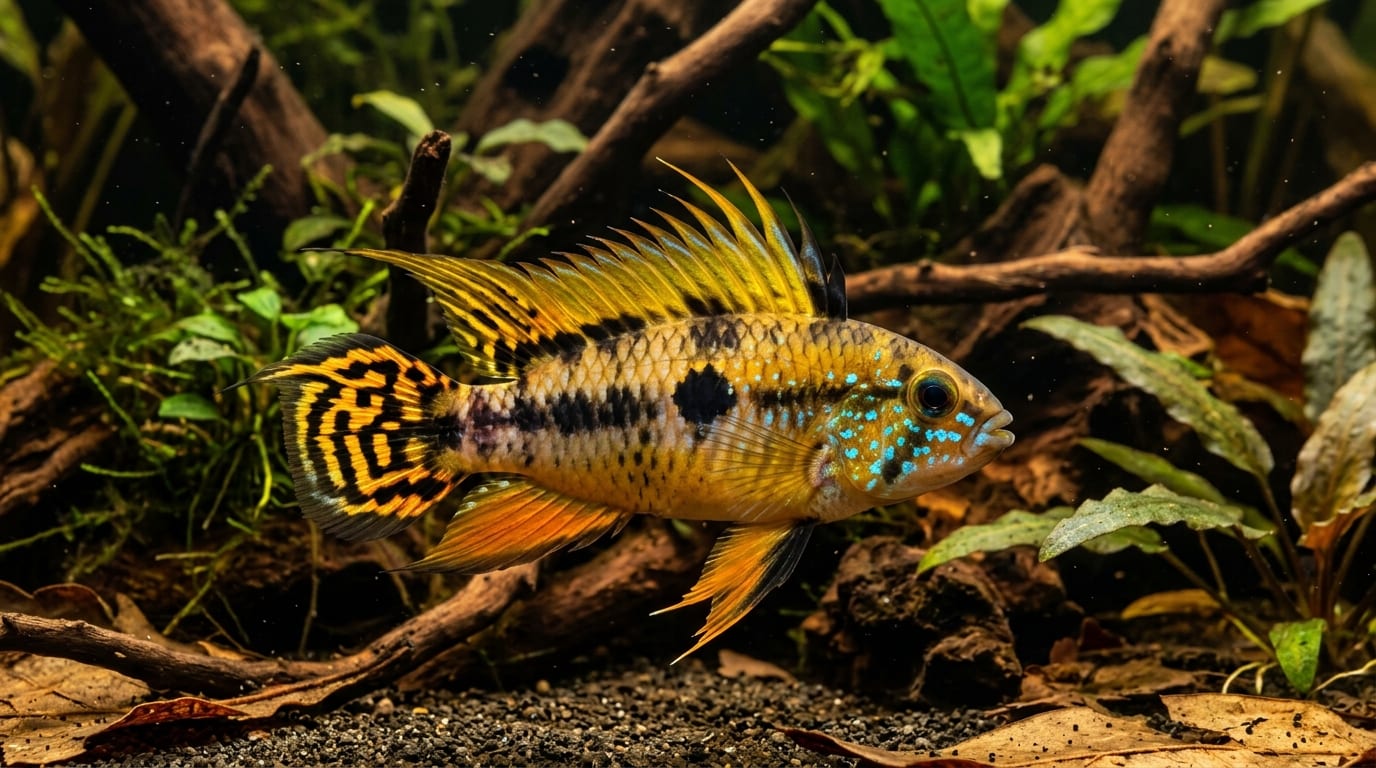
An Apistogramma from northern Peru. Males show a bluish body and broad fins, and a lower jaw projecting beyond the upper separates it from look-alikes. Pairs often stay together long term.
Difficulty
Intermediate
Temperature
22〜29℃
Lifespan
Few reliable data
Size
About 7.5 cm SL (male) and 5.5 cm SL (female) (Seriously Fish)
Diet
Mainly carnivorous (frozen/live foods; pellets once accustomed)
About
Apistogramma panduro is a small cichlid described in 1997 from the Río Ucayali drainage around Jenaro Herrera, Loreto, northern Peru, and also known from the Río Tahuayo below the Marañón confluence. It is A183 in the DATZ system, with a possibly conspecific Río Tamshiyacu form coded A184. Other names include 'blue panda cichlid', and the confusing trade name 'A. sp. pandurini' has also been used. It differs from similar species in having the lower jaw project beyond the upper. Seriously Fish gives about 7.5 cm SL for males and 5.5 cm for females (FishBase records 4.9 cm SL). It lives in slow tributaries and backwaters where leaf litter collects, spawns in caves, and the female guards eggs and fry. Quite aggressive towards its own kind, but pairs often remain monogamous, so a harem is unnecessary. Wild and captive-bred fish are both sold in Japanese specialist shops.
Source: Wikipedia (CC BY-SA 4.0)
Size of the Panduro dwarf cichlid
The Panduro dwarf cichlid grows to About 7.5 cm SL (male) and 5.5 cm SL (female) (Seriously Fish).
Temperature & humidity for the Panduro dwarf cichlid
The ideal temperature for the Panduro dwarf cichlid is 22〜29℃.
Basic Info
Origin
South America (Ucayali drainage and nearby rivers, Loreto, northern Peru)
Lifespan
Few reliable data
Size
About 7.5 cm SL (male) and 5.5 cm SL (female) (Seriously Fish)
References & Sources
Edited & verified by: BreederDirect editorial team
The taxonomic, regulatory, and husbandry data on this page are compiled and verified against the authoritative primary sources below.
Primary sources
Taxonomy & Authority
Regulations & Conservation Status
Not CITES-listedIUCN LC · Least Concern
Not listed in the CITES Appendices (checked on Species+). Not designated under Japan's Invasive Alien Species Act, nor on the Ministry of the Environment's list of invasive alien species. Never release aquarium fish into the wild.
Sources: Species+ (CITES) / FishBase
Regulations may change. Always verify the latest information with the relevant authorities.
Panduro dwarf cichlid Listings
Loading latest listingsFind listings for this species