Source: Wikimedia Commons
Umbrella Cichlid
BeginnerApistogramma borellii
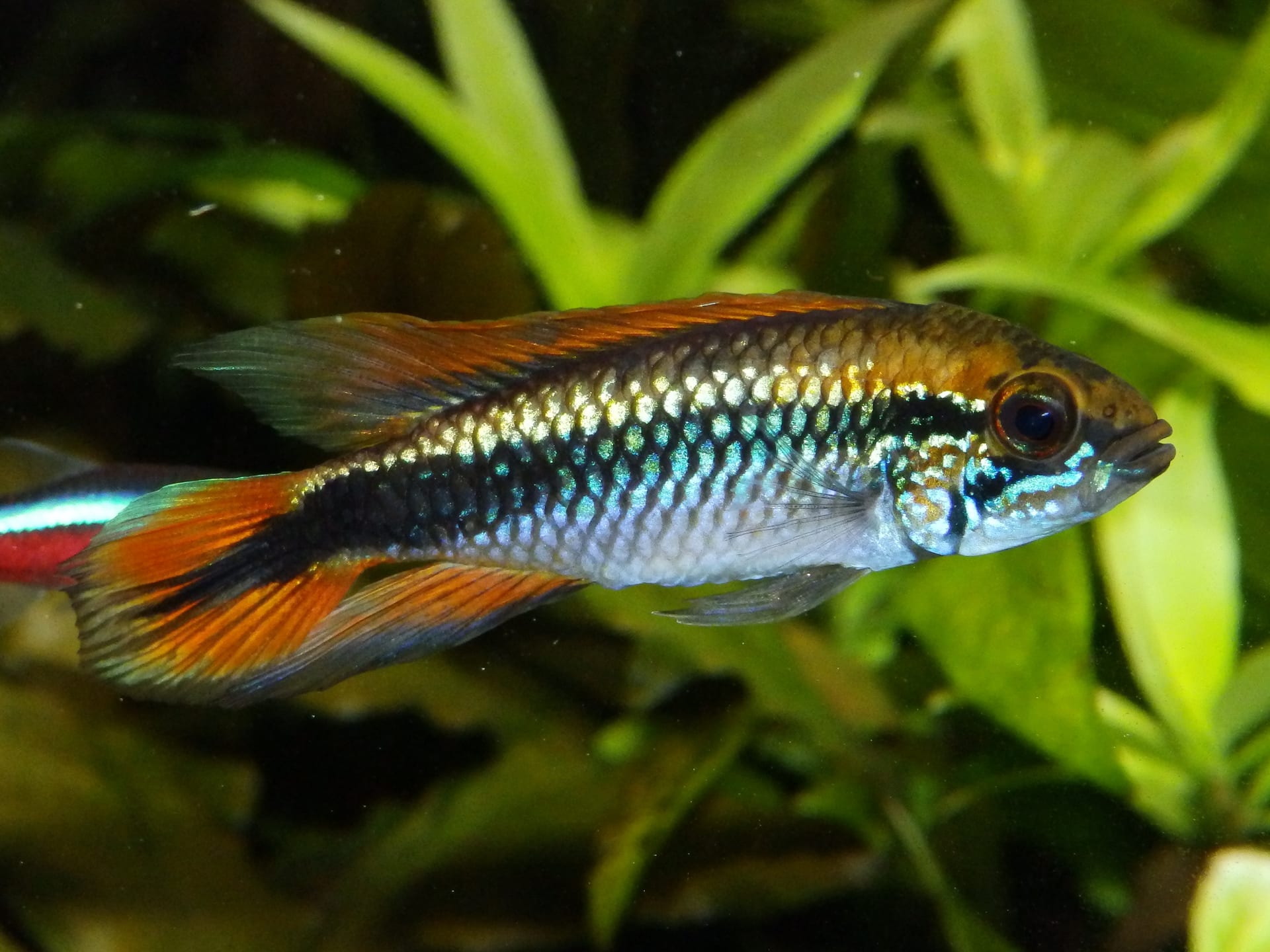
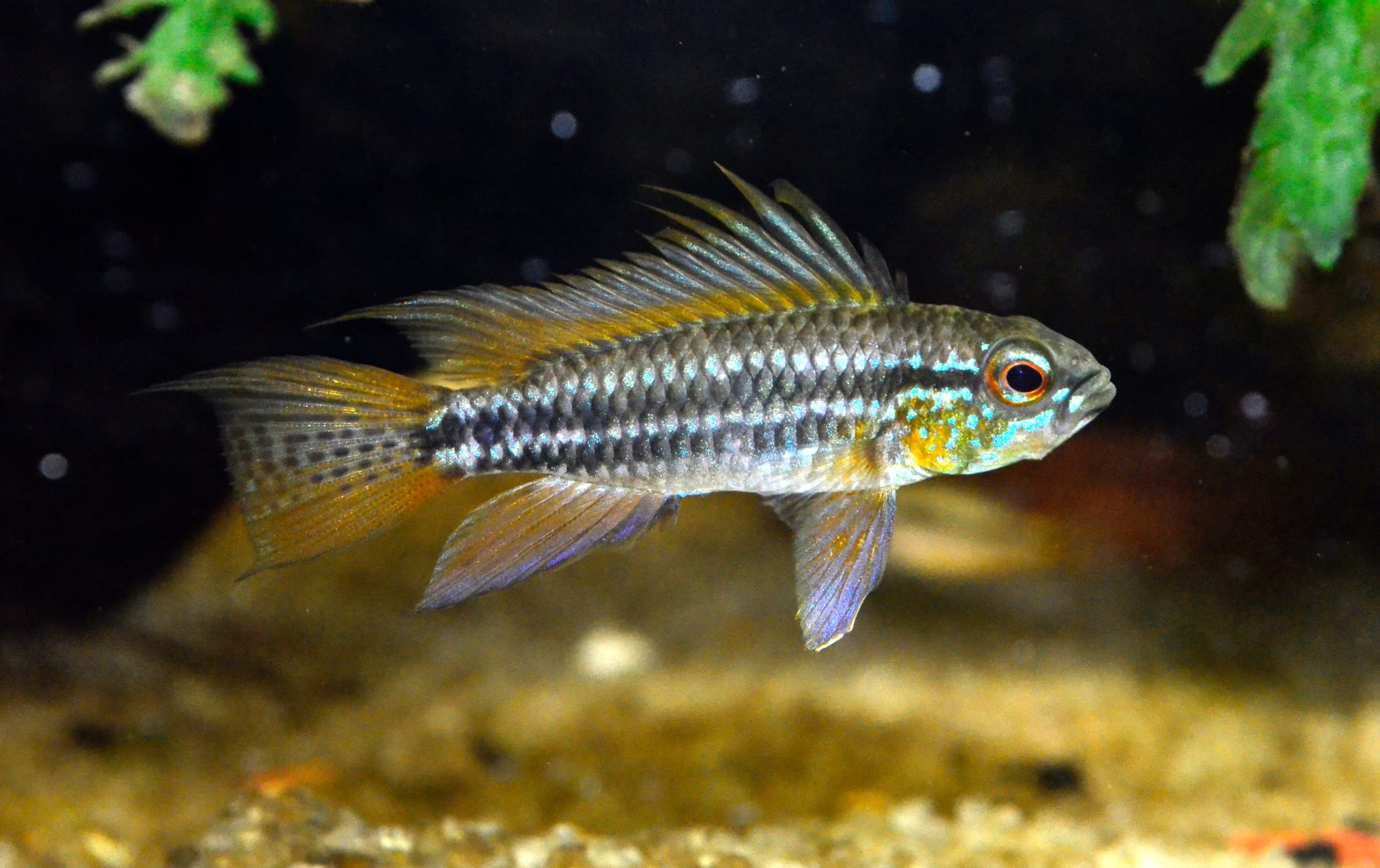
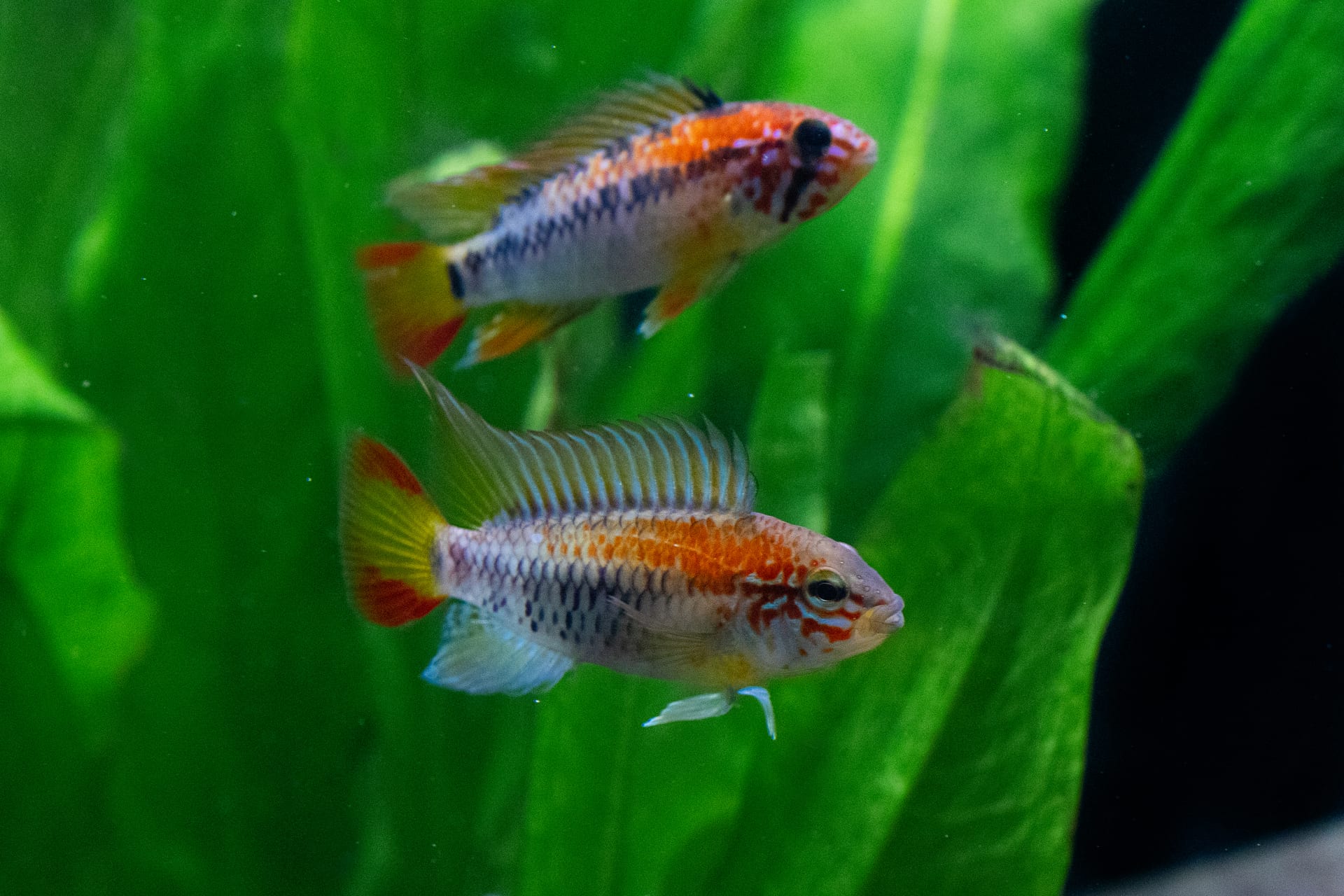
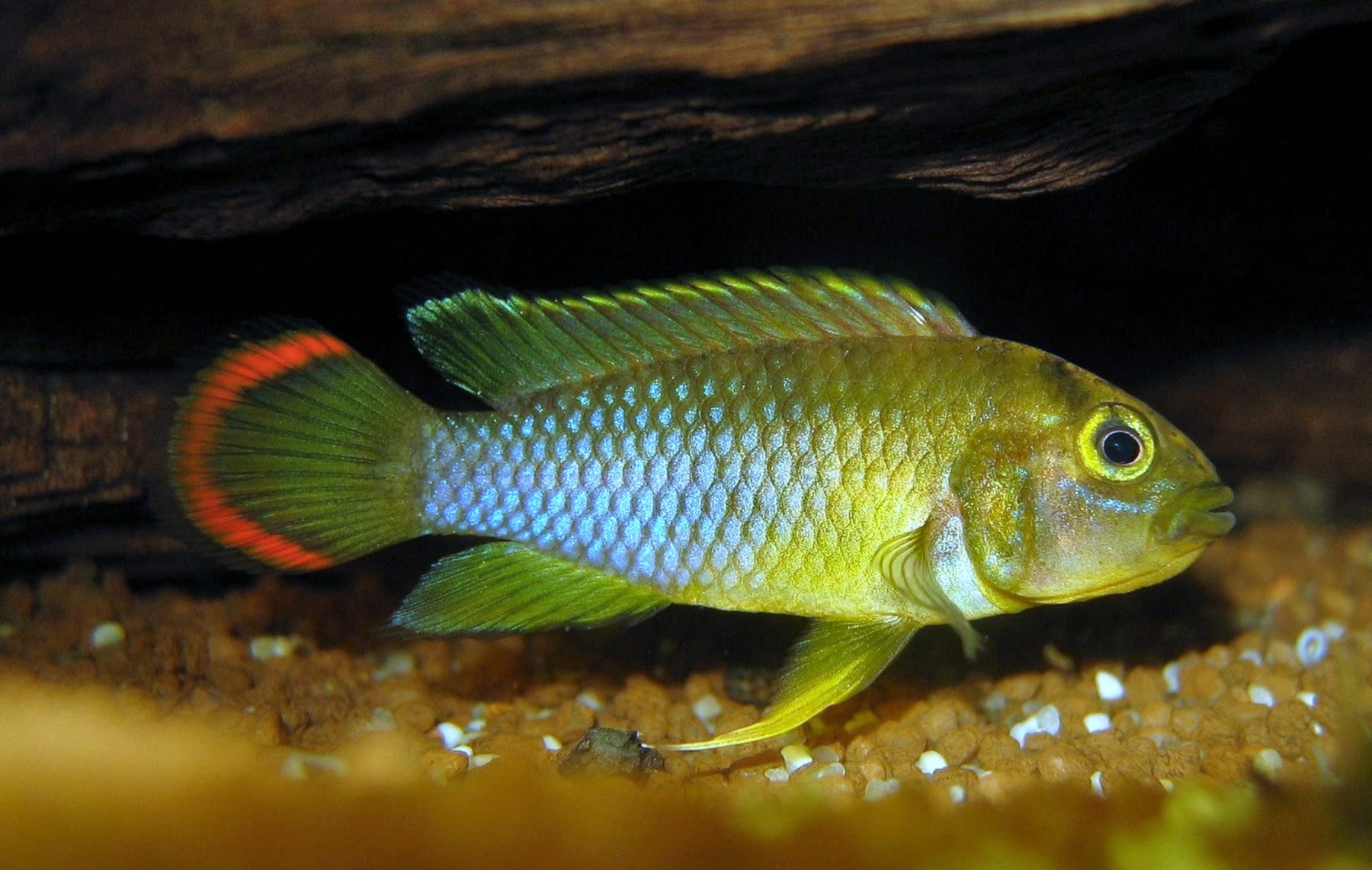
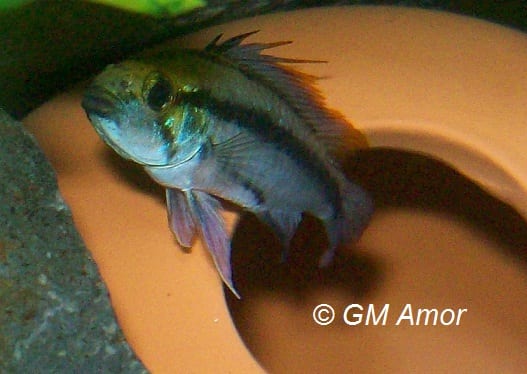
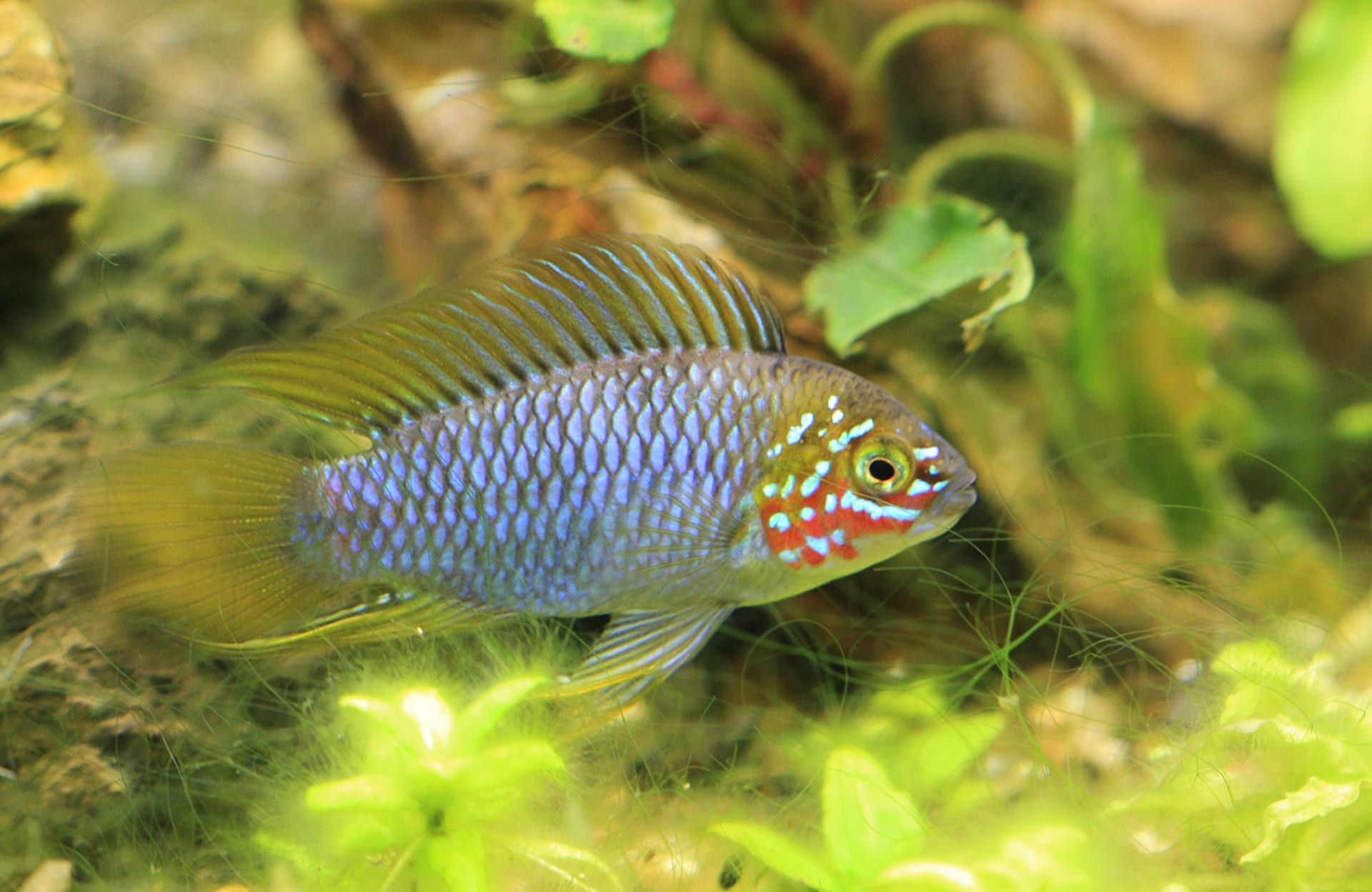
A dwarf cichlid from the Paraguay basin, with a bluish body, yellow head and broad, flowing fins. It tolerates a wider range of temperature and water chemistry than most Apistogramma and is among the easiest to keep.
Difficulty
Beginner
Temperature
20〜26℃
Size
Males about 6.5cm, females about 5cm standard length
Diet
Live and frozen Artemia, Daphnia and bloodworm, plus prepared foods
About
Apistogramma borellii occurs in the Paraguay basin and the lower Parana in Argentina, males reaching about 6.5cm standard length and females about 5cm; males are larger, more colourful and longer-finned. A bluish body sets off the yellow head, and an ornamental strain known as 'Opal' is widely traded. It is unusually adaptable for an Apistogramma: Seriously Fish gives 20-26C, pH 5.0-8.0 and 1-15 dGH, tolerating both cooler and harder, more alkaline water than most relatives. A pair can be kept in 45x30cm, about 41 litres. It is largely carnivorous on benthic invertebrates, so live and frozen Artemia, Daphnia and bloodworm should form the basis of the diet. It is a substrate spawner laying in crevices and cavities, with the female guarding eggs and fry. Captive-raised fish suit community tanks, while wild stock is better alone or with small dither fishes.
Source: Wikipedia (CC BY-SA 4.0)
Size of the Umbrella Cichlid
The Umbrella Cichlid grows to Males about 6.5cm, females about 5cm standard length.
Temperature & humidity for the Umbrella Cichlid
The ideal temperature for the Umbrella Cichlid is 20〜26℃.
Basic Info
Origin
South America: Paraguay River basin and the lower Parana River in Argentina
Size
Males about 6.5cm, females about 5cm standard length
Temperature
20〜26℃
Diet
Care Specifications
- pH
- 5–8
- Hardness (GH)
- 1–15 dGH
- Water Temp.
- 20–26℃
- Min. Tank
- 41 L
PeacefulPairBreeding: Moderate
Sources: Seriously Fish: Apistogramma borellii / FishBase: Apistogramma borellii
References & Sources
Edited & verified by: BreederDirect editorial team
The taxonomic, regulatory, and husbandry data on this page are compiled and verified against the authoritative primary sources below.
Taxonomy & Authority
Accepted name: Apistogramma borellii Regan, 1906
Authority databases: FishBase
Nomenclature follows global taxonomic authority databases.
Regulations & Conservation Status
Not CITES-listedIUCN LC · Least Concern
Sources: CITES Appendices (species not listed) / IUCN Red List
Regulations may change. Always verify the latest information with the relevant authorities.
Umbrella Cichlid Listings
Loading latest listingsFind listings for this species