Source: Wikimedia Commons
Panda Dwarf Cichlid
IntermediateApistogramma nijsseni
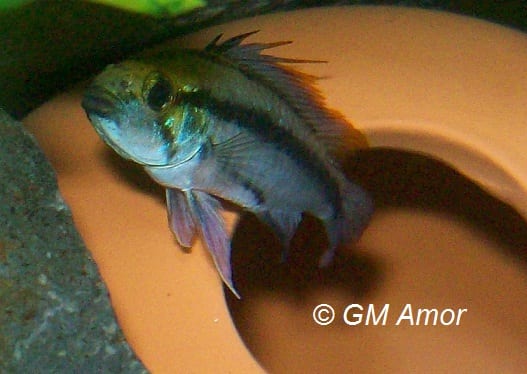
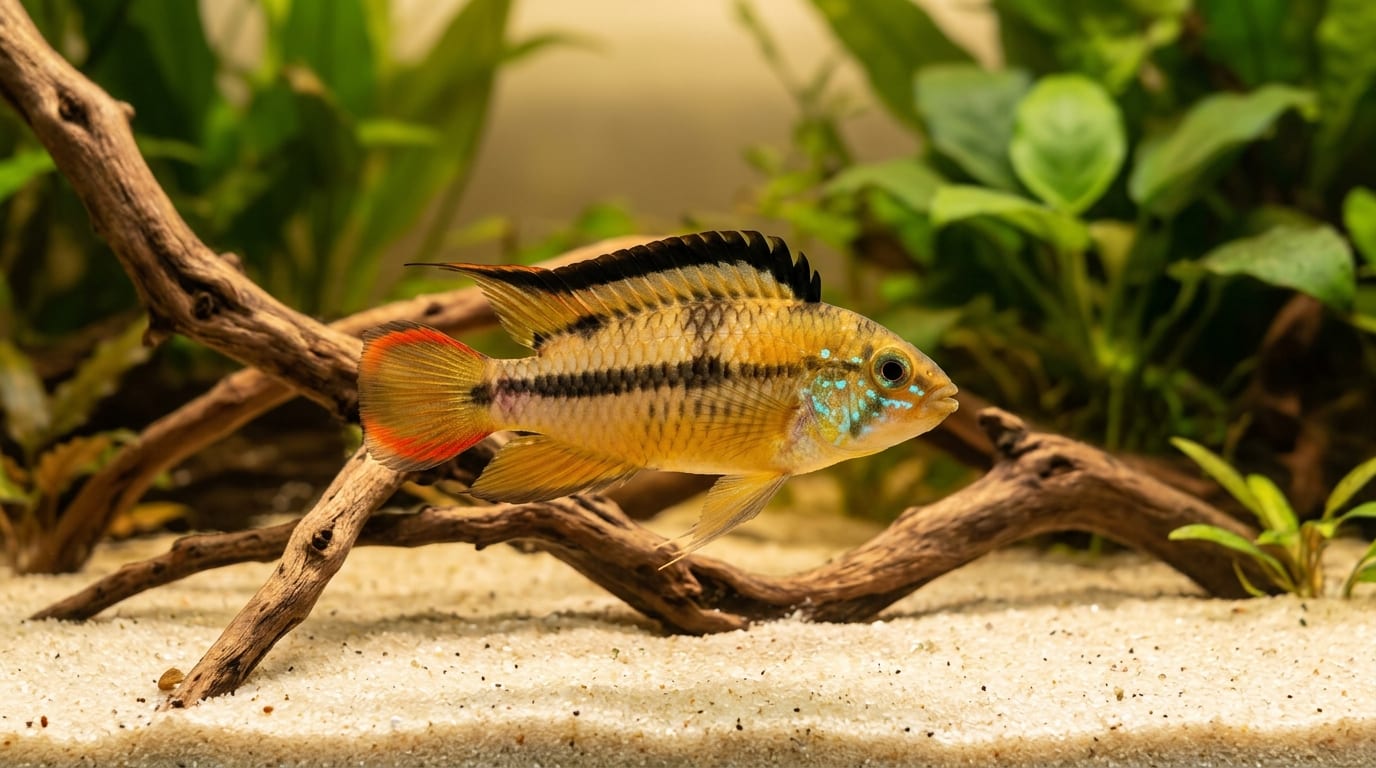
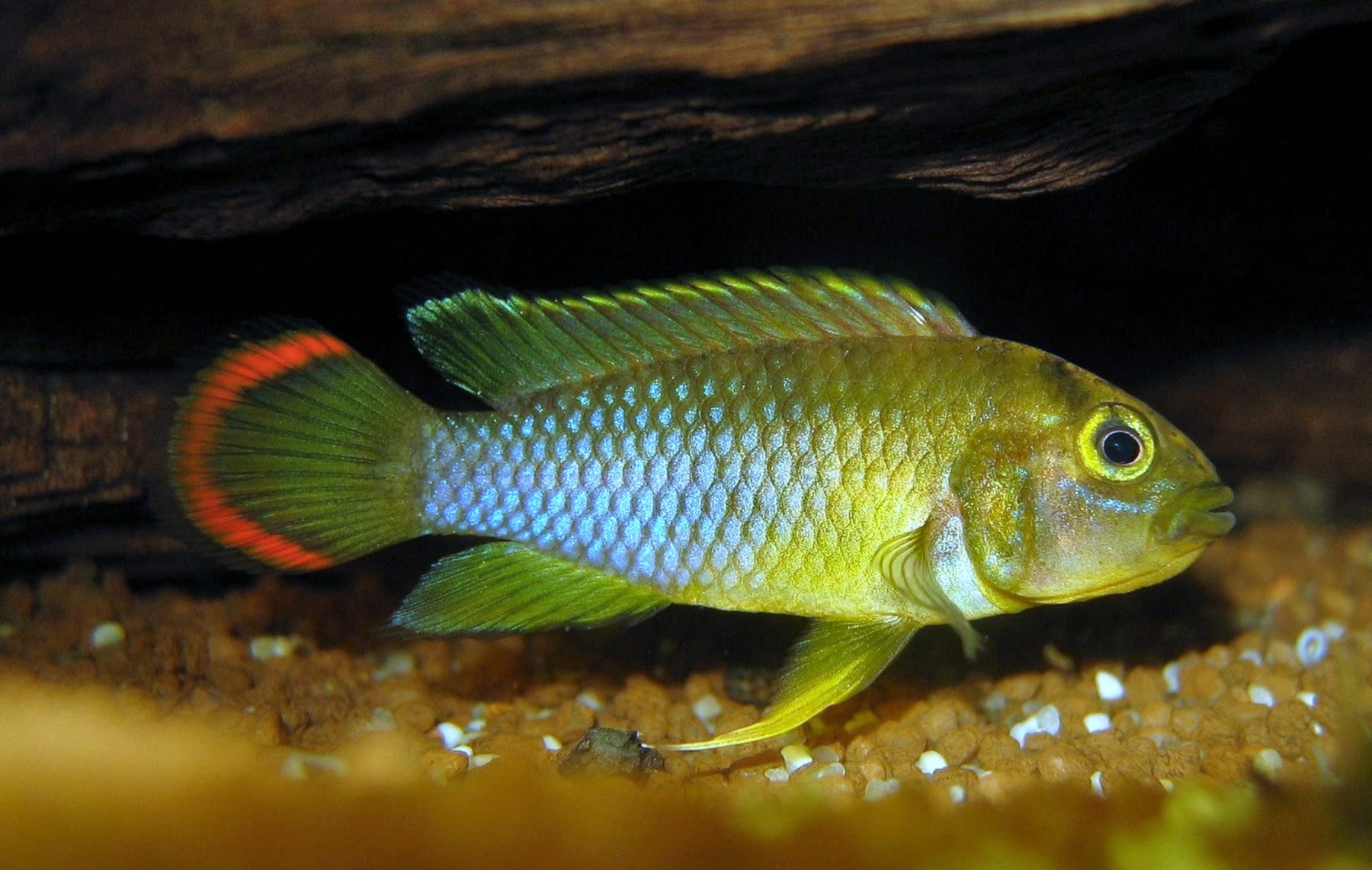
A dwarf cichlid known only from blackwater streams of the Ucayali system in Peru. Brooding females show bold dark patches over bright colour, the origin of the name panda dwarf cichlid. It prefers soft, acidic water.
Difficulty
Intermediate
Temperature
24〜28℃
Lifespan
3-5 years
Size
Up to about 3.9cm standard length
Diet
Live and frozen Artemia, Daphnia and bloodworm, plus prepared foods
About
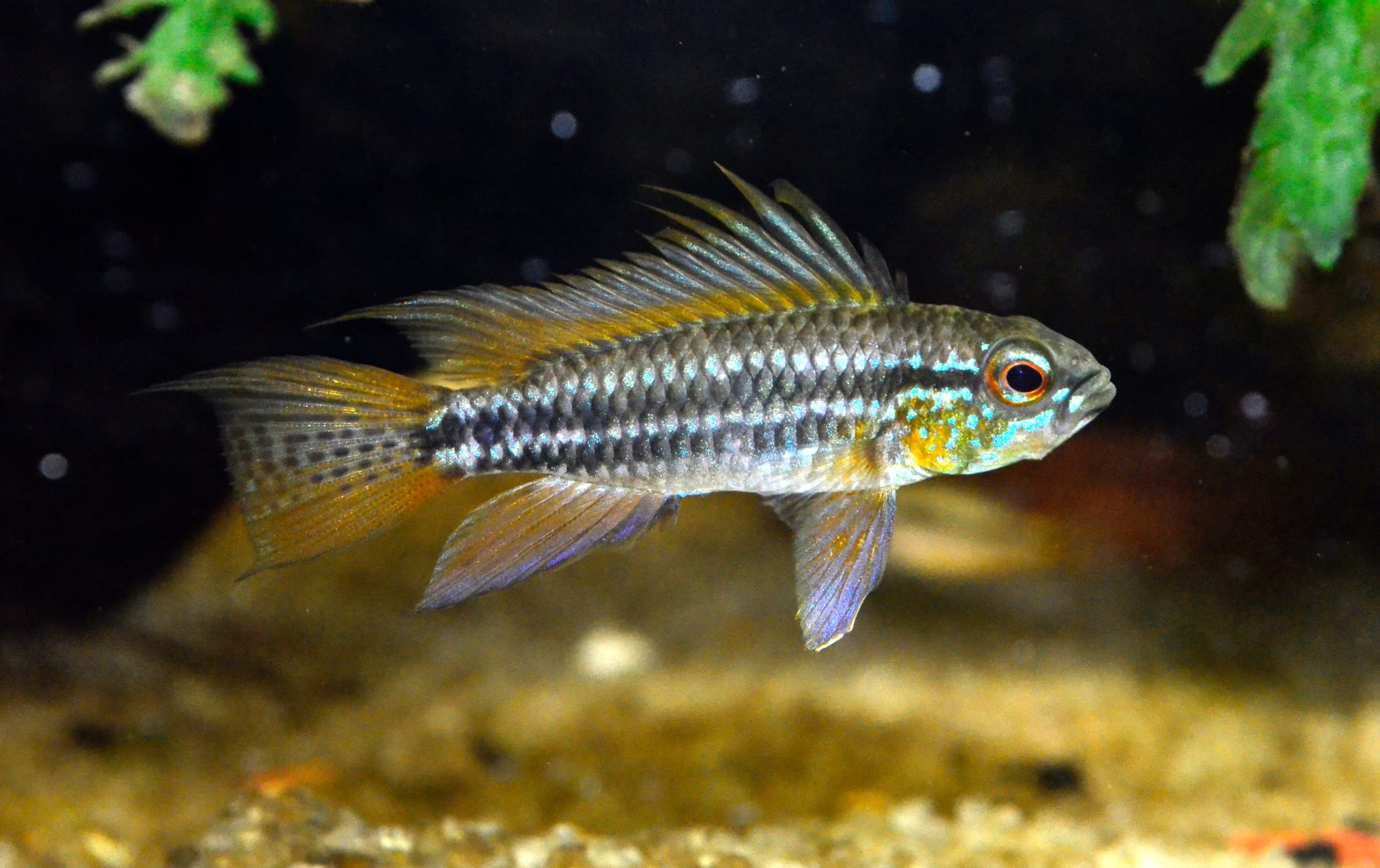
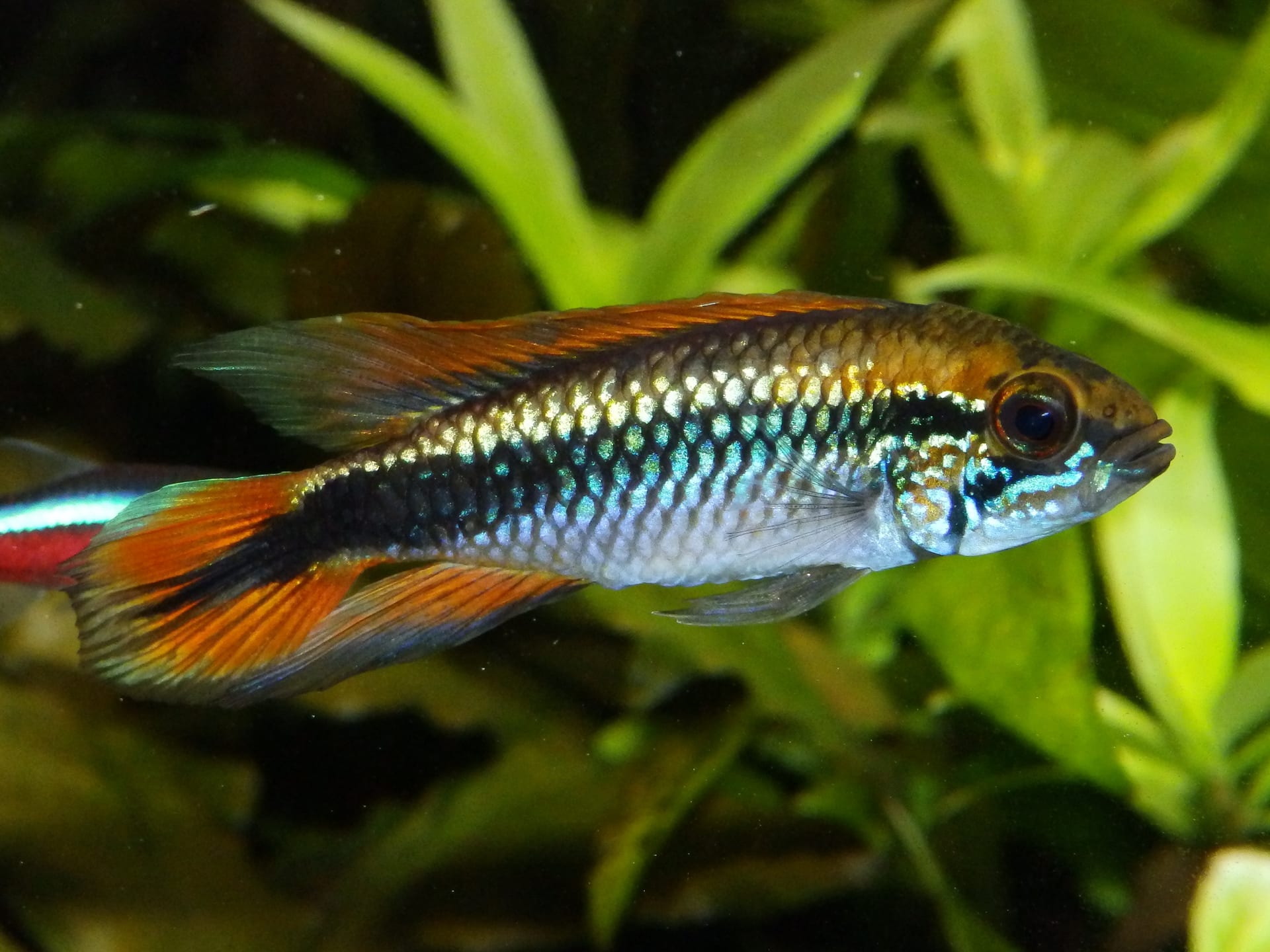
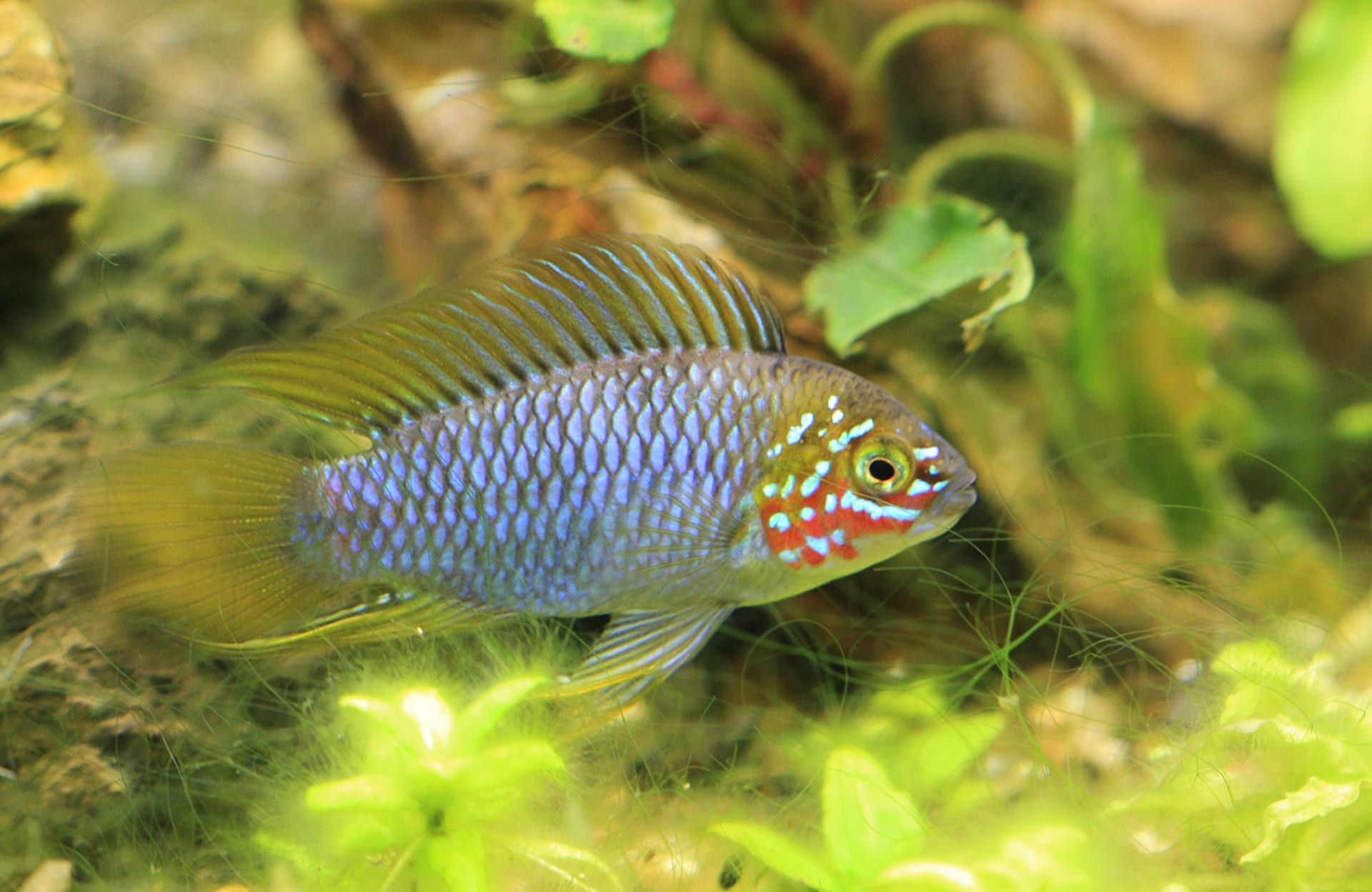
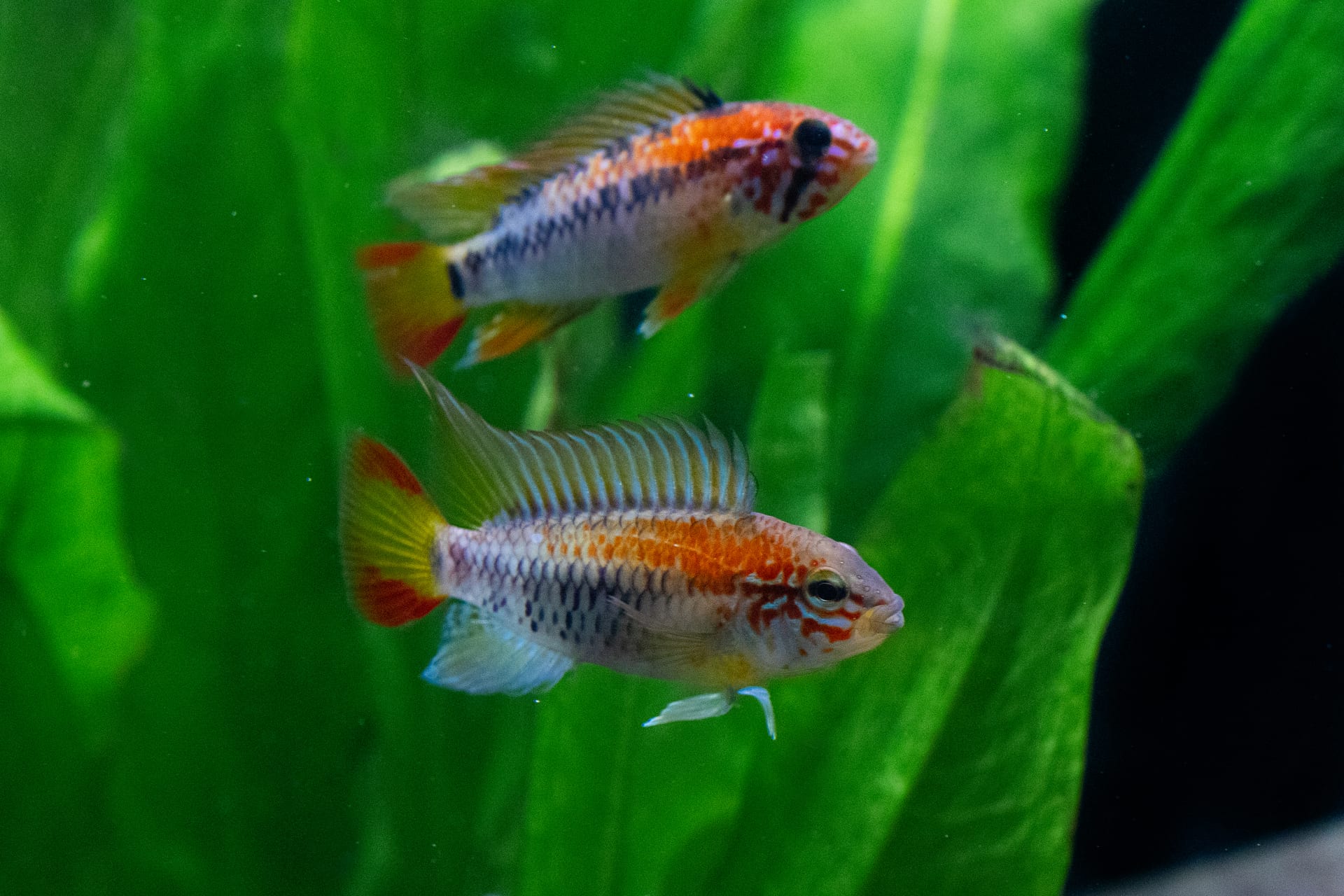
Apistogramma nijsseni is known only from blackwater tributaries of the Ucayali system in Loreto, Peru; FishBase gives the Carahuayte drainage, and the Copal River at Jenaro Herrera is also cited. It reaches about 3.9cm standard length, males being larger, more colourful and longer-finned. Brooding females develop dark patches on the gill covers, flanks and belly, and this pattern is the source of the name panda dwarf cichlid. Seriously Fish gives 24-28C, pH 5.0-6.5 and 0-4 dGH, with a pair kept in 60x30cm, about 54 litres. It feeds mainly on benthic invertebrates, so live and frozen Artemia, Daphnia and bloodworm are the staple. It is a substrate spawner laying in crevices or cavities, the female guarding eggs and fry. Because it has only ever been recorded from the type locality, the IUCN classifies it as Data Deficient.
Source: Wikipedia (CC BY-SA 4.0)
Lifespan of the Panda Dwarf Cichlid
The Panda Dwarf Cichlid lives 3-5 years.
Size of the Panda Dwarf Cichlid
The Panda Dwarf Cichlid grows to Up to about 3.9cm standard length.
Temperature & humidity for the Panda Dwarf Cichlid
The ideal temperature for the Panda Dwarf Cichlid is 24〜28℃.
Basic Info
Origin
South America: Peru, Loreto region, blackwater tributaries of the Ucayali system
Lifespan
3-5 years
Care Specifications
- pH
- 5–6.5
- Hardness (GH)
- 0–4 dGH
- Water Temp.
- 24–28℃
- Min. Tank
- 54 L
PeacefulPairBreeding: Moderate
Sources: Seriously Fish: Apistogramma nijsseni / FishBase: Apistogramma nijsseni
References & Sources
Edited & verified by: BreederDirect editorial team
The taxonomic, regulatory, and husbandry data on this page are compiled and verified against the authoritative primary sources below.
Taxonomy & Authority
Accepted name: Apistogramma nijsseni Kullander, 1979
Authority databases: FishBase
Nomenclature follows global taxonomic authority databases.
Regulations & Conservation Status
Not CITES-listedIUCN DD · Data Deficient
Sources: CITES Appendices (species not listed) / IUCN Red List
Regulations may change. Always verify the latest information with the relevant authorities.
Panda Dwarf Cichlid Listings
Loading latest listingsFind listings for this species