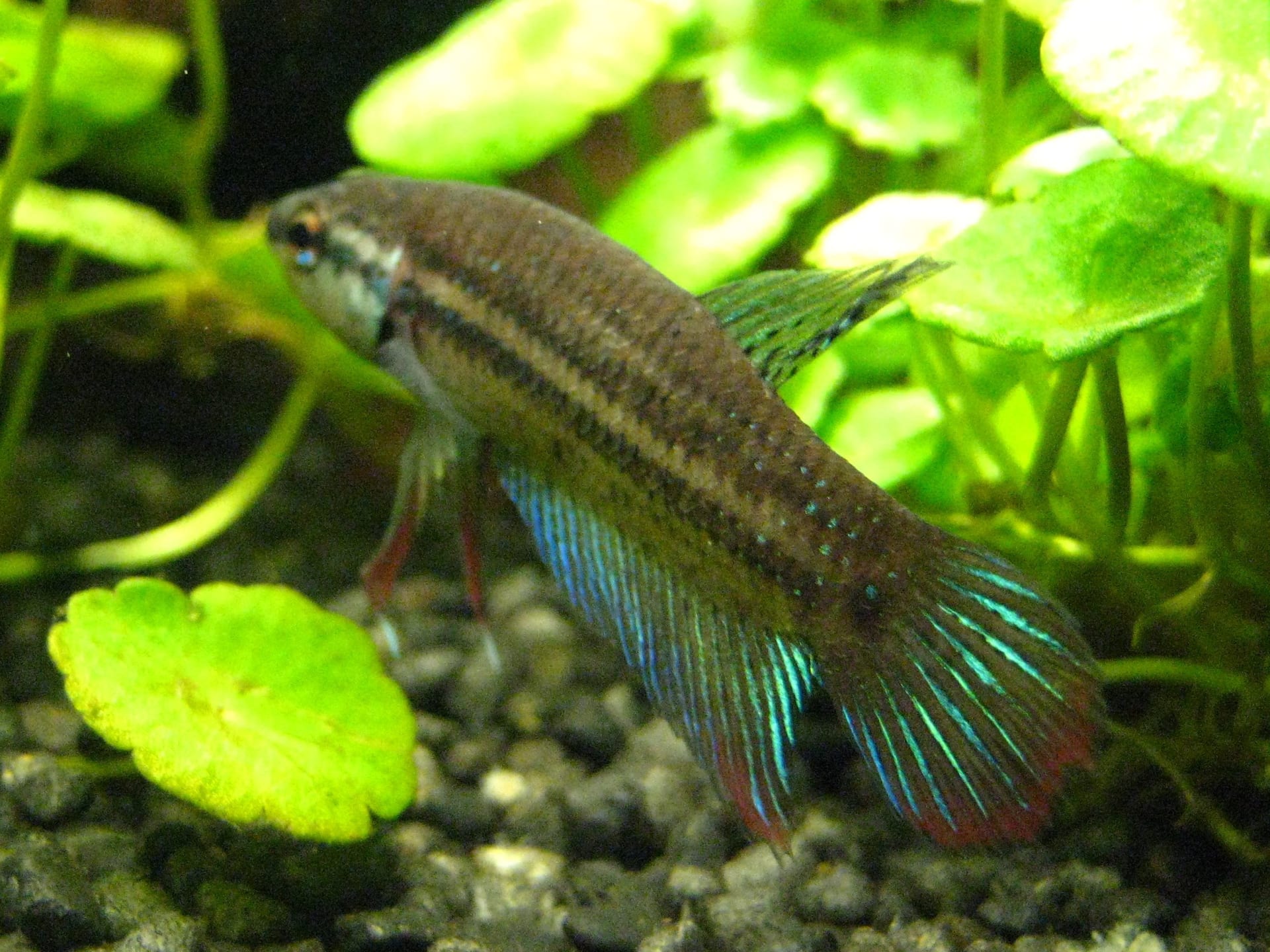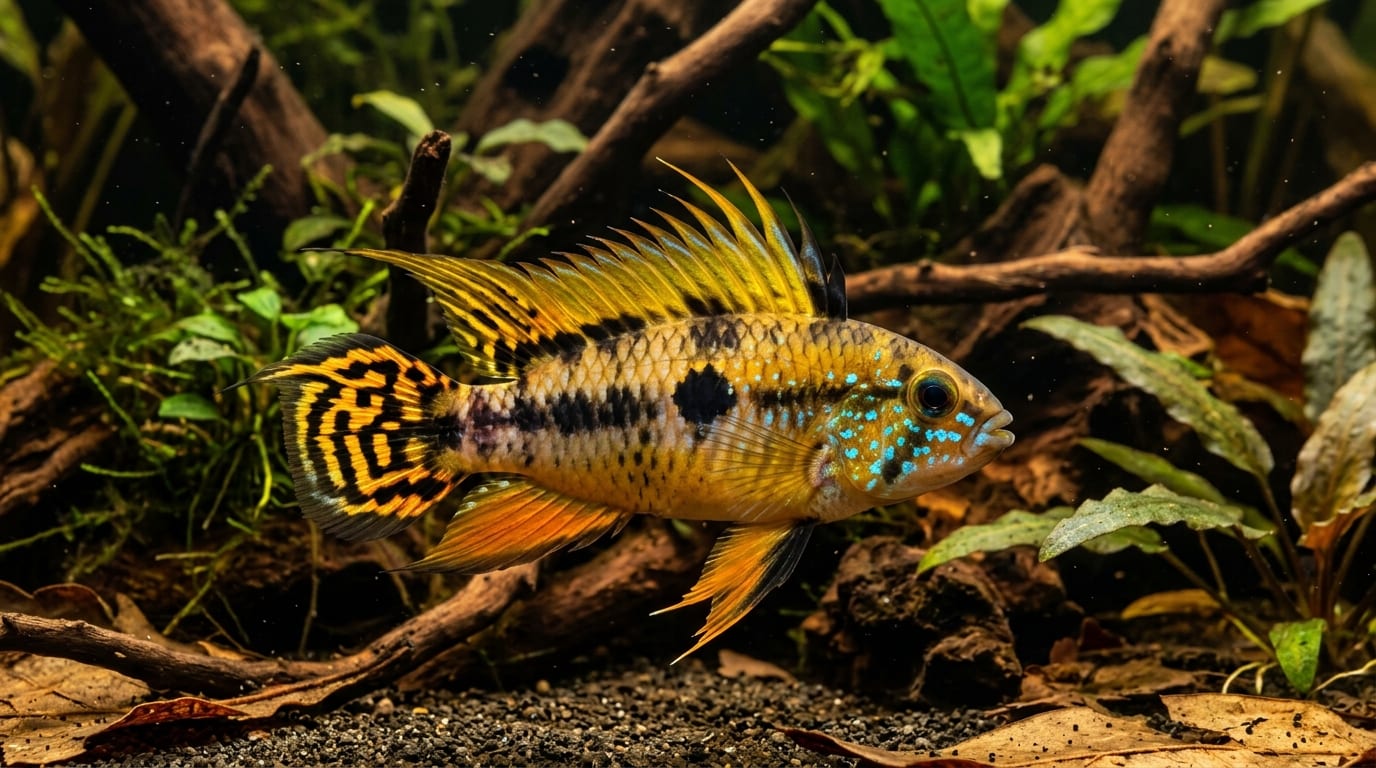
AI-generated image
Inca Dwarf Cichlid
IntermediateApistogramma baenschi
A small dwarf cichlid from Peru. Males show a bold dark blotch on the flank, green-blue iridescence and extended yellowish dorsal rays. It prefers soft acidic water and will breed in a pair tank furnished with wood and caves. Widely traded as "Inka 50".
Difficulty
Intermediate
Temperature
20〜26℃
Lifespan
3-5 years
Size
Males ~5.5cm, females ~4cm
Diet
Frozen and live foods (Artemia, Daphnia, bloodworm), dried pellets
About
Apistogramma baenschi is a small cichlid from Peruvian river systems, described in 2004 and long traded under the name "Inka 50". Males reach about 5.5cm SL and females about 4cm, males showing a broad dark flank blotch, green-blue iridescence, a yellowish dorsal fin and reddish bands in the caudal fin. Seriously Fish gives 20-26C, pH 4.0-6.5 and 1-5 dGH, in a tank of at least 80 x 30cm (about 72 litres) furnished with wood, leaf litter and ceramic caves. The diet is chiefly carnivorous - Artemia, Daphnia and chironomid larvae - though most fish accept dried foods. It is a substrate spawner that deposits eggs inside crevices; eggs hatch in 36-72 hours and fry are free-swimming 5-6 days later, reaching sexual maturity in 5-6 months. Captive-raised stock is easier to settle than wild fish.
Lifespan of the Inca Dwarf Cichlid
The Inca Dwarf Cichlid lives 3-5 years.
Size of the Inca Dwarf Cichlid
The Inca Dwarf Cichlid grows to Males ~5.5cm, females ~4cm.
Temperature & humidity for the Inca Dwarf Cichlid
The ideal temperature for the Inca Dwarf Cichlid is 20〜26℃.
Basic Info
Origin
South America (Peru)
Lifespan
3-5 years
Size
Males ~5.5cm, females ~4cm
Care Specifications
- pH
- 4–6.5
- Hardness (GH)
- 1–5 dGH
- Water Temp.
- 20–26℃
- Min. Tank
- 72 L
PeacefulPairBreeding: Moderate
Sources: Seriously Fish / FishBase
References & Sources
Edited & verified by: BreederDirect editorial team
The taxonomic, regulatory, and husbandry data on this page are compiled and verified against the authoritative primary sources below.
Taxonomy & Authority
Accepted name: Apistogramma baenschi Römer, Hahn, Römer, Soares & Wöhler, 2004
Authority databases: FishBase
Nomenclature follows global taxonomic authority databases.
Regulations & Conservation Status
Not CITES-listedIUCN LC · Least Concern
Sources: CITES Appendices (species not listed) / IUCN Red List
Regulations may change. Always verify the latest information with the relevant authorities.
Inca Dwarf Cichlid Listings
Loading latest listingsFind listings for this species