Source: Wikimedia Commons
Pygmy Leopard Catfish
IntermediateSynodontis petricola
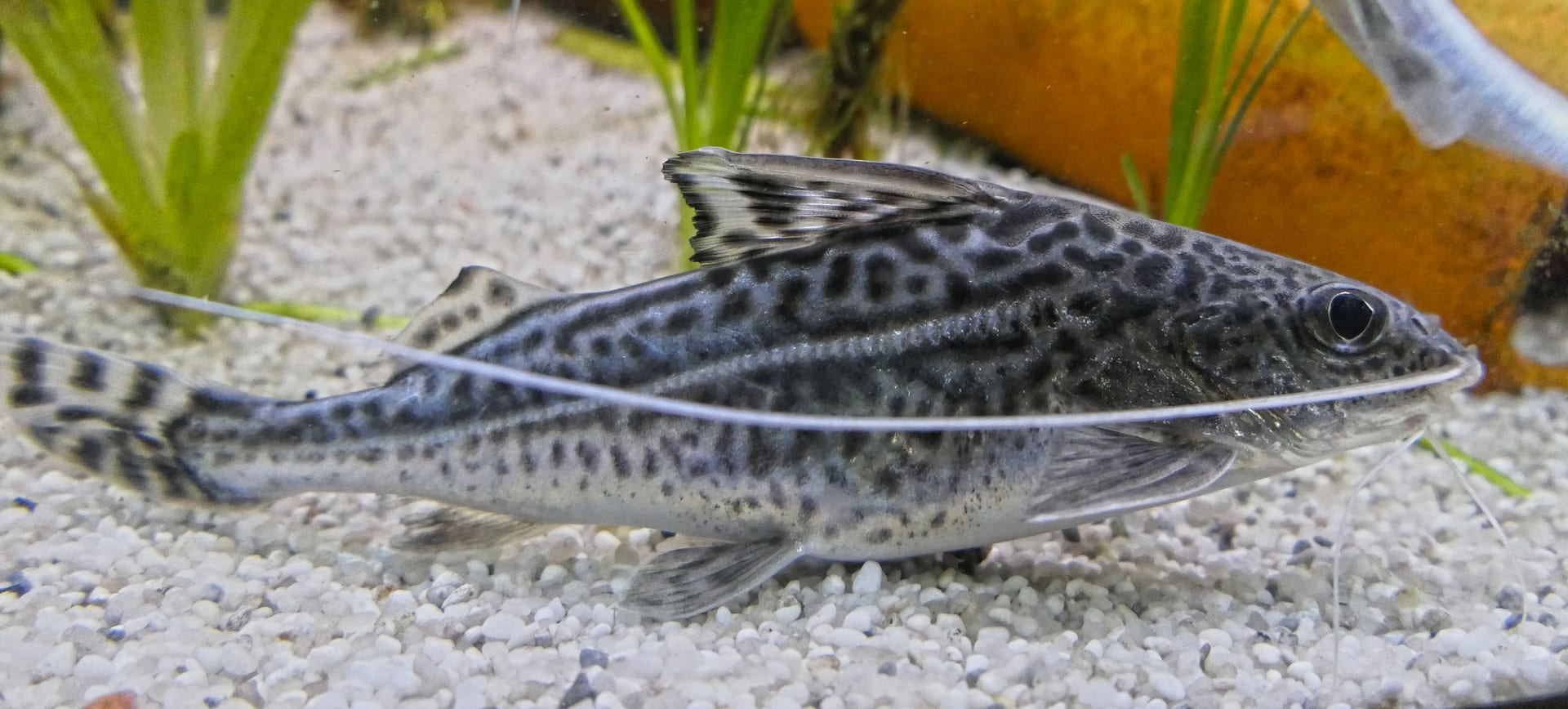
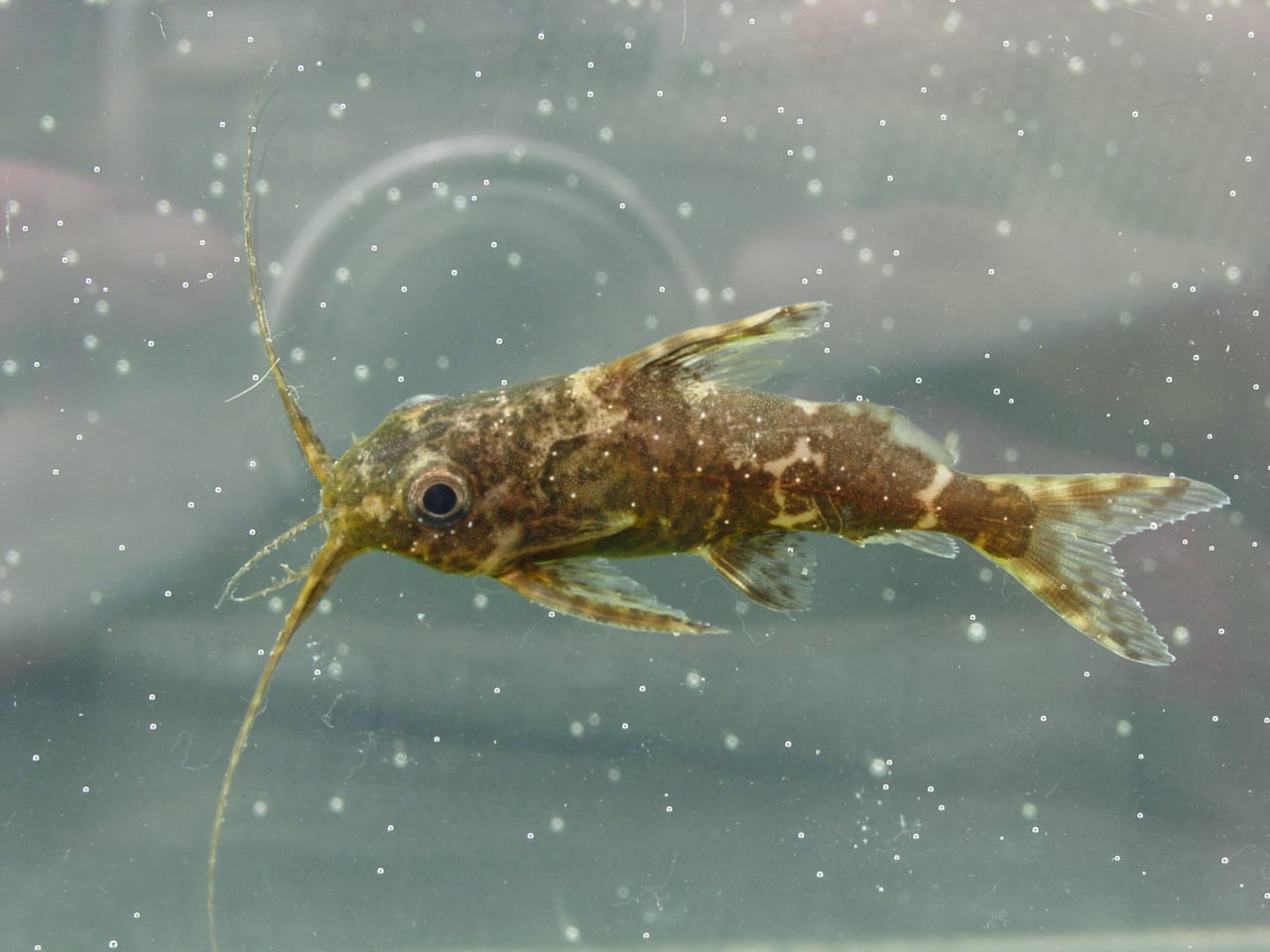
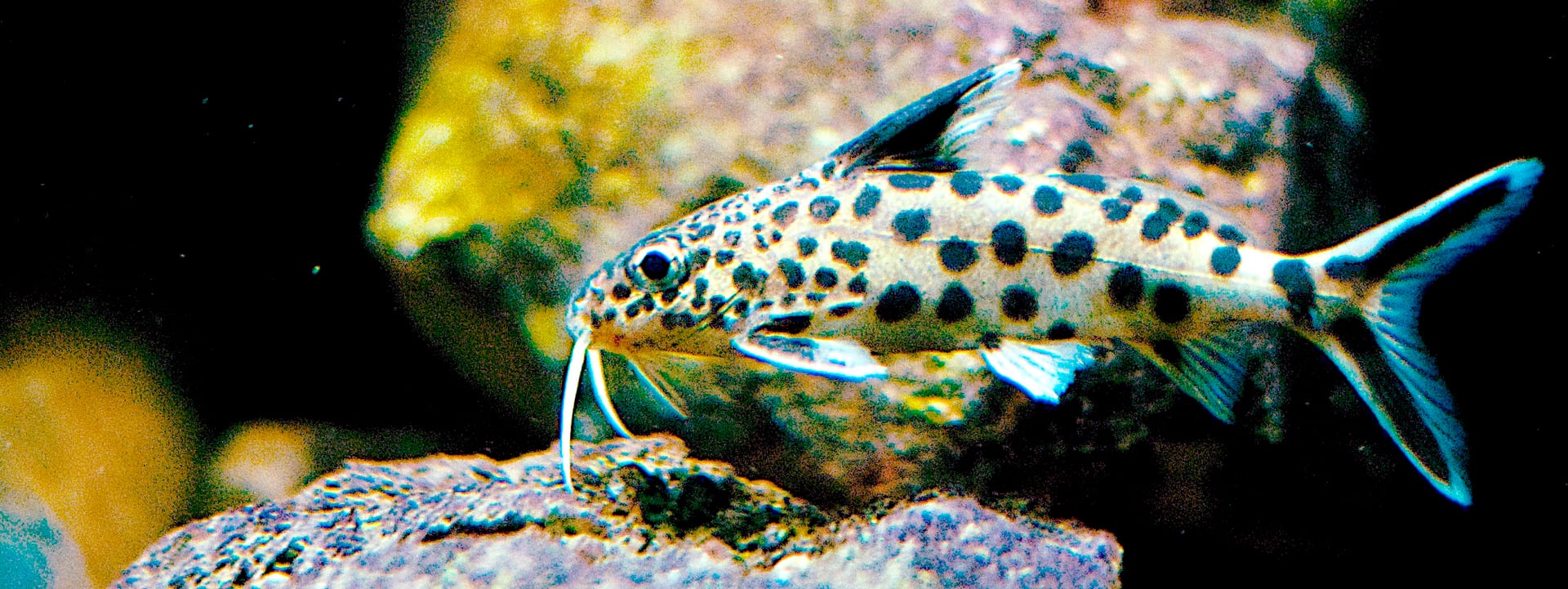
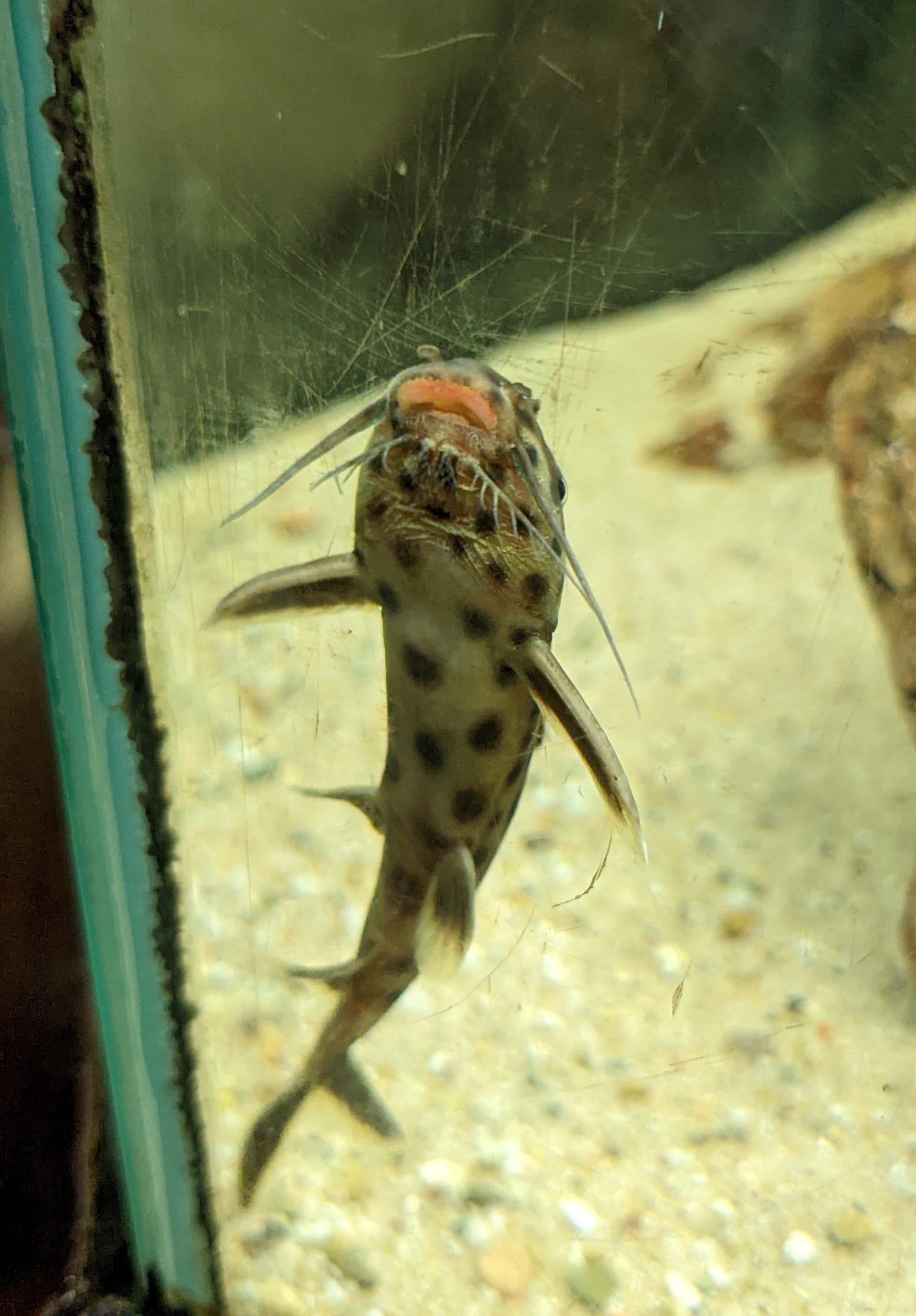
A small catfish that shoals among the rocks of Lake Tanganyika. Dark spots scatter over a pale body and every fin is edged in black and white. It wants hard alkaline water and settles best in groups of four or more.
Difficulty
Intermediate
Temperature
24〜28℃
Lifespan
5-8 years
Size
About 10-13cm
Diet
Frozen and live foods, dried foods, vegetables (shelled peas, cucumber)
About
Synodontis petricola is a small mochokid endemic to Lake Tanganyika, where it shoals among rocks. FishBase gives 10.2cm TL and Seriously Fish 130mm SL. Dark spots scatter over a pale body and each fin is edged in black and white. Seriously Fish gives 24-28C, pH 7.5-8.5 and 10-35 dGH, so the hard alkaline chemistry of the lake should be reproduced. A base of 90 x 30cm (about 81 litres) suits a group, aquascaped with rockwork full of crevices. It is one of the most peaceful Synodontis and mixes well with hard-water cichlids, rainbowfish and livebearers, settling best in groups of four or more. It is omnivorous, taking frozen, live and dried foods as well as shelled peas and cucumber. It can spawn parasitically alongside mouthbrooding cichlids, but a dedicated breeding tank is more productive: eggs hatch in about 24 hours and fry swim free within 2-3 days. Growth is slow.
Source: Wikipedia (CC BY-SA 4.0)
Lifespan of the Pygmy Leopard Catfish
The Pygmy Leopard Catfish lives 5-8 years.
Size of the Pygmy Leopard Catfish
The Pygmy Leopard Catfish grows to About 10-13cm.
Temperature & humidity for the Pygmy Leopard Catfish
The ideal temperature for the Pygmy Leopard Catfish is 24〜28℃.
Basic Info
Origin
Africa (Lake Tanganyika)
Lifespan
5-8 years
Care Specifications
- pH
- 7.5–8.5
- Hardness (GH)
- 10–35 dGH
- Water Temp.
- 24–28℃
- Min. Tank
- 81 L
PeacefulGroupBreeding: Moderate
Sources: Seriously Fish / FishBase
References & Sources
Edited & verified by: BreederDirect editorial team
The taxonomic, regulatory, and husbandry data on this page are compiled and verified against the authoritative primary sources below.
Taxonomy & Authority
Accepted name: Synodontis petricola Matthes, 1959
Authority databases: FishBase
Nomenclature follows global taxonomic authority databases.
Regulations & Conservation Status
Not CITES-listedIUCN LC · Least Concern
Sources: CITES Appendices (species not listed) / IUCN Red List
Regulations may change. Always verify the latest information with the relevant authorities.
Pygmy Leopard Catfish Listings
Loading latest listingsFind listings for this species