Source: Wikimedia Commons
Cuckoo Catfish
IntermediateSynodontis multipunctatus
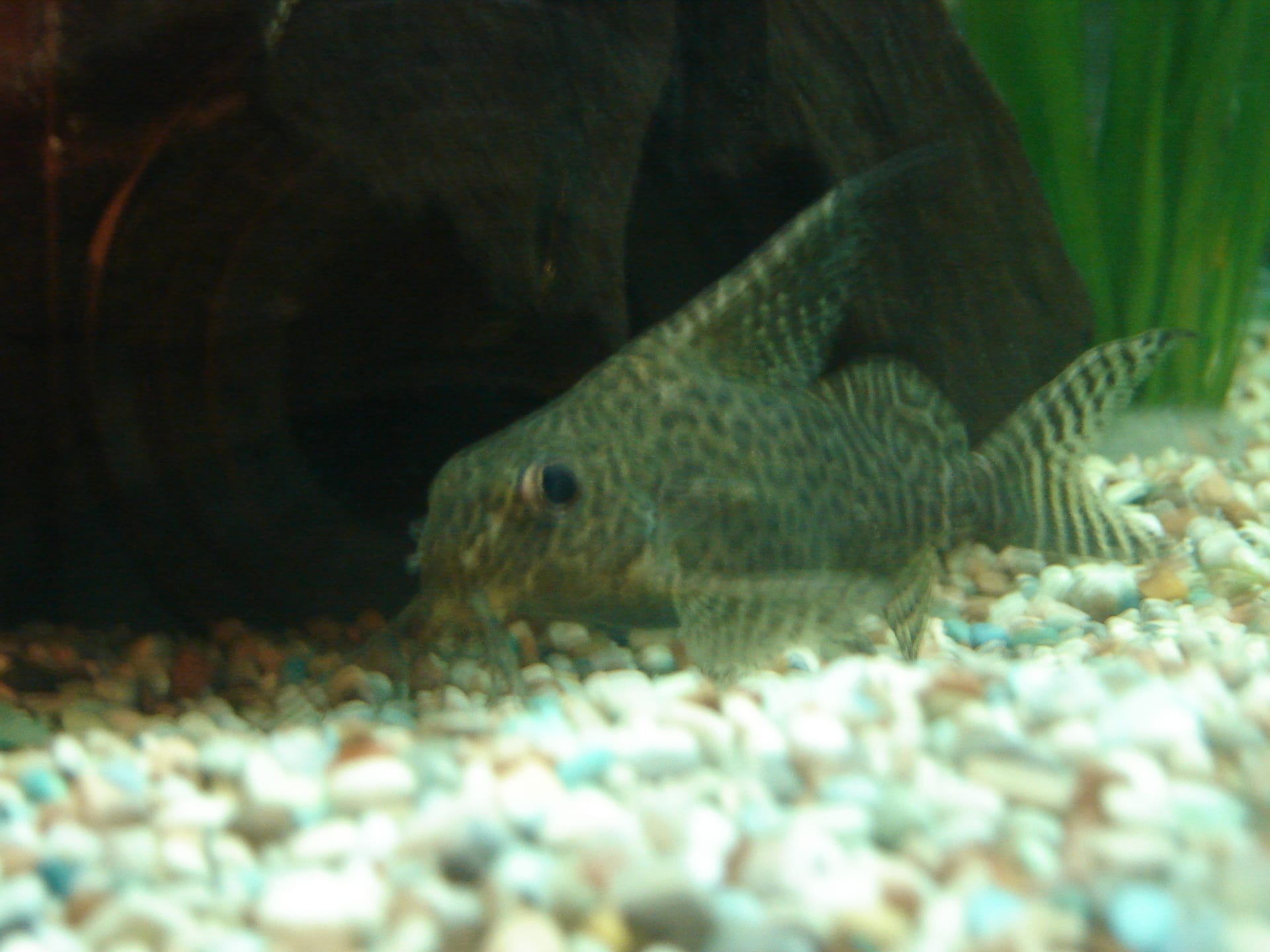
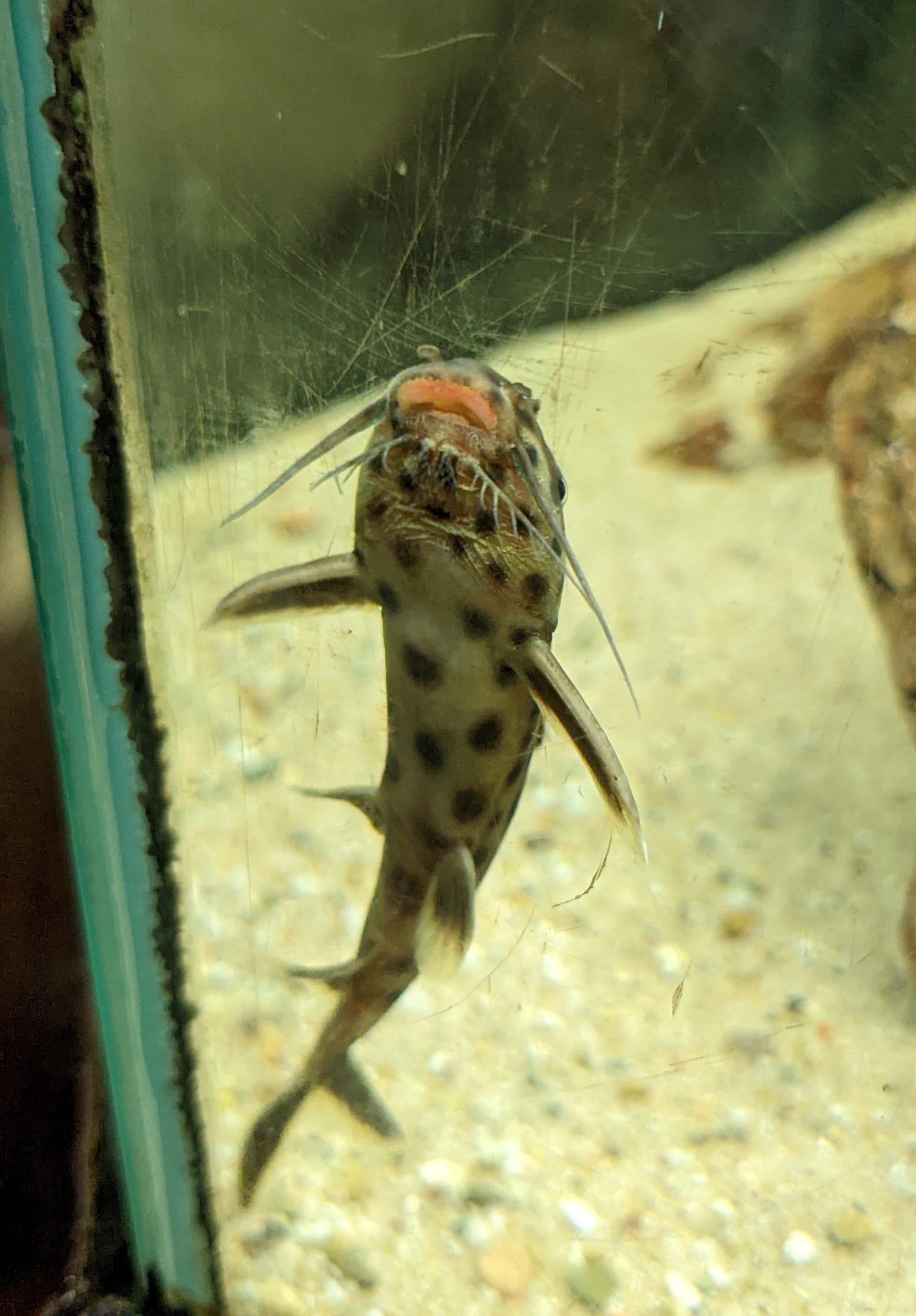
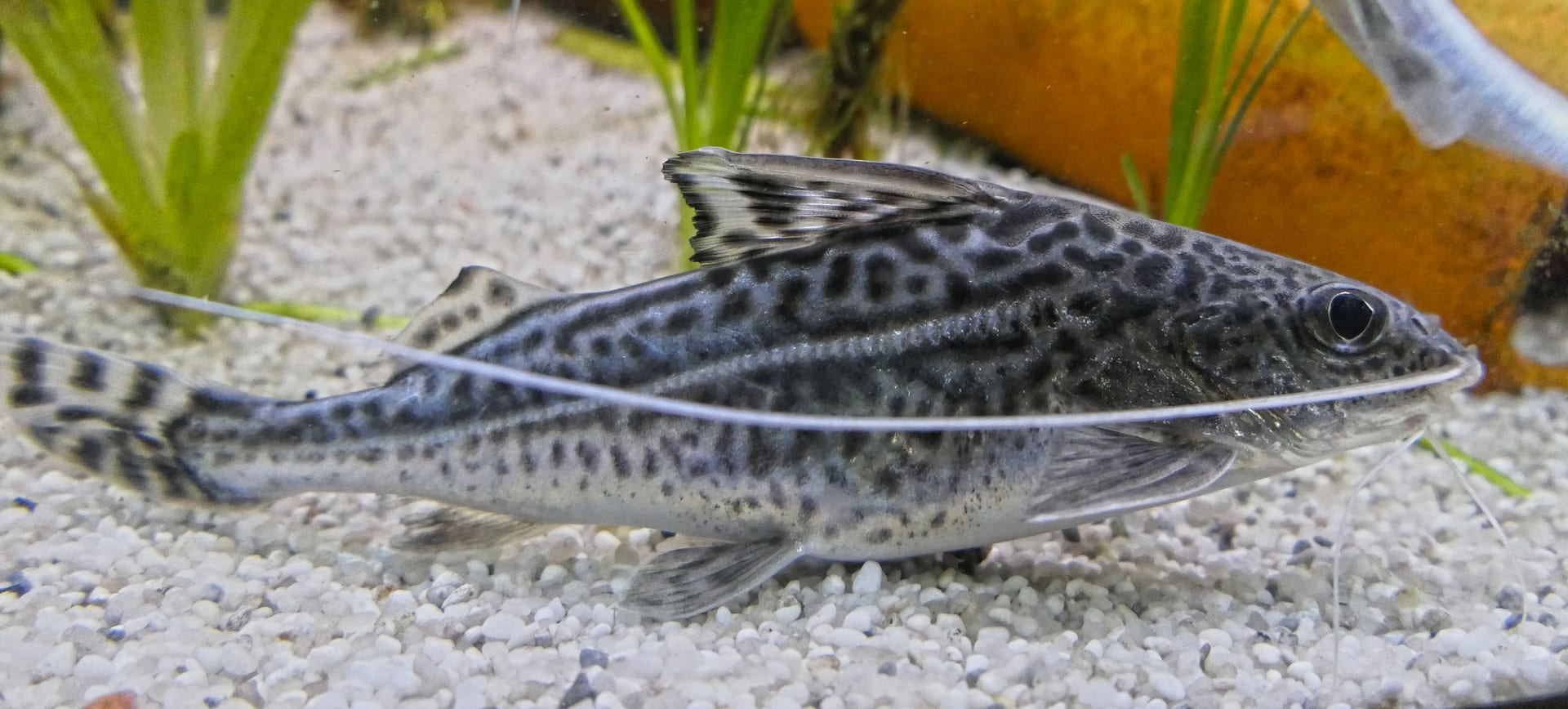
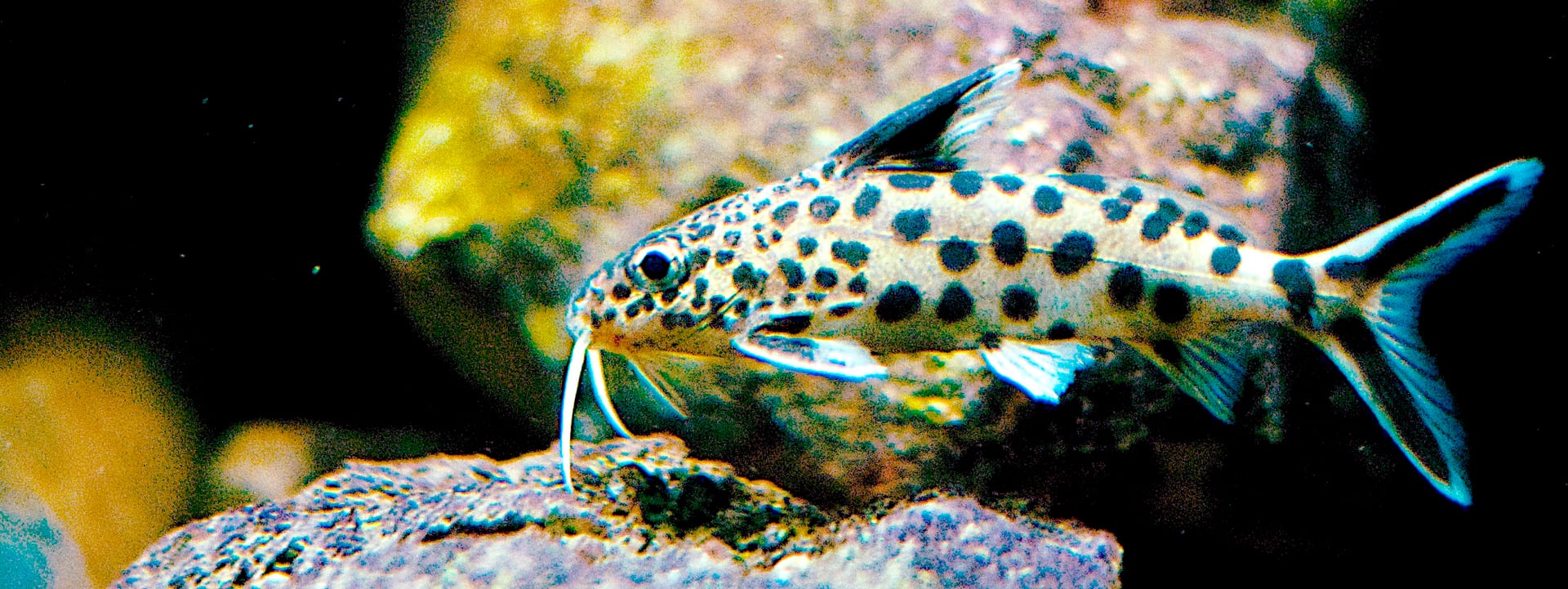
A medium-sized catfish endemic to Lake Tanganyika, famous for slipping its eggs into the spawnings of mouthbrooding cichlids. Its fry then eat the host's young. Dark spots scatter over a pale body. It wants hard, alkaline water.
Difficulty
Intermediate
Temperature
21〜25℃
Lifespan
10-15 years
Size
Up to about 27.5cm
Diet
Frozen and live foods, sinking pellets
About
Synodontis multipunctatus is endemic to Lake Tanganyika; FishBase gives a maximum of 27.5cm TL. Dark spots scatter over a pale body and the fins are black-edged. Its defining trait is brood parasitism: it mixes its own eggs into the spawning of mouthbrooding cichlids, which then incubate them orally. The catfish eggs hatch faster than the host's, and the fry eat the host larvae. FishBase gives 15-35 degrees hardness and 21-25C, so the hard alkaline chemistry of the lake should be reproduced in captivity. Rockwork with many crevices suits it, and it settles best when several are kept together. It is omnivorous, taking frozen, live and sinking dried foods. Captive breeding is only possible with mouthbrooding cichlids present to act as hosts, so it cannot be achieved with the catfish alone.
Source: Wikipedia (CC BY-SA 4.0)
Lifespan of the Cuckoo Catfish
The Cuckoo Catfish lives 10-15 years.
Size of the Cuckoo Catfish
The Cuckoo Catfish grows to Up to about 27.5cm.
Temperature & humidity for the Cuckoo Catfish
The ideal temperature for the Cuckoo Catfish is 21〜25℃.
Basic Info
Origin
Africa (Lake Tanganyika)
Lifespan
10-15 years
Size
Care Specifications
References & Sources
Edited & verified by: BreederDirect editorial team
The taxonomic, regulatory, and husbandry data on this page are compiled and verified against the authoritative primary sources below.
Taxonomy & Authority
Accepted name: Synodontis multipunctatus Boulenger, 1898
Authority databases: FishBase
Nomenclature follows global taxonomic authority databases.
Regulations & Conservation Status
Not CITES-listedIUCN LC · Least Concern
Sources: CITES Appendices (species not listed) / IUCN Red List
Regulations may change. Always verify the latest information with the relevant authorities.
Cuckoo Catfish Listings
Loading latest listingsFind listings for this species