Source: Wikimedia Commons
African butterfly cichlid
BeginnerAnomalochromis thomasi
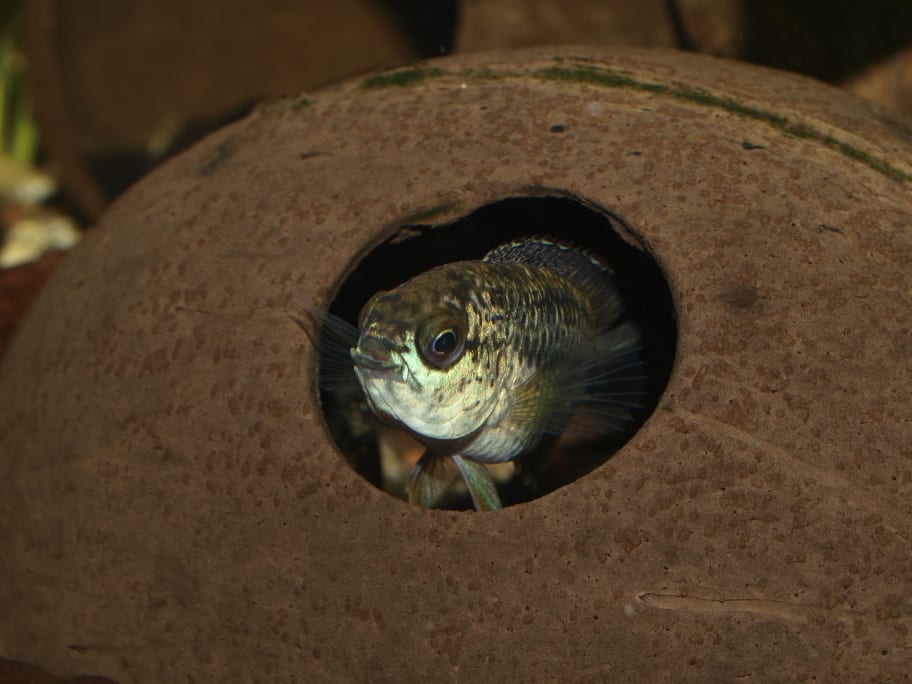
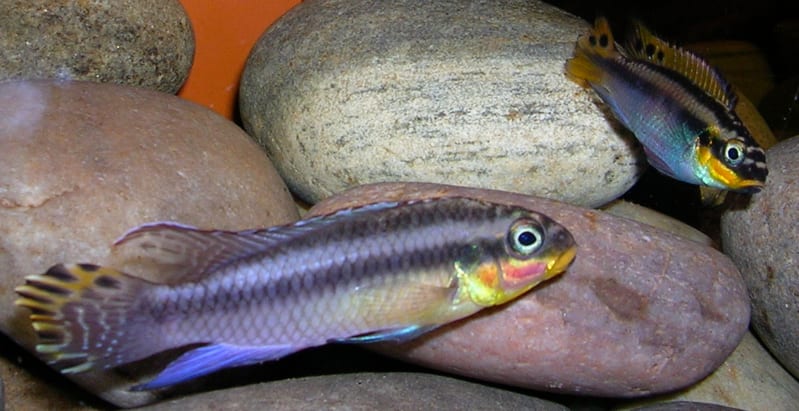
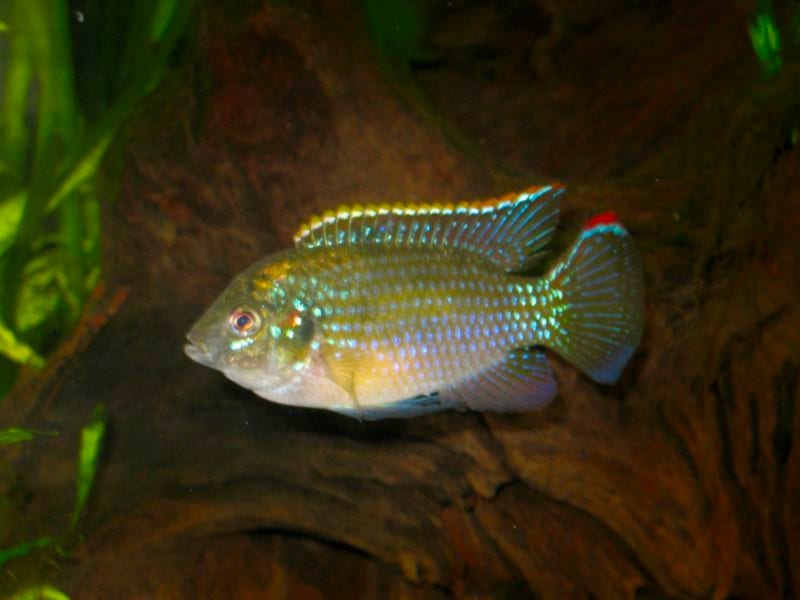
A small cichlid from West African forest streams. Adults show black blotches and blue-spangled scales; unusually peaceful for a cichlid, tolerant of water chemistry, and spawns in pairs on flat stones.
Difficulty
Beginner
Temperature
23〜27℃
Size
Up to 5 cm SL (6.5 cm TL recorded)
Diet
Omnivore (prepared, frozen and live foods)
About
Anomalochromis thomasi is the only species in its genus and occurs in coastal rivers from the Konkouré (Guinea) to the St. John (Liberia). FishBase gives 5 cm standard length, with a maximum recorded total length of 6.5 cm. It lives in shallow, muddy savannah waters and streams bordering forest, and may hide in mud when disturbed. Juveniles look plain, but settled adults show clear black blotches and blue spangling. Peaceful for a cichlid and rarely digs, it suits planted tanks, tolerates slightly acidic to slightly alkaline water, and is regarded as a good first West African dwarf cichlid. Pairs spawn on flat stones or broad leaves, then move the hatched larvae into pits they have dug. It is a regular in Japanese specialist shops.
Source: Wikipedia (CC BY-SA 4.0)
Size of the African butterfly cichlid
The African butterfly cichlid grows to Up to 5 cm SL (6.5 cm TL recorded).
Temperature & humidity for the African butterfly cichlid
The ideal temperature for the African butterfly cichlid is 23〜27℃.
Basic Info
Origin
West Africa (coastal rivers of Guinea, Sierra Leone and Liberia)
Size
Up to 5 cm SL (6.5 cm TL recorded)
Temperature
23〜27℃
Diet
References & Sources
Edited & verified by: BreederDirect editorial team
The taxonomic, regulatory, and husbandry data on this page are compiled and verified against the authoritative primary sources below.
Primary sources
Taxonomy & Authority
Accepted name: Anomalochromis thomasi (Boulenger, 1915)
Synonyms: Haplochromis thomasi (Boulenger, 1915), Hemichromis thomasi (Boulenger, 1915), Paratilapia thomasi Boulenger, 1915, Pelmatochromis thomasi (Boulenger, 1915)
Authority databases: GBIF · GBIF · FishBase
Nomenclature follows global taxonomic authority databases.
Regulations & Conservation Status
Not CITES-listedIUCN LC · Least Concern
Not listed in the CITES Appendices (checked on Species+). Not designated under Japan's Invasive Alien Species Act, nor on the Ministry of the Environment's list of invasive alien species. Never release aquarium fish into the wild.
Sources: Species+ (CITES) / FishBase
Regulations may change. Always verify the latest information with the relevant authorities.
African butterfly cichlid Listings
Loading latest listingsFind listings for this species