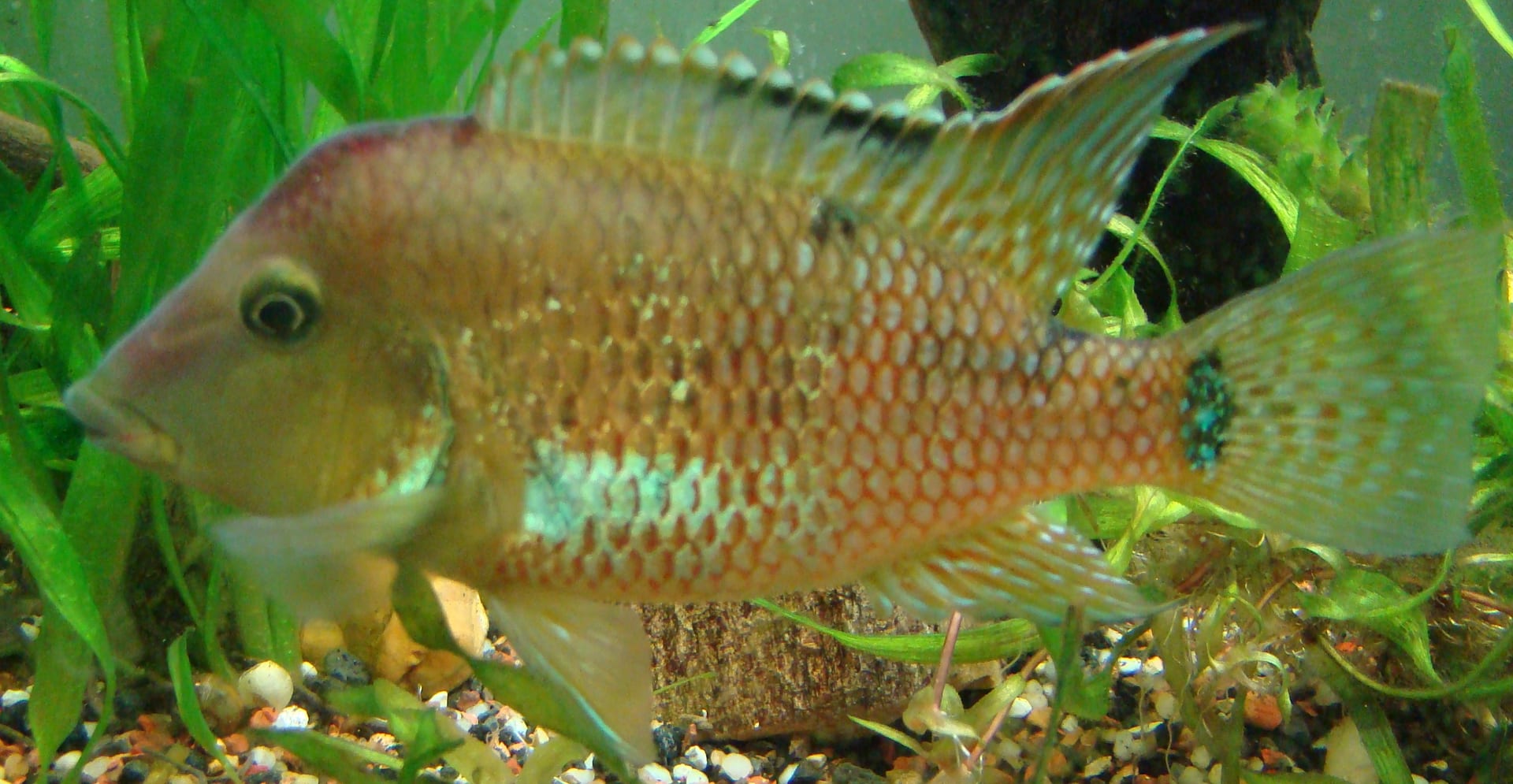
 © Morgana h / CC BY-SA 3.0
Redhump eartheater
The Redhump eartheater (Geophagus steindachneri) is a cichlid from Colombia and Venezuela. As the common name suggests, mature males develop a large red hump on the forehead that stands out in any aquarium. It feeds by taking sand into its mouth and sifting out food, and the female broods her eggs and fry in her mouth. Adults reach a maximum total length of 19.8 cm, so a roomy tank with a sand bed suits them best. It is rated for intermediate keepers, making it a good match once you are comfortable with water quality management.
View Redhump eartheater encyclopedia →Breeder Wanted!
List on BreederDirect and sell directly to customers nationwide!
BreederDirect's 6 Transparency Commitments
All Tropical Fish listings include water quality, temperament, and tank size information from verified Breeder.
- Origin Disclosed
- Real Photos
- Water Quality Disclosed
- Recommended Tank Size
- Temperament Disclosed
- Breed Line Disclosed
Browse all 341 breeds
Water Type
Care Level
Verified breeders wanted for Tropical Fish
Breeders are signing up now ahead of launch. Subscribe to be notified when new listings go live.
Getting alerts is free with a member account. When new listings match your saved search, we'll notify you by email and in-app.
Browse other categories
Verified breeders (preview)
Are you raising tropical fish?
Register as a breeder and connect with buyers directly.
Apply as a breederRedhump eartheater key facts
- Care level
- Intermediate
- Size
- Up to 19.8 cm TL
- Temperature
- 24〜26℃
- Diet
- Omnivore (fine-grade pellets, frozen foods, plant matter)
- Water Temperature & Quality
- 24-26°C, pH 6.5-7.0, 5-15 dH (FishBase); Seriously Fish gives 20-30°C and pH 6.0-7.5. Sensitive to poor water; weekly changes of 40-70% are recommended.
- Aquarium
- Soft, fine sand is essential because it feeds by sifting; coarse gravel hinders feeding and damages gills. Seriously Fish suggests a 120 x 45 cm footprint. Prevent stirred sand from entering the filter.
- Tank Mates & Compatibility
- Males fight, so keep one male with three or more females unless the tank is very large. Mid-water characins make good companions; avoid aggressive bottom-dwellers.
- Diet & Feeding
- It cannot handle large items. Feed fine sinking foods and small frozen foods such as bloodworm and Artemia in 3-4 small meals a day.
- Breeding & Egg-laying
- The female mouthbroods for 10-14 days, and fry return to her mouth for a week or more after release. Brooding females are often moved to a separate tank.
- Health & Cautions
- Never add it to an immature tank, and do not cross colour forms from different localities.
About Redhump eartheater
Guide to the Redhump eartheater (Geophagus steindachneri), a cichlid from Colombia and Venezuela whose mature males grow a red forehead hump. Covers sand-sifting feeding, mouthbrooding, a maximum length of 19.8 cm and care tips for intermediate keepers.
7 things to know before welcoming a Redhump eartheater
1Red hump marks males
Mature males develop a large red hump on the forehead, which gives the fish its English name. Young fish may not show this trait clearly, so ask the seller how the sex was judged if you want a male.
2Choose fine sand
Because it takes sand into its mouth to sift out food, choose fine, smooth sand rather than sharp gravel. A sand bed lets the fish show its natural foraging behavior. It also digs, so set driftwood and rocks firmly on the tank bottom to keep them from shifting.
3Plan a roomy tank
Adults reach a maximum total length of 19.8 cm. Choose a large tank with plenty of floor space so the fish can swim and forage over the sand. If you keep more than one, allow even more room and add hiding places.
4Choose tankmates with care
This fish can't handle large food well, and it can be kept with mid-water fish such as characins, but not with aggressive bottom dwellers. Males fight fiercely, so unless the tank is very large, keep one male with three or more females.
5Keep water quality stable
As an intermediate-level fish, it calls for steady water quality management. Keep the filtration working well, do regular water changes, and avoid sudden changes in water quality or temperature. If you notice changes on the body surface or a drop in appetite, ask the seller or an experienced keeper for advice early.
6Feed sinking foods
It sifts food out of sand near the bottom, so sinking granular foods are easy to feed and suit it well. Combine several types of food to avoid a one-sided diet. Uneaten food can get buried in the sand and foul the water, so feed small amounts and watch how much is eaten.
7Understand mouthbrooding
The female broods her eggs and fry in her mouth. A brooding female may eat less, so keep the tank calm and do not be alarmed. If you plan to breed them, having a separate tank ready for the fry lets you respond calmly.
Frequently asked questions about Redhump eartheater
- Q.Is it suitable for beginners?
- A.It is rated for intermediate keepers. It suits people who are comfortable with basic tank management, including sand bed upkeep and water quality maintenance. Gaining some experience with other tropical fish first is recommended.
- Q.How large does it grow?
- A.The maximum total length is 19.8 cm according to FishBase. Individuals vary and not every fish will reach that size, but it is best to choose a tank with the adult size in mind.
- Q.How long does it live?
- A.Reliable information on lifespan is limited, so no firm estimate can be given. Plan for a long-term commitment by setting up a stable environment and keeping up with health checks.
- Q.How can I tell males from females?
- A.Mature males are recognizable by the large red hump on the forehead. Young fish can be hard to tell apart, so ask the seller if you need to be sure of the sex.
- Q.Can it live with other fish?
- A.It can live with mid-water fish such as characins, but not with aggressive bottom dwellers. Males fight fiercely, so unless the tank is very large, the usual setup is one male with three or more females.
Useful tools for Redhump eartheater care
Learn more about Redhump eartheater in the encyclopedia
View Redhump eartheater encyclopedia entry →
Care difficulty, lifespan, size and diet — all basics covered.
More in this category
Can't find the one you're looking for?
Post your wishes for free and breeders with matching animals will contact you with introductions.