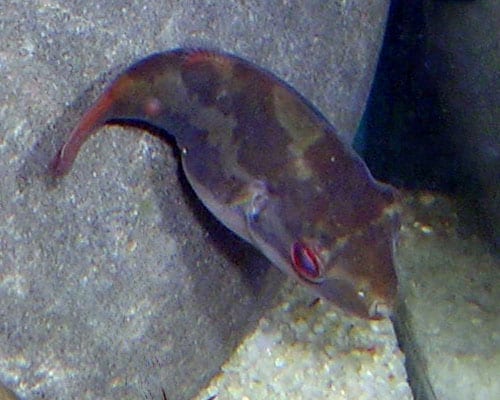
 © Neale Monks / CC BY-SA 3.0
Red-tailed Red-eye Puffer
The Red-tailed Red-eye Puffer is a tiny freshwater puffer found only in a few limited river systems on Sumatra and Borneo. With a standard length of around 4cm and a maximum size of about 4.4cm, it stays small enough to suit even compact aquariums. As the name suggests, mature males develop a striking red tint on their dorsal and caudal fins, making them easy to spot among other puffers. Compared to other red-eye puffers, this species tends to be less aggressive, and telling males from females is relatively straightforward. It packs plenty of personality and visual charm into a very small frame.
View Red-tailed Red-eye Puffer encyclopedia →0% commission on your first sales!Register by September 30, 2026 and your first 2 sales are commission-free!
Breeder Wanted!
List on BreederDirect and sell directly to customers nationwide!
Our 6 Transparency Commitments
All Tropical Fish listings include water quality, temperament, and tank size information from verified Breeder.
- Origin Disclosed
- Real Photos
- Water Quality Disclosed
- Recommended Tank Size
- Temperament Disclosed
- Breed Line Disclosed
Browse all 301 breeds
Water Type
Care Level
Verified breeders wanted for Tropical Fish
Breeders are signing up now ahead of launch. Subscribe to be notified when new listings go live.
Getting alerts is free with a member account. When new listings match your saved search, we'll notify you by email and in-app.
Browse other categories
Verified breeders (preview)
Are you raising tropical fish?
Register as a breeder and connect with buyers directly.
Apply as a breederRed-tailed Red-eye Puffer key facts
- Care level
- Intermediate
- Lifespan
- 3-5 years
- Size
- Up to 4.4cm SL
- Temperature
- 20〜28℃
- Diet
- Small snails, shelled crustaceans, frozen bloodworm and brine shrimp
- Tank
- Seriously Fish suggests a 60 x 30cm base. Plenty of plants and driftwood to create refuges and break up sightlines will reduce territorial disputes between males.
- Water Temperature & Quality
- Seriously Fish gives 20-28C, pH 6.0-7.5 and 2-12 dGH, and FishBase records a habitat pH of about 6.0. It is a true freshwater fish and needs no salt. Conditions shift quickly in a small tank, so change water often.
- Tank Mates
- A species tank, or peaceful shoaling cyprinids large enough to avoid predation but no threat in return, works best. It is loosely gregarious but males hold territories, so cover and space are needed.
- Diet & Feeding
- Feed small snails and shelled crustaceans regularly to wear down the continuously growing teeth, alongside frozen bloodworm and brine shrimp. Dried food should not be the staple.
- Breeding & Spawning
- At least one spawning is documented. The male darkens and extends his ventral ridge in display, and several hundred eggs are deposited among plants and decor. The adults eat the eggs and must be removed; hatching takes about 65 hours.
- Health & Notes
- Its body carries tetrodotoxin, so a dead fish must never be fed to other animals. It is uncommon in the hobby and easily confused with related red-eye puffers, so check fin colour and markings. The IUCN rates it Least Concern.
About Red-tailed Red-eye Puffer
A tiny freshwater puffer native to limited river systems in Sumatra and Borneo, reaching a maximum of about 4.4cm. Mature males show red-tinted dorsal and caudal fins, and the species is known for its relatively calm temperament and easy sex determination.
7 things to know before welcoming a Red-tailed Red-eye Puffer
1Water Quality Matters
This species comes from a handful of soft, slightly acidic river systems on Sumatra and Borneo, so it's sensitive to sudden changes in water chemistry. Do partial water changes in small amounts and avoid abrupt swings in pH or hardness.
2A Tank to Match Its Size
Since adults max out around 4.4cm, you don't need an oversized tank for this puffer. That said, it's sensitive to poor water quality, so running a filter with more capacity than the tank size alone would suggest is worthwhile.
3Best Suited to Experienced Keepers
Keeping the water quality and feeding routine dialed in takes some know-how, which is why this species is considered intermediate-level. It suits keepers who already have some freshwater puffer experience or who can monitor tank conditions closely.
4Choosing Tankmates Carefully
This species is relatively calm for a red-eye puffer, but it still has some territorial instinct. Providing multiple hiding spots and avoiding overcrowding helps reduce conflicts when keeping several together.
5Telling Males from Females
Mature males develop a red tint on the dorsal and caudal fins, making sex differences easier to spot than in many other puffers. This coloring is a handy clue if you want to identify males and females before bringing them home.
6Feeding Habits to Know
Puffers generally favor animal-based foods and have strong teeth adapted for crushing shelled prey. Offering occasional shelled foods like snails helps keep their teeth from overgrowing.
7Preparing the Tank in Advance
Because this species is sensitive to water conditions, it's best to fully cycle the tank before bringing one home. Acclimate new arrivals slowly, since a sudden move to unfamiliar water can be stressful.
Frequently asked questions about Red-tailed Red-eye Puffer
- Q.How big does the Red-tailed Red-eye Puffer get?
- A.Its standard length is around 4cm, and it maxes out at about 4.4cm even as an adult. That makes it one of the smaller freshwater puffer species.
- Q.How difficult is it to keep, and is it suitable for beginners?
- A.This species is considered intermediate-level to keep. Because it's sensitive to water quality changes, it's best attempted once you're already comfortable managing an aquarium.
- Q.Can it be kept together with other fish?
- A.It's relatively calm for a red-eye puffer, but still retains some of the territorial instinct typical of puffers. Providing plenty of hiding spots and avoiding overcrowding can help reduce the risk of conflicts.
- Q.How can you tell males and females apart?
- A.Mature males develop a red tint on their dorsal and caudal fins. This coloring makes sex determination easier than with many other puffer species.
- Q.Is this species subject to CITES?
- A.No, the Red-tailed Red-eye Puffer is not subject to CITES.
Useful tools for Red-tailed Red-eye Puffer care
Learn more about Red-tailed Red-eye Puffer in the encyclopedia
View Red-tailed Red-eye Puffer encyclopedia entry →
Care difficulty, lifespan, size and diet — all basics covered.
More in this category
Can't find the one you're looking for?
Post your wishes for free and breeders with matching animals will contact you with introductions.