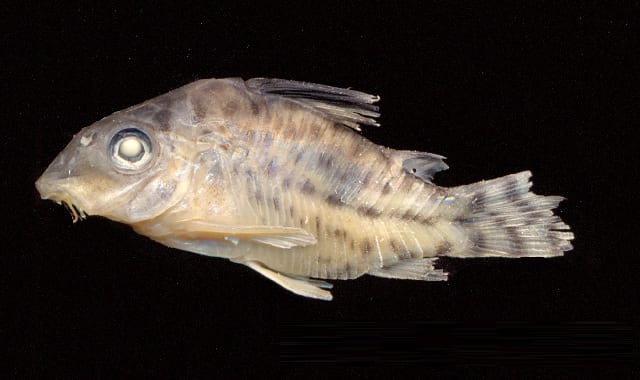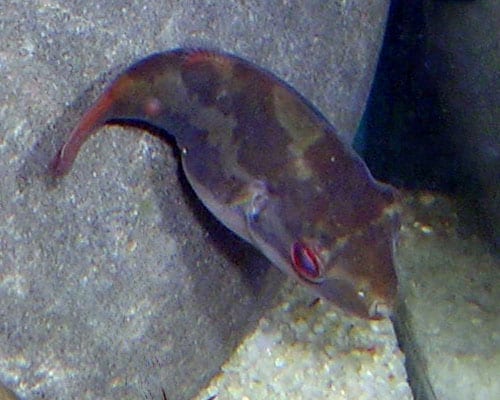
Source: Wikimedia Commons
Red-tailed Red-eye Puffer
IntermediateCarinotetraodon irrubesco
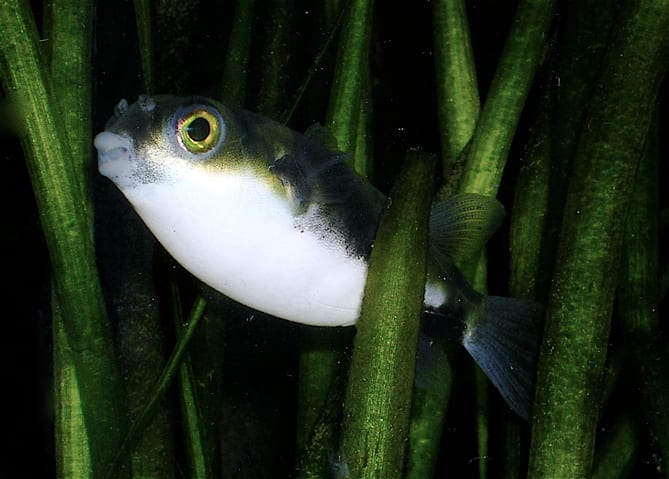
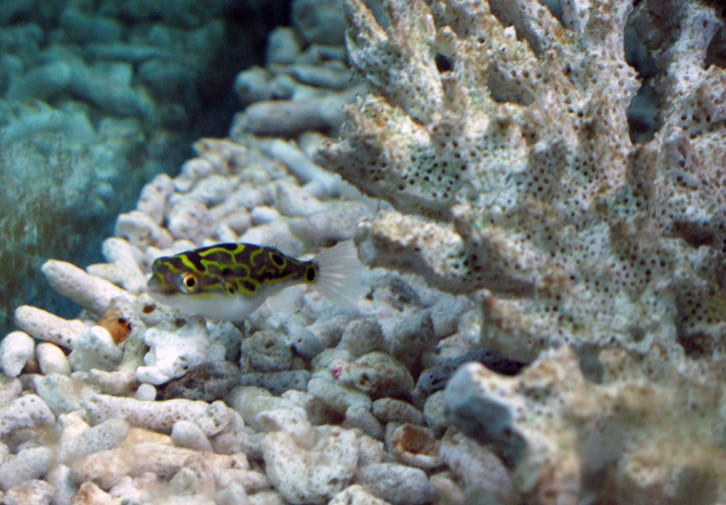
A tiny freshwater puffer in which the male's dorsal and caudal fins turn red. Known only from a few systems in Sumatra and Borneo, it reaches about 4cm SL and is less aggressive than most red-eye puffers.
Difficulty
Intermediate
Temperature
20〜28℃
Lifespan
3-5 years
Size
Up to 4.4cm SL
Diet
Small snails, shelled crustaceans, frozen bloodworm and brine shrimp
About
Carinotetraodon irrubesco is a tiny tetraodontid known only from the lower Banjuasin basin in southern Sumatra and the Sambas river in western Kalimantan. FishBase records a maximum of 4.4cm SL, 10-12 dorsal rays, 9-10 anal rays and a habitat pH of about 6.0. Males have red dorsal and caudal fins, lack a black blotch at the dorsal fin base and carry a red mid-ventral stripe, while females show interrupted black stripes below and five to seven bars on the caudal fin, so the sexes are easily told apart. Seriously Fish gives 20-28C, pH 6.0-7.5, 2-12 dGH and a 60 x 30cm base, and notes it is less aggressive than its congeners although males are territorial. At least one captive spawning is documented, with several hundred eggs deposited among plants and decor and the first fry hatching in 65 hours. The IUCN rates it Least Concern.
Source: Wikipedia (CC BY-SA 4.0)
Lifespan of the Red-tailed Red-eye Puffer
The Red-tailed Red-eye Puffer lives 3-5 years.
Size of the Red-tailed Red-eye Puffer
The Red-tailed Red-eye Puffer grows to Up to 4.4cm SL.
Temperature & humidity for the Red-tailed Red-eye Puffer
The ideal temperature for the Red-tailed Red-eye Puffer is 20〜28℃.
Basic Info
Origin
Indonesia (Banjuasin basin in Sumatra and the Sambas river in Kalimantan)
Lifespan
3-5 years
Care Specifications
- pH
- 6–7.5
- Hardness (GH)
- 2–12 dGH
- Water Temp.
- 20–28℃
Semi-aggressiveGroupBreeding: Hard
Sources: FishBase / Seriously Fish
References & Sources
Edited & verified by: BreederDirect editorial team
The taxonomic, regulatory, and husbandry data on this page are compiled and verified against the authoritative primary sources below.
Taxonomy & Authority
Accepted name: Carinotetraodon irrubesco Tan, 1999
Authority databases: FishBase
Nomenclature follows global taxonomic authority databases.
Regulations & Conservation Status
Not CITES-listedIUCN LC · Least Concern
Sources: CITES Appendices (species not listed) / IUCN Red List
Regulations may change. Always verify the latest information with the relevant authorities.
Red-tailed Red-eye Puffer Listings
Loading latest listingsFind listings for this species