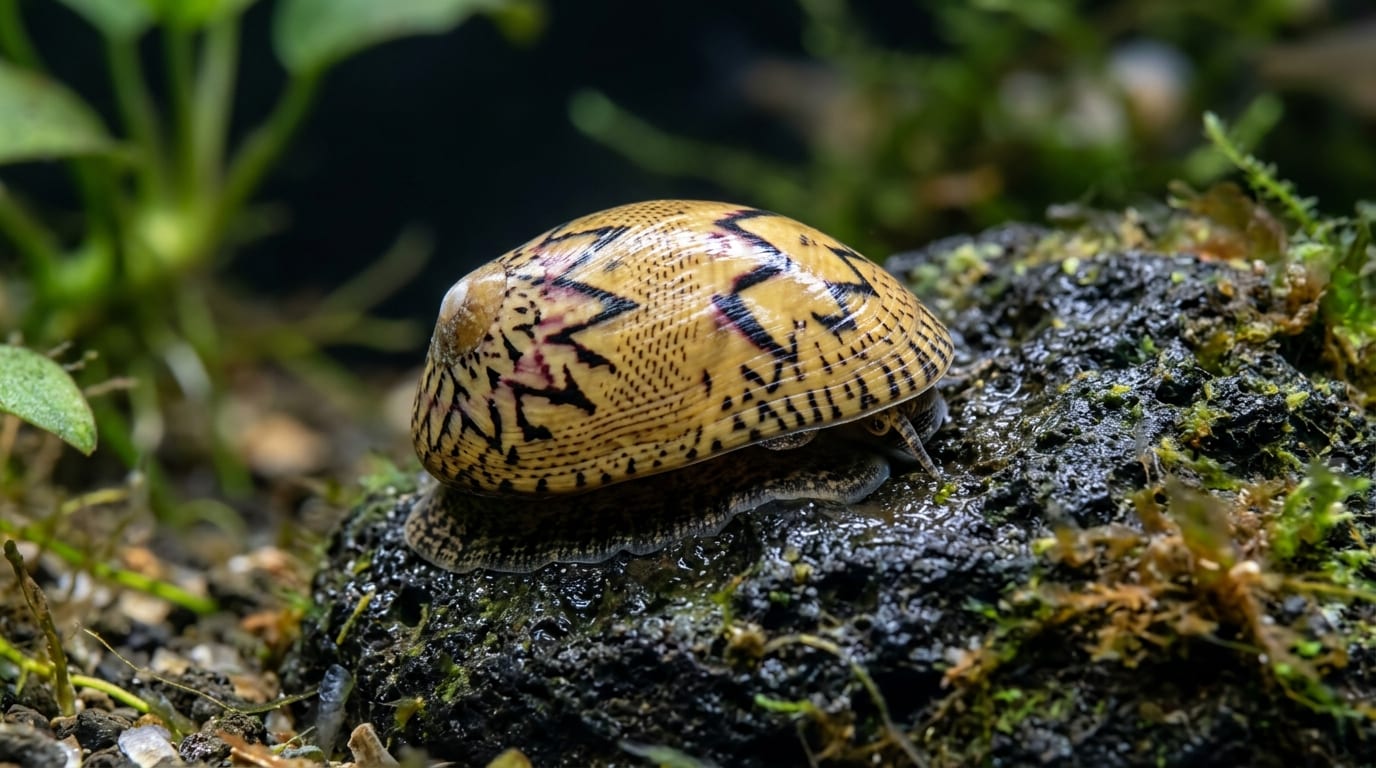
Source: Wikimedia Commons
Assassin Snail
BeginnerAnentome helena
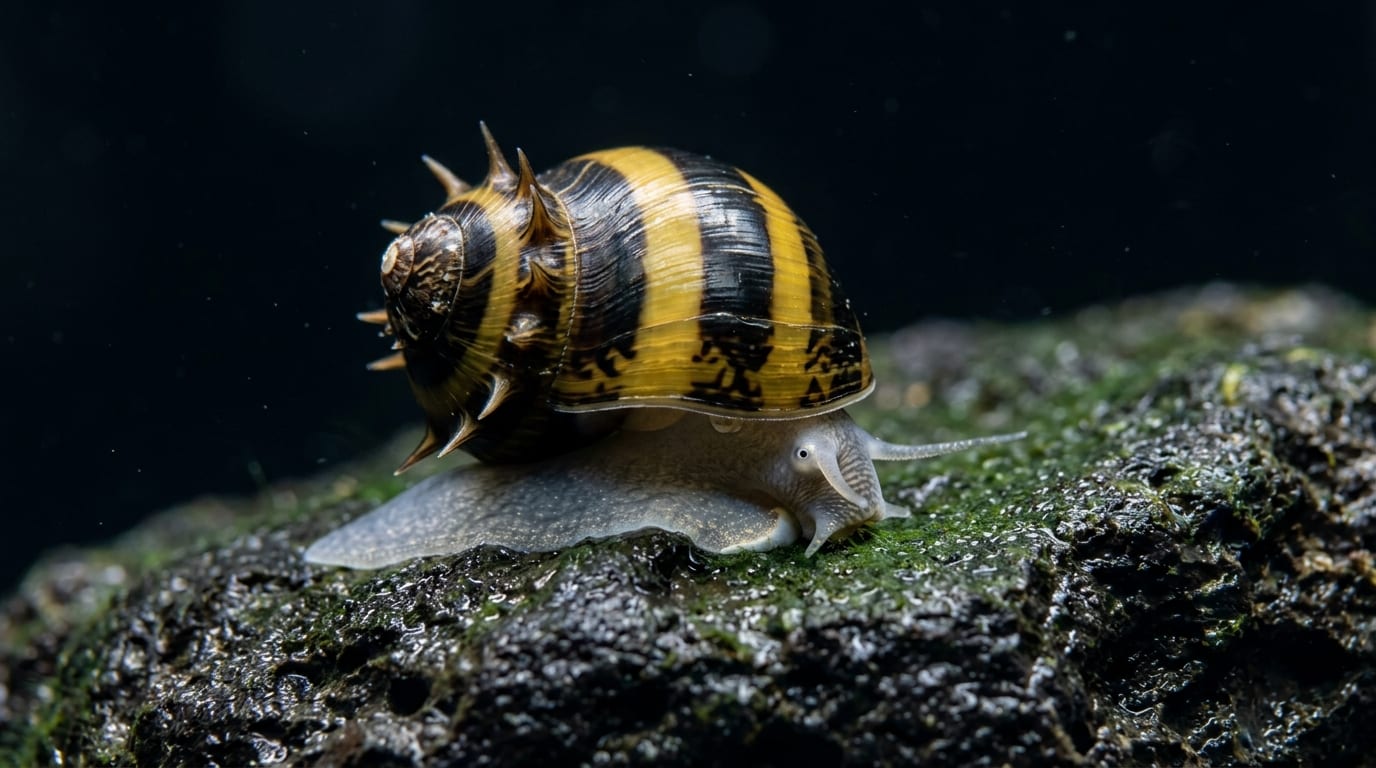
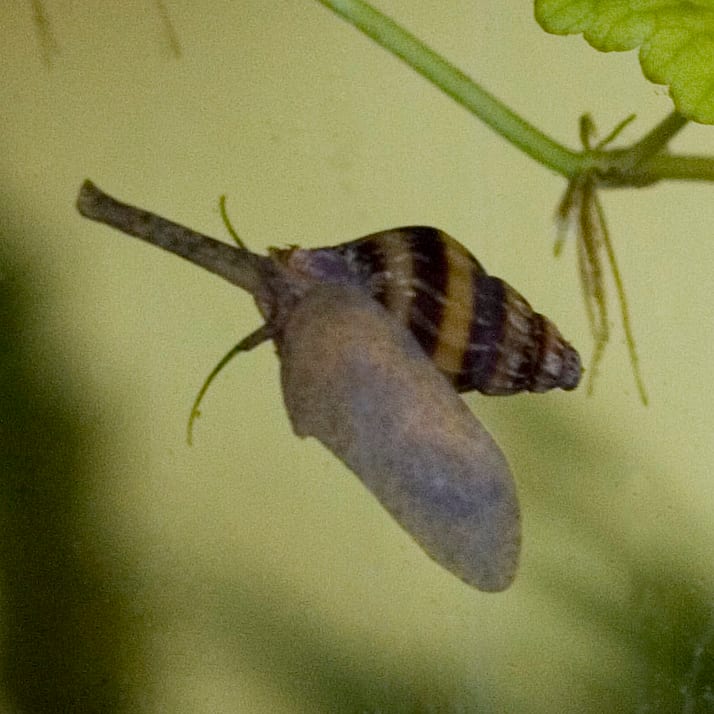
A carnivorous freshwater snail that preys on other snails. The conical shell carries dark brown and yellowish tan bands likened to a bumblebee. It spends much of its time buried, emerging when it senses food.
Difficulty
Beginner
Temperature
22〜28℃
Lifespan
5-10 years
Size
Shell height 18-32mm
Diet
Other snails, worms, frozen foods and sinking prepared foods
About
Anentome helena is a carnivorous freshwater snail widespread in Southeast Asia and belongs to the Nassariidae, a family that is otherwise largely marine. The English Wikipedia gives a shell height of 18-32mm, noting that size depends on food supply and that aquarium animals stay smaller. The German Wikipedia gives 18-28mm high and 7-13mm across, with one to three brown spiral bands over a yellow to olive-brown ground, wide variation in shape, sculpture and colour, six to eight whorls and an operculum. The body is brown with a white foot and a conspicuous extensible proboscis. It spends much of its time buried, is least active around midday, and stirs when it senses food. Like other neogastropods it is carnivorous, taking worms and other snails and ambushing larger snails from the substrate. The sexes are separate, not hermaphroditic. Where introduced it can pose a serious threat to native freshwater gastropods.
Source: Wikipedia (CC BY-SA 4.0)
Lifespan of the Assassin Snail
The Assassin Snail lives 5-10 years.
Size of the Assassin Snail
The Assassin Snail grows to Shell height 18-32mm.
Basic Info
Origin
Southeast Asia (Malaysia, Thailand and Lake Toba in Sumatra, Indonesia)
Lifespan
5-10 years
Size
Shell height 18-32mm
Temperature
Care Specifications
Semi-aggressiveGroup
Sources: Wikipedia (Anentome helena) / Wikipedia (de: Raubturmdeckelschnecke) / WoRMS
References & Sources
Edited & verified by: BreederDirect editorial team
The taxonomic, regulatory, and husbandry data on this page are compiled and verified against the authoritative primary sources below.
Taxonomy & Authority
Accepted name: Anentome helena (von dem Busch, 1847)
Synonyms: Clea helena
Authority databases: GBIF
Nomenclature follows global taxonomic authority databases.
Regulations & Conservation Status
Not CITES-listed
Sources: CITES Appendices (species not listed) / IUCN Red List
Regulations may change. Always verify the latest information with the relevant authorities.
Assassin Snail Listings
Loading latest listingsFind listings for this species