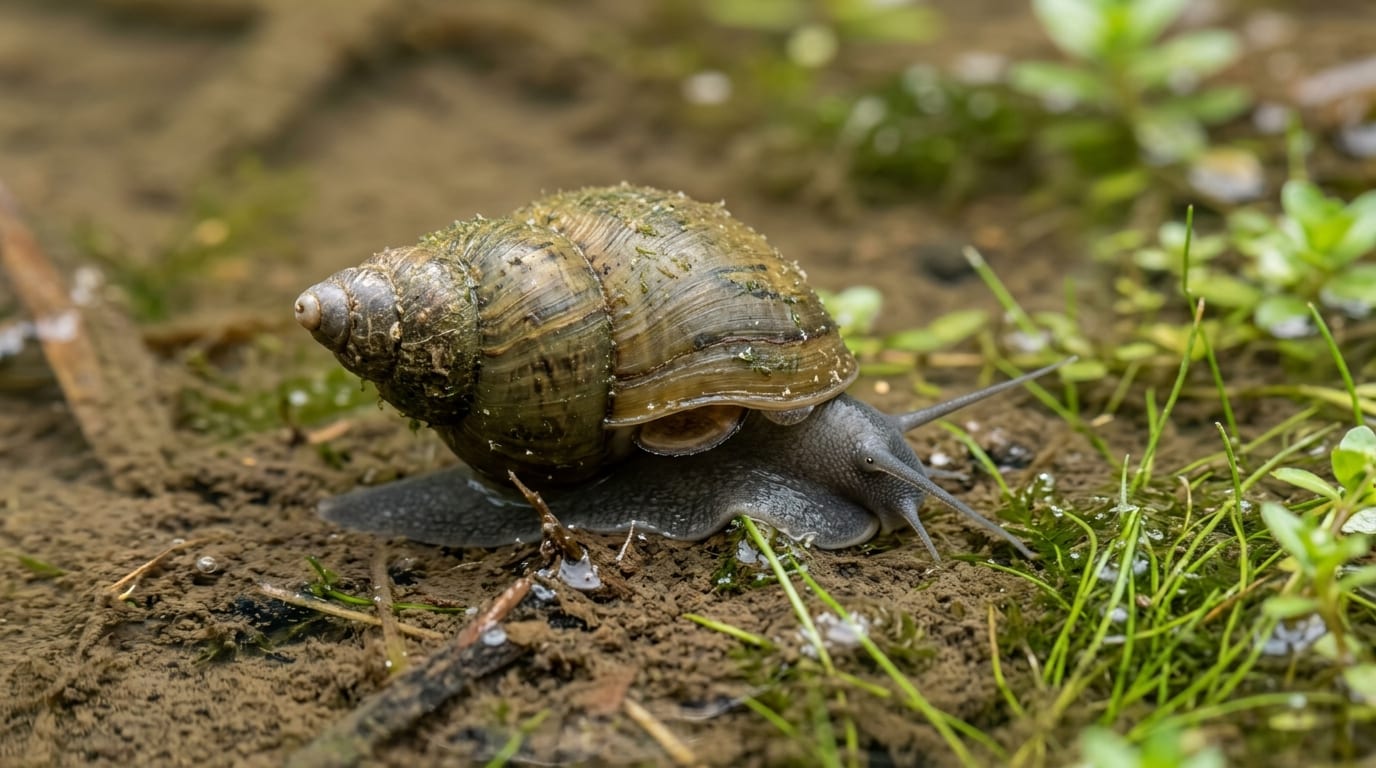
AI-generated image
Horned Nerite
BeginnerClithon corona
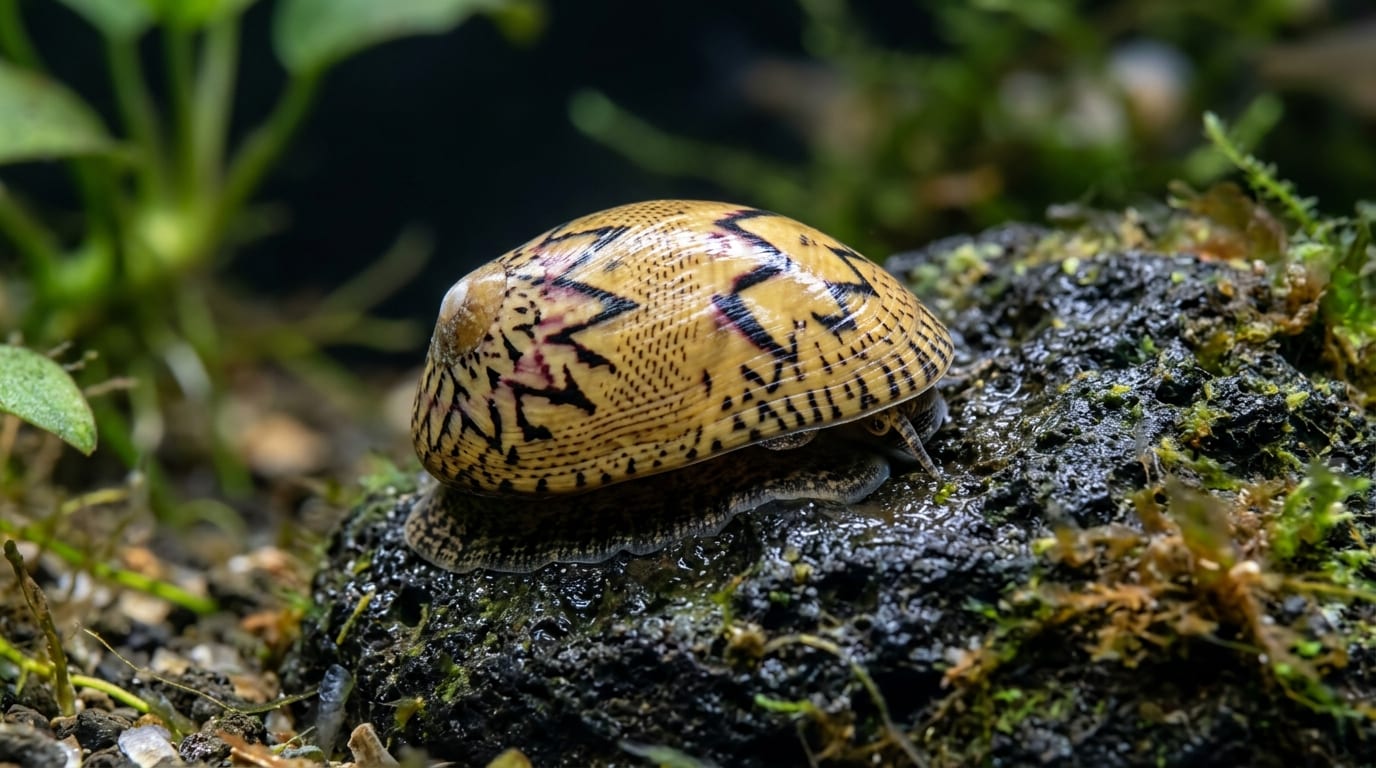
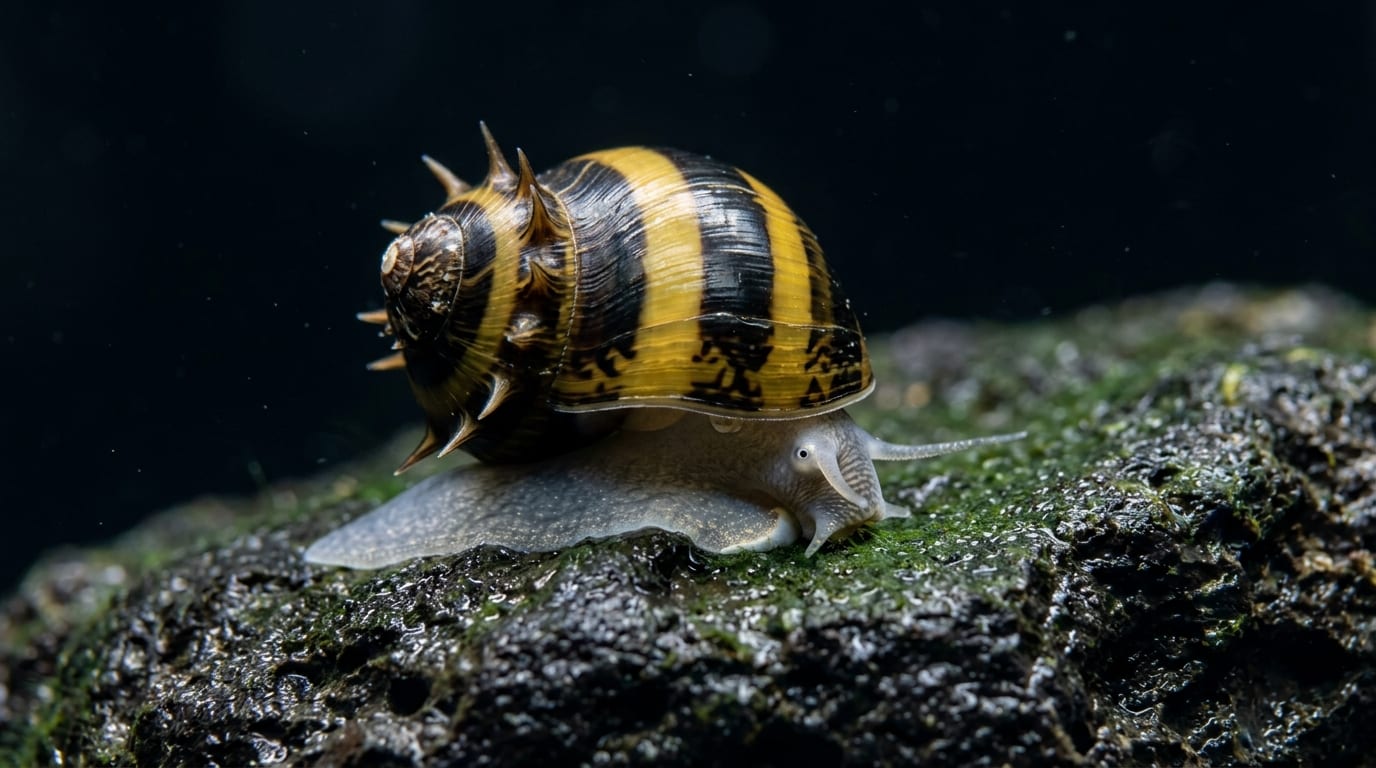
A nerite snail whose shell bears a row of spiny projections. It rasps algae from hard surfaces. Being amphidromous, it will not reproduce within a freshwater aquarium alone.
Difficulty
Beginner
Temperature
22〜28℃
Diet
Algae, biofilm and sinking prepared foods
About
Clithon corona is an operculate nerite snail living in both brackish and fresh water. The English Wikipedia gives a range across the Western Pacific and Southeast Asia, from the Philippines, Indonesia and Malaysia to Micronesia, Papua New Guinea, the Solomon Islands, Vanuatu, New Caledonia, Samoa, Taiwan, and Okinawa and the Ryukyus of Japan. It is an amphidromous benthic species found in freshwater rivers and brackish estuaries alike, grazing algae on hard substrates in intertidal zones and fast-flowing reaches. The freshwater hermit crab Clibanarius fonticola is known to use only the shells of this species. SeaLifeBase treats it as a benthic species of tropical brackish water and notes that the Neritopsina are generally gonochoric broadcast spawners whose embryos pass through planktonic trochophore and then veliger stages, which is why it cannot be bred through generations in fresh water alone. It is traded for freshwater aquaria.
Source: Wikipedia (CC BY-SA 4.0)
Basic Info
Origin
Western Pacific and Southeast Asia (Philippines, Indonesia, Malaysia, Taiwan, and Okinawa and the Ryukyus of Japan)
Temperature
22〜28℃
Diet
Algae, biofilm and sinking prepared foods
Care Guide
Tank
Provide hard surfaces where algae can grow, whether glass, stone or driftwood. It sometimes climbs above the waterline and falls, so fit a lid and right any snail found upside down.
Water Temperature & Quality
Care Specifications
PeacefulGroupBreeding: Very hard
Sources: Wikipedia (Clithon corona) / SeaLifeBase / WoRMS
References & Sources
Edited & verified by: BreederDirect editorial team
The taxonomic, regulatory, and husbandry data on this page are compiled and verified against the authoritative primary sources below.
Taxonomy & Authority
Accepted name: Clithon corona (Linnaeus, 1758)
Authority databases: GBIF
Nomenclature follows global taxonomic authority databases.
Regulations & Conservation Status
Not CITES-listed
Sources: CITES Appendices (species not listed) / IUCN Red List
Regulations may change. Always verify the latest information with the relevant authorities.
Horned Nerite Listings
Loading latest listingsFind listings for this species